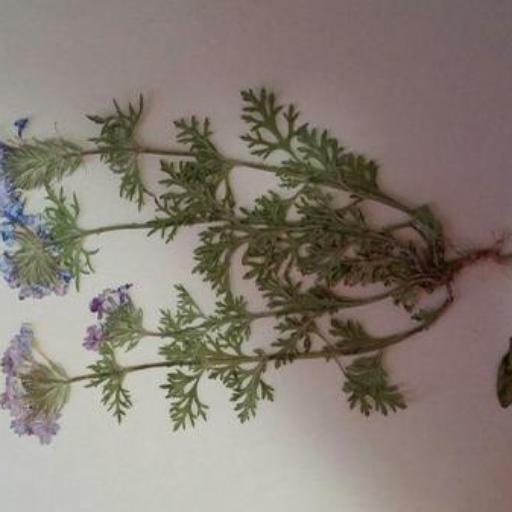
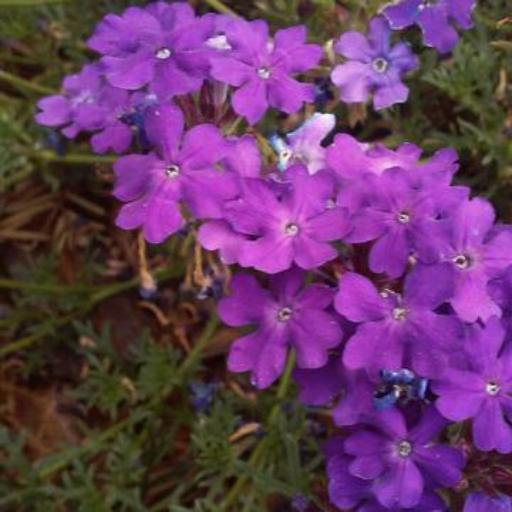
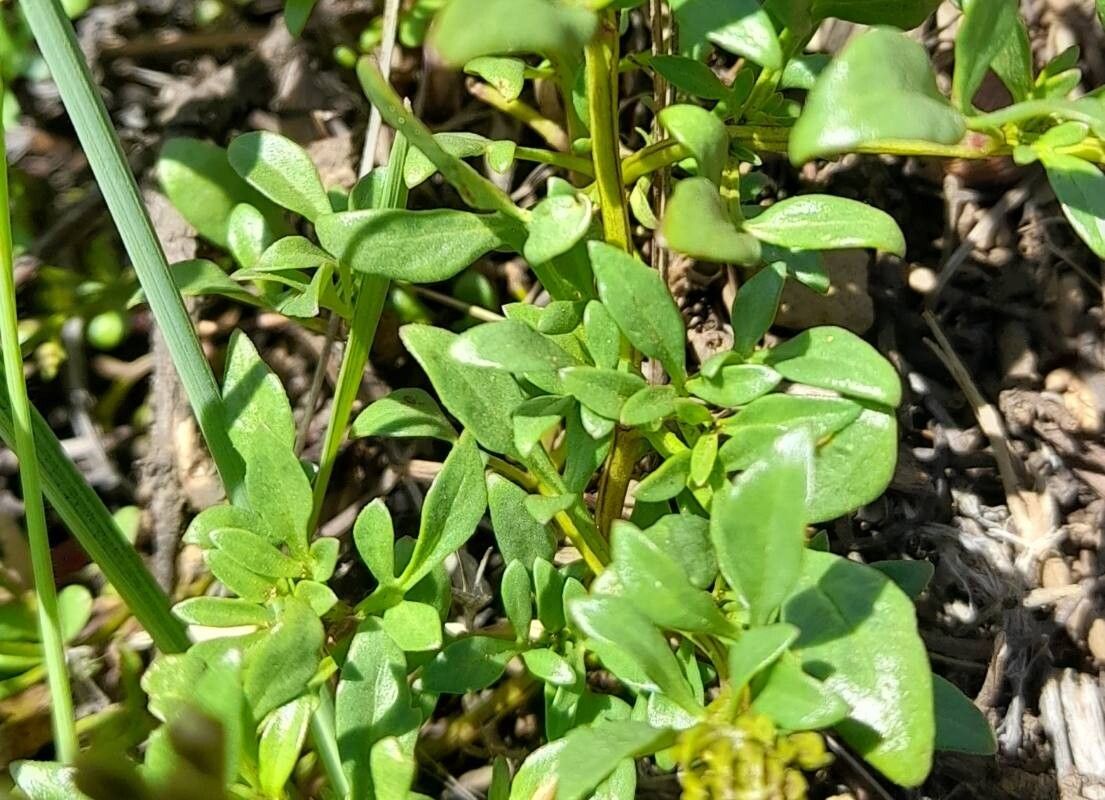
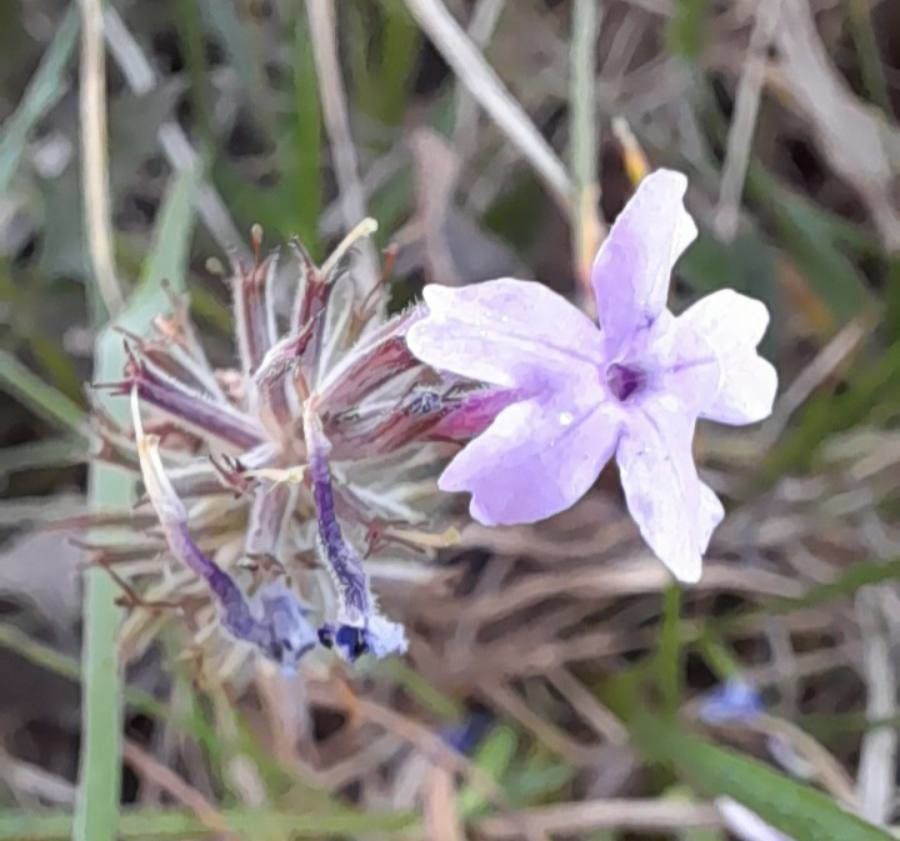
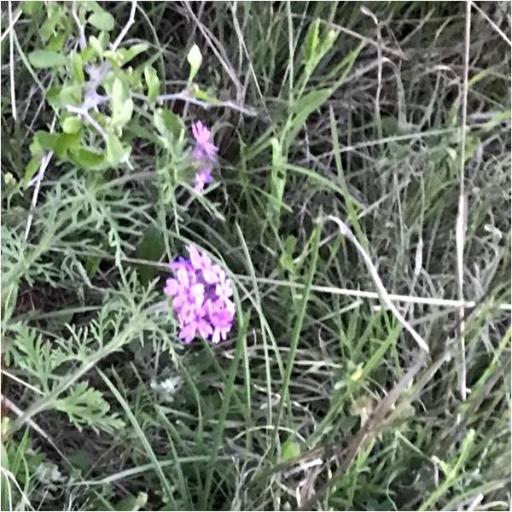
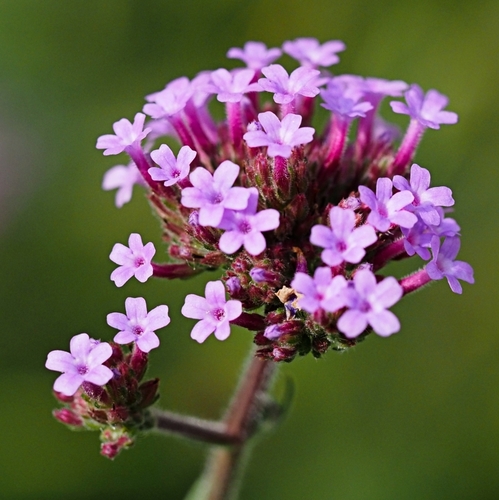
Glandularia aristigera, variously called the moss verbena, desert verbena, fine leafed verbena, wild verbena, tuber vervain, South American mock vervain, Mayne's curse and Mayne's pest, is a species of flowering plant in the family Verbenaceae. It is native to Bolivia, southern Brazil, northern Argentina, Paraguay and Uruguay. It has been widely introduced to the rest of the world's drier tropics and subtropics, including California, Guatemala, Honduras, Nicaragua, Venezuela, Greece, Nigeria, eastern and southern Africa, India, and all of Australia except Tasmania.
Dark blue moss vervain is fairly disease-resistant and generally does not tend to develop illnesses. That said, it can be affected by pests and diseases present in its environment. These problems are typically mild. As for care, the plant requires moderate maintenance. It should be pruned on a regular basis to preserve an attractive look and healthy growth. Fertilizing can also encourage flowering. Dark blue moss vervain is appropriate for anyone with outdoor space, such as a garden or patio, and does not demand extensive gardening experience. It may need more attention when grown indoors.
How to keep Verbena Aristigera.
Light
Dark blue moss vervain is a sun-loving, perennial herbaceous plant native to open habitats, commonly found growing in meadows and grasslands. It prefers full sun but can also tolerate partial sun.
Temperature
Dark blue moss vervain has good temperature adaptability, tolerating higher heat and wider temperature fluctuations. In hot weather, attention should be paid to watering and providing suitable shade to avoid sunburn. However, Dark blue moss vervain is relatively sensitive to low temperatures. Although it can endure some cold, excessively low temperatures may cause frost damage.
Fertilizer
The best time to fertilize a Dark blue moss vervain is in early spring, when it is coming out of dormancy and beginning active growth. Fertilizing supplies important nutrients needed for healthy growth. Although Dark blue moss vervain has fairly low fertilizer requirements, feeding it once a year can improve its survival and encourage better, longer-lasting flowers.
Botanical profile.
- Plant Type
- Herb
- Life Cycle
- Perennial
- Genus
- Verbena
- Family
- Verbenaceae
- Hardiness Zone
- 8-11
- Mature Height
- 20 cm to 30 cm
- Mature Spread
- 0.91 m to 1.83 m
- Leaf Color
- Green
- Leaf Type
- Deciduous
- Flower Color
- Purple, Lavender
- Flower Size
- 2.54 cm
- Bloom Time
- All year round
- Planting Time
- Spring, Summer, Autumn
- Harvest Time
- All year round
- Native Area
- Bolivia
Other names.