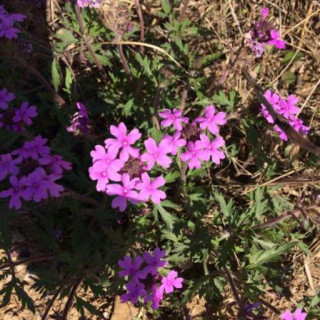
Verbena canadensis
Large Flowered Verbena · Rose mock vervain · Rose vervain · Clump verbena · Rose verbena
Description
Source: leafsnapVerbena canadensis, commonly known as Canadian vervain, is a perennial flowering plant in the Verbenaceae family. Native to North America, it thrives in various habitats including prairies, meadows, and open woods. The plant can reach up to 2 feet in height and features slender stems with small, toothed or lobed green leaves. The flowers of Verbena canadensis are small and tubular, with five petals that range in color from pinkish-purple to lavender-blue. These flowers bloom from late spring through summer, attracting bees, butterflies, and other pollinators. For centuries, Native Americans have used this plant for medicinal purposes, believing it to have healing properties for various ailments such as headaches, fever reduction, and respiratory issues. Verbena canadensis is a low-maintenance plant that thrives in full sun or partial shade with well-drained soil. While it is drought-tolerant once established, it benefits from regular watering during prolonged dry spells. Overall, Verbena canadensis is an excellent addition to any garden. Its attractive flowers provide nectar for pollinators, and its ease of growth makes it an ideal choice, even for novice gardeners looking to add color to their landscape with minimal effort.
🎭 Love, Psychic Abilities, Healing
Care Guide
💧 Water Every 7 days
☀️ Light Full sun
Rose mock vervain flourishes with ample sunlight, which encourages healthy growth and bright blooms. It can tolerate moderate shade, but that lessens its vigor. Excessive exposure can cause wilting. In its native environments, this plant receives substantial daily sun.
🌡️ Temperature 5–35°C
Rose mock vervain is a plant native to temperate regions and is best grown in temperatures of 68 to 95 °F (20 to 35 ℃). Seasonal temperature adjustments are advisable, particularly during excessively hot or cold periods.
💨 Humidity
🪴 Soil 6-7
🌱 Fertilizer
Early spring, when Rose mock vervain is coming out of dormancy and beginning active growth, is the best time to fertilize. Fertilizing supplies essential nutrients needed for healthy development. While Rose mock vervain has fairly low fertilizer requirements, applying fertilizer annually can boost its survival and encourage better, longer-lasting blooms.
🪴 Pot & Repot 2-3 years
When repotting Rose mock vervain, select a pot 1-2 inches (2.5–5.1 cm) larger with ample drainage. Use a well-draining potting mix. Repot in spring or fall, ensuring the root ball sits slightly lower than the rim of the flower pot. Water thoroughly after repotting and place in a warm spot with indirect sunlight.
✂️ Pruning
🌿 Propagating
🐛 Diseases & pets
☠️ Toxicity
Characteristics
- Plant Type
- Herb
- Life Cycle
- Perennial, Annual
- Genus
- Verbena
- Family
- Verbenaceae
- Hardiness Zone
- 5-9
- Mature Height
- 15 cm to 46 cm
- Mature Spread
- 30 cm to 61 cm
- Leaf Color
- Green
- Leaf Type
- Deciduous
- Flower Color
- Purple, Lavender, Pink
- Flower Size
- 1.27 cm
- Bloom Time
- Late spring, Summer
- Planting Time
- Spring
- Harvest Time
- Summer, Early fall