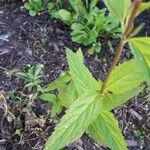
Verbena hastata
American blue vervain · Wild hyssop · American vervain · Blue vervain · Simpler's-joy
Description
Source: leafsnapVerbena hastata, commonly known as blue vervain, is a perennial flowering plant that belongs to the Verbenaceae family. Native to North America, it thrives in wet meadows, marshes, and along stream banks. The plant can reach up to 6 feet in height and features a slender stem with lance-shaped leaves that are toothed along the edges. The flowers of Verbena hastata are small and blue-purple, each with five petals arranged in spikes at the top of the stem. Blooming from June through September, these flowers attract bees, butterflies, and other pollinators. In traditional medicine, such as Native American medicine and Ayurveda, Verbena hastata has been used for its medicinal properties. It has been employed to treat respiratory ailments like coughs and asthma and is also known for its calming effects on anxiety. In addition to its medicinal uses, Verbena hastata is popular in landscaping. Its attractive flowers make it an excellent addition to gardens and naturalized areas, where it not only draws pollinators but also adds visual interest throughout the summer months.
🌳 Blue vervain is a water-loving perennial that gardeners frequently select for its beauty, toughness, and adaptability to waterlogged areas. It's an ideal choice for rain gardens or any sunny, boggy spot in your garden. This plant also looks fantastic in meadow gardens and is often used as a border plant.
🎭 Magic
Care Guide
💧 Water Every 7 days
Blue vervain thrives in consistently moist environments, where it prefers full sun and damp soils. While it has moderate drought tolerance, it achieves optimal growth with weekly watering. During dry spells, extra irrigation is necessary since its growth season heavily relies on water availability.
How should I water my Blue vervain plant?
To keep your Blue vervain healthy, it is important to water it with filtered water that is at room temperature. Tap water can be harmful due to particles it may contain. The Blue vervain prefers warm water because it comes from a warm environment, and cold water can be a shock to its system. Avoid watering the plant from above, as this can cause issues with the foliage. Instead, fully soak the soil with filtered room temperature water. This helps moisturize the roots and supports their growth as they spread and gather necessary nutrients.
What should I do if I give my Blue vervain too much water or too little water?
Overwatering is a more common issue for the health of your Blue vervain. It can cause wilting, yellowing of stems and leaves, and can even lead to diseases like root rot, mold, and mildew. Underwatering is less common, but still possible, and can cause brittle and brown leaves. It's important to catch signs of overwatering early, as some diseases may not be fixable if you wait too long. If you notice signs of overwatering, reduce watering immediately and assess the soil quality. If the soil drains poorly, replace it with a well-draining potting mix. If you notice signs of underwatering, simply water more regularly until the signs disappear.
How frequently should I water my Blue vervain?
If your Blue vervain plant is in a pot, the most precise way to determine if it needs water is by checking the soil. Simply stick your finger into the soil and if the first two to three inches are dry, it's time to water. If you have your Blue vervain plant outdoors in the ground, you can use the same method to test the soil. When the top few inches of soil are dry, it's time to water. Typically, during the spring and early fall, you'll need to water this plant about once every week using this method. However, during extremely hot weather, you may need to increase your watering frequency to twice or more per week. It's worth noting that mature, well-established Blue vervain plants have an impressive ability to withstand drought.
How much water does my Blue vervain plant need?
When watering your Blue vervain, don't be afraid to give it a generous amount of water. Make sure the first two to three inches of soil are dry before watering thoroughly. Water enough to saturate the soil completely, so that excess water drains through the bottom holes of the pot. If you don't see any excess water coming out, you may not have watered enough. However, be careful not to let water accumulate in the soil, as it can harm the plant. Poorly draining soil can also be detrimental to the plant's health, so make sure the water flows through the pot efficiently. If the plant is outside, it typically requires about 1 inch of rain per week.
How do I water my Blue vervain as it grows?
The water requirements of the Blue vervain can vary depending on its growth stages. In the first few years of its life or after being transplanted, it will require more water than usual. During this time, the plant focuses on developing new roots to support future growth, which need extra moisture. As the Blue vervain matures, it will need less water overall. Additionally, during the bloom period, when the plant is developing flowers, it may require more water due to the increased moisture demand.
☀️ Light Full sun
Blue vervain does best with ample light all day, which supports vigorous growth. It is hardy and can persist in lower-light settings, although that may impede ideal development. Coming from clearings and open spaces, it is biologically suited to sunny locations. Be aware that both too much and too little sunlight can cause suboptimal health and growth.
What are the sunlight requirements for Blue Vervain?
Blue Vervain thrives with abundant light exposure throughout the day, which is essential for its robust growth. It requires full sun, meaning above 6 hours of sunlight daily, but it can also grow in partial sun, approximately 3-6 hours of sunlight. While Blue Vervain can survive in less light-rich environments, this might hinder its optimal development. Originating from clearings and open areas, Blue Vervain is biologically adapted to sun-soaked locations. However, both too much and too little sunlight can lead to suboptimal health and growth conditions.
What are the effects of inadequate sunlight on Blue Vervain, and how to address them?
Inadequate lighting can cause several symptoms in Blue Vervain, such as smaller leaves, leggy or sparse growth, faster leaf drop, slower or no growth, lighter-colored new leaves, chlorosis, sunscald, leaf curling, wilting, and leaf scorching. To address these issues, gradually increase sunlight exposure to at least 6 hours daily. If moving the plant outdoors isn't feasible, consider using artificial light with appropriate intensity (30-50W\/sq ft for full sun plants) and keep it on for 8-12 hours per day. Additionally, minimizing obstructions and transplanting the plant to a sunnier spot can also be effective solutions.
How can artificial lighting support Blue Vervain's growth indoors?
Indoor plants, including Blue Vervain, require adequate lighting for optimal growth, especially when natural sunlight is insufficient. Artificial lighting, such as LED lights, can provide the specific wavelengths needed for the plant's development. For full sun plants like Blue Vervain, artificial light should have an intensity of 30-50W\/sq ft. The light source should be placed 12-36 inches above the plant to mimic natural sunlight and left on for 8-12 hours per day to simulate natural daylight hours. This approach promotes faster, healthier growth.
🌡️ Temperature 0–35°C
Blue vervain does best in conditions with temperatures from 68 to 95°F (20 to 35℃). As a native species, it readily adapts to seasonal temperature changes. In very severe weather, though, extra precautions may be necessary to keep temperatures within the ideal range.
What is the ideal temperature range for growing Blue vervain?
Blue vervain thrives in environments where temperatures range from 68 to 95°F (20 to 35°C). As a native plant, it easily acclimates to seasonal temperature changes but might require extra care in extreme conditions to maintain this optimal temperature range.
Is Blue vervain cold-resistant, and how can it be protected during extreme winter conditions?
Yes, Blue vervain has strong cold resistance, and special frost protection measures are not generally needed. However, if temperatures are expected to drop below -35°C, it's important to provide cold protection by covering the plant with soil or straw, and watering it abundantly before the first freeze in autumn to ensure the soil remains moist.
What should I do if the temperature drops below -35°C during the winter?
If winter temperatures drop below -35°C, it's crucial to keep the soil around Blue vervain moist and provide cold protection to prevent damage. Despite its cold tolerance, extremely low temperatures can prevent sprouting in spring. Removing parts of the plant that fail to sprout in spring is recommended.
How does high temperature affect Blue vervain and what are the solutions?
During summer, it's important to ensure that Blue vervain's temperature remains below 35°C. Temperatures exceeding 38°C can lead to leaves becoming lighter in color, curling, suffering from sunburn, or in severe cases, causing the entire plant to wilt and dry. Solutions include trimming sunburned and dried parts, relocating the plant to a shaded area, or using a shade cloth, and watering in the morning and evening to maintain soil moisture.
💨 Humidity
🪴 Soil 6-7
🌱 Fertilizer
A single application of fertilizer in spring is generally adequate for Blue vervain, although repeated feedings can maximize growth. Apply fertilizer every month to a month and a half. Fertilization improves leaf appearance and function, helping maintain even color and a healthy texture. It also promotes root development and nutrient uptake for the plant’s long-term health.
Why should I put fertilizer on my Blue vervain?
The Blue vervain relies on its leaves for structure, so it's important to fertilize them to keep them looking great and functioning properly. Good fertilization will give your Blue vervain consistent color and a healthy texture. Besides benefiting the leaves, fertilization also helps the plant below the surface, promoting root growth and maintenance. This not only ensures current plant health but also improves the plant's ability to absorb nutrients from the soil in the future.
When should I fertilize my Blue vervain for the best results?
If you grow your Blue vervain outdoors, it will produce new growth in early spring, indicated by the emergence of leaves. This is the best time to start fertilizing for the year. Usually, a single application of fertilizer in spring is sufficient for the Blue vervain to thrive. However, if you want to maximize its growth, you can fertilize it multiple times throughout the spring and early summer. If you choose to do this, feed your Blue vervain approximately once every month to a month and a half.
When is it not a good idea to add fertilizer to my Blue vervain plant?
During the late fall and winter, your Blue vervain will go dormant and stop growing. Therefore, it is not recommended to fertilize it during this period. In spring and summer, if you choose to fertilize, start reducing the frequency as summer approaches because the growth rate of your Blue vervain will also slow down. It is important to note that it is not advisable to fertilize your Blue vervain during extremely hot weather or when the soil is excessively dry, as this can cause stress and premature death of the plant.
What kind of fertilizer should I use for my Blue vervain plant?
Choosing the right fertilizer for a Blue vervain is actually quite simple. These plants thrive on a general-purpose garden fertilizer with equal amounts of nitrogen, phosphorus, and potassium. A fertilizer with a ratio of 10-10-10 or something similar will work well. Avoid fertilizers with high nitrogen content if you're unsure. Granular fertilizers, preferably slow-release, are the best choice for Blue vervain. They are easy to apply to the soil. Additionally, using organic soil amendments like compost can be beneficial for feeding your Blue vervain.
How should I add fertilizer to my Blue vervain?
To ensure optimal growth, wait until early spring when your Blue vervain sprouts its first leaves. At this point, apply a balanced, slow-release fertilizer to the soil around the base of the plant. If desired, you can repeat this process later in the season. Remember to apply the fertilizer to the soil rather than directly on the plant. Occasionally, you may need to move some leaves to access the soil around the roots. It is also beneficial to water your Blue vervain before and after feeding it.
🪴 Pot & Repot 2-3 years
When repotting Blue vervain, select a pot 1–2 inches (2.5–5.1 cm) larger that provides ample drainage. Use a well-draining potting mix. Repot in spring or fall, making sure the root ball sits slightly below the rim of the flower pot. Water thoroughly after repotting and place it in a warm spot with indirect sunlight.
✂️ Pruning
Blue vervain is a hardy perennial plant characterized by its tall spikes of blue-violet flowers. To promote growth and improve air circulation, prune it from early to late spring. Remove any dead stems and thin out crowded areas to maintain the plant's vigor. This process not only enhances the plant's health and appearance but also helps prevent diseases.
🌿 Propagating
🐛 Diseases & pets
☠️ Toxicity
Characteristics
- Plant Type
- Herb
- Life Cycle
- Perennial, Biennial, Annual
- Genus
- Verbena
- Family
- Verbenaceae
- Hardiness Zone
- 3-9
- Mature Height
- 0.91 m to 1.83 m
- Mature Spread
- 61 cm
- Leaf Color
- Green
- Leaf Type
- Deciduous
- Flower Color
- Purple, Blue
- Flower Size
- 2.54 cm
- Bloom Time
- Early summer, Mid summer
- Planting Time
- Autumn, Winter
- Harvest Time
- Mid summer