Verbena litoralis
Brazilian vervain · Common verbena · Seashore vervain · Shore verbena · Blue vervain
Description
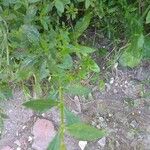
Source: leafsnapVerbena litoralis is a species of verbena known by the common names seashore vervain and Brazilian vervain, and in Hawaiian, ōwī. It is native to the Americas from Mexico south through Central and South America to Argentina and Chile. It is present throughout the world as an introduced species and in some areas a noxious weed. It is naturalized in the contiguous United States, Puerto Rico, Hawaii, Italy, Spain, South Africa, Mauritius, the Galápagos Islands, Australia, Easter Island, French Polynesia, Japan, New Zealand, and other places. It grows in many types of habitat, including disturbed and cultivated areas. This perennial herb produces one or more hairless or slightly bristly erect stems growing 40 centimeters to well over one meter tall. The rough-haired leaves are somewhat lance-shaped and have serrated edges, the blades measuring up to 10 centimeters in length. The inflorescence is made up of one to eleven erect spikes of flowers which are dense at the tip and more open on the lower part. Each small tubular flower has a purple corolla about half a centimeter wide.
Care Guide
💧 Water
Brazilian vervain flourishes in tropical environments that offer high humidity and consistent rainfall. It needs a balanced watering schedule, with once a week being ideal. Its ability to retain moisture in its evergreen leaves makes it adaptable and resilient in various climates.
How should I water my Brazilian vervain plant?
To properly water your Brazilian vervain, follow these steps for optimal plant health. Use filtered water, as tap water may contain harmful particles. It is important that the water is at room temperature or slightly warmer to avoid shocking the plant, as it is accustomed to a warm environment. Avoid overhead watering to prevent foliage complications. Instead, water the soil directly until it is fully soaked. This method benefits the plant by moistening the roots and promoting their spread through the soil to gather necessary nutrients.
What should I do if I give too much or too little water to my Brazilian vervain?
Overwatering is a more common issue that can harm your Brazilian vervain. It causes wilting, yellowing of leaves, and can lead to diseases like root rot, mold, and mildew. Underwatering is less common, but it can make the leaves brittle and brown. It's important to notice signs of overwatering early and reduce watering immediately. If the soil doesn't drain well, replace it with a loose, well-draining potting mix. If underwatering occurs, water more regularly until the signs subside.
How often do I need to water my Brazilian vervain?
If your Brazilian vervain is in a pot, the easiest way to determine if it needs water is by sticking your finger into the soil. If the top two to three inches of soil feel dry, it's time to water it. If you're growing the plant outside in the ground, you can use the same method to test the soil. Once the top few inches of soil have dried out, it's time to water. Usually, during spring and early fall, watering once a week is sufficient. However, in extremely hot weather, you may need to water it twice or more per week. It's worth mentioning that mature and well-established Brazilian vervain plants have a good tolerance for drought.
How much water does my Brazilian vervain plant need?
To properly water your Brazilian vervain, don't hold back on the amount of water you provide. Wait until the top two to three inches of soil are dry, then give the plant a thorough watering. Make sure you add enough water to fully saturate the soil, and allow excess water to drain through the pot's drainage holes. If you don't see any excess water draining, you may have not watered enough. However, be careful not to let the water accumulate inside the soil, as this can harm the plant. On the other hand, if the water is not draining properly, it may indicate that the soil is not draining well, which is not good for the plant's health. If the plant is located outside, one inch of rain per week should be enough to keep it hydrated.
How do I water my Brazilian vervain throughout the year?
The Brazilian vervain has different water needs depending on the season. During the hottest months of the year, it will need more water and you may have to water it more than once per week, depending on how quickly the soil dries out. On the other hand, during the winter, the plant goes into a dormant phase and needs much less water. In fact, you may not need to water it at all during this time. If you do choose to water it, do so cautiously, no more than once per month, as watering too much can increase the risk of disease.
☀️ Light Full sun
The Brazilian vervain depends on plentiful sunlight, doing best when exposed to direct sun for most of the day. It can tolerate, to a limited extent, spots where sunlight is not constant. Excessive sun or too little light can cause poor growth. Native to very sunny habitats, it is adapted to those conditions.
What are the sunlight requirements for Brazilian vervain?
The Brazilian vervain thrives with ample solar exposure, ideally positioned in locations where it can bask in unobstructed sunlight for the majority of the day. It requires full sun, defined as more than 6 hours of sunlight daily, but can marginally endure situations with less constant sun availability. Ensuring the plant receives the right amount of sunlight is vital for its longevity and vigor, as both over-exposure and insufficient light can hinder its development.
What is the impact of sunlight on Brazilian vervain?
Sunlight plays a crucial role in the healthy development of the Brazilian vervain, which originates from environments abundant in sunlight. The warning to gardeners is to observe how sunlight shifts throughout their garden, selecting locations that strike an ideal balance between light and shade. This careful placement ensures the plant's well-being, as the right amount of sunlight encourages stronger, more resilient growth.
How can artificial lighting support Brazilian vervain grown indoors?
Indoor Brazilian vervain plants need adequate lighting to grow optimally, especially when natural sunlight is scarce, such as in winter or less sunny spaces. Artificial lights, particularly LED lights, can be tailored to offer the specific wavelengths needed by the plants. For plants requiring full sun, 30-50W/sq ft of artificial light is suggested; for partial sun plants, 20-30W/sq ft; and for full shade plants, 10-20W/sq ft. The artificial light source should be placed 12-36 inches above the plant, mimicking natural sunlight for 8-12 hours per day to promote healthier growth.
What are the signs of insufficient light in Brazilian vervain?
When Brazilian vervain is placed in areas with inadequate lighting, several symptoms can emerge, indicating a need for more light. These include smaller new leaves, leggy or sparse growth, faster leaf drop, slower or halted new growth, and lighter-colored or irregularly patterned new leaves. Chlorosis, or the yellowing of leaves due to a lack of chlorophyll, sunscald, leaf curling, wilting, and leaf scorching are additional symptoms that can arise from both insufficient and excessive sunlight.
What solutions can help Brazilian vervain plants suffering from light deficiency?
To address light deficiency in Brazilian vervain, moving plants gradually to sunnier spots where they can receive at least 6 hours of direct sunlight daily is recommended. Indoor plants can benefit from artificial light, keeping lamps on for a minimum of 8 hours a day, or by utilizing professional grow lights. Outdoors, it's critical to avoid abrupt changes in light intensity that could cause sunburn. Optimizing sunlight might involve reducing obstructions or transplanting smaller plants to sunnier locations, ensuring they receive ample sunlight and have good soil drainage during their dormant periods in late winter or early spring.
🌡️ Temperature 20–35°C
Brazilian vervain is indigenous to temperate regions and does best within a temperature range of 68 to 95 °F (20 to 35 ℃). Although it is hardy, it prefers milder conditions. In areas with extreme winter or summer weather, seasonal adjustments are required.
What is the native climate of Brazilian vervain?
Brazilian vervain, known botanically as Verbena litoralis, is native to temperate climates, thriving in temperatures between 68 to 95 °F (20 to 35 °C). It is hardy in these conditions but prefers milder temperatures. This plant has some tolerance to cold, generally not requiring any special care when temperatures are above 0°C. However, in regions experiencing severe winter or summer extremes, seasonal adjustments may be necessary to protect the plant. For instance, during cold spells where temperatures are expected to drop below 0°C, temporary cold protection measures, like wrapping the plant in plastic film, fabric, or other materials, should be undertaken. Once temperatures rise again, these protections should be promptly removed.
How does Brazilian vervain react to low temperatures?
Brazilian vervain exhibits a moderate tolerance to low temperatures, thriving optimally when the temperature remains above 20°C. It should be kept above 0°C during winters to maintain its health. Exposure to temperatures below -5°C can cause the leaves to droop; while they may recover in mild cases, severe cold can lead to wilting and leaf fall. To protect Brazilian vervain from cold damage, trim off any frost-damaged parts and, before facing low temperatures again, wrap the plant in non-woven fabric or cloth and erect a wind barrier to shield it from cold winds.
How does Brazilian vervain react to high temperatures?
During the summer, it's important to ensure Brazilian vervain does not experience temperatures above 35°C. Exposure to temperatures exceeding 38°C can lead to a lighter leaf color, drying and withering of leaf tips, curling of leaves, and an increased risk of sunburn. To mitigate heat stress, trim away any sunburned or dried-up sections of the plant. Moving the plant to a shaded location or using a shade cloth can provide protection from the midday and afternoon sun. Additionally, keeping the soil moist with watering in the morning and evening helps the plant manage high temperature conditions.
💨 Humidity
🪴 Soil 6-7
🌱 Fertilizer
The best time to fertilize Brazilian vervain is in early spring, as it comes out of dormancy and begins active growth. Fertilizing supplies essential nutrients for healthy development. Although Brazilian vervain has relatively modest fertilizer requirements, applying fertilizer annually can improve its survival and encourage better, longer-lasting flowers.
🪴 Pot & Repot
✂️ Pruning
Brazilian vervain has tall stems with purple flowers and benefits from pruning from early spring to late winter. To enhance growth, improve air circulation, and maintain an appealing shape, remove up to one-third of the weak stems. This practice promotes continuous blooming and increases the plant's ornamental value.
🌿 Propagating
🐛 Diseases & pets
☠️ Toxicity
Characteristics
- Plant Type
- Herb
- Life Cycle
- Perennial
- Genus
- Verbena
- Family
- Verbenaceae
- Hardiness Zone
- 9
- Mature Height
- 40 cm to 91 cm
- Mature Spread
- 30 cm to 61 cm
- Leaf Color
- Green, Dark Green
- Leaf Type
- Evergreen
- Flower Color
- White, Pink, Purple
- Flower Size
- 4.06 cm to 11.43 cm
- Bloom Time
- Summer, Fall
- Planting Time
- Spring, Summer, Autumn
- Harvest Time
- Late summer, Fall, Early winter
- Native Area
- Belize, Honduras, Mexico, Guatemala, Peru, Panama, Uruguay, Colombia, Paraguay, Argentina, Bolivia, Venezuela, Brazil, El Salvador, Nicaragua, Ecuador, Costa Rica