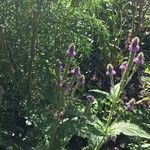
Verbena macdougalii
MacDougal verbena · Macdougal's vervain · New Mexico vervain
Description
Source: wikipedia (CC BY-SA)Verbena macdougalii is a species of verbena known by several common names, including MacDougal verbena, New Mexico vervain, hillside verbena, and spike verbena. It is a perennial herbaceous flowering plant in the verbena family (Verbenaceae). V. macdougalii is the most common tall verbena in New Mexico, where it can be found in mountainous regions across the state. It also occurs in Arizona, Utah, Colorado, and west Texas.
Care Guide
💧 Water
Macdougal Verbena thrives in moist environments and does best with consistent soil moisture, though it can tolerate dry periods. Watering it once a week is usually sufficient to keep it healthy. While it's mainly grown outdoors, seasonal rainfall is particularly beneficial during its crucial growth phases.
☀️ Light Full sun
Sunlight exposure strongly influences both the growth and the health of the macdougal verbena. Native to areas with plentiful sun, it performs best when given ample light, although it can tolerate reduced sunlight. Its light requirements may shift slightly during different stages of growth. Either too little or too much light can negatively affect its well-being.
What are the sunlight requirements for Macdougal verbena?
Macdougal verbena thrives when it receives the appropriate amount of sunlight, which is crucial for its growth and health. It originates from environments with plentiful sunlight and performs best in abundant light, although it can tolerate some shade. The plant requires more than 6 hours of sunlight for full sun exposure, and about 3-6 hours for partial sun. It’s important to observe how sunlight moves through your garden to ensure your plants get a balance of light and shade for optimal growth.
How does sunlight exposure affect Macdougal verbena?
Sunlight exposure significantly affects the growth and health of Macdougal verbena. The plant thrives best under abundant light, a trait inherited from its natural, sun-rich habitats. However, its sunlight needs may vary slightly at different growth stages. Insufficient or excessive light can harm the plant’s well-being. Observing the plant’s reaction to its light environment, such as signs of stress or growth changes, can indicate if adjustments are needed to meet its sunlight requirements.
Can artificial lighting be used for Macdougal verbena, and how?
Yes, artificial lighting can be a vital solution for Macdougal verbena, especially when natural sunlight is insufficient, such as during winter or in less sunny locations. LED lights are recommended because they can be customized to provide specific wavelengths needed by plants. Full sun plants require 30-50W/sq ft, partial sun plants need 20-30W/sq ft, and shade plants require 10-20W/sq ft of artificial light. The light source should be placed 12-36 inches above the plant for 8-12 hours per day to mimic natural sunlight conditions.
What are the symptoms of inadequate sunlight for Macdougal verbena?
Symptoms of inadequate sunlight in Macdougal verbena include smaller new leaves, leggy or sparse growth, faster leaf drop, delayed or halted new growth, lighter-colored or yellowing leaves (chlorosis), sunscald, leaf curling, wilting, and leaf scorching. These symptoms indicate the plant is not receiving enough light, leading to a decrease in photosynthesis and overall health. Conversely, excessive sunlight can also cause issues like chlorosis, sunscald, and leaf scorching.
How can I ensure my Macdougal verbena gets enough sunlight?
To ensure your Macdougal verbena receives enough sunlight, gradually move the plant to a sunnier location, aiming for at least 6 hours of direct sunlight daily. For indoor plants, use a south-facing window or consider artificial lighting if moving the plant isn’t feasible. Outdoor and ground-planted specimens benefit from careful selection of planting sites with minimal sunlight obstructions. For plants that are large or not easily moved, adding artificial light or pruning surrounding foliage to increase sunlight exposure can be effective strategies. Transplanting smaller plants during their dormant period to a brighter location can also help.
🌡️ Temperature 5–35°C
Macdougal verbena can tolerate a wide span of temperatures, but its range may still be constrained by particular combinations of moisture and heat. It does best in warm summer climates with sufficient rainfall or watering. Extended periods of cloudy, rainy weather or prolonged high temperatures can increase the risk of Macdougal verbena dying. In winter, providing proper protection from the cold can boost the plant's survival chances.
💨 Humidity
🪴 Soil 6-7
🌱 Fertilizer
The best time to fertilize a Macdougal verbena is in early spring, as it comes out of dormancy and begins active growth. Fertilization supplies essential nutrients needed for healthy growth. Although Macdougal verbena has relatively low fertilizer requirements, applying fertilizer once a year can improve its survival and encourage better, longer-lasting flowers.
🪴 Pot & Repot
✂️ Pruning
Macdougal verbena is a hardy perennial known for its vibrant purple flowers. To keep the plant healthy and encourage bushier growth, prune it from early to late spring to remove any damaged stems. After the first bloom, trim back one-third of the plant. This will help promote a second round of blooming, maintain the plant's health, and control its size.
🌿 Propagating
🐛 Diseases & pets
☠️ Toxicity
Characteristics
- Plant Type
- Herb
- Life Cycle
- Perennial
- Genus
- Verbena
- Family
- Verbenaceae
- Hardiness Zone
- 4-9
- Mature Height
- 1.52 m
- Mature Spread
- 61 cm
- Leaf Color
- Green
- Leaf Type
- Deciduous
- Flower Color
- Purple, Lavender
- Flower Size
- 0.51 cm to 0.76 cm
- Bloom Time
- Summer
- Planting Time
- Spring, Summer, Autumn
- Harvest Time
- Late summer, Early fall, Mid fall