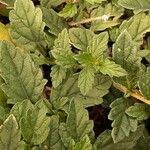
Verbena peruviana
Peruvian mock vervain
Description
Source: leafsnapVerbena peruviana, commonly known as Peruvian verbena, is a perennial flowering plant that belongs to the Verbenaceae family. Native to South America, it can be found in countries such as Peru, Argentina, and Chile. The plant typically grows between 1 to 2 feet tall and can spread up to 2 to 3 feet wide. The leaves of Verbena peruviana are dark green and arranged oppositely on the stem. The plant produces numerous small flowers that are bright pink or purple, blooming from spring until fall. Verbena peruviana prefers full sun exposure but can also tolerate partial shade. It thrives in well-drained soil and requires moderate watering. This plant is known for its ability to attract butterflies and hummingbirds, thanks to its nectar-rich flowers. In addition to its aesthetic appeal, Verbena peruviana possesses medicinal properties. It has anti-inflammatory effects when applied topically to the skin and can be used in tea form to alleviate digestive issues like bloating and gas. Overall, this low-maintenance perennial plant adds vibrant colors to gardens and landscapes while attracting pollinators, making it an excellent choice for any garden or landscape design project.
Care Guide
💧 Water Every 3 days
Keep plants evenly moist until established, when they can tolerate some dry spells. Verbena is somewhat drought tolerant, and it certainly does not do well in boggy conditions, but you must not underwater it either. Soggy plants will succumb to botrytis blight, but drought-stressed plants will attract spider mites. Water verbena as you might your lawn, with an inch of rain or irrigation each week.
☀️ Light Full sun
Peruvian mock vervain is a sun-loving perennial herbaceous plant that comes from open habitats and commonly grows in meadows and grasslands. It prefers full sun but can also tolerate partial sun.
🌡️ Temperature 15–37.8°C
Peruvian mock vervain adapts well to temperature, tolerating higher heat and large temperature swings. In hot conditions, care should be taken with watering and suitable shading should be provided to prevent sunburn. However, Peruvian mock vervain is relatively sensitive to low temperatures; it can endure some cold but very cold conditions can result in frost damage.
💨 Humidity
🪴 Soil 6-7
🌱 Fertilizer
The best time to fertilize a Peruvian mock vervain is in early spring, when it is coming out of dormancy and starting active growth. Fertilizing supplies essential nutrients for healthy development. Though Peruvian mock vervain needs relatively little fertilizer, an annual application can improve its survival and encourage better, longer-lasting blooms.
🪴 Pot & Repot
✂️ Pruning
All verbenas benefit greatly from regular deadheading. This not only removes the seed heads that signal the plant to rest but also helps to keep sprawling plants in their place in your landscape. If you have a large planting of low-growing verbena, you can accomplish this quickly with a string trimmer.
🌿 Propagating
🐛 Diseases & pets
☠️ Toxicity
Characteristics
- Plant Type
- Herb
- Life Cycle
- Perennial
- Genus
- Verbena
- Family
- Verbenaceae
- Hardiness Zone
- 8-11
- Mature Height
- 30 cm
- Mature Spread
- 61 cm
- Leaf Color
- Green
- Leaf Type
- Deciduous
- Flower Color
- Red
- Flower Size
- 2.03 cm to 3.05 cm
- Bloom Time
- All year round
- Planting Time
- Spring, Summer, Autumn
- Harvest Time
- All year round
- Native Area
- Bolivia, Peru