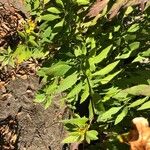
Verbesina alternifolia
Wingstem · Golden Honey Plant · Stickweed · Yellow Iron Weed · Alternate-leaved Crownbeard
Description
Source: leafsnapVerbesina alternifolia is a species of flowering plant in the family Asteraceae. It is commonly known as wingstem or yellow ironweed. It is native to North America.It is a larval host to the gold moth (Basilodes pepita) and the silvery checkerspot (Chlosyne nycteis).
🌳 Wingstem is often overlooked for its distinctive role in ecosystem services, especially in wetland restoration. The species prospers in wet meadows and marshes, making it an important contributor to water purification and habitat provision. Moreover, because it prefers moist soils, wingstem can function as a bioindicator of hydrologic changes in its surroundings, thereby supporting ecological monitoring and conservation efforts.
Care Guide
💧 Water Every week
Wingstem flourishes in moist, woodland-like settings and needs regular watering—about once a week—to stay healthy. Applying mulch is helpful for retaining soil moisture, as it mimics the natural leaf litter found in its habitat. This practice is essential for the plant's vitality and the development of lush foliage.
How should I water my Wingstem plant?
To properly water the Wingstem plant, it is best to use filtered water at room temperature. Tap water may contain harmful particles that can affect the plant's health. The Wingstem prefers warm environments, so using cold water can be a shock to its system. It is important to avoid overhead watering as it can lead to issues with the foliage. Instead, gently pour the filtered room temperature water directly onto the soil until it is fully saturated. This helps to moisten the roots and allows them to continue spreading and absorbing nutrients from the soil.
What should I do if I give my Wingstem plant too much or too little water?
The health of your Wingstem can be negatively affected by both overwatering and underwatering, but overwatering is a more common problem. When the Wingstem receives too much water, its stems and leaves may wilt and turn yellow. Overwatering for a prolonged period can also lead to diseases like root rot, mold, and mildew, which can be fatal to the plant. Underwatering is less common for the Wingstem because it is somewhat drought-tolerant. However, it can still occur, causing the leaves to become brittle and brown. It is important to recognize the signs of overwatering early on to prevent irreversible damage. If you notice these signs, reduce your watering immediately and check the soil's drainage quality. If the soil drains poorly, replace it with a loose, well-draining potting mix. Conversely, if your Wingstem shows signs of not receiving enough water, simply water it more regularly until the signs improve.
How much should I water my Wingstem?
If your Wingstem plant is in a pot, the most precise way to check if it needs water is by putting your finger in the soil. If the top two to three inches of soil feel dry, then it's time to water it. If you're growing your Wingstem outdoors in the ground, you can use a similar method to test the soil. When the first few inches of soil have dried out, it's time to water it. In the spring and early fall, you'll typically need to water this plant about once a week using this method. However, during extremely hot weather, you may have to water it twice or more per week. Keep in mind that mature, well-established Wingstem plants are tough and can survive drought conditions.
How much water does my Wingstem plant need?
To properly water your Wingstem, do not hold back on the amount of water you provide. Wait until the top two to three inches of soil are dry, then give the plant a deep and thorough watering. Make sure the entire soil is soaked by adding enough water. You should see excess water flowing out of the drainage holes at the bottom of the pot. If there is no excess water draining, it means you have not watered enough. However, be careful not to let water accumulate in the soil as it can harm the plant. On the other hand, if no water drains from the pot, it may indicate poor soil drainage, which is not good for the plant's health. Avoid this by ensuring the soil has proper drainage. If the plant is outdoors, one inch of rain per week should be sufficient.
How do I water my Wingstem plant as it grows?
The water needs of the Wingstem can vary depending on its growth stages. In the first few years or after transplanting, more water is needed. During these stages, the plant focuses on developing new roots to support future growth, so they require extra moisture. As the plant matures, less water is required. Additionally, during the bloom period, the plant may need more water as flower development consumes a significant amount of moisture.
☀️ Light Full sun
Wingstem thrives when regularly exposed to sunlight all day, but it can also do well if it receives light for only part of the day. Its native habitat gives it the capacity to tolerate various light conditions, although too much or too little sunlight can adversely affect the plant's normal growth.
What are the sunlight requirements for Wingstem (Verbesina alternifolia)?
Wingstem requires regular exposure to sunlight to thrive. It can flourish in full sun conditions, which means receiving more than 6 hours of sunlight daily, and can also do well in partial sun, with about 3-6 hours of sunlight. However, it's essential to observe how sunlight moves through your garden to choose spots that provide a balance of light and shade, ensuring the plants' health and happiness.
How does artificial lighting benefit indoor Wingstem plants, and what are the guidelines for using it?
Artificial lighting is crucial for indoor Wingstem plants, especially when natural sunlight is scarce, like in winter or less sunny spaces. It promotes faster, healthier growth. LED lights are recommended due to their ability to provide specific light wavelengths needed by plants. For full sun plants, 30-50W/sq ft is needed, partial sun plants require 20-30W/sq ft, and full shade plants need 10-20W/sq ft. The light source should be placed 12-36 inches above the plant to mimic natural sunlight, and most plants need 8-12 hours of light per day.
What are the signs of inadequate lighting in Wingstem plants?
Signs of inadequate lighting in Wingstem plants include small, newer leaves compared to mature ones, leggy or sparse growth, faster leaf drop, slower or halted growth, lighter-colored new leaves, chlorosis (yellowing leaves due to chlorophyll breakdown), sunscald (damaged leaves from excessive light), leaf curling, wilting from water loss, and leaf scorching indicated by brown, dry edges on leaves.
How can I manage sunlight exposure for Wingstem plants to ensure their health?
To ensure Wingstem plants' health, gradually increase their sunlight exposure to at least 6 hours daily. For indoor plants, use a south-facing window or artificial lights for 8 hours daily. Outdoors, adapt plants to sunlight gradually to avoid sunburn. Reduce obstructions like trees by pruning for more sunlight or consider transplanting smaller plants to sunnier locations during their dormant period, ensuring they have proper drainage.
🌡️ Temperature 5–32.2°C
The wingstem prefers a native growing environment with cool to warm temperatures. Optimal temperatures for growth are 41 to 89 ℉ (5 to 32 ℃). It will withstand freezing temperatures in winter, and in summer it flowers only in partial shade. The best way to manage temperature is to keep it consistent and avoid large fluctuations.
What temperatures are best for growing Wingstem?
Wingstem thrives in a range of temperatures from cool to warm, specifically from 41 to 89 °F (5 to 32 °C). It tolerates freezing temperatures during winter and prefers partial shade during summer to bloom. The plant benefits from consistent temperature maintenance and protection from extreme fluctuations. Wingstem is notably cold-resistant, generally not requiring special frost protection measures unless winter temperatures are forecasted to fall below -25°C. For optimal winter care, it's advised to water the plant abundantly before the first freeze in autumn, keeping the soil moist to prevent drought and water scarcity during colder months.
How does Wingstem respond to low temperatures?
Wingstem is quite tolerant to cold, thriving best when temperatures are above 5°C. During the winter, it's important to ensure temperatures remain above -20°C. Exposure to temperatures below -25°C may not show immediate damage during winter, but it can lead to a reduced sprouting rate or complete lack of sprouting in spring. If this occurs, removing parts of the plant that have failed to sprout in spring is recommended as a solution.
How should Wingstem be cared for in high temperatures?
During summer, Wingstem should ideally be kept below 32°C. Exposure to temperatures above 35°C can cause the leaves to lighten in color, curl, and become prone to sunburn. In severe cases, the plant may wilt and dry out completely. To mitigate these effects, it's advisable to trim away sunburned and dried parts of the plant, relocate it to a shaded area during midday and afternoon, or employ a shade cloth for protection. Adequate watering in the morning and evening helps maintain soil moisture, crucial for the plant's health in high temperatures.
What is the botanical name of Wingstem?
The botanical name of Wingstem is Verbesina alternifolia.
💨 Humidity
🪴 Soil 6-7
🌱 Fertilizer
One application of fertilizer in spring is generally adequate for Wingstem, though repeated feedings can boost growth to its fullest. Fertilize about once every month to a month and a half. Fertilization improves the leaves' appearance and function, helping maintain even color and a healthy texture. It also promotes root development and nutrient uptake, supporting the plant's long-term health.
🪴 Pot & Repot 2-3 years
When repotting Wingstem, select a pot 1–2 inches (2.5–5 cm) larger that provides good drainage. Use a well-draining potting mix. Repot in spring or fall, making sure the root ball is positioned slightly below the rim of the flower pot. Water thoroughly after repotting and keep it in a warm spot with indirect sunlight.
✂️ Pruning
Wingstem is characterized by its tall stems and vibrant yellow flowers. To maintain the plant's health, prune it in early spring. This involves removing dead stems and thinning out crowded branches, which improves air circulation and helps prevent disease. Always use clean tools and make cuts at a 45-degree angle to promote optimal healing.
🌿 Propagating
🐛 Diseases & pets
☠️ Toxicity
Characteristics
- Plant Type
- Herb
- Life Cycle
- Perennial
- Genus
- Verbesina
- Family
- Asteraceae
- Hardiness Zone
- 5-8
- Mature Height
- 1.22 m to 2.44 m
- Mature Spread
- 91 cm
- Leaf Color
- Green
- Leaf Type
- Deciduous
- Flower Color
- Yellow
- Flower Size
- 2.54 cm to 7.62 cm
- Bloom Time
- Mid summer
- Planting Time
- Spring
- Harvest Time
- Mid summer