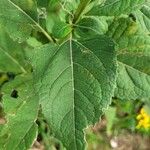
Verbesina occidentalis
Yellow crownbeard · Stickweed
Description
Source: leafsnapVerbesina occidentalis is a flowering plant in the family Asteraceae. The common names for Verbesina occidentalis are yellow crownbeard and stick weed. Verbesina occidentalis is often considered a weedy plant of disturbed areas, due its presence in managed agricultural areas such as hayfields.
🌳 Yellow crownbeard is not commonly acknowledged for its usefulness to humans but is important for sustaining pollinator communities. It produces abundant nectar that attracts many kinds of bees, butterflies, and other insects, helping pollinate nearby plants and thereby increasing biodiversity.
Care Guide
💧 Water
Yellow crownbeard is a versatile plant that thrives in different moisture conditions and demonstrates moderate drought tolerance. For best results, it should be watered consistently once a week. As an outdoor plant in temperate regions, yellow crownbeard is resilient to changes in rainfall. It prefers well-drained soil to achieve optimal growth.
How should I water my Yellow crownbeard plant?
To properly water the Yellow crownbeard, it is recommended to use filtered water at room temperature. Tap water may contain harmful particles that can affect the plant's health. The Yellow crownbeard is accustomed to a warm environment, so using cold water can be a shock to its system. Additionally, it is best to avoid overhead watering as it can cause problems with the foliage. Instead, simply apply filtered room temperature water directly to the soil until it is completely soaked. This method helps to moisturize the roots and promote their growth and nutrient absorption.
If I give my Yellow crownbeard too much or too little water, what should I do?
Overwatering is a common issue that can harm your Yellow crownbeard plant. It causes wilting and yellowing of the stems and leaves. Over time, it can also lead to root rot, mold, and mildew, which can be fatal to your plant. Underwatering is less common, but still possible. It causes the leaves to become brittle and brown. It's important to recognize the signs of overwatering early on as some of the damage may be irreversible if not addressed promptly. Reduce your watering schedule if you notice these signs and consider improving the soil drainage. If you see signs of underwatering, simply water more regularly until the signs disappear.
How often should I water my Yellow crownbeard plant?
If your Yellow crownbeard plant is in a pot, the most precise way to determine if it needs water is by checking the soil. Stick your finger into the soil and if you feel that the top two to three inches are dry, it's time to water it. If you are growing the Yellow crownbeard outdoors in the ground, you can use a similar method. When you find that the first few inches of soil have dried out, it's time to water it. During the spring and early fall seasons, following this method will typically lead you to water the plant about once a week. However, when extremely hot weather comes, you may need to water it twice a week or even more frequently. It's worth noting that mature and well-established Yellow crownbeard plants have a remarkable ability to withstand drought.
How much water does my plant called Yellow crownbeard need?
To properly water your Yellow crownbeard, make sure the top two to three inches of soil are dry before watering. Give the plant a thorough watering, making sure to soak the entire soil. Add enough water so that it drains through the bottom drainage holes. If you don't see water draining, you may have not watered enough. However, be careful not to let water accumulate in the soil, as this can be harmful to the plant. If the water isn't draining properly, it could be due to poorly draining soil, which should be avoided. If the plant is outdoors, 1 inch of rain per week should be enough.
How should I water my Yellow crownbeard as it grows?
The water requirements of the Yellow crownbeard vary based on its growth stages. When the plant is young or when it has just been transplanted, it requires more water than usual. During these stages, the Yellow crownbeard focuses on growing new roots that will support its future growth, and these roots perform best with slightly more moisture. As the plant matures, it will require less water. Additionally, during the bloom period, when the flowers are developing, the Yellow crownbeard may need more water to accommodate the increased moisture needs.
☀️ Light Full sun
Yellow crownbeard does best when given plentiful daytime sunlight and also handles moderate light levels well. Its growth peaks with uninterrupted sun exposure all day, though it can tolerate less intense light. Adequate solar energy is essential: too little limits growth, while too much can lessen its vigor.
What are the sunlight requirements for Yellow Crownbeard (Verbesina occidentalis)?
Yellow Crownbeard requires full sun, defined as above 6 hours of sunlight daily, for optimal growth but can also thrive in partial sun, about 3-6 hours of sunlight daily. Watching how sunlight moves through your garden will help you choose locations that provide the right balance of light and shade, ensuring the plant's well-being.
What essentials should be considered for growing Yellow Crownbeard?
For successful growth, Yellow Crownbeard needs abundant radiant energy during the day and adapts well to moderate luminosity levels. Its growth peaks under continuous solar exposure and can tolerate periods of less intense sun. Both natural sunlight and artificial lighting, such as LED lights, can support its growth. Artificial light should be 30-50W/sq ft for full sun plants, 20-30W/sq ft for partial sun plants, and 10-20W/sq ft for full shade plants, positioned 12-36 inches above the plant and provided for 8-12 hours per day.
How does insufficient light affect Yellow Crownbeard and what are the symptoms?
Inadequate lighting can cause several issues for Yellow Crownbeard, including smaller new leaves, leggy or sparse growth, faster leaf drop, halted growth, and signs of chlorosis. Symptoms of too much sunlight include sunscald, leaf curling, wilting, leaf scorching, and a loss of leaf greenness due to the breakdown of chlorophyll, indicating the plant's struggle with photosynthesis.
What solutions can help Yellow Crownbeard grow better in indoor, outdoor, and ground settings?
For indoor growth, gradually increase sunlight exposure to at least 6 hours daily or use artificial light. Outdoor plants should be moved gradually to sunnier spots to avoid sunburn. To improve light access for ground-planted Yellow Crownbeard, reduce obstructions by pruning or relocating the plant to a sunnier area. Note, parts of the plant already affected by insufficient light may not recover, but new growth should be healthy with increased light exposure.
🌡️ Temperature 10–35°C
Yellow crownbeard prefers to grow in areas with temperatures between 10 and 35 ℃ (50 and 95 ℉). It performs best in warm conditions but can tolerate cooler temperatures, making it well suited to temperate regions. In the warmer months it favors well-draining soil to help manage its temperature, while in winter it benefits from protection against strong winds to prevent damage to its foliage.
What is the ideal growth temperature for Yellow Crownbeard?
Yellow crownbeard, or Verbesina occidentalis, flourishes in a native growth environment where temperatures range between 10°C (50°F) and 35°C (95°F). This versatile plant is well-suited for temperate regions due to its capability to withstand both warm and cooler temperatures. It is most comfortable in warm temperatures, requiring well-draining soil during the warmer months for optimal temperature regulation. To prevent damage to its foliage in winter, shielding the plant from strong winds is beneficial. Yellow crownbeard exhibits strong cold resistance, typically obviating the need for special frost protection measures. However, if temperatures are anticipated to fall below -25°C, providing cold protection with materials like soil or straw is advisable. Ensuring the soil is moist before the arrival of the first freeze in autumn can help the plant avoid drought and water scarcity through the winter and into early spring.
How does Yellow Crownbeard respond to low temperatures?
Yellow crownbeard is notably cold-tolerant, thriving optimally when temperatures are maintained above 10°C but should be kept above -15°C during winter. Should temperatures plunge below -25°C, the plant might not exhibit immediate changes, but such extreme cold can lead to a decrease in sprouting or a complete absence of sprouting come spring. To mitigate these effects, it is recommended to remove any parts of the plant that have failed to sprout in spring.
What should be done if Yellow Crownbeard is exposed to high temperatures?
During the summer months, care should be taken to ensure that the temperature around the Yellow crownbeard does not exceed 35°C. Exposure to temperatures above 41°C can cause its leaves to lighten in color, become prone to curling, suffer from sunburn, and in severe cases, lead the plant to wilt and dry out. To address these issues, sunburned and dried parts of the plant should be trimmed away. The plant should be relocated to a shaded area or protected with a shade cloth to avoid direct midday and afternoon sun. Additionally, watering the plant thoroughly in the morning and evening is crucial to maintain soil moisture and support the plant’s health in high temperatures.
💨 Humidity
🪴 Soil 6-6
🌱 Fertilizer
Usually a single fertilizer application in spring is adequate for Yellow crownbeard, though multiple feedings can maximize growth. Apply fertilizer every one to one and a half months. Fertilization improves the leaves' appearance and function, supporting even color and a healthy texture. It also promotes root development and nutrient uptake for the plant's long-term health.
🪴 Pot & Repot
✂️ Pruning
The yellow crownbeard is a plant with tall stems and yellow flowers that benefits greatly from spring pruning. To encourage new growth, it's important to trim old stems. You can also reduce the plant's height as needed and remove spent flowers to extend the blooming period. Pruning while the plant is actively growing improves its health and helps manage its size. Always use clean tools when pruning to prevent the spread of disease.
🌿 Propagating
🐛 Diseases & pets
☠️ Toxicity
Characteristics
- Plant Type
- Herb
- Life Cycle
- Perennial
- Genus
- Verbesina
- Family
- Asteraceae
- Hardiness Zone
- 6-10
- Mature Height
- 2.13 m
- Mature Spread
- 46 cm to 61 cm
- Leaf Color
- Green, Dark Green
- Leaf Type
- Deciduous
- Flower Color
- Yellow
- Flower Size
- 5.08 cm to 7.62 cm
- Bloom Time
- Mid summer
- Planting Time
- Spring, Summer, Autumn
- Harvest Time
- Mid summer, Late summer, Early fall