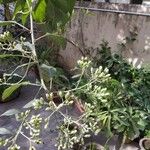
Verbesina virginica
Frostweed · Virginia crownbeard · White crownbeard · Texas Crownbeard
Description
Source: leafsnapVerbesina virginica, commonly known as Frostweed or White Crownbeard, is a perennial herbaceous plant belonging to the Asteraceae family. Native to eastern North America, it thrives in moist soils along streams, meadows, and woodlands. This plant can grow up to 6 feet tall and features a stout stem with large leaves that are either ovate or lanceolate in shape. The leaves are dark green on the top side and a lighter shade of green underneath. Verbesina virginica produces white or cream-colored flowers that bloom from late summer through fall. A unique characteristic of this plant is its ability to generate "frost flowers" during freezing temperatures. When the water inside the stem freezes, it expands and causes the stem to split open, creating delicate ice formations that resemble flowers. Native Americans have utilized Verbesina virginica for medicinal purposes to treat various ailments such as fever, coughs, colds, and wounds. However, it is important to use this plant under medical supervision due to its potential toxicity. Overall, Verbesina virginica is an intriguing plant with unique features, making it an attractive addition to gardens. Additionally, its historical medicinal uses by Native Americans lend it cultural significance.
🌳 Frostweed can form ice structures along its stems as temperatures fall, a capability that has fascinated naturalists and also inspired artists and photographers. While it is not widely known for traditional uses like producing pigments or sweeteners, this occurrence — called crystallofolia — takes place when the plant's stem ruptures and its sap leaks out, freezing into delicate patterns that attract observers and create a microhabitat for small creatures during frosty conditions.
🎭 Gentle, pale, change shape
Care Guide
💧 Water Every 7 days
Frostweed flourishes in moist environments, similar to those found along stream banks. It needs weekly watering and thrives best outdoors, with its growth cycle highly reliant on water availability during active growing seasons.
How should I water my Frostweed plant?
To properly water the Frostweed, it is recommended to use filtered water at room temperature. Tap water may contain harmful particles, so filtered water is preferred. The reason for using room temperature water is that the Frostweed is accustomed to warm environments and cold water may shock it. It is important to avoid overhead watering as it can cause issues with the foliage. Instead, water the plant by applying filtered room temperature water directly to the soil until it is completely soaked. This will benefit the plant by moisturizing the roots and allowing them to spread throughout the soil to gather essential nutrients.
What should I do if I give my Frostweed too much or too little water?
Overwatering can harm your Frostweed by causing wilting, yellowing leaves, and potential diseases like root rot, mold, and mildew. Underwatering is less likely but can cause brittle, brown leaves. It's important to recognize the signs of overwatering early and adjust your watering schedule accordingly. If you notice these signs, reduce watering and check the soil's drainage. Replace poorly draining soil with a loose, well-draining potting mix. If your Frostweed shows signs of underwatering, simply increase your watering frequency until the signs disappear.
How often do I need to water my Frostweed plant?
If your Frostweed is in a pot, the best way to check if it needs water is to stick your finger into the soil. If the top two to three inches are dry, it's time to water it. If your Frostweed is planted in the ground outdoors, you can use the same method to test the soil. When the top few inches are dry, it's time to water. In spring and early fall, you'll usually need to water once a week. In extremely hot weather, you may need to water twice a week or more. However, mature Frostweed plants can tolerate drought well.
How much water does my Frostweed plant need?
To properly water your Frostweed, don't hold back on the amount of water you give. Ensure that the first two to three inches of soil are dry before watering, and when you do, make sure to thoroughly soak the soil. The water you add should be enough to cause excess water to drain out through the pot's drainage holes. If you don't see water flowing out, it means you haven't watered enough, but be careful not to let water accumulate inside the soil, as it can harm the plant. On the other hand, if water doesn't drain properly, it indicates poorly draining soil, which is bad for the plant's health and should be avoided. If the plant is placed outside, receiving 1 inch of rain per week will be enough.
How do I water my Frostweed as it grows?
The water needs of the Frostweed can vary depending on its growth stages. When your Frostweed is in the early years or has just been transplanted, it will require more water than usual. During these stages, the plant focuses a lot of energy on growing new roots, which need extra moisture to support future growth. As the plant matures, it will require less water. Another stage in which the Frostweed may need more water is during the bloom period. Flower development requires a significant amount of moisture, so you may need to provide additional water at this time.
☀️ Light Partial sun
Frostweed performs best with moderate sun exposure, though it can adjust to areas with strong sunlight. Native to habitats of dappled shade, this plant’s growth, health, and flowering benefit from adequate light but can be harmed by prolonged, intense exposure.
What are the sunlight requirements for Frostweed?
Frostweed, or Verbesina virginica, requires moderate sun exposure to thrive, but it can adapt to more intensive sunlight conditions. It's recommended to provide the plant with about 3-6 hours of sunlight daily for partial sun exposure, and more than 6 hours for full sun conditions. However, it's crucial to notice how sunlight moves through your garden to find the perfect balance of light and shade for your plants, ensuring their health and happiness.
Can Frostweed grow indoors and how should it be managed?
Yes, Frostweed can grow indoors, especially in conditions where natural sunlight is insufficient. It's important to use artificial lighting to provide adequate light for optimal growth. LED lights are preferred due to their ability to offer specific wavelengths necessary for plant growth. For full sun plants, including Frostweed when grown indoors, 30-50W/sq ft of artificial light is needed. The light source should be placed 12-36 inches above the plant and kept on for 8-12 hours per day to mimic natural daylight hours.
What are the signs of light deficiency in Frostweed?
When Frostweed receives insufficient light, several symptoms may indicate light deficiency: smaller new leaves, leggy or sparse growth, faster leaf drop, slower or no new growth, lighter-colored new leaves, chlorosis (yellowing), sunscald, leaf curling, wilting, and leaf scorching. These symptoms reflect the plant's struggle with inadequate light conditions, affecting its growth, health, and ability to photosynthesize efficiently.
What solutions are available for Frostweed suffering from light deficiency?
To combat light deficiency in Frostweed, gradually adapting your plant to direct sunlight or providing additional artificial light are effective solutions. For indoor plants, increasing sun exposure incrementally or using artificial light like desk or ceiling lamps for at least 8 hours daily can help. Outdoors, moving your plants to sunnier spots gradually is key to avoiding sunburn. Additionally, for plants in the ground, reducing obstructions like pruning trees or transplanting to sunnier locations with good drainage can greatly benefit the plant's access to sunlight. Remember, parts of the plant that were previously affected may not recover, but new growth should be healthy with improved light conditions.
🌡️ Temperature 15–37.8°C
Frostweed originates from areas where temperatures fall between 68 and 100 °F (20 to 38 ℃). It favors a warm climate and might need seasonal adjustments in colder areas to preserve ideal temperatures for growth.
What is the native environment and optimal temperature range for Frostweed?
Frostweed, botanically known as Verbesina virginica, thrives natively in environments where the temperatures range from 68 to 100 °F (20 to 38 °C). This plant prefers warm climates and may require seasonal adjustments in colder regions to ensure its growth temperatures remain optimal. Despite its preference for warmth, Frostweed has some degree of cold tolerance and can usually withstand temperatures above 0°C without needing additional protection. However, when temperatures are expected to dip below freezing, temporary measures such as wrapping the plant with plastic film, fabric, or other protective materials are necessary. These protections should be removed once the temperature rises to ensure the health of the plant.
How does Frostweed react to low temperatures and how can it be protected?
Frostweed exhibits moderate tolerance to low temperatures, performing optimally when the temperature remains above 20°C. In the winter, it's crucial to keep the environment above 0°C to prevent damage. If temperatures fall below -10°C, Frostweed's leaves may begin to droop, and in severe cases, leaves will wilt and eventually fall off. To protect Frostweed from low temperatures, the frost-damaged parts should be trimmed away, and prior to experiencing cold again, the plant should be wrapped with non-woven fabric or cloth. Additionally, constructing a wind barrier can help protect the plant from cold winds, further safeguarding it from frost damage.
What effects do high temperatures have on Frostweed, and how can these be mitigated?
During the summer, it's important to ensure that Frostweed's environment does not exceed 38°C, as high temperatures can cause significant stress to the plant. Exposure to temperatures above 43°C can lead to leaves lightening in color, drying and withering of leaf tips, curling of the leaves, and an increased likelihood of sunburn. To mitigate the effects of high temperatures, sunburned and dried parts of the plant should be trimmed away. The plant should be moved to a shaded location or provided with shade cloth to protect it from midday and afternoon sun. Watering the plant in the morning and evening can also help keep the soil moist, reducing the stress on Frostweed during high-temperature periods.
💨 Humidity
🪴 Soil 6-7
🌱 Fertilizer
Typically, one fertilizer application in spring is enough for Frostweed, although several feedings can optimize growth. Fertilize about once a month to every six weeks. Fertilization improves the appearance and function of the leaves, helping maintain uniform color and a healthy texture. It also promotes root development and enhances nutrient uptake for the plant’s long-term health.
🪴 Pot & Repot
✂️ Pruning
Frostweed is a perennial plant known for its unique winter ice formations. To maintain its health and appearance, it's important to prune it from early to late spring. Focus on removing dead stems and leggy growth to promote bushiness and improve air circulation. Regular pruning helps keep the plant healthy and enhances its overall look.
🌿 Propagating
🐛 Diseases & pets
☠️ Toxicity
Characteristics
- Plant Type
- Herb
- Life Cycle
- Perennial, Biennial
- Genus
- Verbesina
- Family
- Asteraceae
- Hardiness Zone
- 8-11
- Mature Height
- 1.37 m
- Mature Spread
- 91 cm
- Leaf Color
- Green
- Leaf Type
- Deciduous
- Flower Color
- White
- Flower Size
- 7.62 cm to 15.24 cm
- Bloom Time
- Mid summer, Late summer
- Planting Time
- Winter
- Harvest Time
- Late summer, Fall