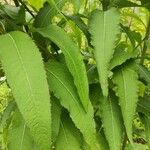
Vernonia baldwinii
Western ironweed · Baldwin's ironweed · Interior ironweed · Ironweed · Inland ironweed
Description
Source: leafsnapVernonia baldwinii, the western ironweed or Baldwin's ironweed, is a perennial herb native to central North America.
🌳 At first glance Baldwin's ironweed might look like an ordinary wildflower, but its capacity to draw a range of pollinators — bees, butterflies, and birds — makes it a keystone species for maintaining ecosystem health and diversity. In addition, its vivid purple blooms are not only pleasing to look at but could be used as natural dyes, providing an eco-friendly alternative to synthetic colorants.
Care Guide
💧 Water
Baldwin's ironweed thrives in well-drained soil with consistent moisture and benefits from weekly watering to maintain optimal health. Once established, its strong root system provides moderate drought tolerance. This versatile plant adapts to various climate zones and can flourish outdoors, maintaining lush foliage despite changes in rainfall.
How should I water my Baldwin's ironweed plant?
To properly water the Baldwin's ironweed, use filtered water at room temperature. Tap water may contain harmful particles, making filtered water the better choice. The plant prefers warm environments, so avoid using cold water as it can shock the system. Instead of overhead watering, apply the filtered room temperature water directly to the soil until it is fully soaked. This method benefits the plant by moistening the roots and aiding their spread through the soil to gather nutrients.
What should I do if I give too much or too little water to my Baldwin's ironweed?
Overwatering can be more harmful to the health of your Baldwin's ironweed compared to underwatering. Overwatering causes wilting and yellowing of the stems and leaves, and if prolonged, can lead to diseases such as root rot, mold, and mildew, which can be fatal to the plant. Underwatering is less common, as Baldwin's ironweed is tolerant to drought. However, it is still possible, and signs include brittle and brown leaves. It is important to be vigilant for signs of overwatering and take action promptly to prevent irreversible damage. If signs are detected, reduce watering immediately and check the soil quality. If the soil does not drain well, replace it with a loose, well-draining potting mix. Conversely, if signs indicate insufficient water, increase watering until the signs improve.
How many times a week should I water my Baldwin's ironweed plant?
If your Baldwin's ironweed is in a pot, the best way to determine if it needs water is to check the soil. Stick your finger into the soil and if the top two to three inches are dry, it's time to water it. For Baldwin's ironweed grown outdoors in the ground, you can use a similar method to test the soil. When the top few inches of soil have dried out, it's time to water. In the spring and early fall, you'll typically need to water this plant about once a week using this method. However, during extremely hot weather, you may need to water it two or more times a week. It's worth noting that mature, well-established Baldwin's ironweed can withstand drought fairly well.
How much water does my Baldwin's ironweed plant need?
To properly water your Baldwin's ironweed, don't hold back on the amount of water you give. When the top two to three inches of soil are dry, give it a thorough watering, making sure to completely soak the soil. You'll know you've added enough water when you see excess water draining from the pot's drainage holes. If no water is draining, then you have likely not watered enough. However, be careful not to let water accumulate in the soil, as this can harm the plant. On the other hand, if the water is not draining properly, it could be a sign of poorly draining soil, which is not good for the plant's health. If the ironweed is planted outside, receiving about 1 inch of rain per week should be sufficient.
How should I water my Baldwin's ironweed as it grows?
The water needs of the Baldwin's ironweed depend on its growth stages. When it is in its early years or has been transplanted to a new location, it requires more water. During these stages, the plant expends a lot of energy on developing new roots, which need extra moisture to support future growth. As the plant matures, it will require less water. Additionally, during the bloom period, the flower development requires a significant amount of moisture, so it may need more water at this time.
☀️ Light Full sun
Baldwin's ironweed grows best in plentiful light. It can tolerate partial shade, but it does best with strong, abundant sunlight throughout the day. Its natural habitat provides ample light, which supports healthy growth. Both too little light and too much exposure can hinder its ability to thrive.
What are the sunlight requirements for Baldwin's Ironweed?
Baldwin's Ironweed thrives in full to partial sun exposure. It requires above 6 hours of sunlight (full sun) daily for optimal growth but can tolerate about 3-6 hours of sunlight (partial sun). Observing how sunlight moves through your garden will help in choosing the perfect spots that provide a balance of light and shade, ensuring the plants' happiness.
What essentials should be considered for growing Baldwin's Ironweed successfully?
Baldwin's Ironweed primarily thrives under abundant light. It performs best with ample, intense sunlight throughout the day, mirroring its natural habitat conditions for healthy growth. Both inadequate and overexposure to light can impede its flourishing process. In cases of insufficient natural sunlight, especially indoor or during winter, artificial lighting can be a vital solution, promoting faster, healthier growth. LED lights are recommended, providing specific wavelengths needed by plants. For indoor plants, 30-50W/sq ft is advised for full sun plants, 20-30W/sq ft for partial sun plants, and 10-20W/sq ft for full shade plants. The correct distance (12-36 inches) and duration (8-12 hours per day) of artificial light should mimic natural sunlight as closely as possible.
What are the symptoms of light deficiency or overexposure in Baldwin's Ironweed?
Symptoms of light deficiency in Baldwin's Ironweed include smaller new leaves, leggy or sparse growth, faster leaf drops, slower or no new growth, and lighter-colored new leaves indicating insufficient sunlight. Conversely, symptoms like chlorosis, sunscald, leaf curling, wilting, and leaf scorching manifest due to excessive sunlight exposure, affecting the plant's overall health. These conditions underscore the importance of optimal sunlight exposure for the plant.
How can I address sunlight-related issues for Baldwin's Ironweed?
For indoor plants, gradually move them to a sunnier spot each week until they receive at least 6 hours of direct sunlight daily, preferably using a south-facing window. If moving the plant isn't feasible, consider using artificial light, keeping a desk or ceiling lamp on for at least 8 hours daily or investing in professional grow lights. For outdoor plants, adapt them gradually to sunnier locations to avoid shock and sunburn. Minimizing obstructions, such as pruning obstructive branches, can improve sunlight exposure. If necessary, transplanting smaller plants during their dormant period into areas with ample sunlight and good drainage can address insufficient light issues. Note that while parts of the plant affected by inadequate light may not recover, increasing light exposure will ensure new growth is healthy.
🌡️ Temperature 5–35°C
Baldwin's ironweed, native to temperate regions, prefers temperatures between 41 and 95 ℉ (5 and 35 ℃). It can tolerate higher temperatures during the growing season, but should be kept out of direct sunlight to avoid overheating. In colder months, it must be protected from frost to ensure its survival.
What is the preferred temperature range for Baldwin's ironweed?
Baldwin's ironweed, botanically known as Vernonia baldwinii, thrives in a temperature range of 41 to 95°F (5 to 35°C). It's native to temperate regions and can handle warmer temperatures during the growing season. However, to avoid overheating, it's advised to keep the plant out of direct sunlight. During colder months, protection from frost is necessary for survival, although the plant has strong cold resistance and typically doesn't require special frost protection measures. If winter temperatures are expected to drop below -25°C, cold protection can be provided by covering the plant with soil or straw. Watering the plant abundantly before the first freeze in autumn helps ensure the soil remains moist and enters a frozen state, aiding the plant through winter and early spring.
What should be done if Baldwin's ironweed is exposed to temperatures below its cold tolerance level?
Baldwin's ironweed is highly cold-tolerant, performing best when temperatures are kept above 5°C. During winter, it should not be exposed to temperatures below -20°C. Should temperatures fall below -25°C, the plant may not show noticeable changes immediately, but there could be a decrease in sprouting or even no sprouting at all come springtime. In such cases, the recommended solution is to remove any parts of the plant that have failed to sprout in the spring, helping to promote new growth and preserve the plant's health.
How should Baldwin's ironweed be cared for during high temperatures?
In the summer, Baldwin's ironweed should ideally be kept in conditions below 35°C. Exposure to temperatures above 38°C can cause the leaves to lighten in color, become prone to curling, susceptible to sunburn, and the plant might wilt and dry out in severe cases. To mitigate these issues, trim away any sunburned or dried-up parts of the plant. Move the plant to a shaded location or use a shade cloth to protect it from the midday and afternoon sun. Additionally, watering the plant in the morning and evening will help keep the soil consistently moist, protecting the plant from the heat.
💨 Humidity
🪴 Soil 6-7
🌱 Fertilizer
A single fertilization in spring is generally enough for Baldwin's ironweed, though several feedings can maximize growth. Apply fertilizer about once every month to month and a half. Fertilizing improves the leaves' appearance and function, helping them maintain even color and a healthy texture. It also promotes root development and nutrient uptake, supporting the plant's long-term health.
Why should I put fertilizer on my Baldwin's ironweed?
The main structure of the Baldwin's ironweed is made up of its leaves. Fertilization is a powerful method to ensure that these leaves look fabulous and perform their function effectively. When properly fertilized, the Baldwin's ironweed will maintain leaves with consistent color and a healthy texture. Moreover, fertilization supports the plant's root system by promoting the growth of new roots and maintaining existing ones below the soil surface. This means that fertilization not only keeps the plant healthy in the present but also improves its ability to absorb soil nutrients in the future.
When should I put fertilizer on my Baldwin's ironweed?
If you have a Baldwin's ironweed plant growing outdoors, it will start to show new growth in the early spring. This is a signal that it's time to start fertilizing for the year. Usually, a single application of fertilizer in the spring is sufficient for a Baldwin's ironweed. However, if you want to promote maximum growth, you can fertilize it multiple times during the spring and early summer. In this case, you can feed your Baldwin's ironweed once every month to a month and a half.
When is it better to not put fertilizer on my Baldwin's ironweed?
During the late fall and winter, your Baldwin's ironweed will go into a dormant phase and stop producing new growth. It is best to avoid fertilizing your Baldwin's ironweed during this time. In the spring and summer, if you choose to fertilize, gradually reduce the amount of fertilizer as summer approaches because the growth rate of your Baldwin's ironweed will slow down. In general, it is not recommended to fertilize your Baldwin's ironweed during extremely hot weather or when the soil is excessively dry. Fertilizing in these conditions can cause stress and premature death of your Baldwin's ironweed.
What kind of fertilizer does my Baldwin's ironweed plant need?
Choosing the best fertilizer for a Baldwin's ironweed is simple. A general-purpose garden fertilizer with equal amounts of nitrogen, phosphorus, and potassium will make these plants thrive. Fertilizers with a 10-10-10 ratio or similar will work well. Avoid high-nitrogen fertilizers when unsure. Granular slow-release fertilizers are the most recommended for Baldwin's ironweed and easy to apply. Additionally, feeding with organic soil amendments like compost can be beneficial.
How should I add fertilizer to my Baldwin's ironweed plant?
To ensure the healthy growth of your Baldwin's ironweed plant, wait until early spring when the first leaves start emerging from the soil. At this point, you can apply a granular slow-release fertilizer with a balanced formula to the soil around the base of the plant. If desired, you can repeat this fertilization process later in the season. Remember to apply the fertilizer to the soil, not the plant itself, which may involve moving some leaves to access the soil near the roots. Additionally, it's recommended to water your Baldwin's ironweed before and after fertilizing for optimal results.
🪴 Pot & Repot 2-3 years
When repotting Baldwin's ironweed, select a pot 1-2 inches (2.5–5.1 cm) larger that provides good drainage. Use a well-draining potting mix. Repot in spring or fall, making sure the root ball sits slightly below the rim of the flower pot. Water thoroughly after repotting and keep it in a warm spot with indirect sunlight.
✂️ Pruning
To keep Baldwin's ironweed healthy and vibrant, prune it from early to late spring. Start by removing any dead stems to improve its health and airflow. Cutting it back by one-third encourages more blooming, and regular deadheading supports continued growth. Consistent maintenance helps rejuvenate older plants, ensuring that Baldwin's ironweed remains vibrant and resistant to disease.
🌿 Propagating
🐛 Diseases & pets
☠️ Toxicity
Characteristics
- Plant Type
- Herb
- Life Cycle
- Perennial
- Genus
- Vernonia
- Family
- Asteraceae
- Hardiness Zone
- 5-9
- Mature Height
- 1.22 m
- Mature Spread
- 0.61 m to 1.22 m
- Leaf Color
- Green
- Leaf Type
- Deciduous
- Flower Color
- Purple, Lavender
- Flower Size
- 2.54 cm
- Bloom Time
- Mid summer
- Planting Time
- Spring, Summer, Autumn
- Harvest Time
- Mid summer, Late summer