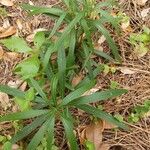
Vernonia gigantea
Giant ironweed · Tall ironweed
Description
Source: leafsnapVernonia gigantea (also known as giant ironweed, tall ironweed or ironweed) is a species of perennial plant from family Asteraceae found in United States and Canada. The plant is native to the eastern United States, north to New York state and Ontario, and southwest to Texas.
🌳 Beyond its ornamental appeal, giant ironweed plays an important role in habitat restoration and soil stabilization projects. Its strong root system makes it well suited for erosion control and for reclaiming land disturbed by human activity or natural forces. Additionally, giant ironweed is an essential food source for pollinators such as butterflies, providing nectar when other sources are scarce, thereby supporting biodiversity and ecological balance.
🎭 Feelings, thoughts and actions
Care Guide
💧 Water Every week
Giant ironweed thrives in moist environments and needs regular watering, about once a week. However, once it is established, it can tolerate drought conditions. It grows well outdoors, where it benefits from natural rainfall, making it an excellent choice for rain gardens. Its robust nature and adaptability to different moisture levels contribute to its suitability for these areas.
☀️ Light Full sun
Giant ironweed does best when it receives a large portion of the day's sunlight. It can also tolerate moderately shaded conditions. In its native habitat it prospered in clearings and along edges where sunlight was common. Insufficient light can limit its growth, while too much exposure can cause leaf scorch.
What are the sunlight requirements for Giant ironweed?
Giant ironweed thrives best in full sun conditions, requiring more than 6 hours of sunlight a day. It can also tolerate partial sun, getting about 3-6 hours of sunlight. Observing how sunlight moves through your garden can help in choosing spots that provide a balance of light and shade, ensuring the plant's well-being. In its natural habitat, Giant ironweed prospered in clearings and edges where sunlight was abundant. Insufficient sunlight can hinder its growth, while too much direct exposure can cause leaf scorch.
How can artificial lighting benefit indoor plants like Giant ironweed?
Indoor plants, including Giant ironweed, require adequate lighting for optimal growth. Artificial lighting becomes crucial when natural sunlight is insufficient, especially during winter or in less sunny spaces. LED lights are a preferred choice for artificial plant lighting due to their ability to provide specific light wavelengths needed by plants. For full sun plants, 30-50W/sq ft of artificial light is recommended, 20-30W/sq ft for partial sun plants, and 10-20W/sq ft for full shade plants. The light source should be placed 12-36 inches above the plant, mimicking natural sunlight as closely as possible. Most plants will need 8-12 hours of light per day.
What are the symptoms of inadequate light exposure in Giant ironweed?
When Giant ironweed doesn't receive enough light, several symptoms can appear. These include smaller new leaves compared to older ones, leggy or sparse growth with longer spaces between leaves or stems, faster leaf drop as the plant conserves resources, delayed growth or a complete halt in new leaf production, and lighter-colored or pale new leaves indicating a lack of chlorophyll. Additionally, symptoms like chlorosis (yellowing of the leaves), sunscald (damage from intense sunlight), leaf curling, wilting from excessive water loss, and leaf scorching may also be observed. These symptoms highlight the plant's struggle with inadequate sunlight or excessive exposure.
How can you address light exposure issues for Giant ironweed, both indoors and outdoors?
To optimize Giant ironweed's growth considering light exposure, gradually increase sunlight exposure to at least 6 hours daily. For indoor plants, use a south-facing window or supplemental artificial light for at least 8 hours daily. Outdoor plants should be moved to sunnier spots gradually over weeks to avoid sudden light intensity changes and potential sunburn. Removing obstructions like pruning obstructive branches can help outdoor plants receive more sunlight. Transplanting to a sunnier location with good drainage is advisable for smaller or potted plants. Note that parts of the plant damaged by insufficient light may not recover, but new growth should be healthy if light conditions are improved.
🌡️ Temperature 5–35°C
The native temperature conditions for giant ironweed are fairly adaptable. It favors a range of 5 to 35 ℃ (41 to 95 ℉) for optimal growth. In winter, it is advisable to reduce the temperature to 5 to 20 ℃ (41 to 68 ℉) to ensure proper dormancy.
What are the ideal temperature ranges for Giant Ironweed's growth and winter dormancy?
Giant Ironweed (Vernonia gigantea) thrives in a native growth environment with temperature ranges between 5 to 35°C (41 to 95°F) for optimal growth. During the winter months, it's recommended to adjust the temperature range to 5 to 20°C (41 to 68°F) to ensure the plant enters proper dormancy. These temperature adjustments help in maintaining the health and growth potential of the Giant Ironweed across different seasons.
Is special frost protection necessary for Giant Ironweed in winter?
Giant Ironweed possesses strong cold resistance, making special frost protection measures generally unnecessary. However, for temperatures expected to drop below -25°C, it's important to implement cold protection strategies. This includes covering the plant with insulating materials such as soil or straw. Before the advent of the first freeze in autumn, ensure the plant is watered abundantly, so the soil stays moist and freezes in that state, preventing drought and water scarcity during the colder months.
What symptoms indicate Giant Ironweed is affected by extremely low temperatures, and what are the solutions?
Giant Ironweed shows remarkable cold tolerance and typically thrives best when the temperature remains above 5°C. During winter, the plant should be kept at temperatures above -20°C. If temperatures fall below -25°C, you might not see immediate changes during winter, but there may be a noticeable decrease in sprouting, or the plant may not sprout at all come spring. In such cases, it is advisable to remove any parts of the plant that fail to sprout as part of the recovery process.
How does high temperature affect Giant Ironweed, and how can these effects be mitigated?
During the summer, it is crucial for Giant Ironweed's well-being that it is kept under 35°C. Exceeding 38°C can lead to several stress symptoms; the leaves may lighten in color, become prone to curling, susceptible to sunburn, and in severe cases, the plant might wilt and become dry. To mitigate these effects, trim away sunburned and dried-up parts, move the plant to a shadier location, or employ a shade cloth to protect it from intense midday and afternoon sun. Additionally, ensure the soil remains moist by watering the plant during cooler morning and evening hours.
💨 Humidity
🪴 Soil 5-6
🌱 Fertilizer
One fertilizer application in spring is generally adequate for Giant ironweed, though repeated feedings can maximize growth. Apply fertilizer about once every month to a month and a half. Fertilization improves the leaves' appearance and function, maintaining consistent color and healthy texture. It also promotes root development and nutrient uptake, supporting long-term plant health.
🪴 Pot & Repot 2-3 years
When repotting Giant ironweed, select a pot 1–2 inches (2.5–5.1 cm) larger that provides good drainage. Use a well-draining potting mix. Repot in spring or fall, making sure the root ball sits slightly lower than the rim of the pot. Water thoroughly after repotting and place in a warm spot with indirect sunlight.
✂️ Pruning
To ensure giant ironweed thrives, it's important to regularly prune it from early to late spring. This process not only encourages growth but also boosts bloom production. Begin by removing any dead stems, and then trim back about one-third of the growth from the previous year. This helps maintain the plant's shape and improves airflow. Effective pruning enhances the appearance and health of giant ironweed, resulting in a striking display.
🌿 Propagating
🐛 Diseases & pets
☠️ Toxicity
Characteristics
- Plant Type
- Herb
- Life Cycle
- Perennial
- Genus
- Vernonia
- Family
- Asteraceae
- Hardiness Zone
- 5-9
- Mature Height
- 0.91 m to 2.13 m
- Mature Spread
- 0.91 m to 1.83 m
- Leaf Color
- Green
- Leaf Type
- Deciduous
- Flower Color
- Purple, Lavender
- Flower Size
- 2.54 cm
- Bloom Time
- Early summer, Mid summer
- Planting Time
- Autumn
- Harvest Time
- Mid summer, Late summer