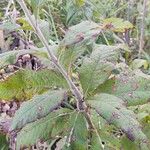
Vernonia missurica
Missouri Ironweed
Description
Source: leafsnapVernonia missurica, the Missouri ironweed, is a species of magenta-flowered perennial plant from family Asteraceae native to the central and east central United States.
🌳 Missouri ironweed serves as a focal point for pollinators, providing plentiful nectar that draws butterflies, bees, and other beneficial insects. Its value reaches beyond ecological function to include aesthetic appeal, with vivid purple blooms making it a popular choice for native plant gardens and organic landscaping. The plant's ornamental traits have led to interest in its cultivation and conservation, representing a blend of beauty and ecological usefulness.
Care Guide
💧 Water Every week
Missouri ironweed naturally grows in moist prairies and floodplains, flourishing in consistently wet conditions. To encourage lush growth, it's best to water it weekly. As an outdoor perennial, it thrives on rainwater, which helps support its robust growth during peak seasons.
☀️ Light Full sun
Missouri ironweed grows best when it gets abundant light, which is common in its natural habitats. Both too much and too little light can be harmful: too much may cause withered leaves, while too little can lead to stunted growth. This need for ample light continues through all stages of its development.
What are the sunlight requirements for Missouri Ironweed?
Missouri Ironweed requires full sun, meaning it should receive more than 6 hours of sunlight daily. It's crucial to find spots in your garden that strike a perfect balance between light and shade to ensure the plant's well-being. Too much or too little sunlight can lead to issues such as withered leaves or stunted growth, highlighting the importance of ample light throughout its growth stages.
How can artificial lighting benefit indoor Missouri Ironweed plants?
For indoor Missouri Ironweed plants, artificial lighting serves as a vital alternative when natural sunlight is insufficient, especially in winter or in less sunny locations. LED lights are recommended because they can be customized to the specific light wavelengths needed by the plant. Depending on whether plants require full sun, partial sun, or shade, the wattage per square foot varies. Proper distance (12-36 inches above the plant) and duration (8-12 hours per day) of light exposure are crucial for mimicking natural sunlight conditions and ensuring healthy growth.
What are the signs of inadequate lighting for Missouri Ironweed?
Signs of inadequate lighting in Missouri Ironweed include the development of smaller leaves, leggy or sparse growth, faster leaf drop, slowed or halted growth, and lighter-colored or chlorotic leaves. Conditions like sunscald, leaf curling, wilting, and leaf scorching can occur under extreme sunlight conditions. These symptoms indicate either too much or too little light, both of which can negatively impact the plant's health and growth.
What solutions can improve light conditions for Missouri Ironweed?
Improving light conditions for Missouri Ironweed involves strategic placement and adjustments. Indoors, gradually moving plants to sunnier spots or using artificial lights can ensure they receive at least 6 hours of direct sunlight daily. Outdoors, it's crucial to transition plants to brighter areas gradually to prevent sunburn. Reducing obstructions like trees is another method for outdoor plants. If necessary, transplanting during the plant's dormant period can also help improve exposure to sunlight. However, damaged parts from insufficient light might not recover, but new growth will be healthy with better light conditions.
🌡️ Temperature 5–32.2°C
In its native environment, missouri ironweed favors moderate climates, growing best at temperatures from 41 to 89.6 °F (5 to 32 ℃). Seasonal modifications to maintain that temperature range may be required to keep missouri ironweed healthy and thriving.
What are the ideal temperature conditions for Missouri Ironweed?
Missouri Ironweed, with its botanical name Vernonia missurica, thrives best in temperate conditions. It grows optimally in a temperature range between 41 to 89.6 °F (5 to 32 °C). To ensure the plant remains healthy and thriving, it may be necessary to make seasonal adjustments to maintain this temperature range.
Is Missouri Ironweed resistant to cold temperatures?
Yes, Missouri Ironweed exhibits strong cold resistance and special frost protection measures are generally not required during winter. However, if winter temperatures are expected to fall significantly below the plant's growth limit temperature, protecting the plant from cold by covering it with soil or straw is recommended. Additionally, watering the plant abundantly before the first freeze in autumn is advised to ensure the soil remains moist and enters winter in a frozen state, which helps prevent drought and water scarcity for the plant during the colder months.
How does Missouri Ironweed respond to low temperature conditions?
Missouri Ironweed is quite cold-tolerant, thriving best when temperatures are kept above its minimum suitable growth temperature. During winter, it's important to ensure that the temperature does not fall below its tolerable growing minimum. If temperatures drop below this limit, there might not be noticeable changes during winter, but come spring, there could be a decrease in sprouting or potentially no sprouting at all. As a solution, in spring, it's recommended to remove any parts of the plant that have failed to sprout.
What should be done if Missouri Ironweed is exposed to high temperatures?
During summer, it's crucial to keep Missouri Ironweed below its maximum suitable growth temperature. Exposure to temperatures exceeding its tolerable growing maximum can cause the leaves to lighten in color, curl, become prone to sunburn, and in severe cases, the entire plant might wilt and dry out. To combat this, trim away the sunburned and dried-up parts. Relocating the plant to a shaded area during the midday and afternoon sun or using a shade cloth can provide relief. Additionally, watering the plant in the morning and evening can help keep the soil moist and protect the plant from high temperature stress.
💨 Humidity
🪴 Soil 6-7
🌱 Fertilizer
The best time to fertilize Missouri ironweed is in early spring, when it is coming out of dormancy and beginning active growth. Fertilizing supplies essential nutrients for healthy development. Although Missouri ironweed has relatively low fertilizer requirements, applying fertilizer annually can improve its survival and encourage better, longer-lasting blooms.
🪴 Pot & Repot
✂️ Pruning
To keep Missouri ironweed healthy and visually appealing, it's important to prune it annually, either in early or late spring. Start by removing any dead stems and thinning the plant to improve air circulation. This not only enhances flowering but also prevents the plant from becoming leggy. Make sure to use clean, sharp tools to minimize stress on the plant, which promotes healthy regrowth and maintains its appearance in your garden.
🌿 Propagating
🐛 Diseases & pets
☠️ Toxicity
Characteristics
- Plant Type
- Herb
- Life Cycle
- Perennial
- Genus
- Vernonia
- Family
- Asteraceae
- Hardiness Zone
- 5-8
- Mature Height
- 0.91 m to 1.52 m
- Mature Spread
- 0.91 m to 1.22 m
- Leaf Color
- Dark Green
- Leaf Type
- Deciduous
- Flower Color
- Purple, Lavender
- Flower Size
- 1.27 cm
- Bloom Time
- Mid summer
- Planting Time
- Spring, Summer
- Harvest Time
- Mid summer, Late summer