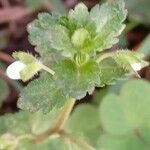
Veronica agrestis
Βερονίκη · Field speedwell · Green field speedwell · Procumbent speedwell · Garden Speedwell
Description
Source: leafsnapVeronica agrestis, commonly known as green field speedwell, is a species of flowering plant in the family Plantaginaceae.
Care Guide
💧 Water
Green field-speedwell thrives in areas with consistent rainfall and benefits from regular watering. Watering it once a week is enough to keep it healthy. As a herbaceous plant, green field-speedwell can endure rainy periods without becoming overly waterlogged, demonstrating its resilience.
How should I water my Green field-speedwell plant?
To water Green field-speedwell, you have several options. You can use a garden hose with a spray nozzle, a watering can, or any other common watering tool. This plant is not too picky about the type of water it receives, so rainwater, tap water, or filtered water will all suffice. However, it's best to avoid watering this plant from overhead as it can damage the leaves and flowers, and even invite disease. Instead, setting up a drip irrigation system is the preferred method for watering Green field-speedwell. This allows for even and direct application of water to the soil. If you have a container-grown Green field-speedwell, the approach is similar but the tools may vary. You can use a cup, watering can, or simply pour water from your tap directly onto the soil of the container.
What should I do if I give my Green field-speedwell plant too much or too little water?
To prevent underwatering your Green field-speedwell, simply water it more regularly. However, overwatering can be a bigger problem. It can cause diseases that lead to the plant's decline and death. To avoid this, choose a growing location that gets plenty of sunlight and has good drainage. If you overwater a potted Green field-speedwell, consider repotting it with loose soil and a pot that drains well.
How often should I water my Green field-speedwell plant?
Green field-speedwell should be watered regularly throughout the growing season. In the spring, water it once a week. As the weather gets warmer, you may need to water it two to three times a week. However, do not exceed this frequency as it can harm the plant. Regardless of how often you water, make sure the soil is moist but not overly wet. If you have a potted Green field-speedwell, you'll need to water it more frequently than if it were planted in the ground. Generally, water a potted Green field-speedwell a few times per week, compared to once a week for an in-ground plant.
How much water does my Green field-speedwell plant need?
To determine how much water to give your Green field-speedwell, there are a few options. One method is to feel the soil for moisture and water until the first six inches are moist. Alternatively, you can use a set measurement, such as two gallons per week, depending on the heat and rate of soil dryness. However, be cautious of overwatering if your plant requires less than two gallons. When growing Green field-speedwell in a container, the approach is different. Water enough to moisten all dry soil layers and check for moisture by sticking your finger in the soil or noticing excess water draining from the pot.
How can I know if I'm giving enough water to my Green field-speedwell?
It can be challenging to properly water your Green field-speedwell because their deep roots need moist soil, but they are prone to root rot if overwatered. Overwatering can also cause browning. Underwatering is not as common, as these plants can survive without extra watering for a while, but if they go too long without water, they will wilt and develop dry leaves.
☀️ Light Full sun
Green field-speedwell grows best in plentiful sunlight, showing vigorous development when given abundant daily light. It can tolerate less light than it typically requires, although that may reduce its growth rate. It comes from a habitat known for high light exposure. Both too much light and too little light can harm its health.
How many hours of sunlight does Green field-speedwell need each day to grow well?
To ensure optimal growth and survival of the plants, it is important to provide them with a minimum of 6 to 8 hours of sunlight each day. Particularly in the summer, they thrive with exposure to morning light. The Green field-speedwell, in particular, requires abundant sunlight for its needs. When these species receive ample light, they are able to efficiently produce food, display vibrant blooms, and enhance their chances of survival.
What kind of sunlight does Green field-speedwell require?
The Green field-speedwell thrives in full sunlight, so it's important to avoid crowding them together. This allows each plant to receive even sun exposure and prevents the leaves from being starved of sunlight. If you plant them in pots, make sure to place the herbaceous flowers in windows that receive direct sun throughout the year. The Green field-speedwell doesn't do well in partial or filtered light because it needs full sunlight to develop strong stems and healthy flowers. Ideally, this plant should always be exposed to the sun.
Can the sun harm plants? How can we shield Green field-speedwell from damage caused by the sun and heat?
When temperatures exceed 90℉ (32℃), the Green field-speedwell is vulnerable to damage, particularly if exposed to prolonged sunlight. To protect the plant, it is advisable to provide some shade in the afternoon during the summer, as sunlight intensity and duration are higher compared to winter. If the Green field-speedwell becomes overly stressed by sunlight, it is important to ensure they are well hydrated. Water the plants when the top 2 inches of soil are dry and consider bringing container-planted ones indoors on hot days. While it is normal for the plant leaves to wilt during the day, they usually recover at night. However, if the Green field-speedwell continues to droop, it indicates rapid water loss, necessitating immediate watering.
Should I keep Green field-speedwell out of the sun to protect it?
The Green field-speedwell thrives in full sun and does not require any protection from sunlight. Some species of this plant even prefer the sun and move towards it (heliotropic). If possible, plant them in south-facing gardens to ensure they receive sun exposure from morning to afternoon. However, it's important to note that too much sun can cause sunburn in some species, so it's advisable to provide afternoon and midday shade through a tree or a wall. It's not recommended to grow the Green field-speedwell in shady areas because larger flowers require significant energy to grow and produce. For best results, always provide the lighting conditions they prefer and place them in an area with full sun.
What will happen if the Green field-speedwell doesn't get enough sunlight?
When the Green field-speedwell doesn't receive enough sunlight or is not placed in full sun locations, several issues may arise. Firstly, the photosynthetic process will slow down. Additionally, a lack of sunlight will cause the stems to become thin and long, in an attempt to seek more sunlight. Consequently, the plant will not bloom or produce seeds in shaded areas. Inadequate sunlight will also lead to the death of older leaves, lighter coloration of new leaves compared to old foliage, and smaller new growth. While the Green field-speedwell thrives in sunlight, it can wilt in extreme heat and ultraviolet light during the summer months. To protect the leaves and flowers, consider covering them with a net that provides some shade, especially in the summer. When indoors, use a fan to reduce heat.
🌡️ Temperature 5–35°C
Green field-speedwell is native to habitats with moderate temperatures, favoring a range of 68 to 95 °F (20 to 35 °C). The plant does best under steady temperature conditions and may require seasonal adjustments to maintain a consistent, favorable growing environment.
What is the native environment of Green field-speedwell?
Green field-speedwell, or Veronica agrestis, is native to environments that experience moderate temperatures, preferring a range between 68 to 95°F (20 to 35°C). It thrives best in stable temperature conditions and may require seasonal adjustments to maintain a stable and favorable growth environment.
Does Green field-speedwell require special frost protection measures during winter?
Green field-speedwell has strong cold resistance, so special frost protection measures are typically not necessary during winter. However, if winter temperatures are expected to drop below -30°C, it's important to provide protection against the cold. This can be achieved by covering the plant with soil or straw. Additionally, watering the plant abundantly before the first freeze in autumn, to ensure the soil remains moist and enters a frozen state, helps prevent drought and water scarcity during winter and early spring.
What should I do if the temperature falls below -30°C?
If the temperature falls below -30°C, Green field-speedwell may not show noticeable changes during the winter, but there may be a decrease in sprouting or even no sprouting during springtime. In such cases, it is advisable to remove any parts of the plant that have failed to sprout in spring.
How does high temperature affect Green field-speedwell and what are the solutions?
During summer, it's important to keep Green field-speedwell below 35°C. Temperatures exceeding 38°C can cause the leaves to become lighter in color, curl, become prone to sunburn, and in severe cases, cause the entire plant to wilt and dry. To mitigate these effects, trim away sunburned and dried-up parts of the plant. Moving the plant to a location that provides shade during the midday and afternoon sun or using a shade cloth can help. Ensure you water the plant in the morning and evening to keep the soil moist.
💨 Humidity
🪴 Soil 6-7
🌱 Fertilizer
Green field-speedwell benefits from regular, light fertilizer applications to encourage healthy leaf growth. Fertilize Green field-speedwell about once a month during the summer. Nitrogen is vital for foliage, and adding nitrogen-rich sources helps Green field-speedwell thrive.
🪴 Pot & Repot
✂️ Pruning
Green field-speedwell is a low-growing annual herb with small blue flowers. To control its spread and shape, prune it from early to late spring. Regular trimming encourages healthy growth, improves air circulation, and increases sunlight exposure. Additionally, it prevents excessive self-seeding, making garden management easier.
🌿 Propagating
🐛 Diseases & pets
☠️ Toxicity
Characteristics
- Plant Type
- Herb
- Life Cycle
- Annual
- Genus
- Veronica
- Family
- Plantaginaceae
- Hardiness Zone
- 4-9
- Mature Height
- 5 cm to 30 cm
- Mature Spread
- 15 cm to 25 cm
- Leaf Color
- Green, Dark Green
- Leaf Type
- Semi-evergreen
- Flower Color
- White
- Flower Size
- 0.25 cm to 0.51 cm
- Bloom Time
- All year round
- Planting Time
- Spring, Summer
- Harvest Time
- All year round
- Native Area
- India, Sweden, Austria, Slovakia, Montenegro, Slovenia, Croatia, Belarus, Russia, Germany, Estonia, Romania, Latvia, Belgium, Portugal, Netherlands, France, Czech Republic, Bulgaria, Poland, Greece, Ukraine, Serbia, Lithuania, Norway, Italy, Spain, Switzerland, Denmark, Finland, Albania, Ireland, United Kingdom, Hungary, Algeria, Turkmenistan