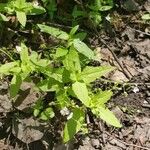
Veronica americana
American brooklime · American speedwell · Speedwell · Neckweed · Purslane speedwell
Description
Source: leafsnapVeronica americana, variously called American brooklime or American speedwell, is a plant native to temperate and arctic Asia and North America where it grows in streams and bottomlands. It is a herbaceous perennial with glabrous stems 10–100 cm long that bear terminal or axillary racemes or spikes of soft violet flowers. The leaves are 1.5–8 cm long and 3 to 20 times as long as wide, short-petiolate, glabrous, serrate to almost entire.The plant can be confused with Scutellaria (skullcap) and other members of the mint family. Members of the mint family have square sided stems, and Veronica species have rounded stems.
Care Guide
💧 Water
American Speedwell thrives in moist, humid environments and needs to be watered weekly for optimal health. While it is somewhat drought-tolerant, this plant is commonly found along stream banks, making it a great choice for gardens that have good drainage and moisture retention.
What is the most effective way to water my American Speedwell plant?
To care for the American Speedwell plant, it's important to use filtered water at room temperature. Tap water may contain harmful particles, so filtered water is a safer choice. This plant prefers warmer water because it's used to a warm environment, and cold water can be a shock. Avoid overhead watering to prevent leaf problems. Instead, water the soil directly until it's fully saturated. This helps the roots stay hydrated and absorb nutrients effectively.
What should I do if I give my American Speedwell plant too much water or too little water?
Overwatering is a more common and serious issue for the health of your American Speedwell. It can cause wilting and yellowing of the stems and leaves, as well as diseases like root rot, mold, and mildew that can kill the plant. Underwatering is less common, but can still happen, causing the leaves to become brittle and brown. It's important to recognize the signs of overwatering early to prevent irreversible damage. Reduce your watering schedule immediately if you see these signs and replace poorly draining soil with a loose, well-draining mix. If you notice signs of underwatering, simply water more regularly until the signs go away.
How many times should I water my American Speedwell plant?
If your American Speedwell plant is in a pot, the most precise way to determine if it needs water is to stick your finger into the soil. If the top two to three inches of soil are dry, it's time to water it. If you have your American Speedwell planted outdoors in the ground, you can use a similar method to test the soil. Once the top few inches have dried out, it's time to water it. Typically, during the spring and early fall, this plant should be watered about once a week using this method. When it gets very hot, you may need to water it twice or more per week. However, mature and well-established American Speedwell plants have good drought tolerance.
How much water does my American Speedwell plant need?
To properly water your American Speedwell, don't be afraid to give it a generous amount of water. Wait until the top two to three inches of soil are dry, and then thoroughly soak the soil. Make sure to add enough water so that it flows through the drainage holes at the bottom of the pot. If you don't see any excess water draining, it means you haven't watered it enough. However, be careful not to let water accumulate in the soil, as this can harm the plant. On the other hand, if water isn't draining properly, it could indicate that the soil doesn't drain well, which is bad for the plant's health. If the plant is outside, one inch of rain per week should be enough.
How do I water my American Speedwell as it grows?
The water requirements of the American Speedwell can vary depending on its growth stages. When the plant is in its early years or has just been transplanted, it will need more water than usual. During these stages, the American Speedwell focuses on developing new roots to support future growth, which requires increased moisture. As the plant matures, it will require less water. Additionally, during the bloom period, the American Speedwell may need more water due to the increased demand for moisture during flower development.
☀️ Light Full sun
American Speedwell performs best in full sun but can manage in spots with less light. Excessive shade can cause problems, such as reduced vigor. It is very adaptable, coming from habitats with varying amounts of sun. A lack of adequate sunlight can impede healthy growth and flowering.
What are the sunlight requirements for American Speedwell?
American Speedwell requires full exposure to the sun for optimal growth, thriving in areas with more than 6 hours of sunlight. However, it can also tolerate partial sun, approximately 3-6 hours of sunlight, but excessive shade may lead to health issues and weakened growth. This plant is adaptable, having originated from environments with variable sun exposure, but inadequate sun may hinder its healthy growth and bloom.
How can artificial lighting be used for American Speedwell indoors?
Indoor plants like American Speedwell require adequate lighting for optimal growth, especially when natural sunlight is insufficient, such as in winter or less sunny spaces. Artificial lights, particularly LED lights, are a suitable solution because they can be customized to provide the specific wavelengths of light that plants need. For full sun plants, 30-50W/sq ft of artificial light is recommended, 20-30W/sq ft for partial sun plants, and 10-20W/sq ft for full shade plants. The light source should be placed 12-36 inches above the plant and kept on for 8-12 hours per day to mimic natural daylight hours.
What are the symptoms of inadequate sunlight for American Speedwell?
Symptoms of inadequate sunlight in American Speedwell include smaller new leaves, leggy or sparse growth, faster leaf drop, slower or no new growth, and paler new leaves indicating a lack of chlorophyll and essential nutrients. Chlorophyll breakdown can cause leaves to lose their green color and turn yellow in a condition called chlorosis, while excessive sunlight exposure may lead to sunscald, leaf curling, wilting, and leaf scorching.
What solutions exist for American Speedwell experiencing insufficient sunlight?
To combat insufficient sunlight for American Speedwell, gradually move plants to sunnier locations, ideally to receive at least 6 hours of direct sunlight daily. Utilize south-facing windows and keep curtains open for maximum sunlight, or use artificial lighting such as desk or ceiling lamps for at least 8 hours daily. If a plant is too large or not easily movable, professional plant grow lights can provide ample light. For outdoor plants, avoid sudden changes in light intensity to prevent sunburn. If sunlight is blocked by obstructions like trees, consider pruning or transplant smaller plants to sunnier locations with good drainage, ideally during their dormant period in late winter or early spring.
🌡️ Temperature 0–32.2°C
American Speedwell is native to climates with temperatures between 32 and 90 degrees Fahrenheit (0 to 32 degrees Celsius). It does best within that temperature range. In different seasons, small temperature adjustments may be necessary to ensure optimal growth.
What is the indigenous climate for American Speedwell?
American Speedwell, also known by its botanical name Veronica americana, is indigenous to climates where temperatures range between 32 to 90 degrees Fahrenheit (0 to 32 degrees Celsius). It thrives within this temperature range, indicating its adaptability to varying seasonal climates. Although the plant has strong cold resistance, during extreme winter conditions (below -35°C), it requires additional cold protection. This can be provided by covering the plant with soil or straw. Additionally, to prevent drought and water scarcity during winter and early spring, it's recommended to water the plant abundantly before the first freeze in autumn, ensuring the soil remains moist and enters a frozen state.
How does low temperature affect American Speedwell?
American Speedwell is cold-tolerant and thrives best in temperatures above 0°C, but during winter, it should ideally be kept above -30°C. However, when the temperature falls below -35°C, the plant may not show noticeable changes during the winter, but there could be a decrease in sprouting or even no sprouting at all during the spring. The recommended solution for this issue is to remove any parts that have failed to sprout in the spring.
What should be done if American Speedwell experiences high temperatures?
During summer, it's crucial to keep American Speedwell below 32°C to avoid heat stress. If the temperature exceeds 35°C, the leaves may become lighter in color, curl, become prone to sunburn, and in severe cases, the entire plant may wilt and dry out. To mitigate this, trim away the sunburned and dried-up parts of the plant. Relocating the plant to a shaded area during the midday and afternoon sun, or using a shade cloth to create shade, can be beneficial. Additionally, water the plant in the morning and evening to maintain soil moisture and counteract the effects of high temperatures.
💨 Humidity high (>60%)
This plant needs special care because it loves high humidity levels of 60-80% or more. The best way to achieve this is by placing a humidifier near the plant. Daily misting is also essential! Make sure the room has good ventilation.
🪴 Soil 6-7
🌱 Fertilizer
The best time to fertilize an American Speedwell is in early spring, as it comes out of dormancy and begins active growth. Fertilizing supplies essential nutrients for healthy development. Although American Speedwell has relatively low fertilizer requirements, applying fertilizer annually can improve its survival and encourage better, longer-lasting flowers.
🪴 Pot & Repot
✂️ Pruning
American Speedwell is a plant known for its delicate blue flowers and its creeping growth habit. To encourage new growth, improve air circulation, and reduce the risk of disease, prune any dead or damaged stems from early to late spring. Regular maintenance helps prevent the plant from becoming invasive and supports ecological balance in gardens.
🌿 Propagating
🐛 Diseases & pets
☠️ Toxicity
Characteristics
- Plant Type
- Herb
- Life Cycle
- Perennial
- Genus
- Veronica
- Family
- Plantaginaceae
- Hardiness Zone
- 3-8
- Mature Height
- 10 cm to 52 cm
- Mature Spread
- 0.91 m to 1.22 m
- Leaf Color
- Green, Blue
- Leaf Type
- Deciduous
- Flower Color
- Purple, Blue
- Flower Size
- 0.76 cm
- Bloom Time
- Mid spring, Late spring, Early summer, Mid summer
- Planting Time
- Spring, Summer
- Harvest Time
- Summer, Early fall
- Native Area
- Russia, Mexico, Japan