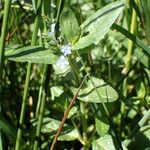
Veronica beccabunga
Brooklime · European brooklime · European Speedwell · Water · Marsh speedwell
Description
Source: leafsnapVeronica beccabunga, commonly known as Brooklime, is a perennial herbaceous plant belonging to the Plantaginaceae family. Native to Europe and Asia, it thrives in wetlands and along streams and riversides. The plant has a creeping habit, with stems that can grow up to 50 cm long. Its oval-shaped leaves, featuring toothed edges, are arranged in opposite pairs along the stem. Brooklime produces small blue flowers that bloom from May to September, each with four petals arranged in a cross shape, resembling tiny stars. These flowers are attractive to bees and other pollinators. Historically, Brooklime has been used for medicinal purposes due to its anti-inflammatory properties, making it useful for treating skin conditions such as eczema and psoriasis when applied topically. In addition to its medicinal uses, Brooklime is also edible, with a slightly bitter taste similar to watercress or spinach. It can be a flavorful addition to raw salads or cooked dishes like soups and stews. Overall, Veronica beccabunga is an attractive herbaceous perennial that offers both ornamental and medicinal benefits, making it an excellent addition to any garden, especially those near water sources where it thrives.
Care Guide
💧 Water Every 7 days
European Speedwell flourishes in moist environments and needs weekly watering to maintain healthy growth. In indoor settings, higher humidity levels are advantageous, as they simulate the plant's natural habitat. As an evergreen, European Speedwell is efficient at retaining water, which helps it maintain a vibrant appearance throughout the year.
How should I water my European Speedwell plant?
To properly water the European Speedwell, it's best to use filtered water at room temperature or slightly warmer. Tap water may contain harmful particles, so filtering it is important. Since the European Speedwell originates from a warm environment, using cold water can shock the plant. It's also recommended to avoid overhead watering as it can result in issues with the foliage. Instead, gently apply filtered room temperature water directly to the soil until it is completely soaked. This helps to moisten the roots and facilitates their spread through the soil, allowing them to collect necessary nutrients for the plant's health.
What do I need to do if I give too much or too little water to my European Speedwell plant?
Overwatering poses a greater risk to the health of your European Speedwell compared to underwatering. When this plant receives excessive water, its stems and leaves may wilt and turn yellow. Overwatering can also result in diseases like root rot, mold, and mildew, which can be fatal. Underwatering is less common due to the plant's moderate drought tolerance, but it is still possible. In such cases, the leaves of your European Speedwell may become brittle and brown. It is crucial to promptly notice signs of overwatering to prevent irreversible damage. If you observe early signs, reduce watering immediately and check the soil's drainage. Replace poorly draining soil with a loose, well-draining potting mix. Conversely, if your European Speedwell lacks sufficient water, increase watering until the signs subside.
How frequently do I need to water my European Speedwell?
If your European Speedwell plant is in a pot, the most precise way to determine if it needs water is by checking the soil with your finger. If the top two to three inches of soil are dry, it's time to water it. If you're growing the European Speedwell outdoors in the ground, you can use a similar method to test the soil. When the first few inches of soil have dried out, it's a sign to water it. Typically, during the spring and early fall, watering once a week is sufficient. However, during extremely hot weather, you may need to water twice or more per week. It's worth noting that mature, well-established European Speedwell plants have a remarkable ability to withstand drought.
How much water does my European Speedwell plant need?
When watering your European Speedwell, make sure to give it a generous amount of water. Wait until the top few inches of soil are dry, then water the plant thoroughly so that the soil is completely soaked. To ensure you're giving enough water, allow excess water to drain out of the pot's drainage holes. If you don't see any excess water draining, your plant may be underwatered. However, be careful not to let the water accumulate in the soil, as this can harm the plant. If water doesn't drain properly, it could indicate poor soil drainage, which is bad for the plant's health. If the plant is outdoors, 1 inch of rain per week should suffice.
How do I water my European Speedwell at different times it is growing?
The water needs of the European Speedwell can vary depending on its growth stages. When the plant is during its first few years or has just been transplanted, it requires more water than usual. During these stages, the plant focuses on developing new roots to support future growth, and these roots perform best with slightly more moisture. However, as the plant matures over a few seasons, it will require less water. Additionally, during the bloom period, when the plant is producing flowers, it may need more water to support the development of the blooms.
☀️ Light Full sun
The European Speedwell does best with generous sunlight for most of the day, though it can also tolerate partial exposure. Coming from bright habitats, both too little and too much light can slow its growth or result in weak, discolored foliage.
What are the sunlight requirements for European Speedwell?
European Speedwell thrives best under specific sunlight conditions to ensure healthy growth. It requires 'full sun' exposure, which means the plant should receive above 6 hours of direct sunlight daily. Alternatively, it can also grow under 'partial sun' conditions, receiving about 3-6 hours of sunlight. It's essential to observe how sunlight moves through your garden and choose locations that provide an optimal balance of light and shade, ensuring the plants' happiness and wellbeing.
How should I provide lighting for indoor European Speedwell plants?
Indoor European Speedwell plants require adequate lighting, especially when natural sunlight is insufficient, such as during winter or in less sunny indoor spaces. Artificial lighting can be a vital solution for promoting healthier and faster growth. LED lights are recommended due to their ability to provide specific wavelengths needed by the plants. For full sun plants, aim for 30-50W/sq ft of artificial light, partial sun plants require 20-30W/sq ft, and full shade plants need 10-20W/sq ft. Position the light source 12-36 inches above the plant to mimic natural sunlight conditions and ensure the lighting lasts for about 8-12 hours per day, mimicking natural daylight hours.
What symptoms indicate insufficient lighting for European Speedwell?
European Speedwell exhibits several symptoms when exposed to inadequate lighting, impacting its growth and appearance. Symptoms include new leaves growing smaller than preceding ones, leggy or sparse growth due to longer spaces between leaves or stems, faster drop of older leaves as a resource conservation measure, slower or ceased new growth, lighter-colored new leaves indicating lack of essential nutrients, and symptoms of overexposure like chlorosis, sunscald, leaf curling, wilting, and leaf scorching. These symptoms highlight the plant's struggle with either too little or too much sunlight exposure.
What actions can I take to remedy light deficiencies for European Speedwell indoors and outdoors?
To remedy light deficiencies for European Speedwell, it's crucial to gradually adjust their exposure to sunlight. For indoor plants lacking sunlight, gradually move them to sunnier spots, aiming for at least 6 hours of direct sunlight per day. Utilize south-facing windows and keep curtains open. If moving the plant isn't feasible, consider providing artificial light for at least 8 hours daily. For outdoor plants, transition them to sunnier places gradually to avoid shock. In cases of blocked sunlight, identify and reduce obstructions if possible, or consider transplanting smaller plants to brighter locations during their dormant period. Note that parts of the plant affected by insufficient sunlight may not fully recover but adapting these measures can lead to healthier new growth.
🌡️ Temperature 0–32.2°C
European Speedwell comes from habitats with temperatures ranging from 32 to 90 °F (0 to 32 ℃). The plant prefers milder climates and should be managed to help it adapt to seasonal temperature fluctuations.
What is the preferred temperature range for European Speedwell?
European Speedwell, botanically named Veronica beccabunga, thrives in environments where the temperature ranges from 32 to 90°F (0 to 32°C). This plant prefers milder climates and has strong cold resistance, meaning it typically does not require special frost protection measures during winter. However, in environments where winter temperatures are expected to drop below -35°C, measures should be taken to protect the plant from the cold. This can include covering it with materials such as soil or straw. To prepare for winter, it's recommended to water the plant abundantly before the first freeze in autumn to ensure the soil remains moist and enters a frozen state, helping prevent drought and water scarcity during winter and early spring.
How does European Speedwell handle low temperatures?
European Speedwell is notably cold-tolerant, best thriving when temperatures are above 0°C. It's equipped to handle winters where temperatures stay above -30°C. If temperatures fall below -35°C, the plant may not show immediate distress, but there can be a decrease in sprouting or completely no sprouting come springtime. The solution for spring includes removing any parts of the plant that have failed to sprout, helping to encourage new growth and maintain the plant's health.
What should be done if European Speedwell experiences high temperatures?
During summer, it's essential to ensure that European Speedwell is kept below 32°C to avoid heat stress. When temperatures exceed 35°C, the plant's leaves may become lighter in color, curl, and become prone to sunburn; in severe cases, the plant might wilt and dry out entirely. To mitigate these issues, sunburned and dried-up parts of the plant should be trimmed away. Moving the plant to a shadier location or using a shade cloth can provide protection from the harsh midday and afternoon sun. Additionally, watering the plant in the morning and evening will help keep the soil moist and support the plant's health during high temperatures.
💨 Humidity
🪴 Soil 6-7
🌱 Fertilizer
Early spring, when the European Speedwell is coming out of dormancy and beginning active growth, is the best time to fertilize it. Fertilizing supplies essential nutrients needed for healthy growth. Although European Speedwell requires relatively little fertilizer, feeding it once a year can improve its survival and encourage better, longer-lasting blooms.
Why should I put fertilizer on my European Speedwell?
The main structure of the European Speedwell is made up of its leaves. To ensure that these leaves not only look great but also serve their purpose effectively, proper fertilization is crucial. Fertilization has a significant impact on the overall appearance and health of the leaves. It helps maintain consistent color and promotes a healthy texture. Moreover, fertilization also benefits the plant below the surface of the soil. It aids in the development of new roots and the maintenance of existing ones within the root system. This means that fertilization not only keeps the plant healthy in the present but also improves its ability to absorb nutrients from the soil in the future.
When should I fertilize my European Speedwell?
If you grow your European Speedwell outdoors, it will sprout new growth in early spring. This is the signal to start fertilizing for the year. You can usually get by with just one application of fertilizer. But if you want to maximize growth, you can fertilize multiple times in the spring and early summer. In that case, feed your European Speedwell every month to a month and a half.
When should I not fertilize my European Speedwell plant?
During the late fall and winter, your European Speedwell will go into a dormant phase, where it will stop producing new growth. It is best to avoid fertilizing your European Speedwell during this time. In the spring and summer, if you decide to fertilize, start decreasing the amount of fertilizer applied as summer approaches since the growth rate of your European Speedwell will also slow down. Overall, it's not a good idea to fertilize your European Speedwell during extremely hot weather or when the soil is very dry. Fertilizing in these conditions can stress your European Speedwell and lead to its premature death.
What kind of fertilizer does my European Speedwell plant need?
Choosing the best fertilizer for a European Speedwell is straightforward. Use a general-purpose garden fertilizer with equal amounts of nitrogen, phosphorus, and potassium, like a 10-10-10 ratio. Avoid fertilizers with high nitrogen. Granular slow-release fertilizers are ideal for European Speedwell and easy to apply. Also, consider using organic soil amendments like compost to feed your European Speedwell.
How do I give nutrients to my European Speedwell plant?
To ensure the best results for your European Speedwell, wait until its first leaves emerge in early spring before applying a granular slow-release fertilizer. Remember to distribute the fertilizer around the base of the plant rather than directly onto it. If needed, you can repeat this process later in the season by clearing away any leaves to access the soil around the roots. Additionally, it is recommended to water your European Speedwell before and after fertilizing to support healthy growth.
🪴 Pot & Repot Every 12 months
✂️ Pruning
To improve the appearance and conserve nutrients of European speedwell, remove any withered flowers. Prune on sunny mornings, making cuts close to the last flower. This helps regulate blooming, with a second bloom usually appearing in about 20 days. After winter, prune any yellowed parts when temperatures are above 0°C (32°F) to encourage new growth.
🌿 Propagating
🐛 Diseases & pets
☠️ Toxicity
Characteristics
- Plant Type
- Herb
- Life Cycle
- Perennial
- Genus
- Veronica
- Family
- Plantaginaceae
- Hardiness Zone
- 3-8
- Mature Height
- 20 cm to 61 cm
- Mature Spread
- 1.22 m
- Leaf Color
- Green, Blue
- Leaf Type
- Evergreen
- Flower Color
- Blue
- Flower Size
- 2.54 cm
- Bloom Time
- Late spring, Early summer, Mid summer
- Planting Time
- Spring, Summer
- Harvest Time
- Early summer, Mid summer
- Native Area
- Europe, Asia, Middle East