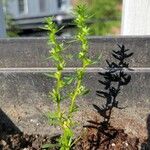
Veronica peregrina
Necklaceweed · Neckweed · Wandering speedwell · Purslane speedwell · American speedwell
Description
Source: leafsnapVeronica peregrina, commonly known as neckweed or purslane speedwell, is a small annual herbaceous plant belonging to the Plantaginaceae family. Native to Europe and Asia, it has now spread throughout North America and other parts of the world. The plant can grow up to 30 cm tall and features small, oval-shaped leaves that are arranged oppositely on its stem. The flowers of Veronica peregrina are small and blue-violet, with four petals arranged in a cross shape. They bloom from May to September, attracting bees for pollination. The plant produces fruit in the form of capsules, which contain numerous tiny seeds. Veronica peregrina thrives in moist, sunny, or partially shaded areas such as meadows, fields, roadsides, gardens, or disturbed areas like construction sites. It can tolerate various soil types but prefers well-drained soils with moderate fertility. This plant has been used for medicinal purposes since ancient times, primarily due to its anti-inflammatory properties, which help relieve pain caused by arthritis and other inflammatory conditions. It also contains antioxidants that help protect against free radicals, which can cause cell damage leading to cancer. Overall, Veronica peregrina is an attractive wildflower that provides food for pollinators while also possessing medicinal properties, making it an important component of our ecosystem today.
🌳 Although frequently ignored because of its tiny size, the unassuming flowers of purslane Speedwell are noteworthy when examined scientifically. This plant, often considered an annoying weed, contains mannitol, a carbohydrate useful for biofuel production. Unlike typical biofuel crops such as corn or sugarcane, purslane Speedwell can be grown with little land and fewer inputs, making it an environmentally friendly alternative for renewable energy.
🎭 Rest, Affection, Fortune
Care Guide
💧 Water Every 7 days
Purslane Speedwell thrives in moist environments and requires consistent weekly watering to stay healthy. While it has moderate tolerance to drought, it grows best outdoors where it can benefit from natural rainfall. This aligns with its growth cycles for optimal water uptake.
How should I water my Purslane Speedwell plant for the best results?
To water Purslane Speedwell, you have a few options: a garden hose with a spray nozzle, a watering can, or any other watering tool you may have. Luckily, this plant isn't too fussy about its water source - it can survive on rainwater, tap water, or filtered water. However, it's best to avoid watering from above as it can harm the leaves and flowers and even lead to disease. Instead, setting up a drip irrigation system is often the most effective way to water this plant. These systems evenly distribute water directly to the soil. If you have a container-grown Purslane Speedwell, the same watering principles apply, but you can use a cup, watering can, or tap to water the soil directly.
What should I do if I give my Purslane Speedwell too much or too little water?
If you notice your Purslane Speedwell is lacking moisture, the remedy is simple: water it more regularly. However, overwatering can be a serious problem if not caught early. Overwatered plants can develop diseases that may cause them to decline and eventually die. To prevent this, choose a suitable location with plenty of sunlight to help dry the soil and ensure good drainage to prevent pooling and waterlogged soil. If you have an overwatered Purslane Speedwell in a pot, consider switching it to a new one with better drainage and looser soil.
How often do I need to water my Purslane Speedwell plant?
Purslane Speedwell requires regular watering throughout the growing season. In the beginning of spring, aim to water this plant about once a week. As the season progresses and temperatures rise, you may need to increase watering to two or three times a week. However, be careful not to exceed this rate as it can harm your Purslane Speedwell. Regardless of how often you water, ensure that the soil remains moist but not wet. Watering Purslane Speedwell in a pot is a bit different. Potted plants tend to heat up and dry out faster than those in the ground, so you'll need to water them more frequently. In most cases, plan to water container-grown Purslane Speedwell a few times a week, compared to just once a week for plants in the ground.
How much water does my Purslane Speedwell plant need?
Determining how much water to give your Purslane Speedwell can be done in a few ways. Some gardeners prefer to assess soil moisture by feeling the soil. This method advises watering until the top six inches of soil feel moist. Another approach is using a fixed measurement, such as approximately two gallons per week, depending on heat and drying speed. However, strictly following these guidelines may lead to overwatering if your plant requires less water. When growing Purslane Speedwell in a container, a different method is needed. Moistening all layers of dry soil is recommended. You can check for moisture by sticking your finger in the soil or allowing a slight trickle of excess water to exit the pot's drainage holes.
How do I know if I am watering my Purslane Speedwell plant enough?
Avoiding overwatering your Purslane Speedwell can be challenging because these plants have deep roots that need to be watered regularly. However, Purslane Speedwell is prone to root rot and browning if overwatered. Underwatering is less likely to be a problem for your Purslane Speedwell since they can survive without supplemental watering for a period. But if you neglect to water the plant for too long, it will start to wilt and you may observe dry leaves.
☀️ Light Full sun
Purslane Speedwell needs plenty of light to grow well and performs best in full sun. It can also tolerate areas with reduced light or where sunlight is mostly blocked. Insufficient sunlight may hinder its growth, while too much exposure can cause harm.
What are the sunlight requirements for Purslane Speedwell?
Purslane Speedwell thrives under full sun, needing over 6 hours of sunlight daily, yet it can also adapt to partial sun or full shade conditions, with about 3-6 hours of sunlight. The plant's growth and health are greatly influenced by the amount of sunlight it receives. For its optimal growth, monitoring the balance of light and shade throughout the day is crucial, as too little sunlight can stunt its growth, while too much can cause damage.
How do artificial lights support plant growth indoors?
Indoor plants, including Purslane Speedwell, require adequate lighting, especially when natural sunlight is insufficient. Artificial lights, particularly LED lights, can be tailored to provide specific wavelengths necessary for plant health, offering a practical solution. For successful indoor plant growth, consider the type of artificial light, with full sun plants needing 30-50W/sq ft, partial sun plants 20-30W/sq ft, and full shade plants 10-20W/sq ft. Additionally, placing the light source 12-36 inches above the plant and ensuring 8-12 hours of light per day mimics natural sunlight conditions.
What are common symptoms of inadequate light in Purslane Speedwell?
When Purslane Speedwell doesn't get enough light, it may show several symptoms, including smaller new leaves, leggy or sparse growth, faster leaf drop, and slower or no new growth. Leaves might develop lighter color or yellowing (chlorosis) due to insufficient sunlight, affecting chlorophyll production and nutrient absorption. Extreme sunlight exposure can cause sunscald, leaf curling, wilting, and leaf scorching, indicating both underexposure and overexposure issues.
How can I address light-related issues in Purslane Speedwell?
To address light-related issues in Purslane Speedwell, gradually acclimate your plant to the correct amount of sunlight. For indoor plants, move them to a sunnier spot each week to achieve at least 6 hours of direct sunlight daily, or use artificial lighting like desk lamps or professional grow lights for at least 8 hours daily. Outdoors, ensure plants gradually adapt to sunnier spots to prevent sunburn. For ground plants, reduce obstructions by pruning trees or relocating smaller plants to sunnier locations with better drainage during their dormant period. Remember, while parts of the plant that have suffered due to insufficient sunlight may not recover, new growth should be healthy once light conditions improve.
🌡️ Temperature 0–35°C
Purslane Speedwell originates from temperate regions and prefers temperatures between 68 to 95 °F (20 to 35 ℃). Seasonal adjustments may be needed to maintain this temperature range, particularly in colder climates.
What is the optimal temperature range for Purslane Speedwell?
Purslane Speedwell, also known as Veronica peregrina, thrives best in temperate regions with optimal temperatures ranging between 68 to 95°F (20 to 35°C). To ensure the plant's health, seasonal adjustments may be required to maintain this temperature range, especially in colder climates.
How does Purslane Speedwell handle cold weather and what are the recommended winter care instructions?
Purslane Speedwell has strong cold resistance and does not usually require special frost protection measures during winter. However, if temperatures are expected to drop below -35°C, it's important to provide cold protection by covering the plant with soil or straw. Additionally, watering the plant abundantly before the first freeze in autumn is recommended to ensure the soil remains moist and enters a frozen state, which helps prevent drought and water scarcity during winter and early spring.
What should I do if Purslane Speedwell is exposed to temperatures below 20°C?
Purslane Speedwell is cold-tolerant, ideally kept above 0°C during winter. If the temperature falls below -35°C, you might notice a decrease in sprouting or no sprouting at all in spring. In such cases, it's advised to remove any parts of the plant that have failed to sprout as a part of the recovery process.
How does high temperature affect Purslane Speedwell and what measures should be taken?
During the summer, it's crucial to keep Purslane Speedwell below 35°C as exposure to temperatures exceeding 38°C can cause the leaves to become lighter in color, curl, and become susceptible to sunburn. In severe cases, the plant may wilt and dry up. To mitigate these issues, trim away the sunburned and dried-up parts, move the plant to a shaded location, or use a shade cloth to protect it from midday and afternoon sun. Additionally, ensure the soil remains moist by watering the plant in the morning and evening.
💨 Humidity
🪴 Soil 5-7
🌱 Fertilizer
Purslane Speedwell benefits from regular, light fertilizer applications to encourage healthy leaf growth. Apply fertilizer to Purslane Speedwell about once a month during the summer. Nitrogen is essential for foliage, and adding nitrogen-rich sources helps Purslane Speedwell thrive.
🪴 Pot & Repot
✂️ Pruning
To maintain the appearance and health of Purslane Speedwell, promptly remove any withered flowers. This practice helps conserve nutrients. For best results, prune on sunny, dry mornings by cutting at the base of the last flower. Regular pruning can help manage the timing of new blooms, which typically appear about 20 days later. Additionally, once winter ends and temperatures rise above 0℃ (32℉), prune any yellowed parts of the plant.
🌿 Propagating
🐛 Diseases & pets
☠️ Toxicity
Characteristics
- Plant Type
- Herb
- Life Cycle
- Annual, Biennial
- Genus
- Veronica
- Family
- Plantaginaceae
- Hardiness Zone
- 3-9
- Mature Height
- 5 cm to 30 cm
- Mature Spread
- 15 cm
- Leaf Color
- Green, Blue
- Leaf Type
- Deciduous
- Flower Color
- White
- Flower Size
- 2.54 cm
- Bloom Time
- Mid spring, Late spring, Early summer
- Planting Time
- Spring, Summer
- Harvest Time
- Early summer, Mid summer
- Native Area
- Honduras, Mexico, Bolivia, Japan, Peru, Costa Rica