Veronica persica
سیزاب ایرانی · Bird's-eye · Creeping speedwell · Common Field-speedwell · Persian speedwell
Description
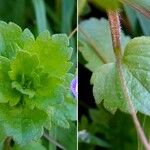
Source: leafsnapVeronica persica, commonly known as Persian speedwell, is a low-growing herbaceous plant in the Plantaginaceae family. Native to Europe and Asia, it has been introduced and naturalized in many parts of the world, including North America. The plant exhibits a prostrate growth habit, with stems reaching up to 30 cm in length. Its small, oval-shaped leaves have toothed margins and are arranged in opposite pairs along the stem. The flowers of Veronica persica are small, blue-violet in color, and feature four petals arranged in a cross shape. Persian speedwell thrives in moist soils but can tolerate dry conditions once established. It grows well in both full sun and partial shade, and is often found along roadsides, in lawns, and in disturbed areas. For centuries, the plant has been valued for its medicinal properties, particularly its anti-inflammatory effects, which make it useful for treating respiratory ailments such as bronchitis and asthma. Overall, Veronica persica is an attractive, low-growing groundcover that provides beautiful blue-violet flowers in the spring. Its medicinal properties make it an interesting addition to any garden or landscape design project.
🌳 Bird's Eye Speedwell is often ignored but functions as a valuable bioindicator, assisting ecologists in assessing the ecological health of an area. Because it grows and spreads quickly in disturbed soils, Bird's Eye Speedwell indicates soil compaction and can reveal the effects of heavy foot traffic or machinery on an ecosystem.
🎭 Fidelity, Female Fidelity
Care Guide
💧 Water Every 7 days
Birdeye speedwell flourishes in temperate zones, requiring moderate moisture and benefiting from weekly watering. It adapts well to different climates, but it's important to provide the right amount of water. Too little water can hinder flowering, while too much can lead to root issues. To ensure optimal health, keep the soil moist but not waterlogged.
How should I water my Birdeye speedwell plant?
To water Birdeye speedwell, you have multiple options. You can use a garden hose with a spray nozzle, a watering can, or any other common watering tool. Birdeye speedwell is not too particular about the type of water it receives - it's happy with rainwater, tap water, or filtered water. It's generally not recommended to water this plant from above, as this can harm the leaves and flowers and potentially lead to disease. Instead, it's often best to set up a drip irrigation system, which will deliver water evenly and directly to the soil. If you have a container-grown Birdeye speedwell, the approach is similar - use a cup, watering can, or tap to water the soil directly.
What do I do if I give my Birdeye speedwell too much or too little water?
To remedy underwatering, simply water the Birdeye speedwell more regularly. However, overwatering can be more problematic. It can lead to diseases and even death. Prevent this by selecting a proper location with adequate sunlight and good drainage. If your potted plant is overwatered, consider changing to a new pot with better drainage. Use loose soil and a pot that drains well when repotting.
How much water does the Birdeye speedwell need?
Birdeye speedwell requires regular watering throughout the growing season. In the spring, watering once per week is sufficient. As the season progresses and temperatures rise, you may need to water two to three times per week. However, it's important not to exceed this watering rate as it can harm the plant. Regardless of the frequency, ensure that the soil remains moist but not overly wet. If you have Birdeye speedwell in a pot, you'll need to water it more frequently compared to plants in the ground. Generally, watering container-grown Birdeye speedwell a few times per week is recommended, whereas in-ground plants only require watering once per week.
How can I know if I'm giving enough water to my Birdeye speedwell?
Avoiding overwatering your Birdeye speedwell can be tricky. On one hand, these plants have deep roots that need to be moistened weekly. However, Birdeye speedwell is highly prone to root rot, which can cause browning. Underwatering is less of a concern because these plants can survive without additional watering for a while. Yet, if you wait too long to water them, they will likely wilt and develop dry leaves.
☀️ Light Full sun
Bird's Eye Speedwell thrives in abundant sunlight but can also tolerate moderate light. Native to sunny habitats, this energy is essential for the plant’s healthy development at every stage. Insufficient sunlight can limit growth, while too much can damage the plant, highlighting the need for a balanced amount of light.
What are the sunlight requirements for Birdeye Speedwell?
Birdeye Speedwell thrives best in full sun, requiring above 6 hours of sunlight daily, but it can also grow in partial sun, which is about 3-6 hours of sunlight. It's vital to observe how sunlight moves through your garden to find spots that offer the ideal balance of light and shade for your plants, ensuring they grow healthy and happy.
How does sunlight affect the growth of Birdeye Speedwell?
Sunlight is crucial for the healthy growth of Birdeye Speedwell at all stages, as it originates from a sunny environment. While this plant flourishes under abundant sunlight, it can also endure modest light conditions. However, a lack of sufficient sunlight can stunt the growth of the plant, and too much sunlight may harm it. It shows the importance of balancing sunlight exposure for the optimal growth of Birdeye Speedwell.
Can artificial lighting be used for Birdeye Speedwell, and how?
Yes, artificial lighting can be used for Birdeye Speedwell, especially when natural sunlight is insufficient. This is particularly useful in winter or less sunny spaces. LED lights are recommended because they can be customized to provide specific wavelengths needed by the plant. Full sun plants require 30-50W/sq ft, partial sun plants need 20-30W/sq ft, and full shade plants need 10-20W/sq ft of artificial light. The light source should be placed 12-36 inches above the plant for 8-12 hours per day to mimic natural sunlight conditions.
What are the symptoms of inadequate light in Birdeye Speedwell?
When Birdeye Speedwell is grown indoors or in conditions of inadequate light, it may show symptoms like smaller new leaves, leggy or sparse growth, faster leaf drop, slower or no new growth, lighter-colored new leaves, chlorosis (leaves turning yellow), sunscald, leaf curling, wilting, and leaf scorching. These signs indicate the plant's struggle with insufficient sunlight and its adverse effects on growth and health.
What solutions can improve sunlight exposure for Birdeye Speedwell?
To enhance sunlight exposure for Birdeye Speedwell, gradually move the plants to sunnier locations, ensuring they receive at least 6 hours of direct sunlight daily if indoors. For outdoor plants, avoid sudden changes in light intensity to prevent sunburn. If obstructions block sunlight, consider pruning or transplanting to sunnier spots. For large or non-movable indoor plants, artificial lighting such as desk lamps or professional grow lights for at least 8 hours daily can supplement light exposure. Note that parts of the plant affected by insufficient sunlight may not recover, but increasing light exposure can ensure new growth is healthy.
🌡️ Temperature 15–35°C
Bird's Eye Speedwell originates from habitats with moderate temperatures. It grows best in a temperature range of 68 to 95 °F (20 to 35 ℃). In extreme conditions, consider modifying the environment to recreate its preferred range.
What temperature conditions are best for Birdeye speedwell?
Birdeye speedwell, also known as Veronica persica, thrives in moderate temperature environments, ideally between 68 to 95 °F (20 to 35 °C). It possesses strong cold resistance, making special frost protection measures usually unnecessary. However, in conditions below -15°C, providing cold protection by covering the plant with soil or straw is advisable. Additionally, watering the plant abundantly before the first freeze in autumn helps maintain soil moisture, preventing drought and water scarcity during winter and early spring.
How does Birdeye speedwell react to low temperatures?
Birdeye speedwell is cold-tolerant, preferring temperatures above 20°C and should be kept above 0°C during winter. If temperatures fall below -15°C, it may not show immediate changes but could experience decreased or no sprouting during the following spring. To mitigate this, removing parts of the plant that have failed to sprout in the spring is recommended.
What should I do if Birdeye speedwell experiences high temperatures?
During summer, it's crucial to keep Birdeye speedwell below 35°C. Exceeding 41°C can cause the plant's leaves to lighten in color, curl, and become sunburned, potentially leading to the entire plant wilting and drying out. To combat this, trim away the sunburned and dried-up parts. Relocating the plant to a shady area during midday and afternoon sun or using a shade cloth can help, along with watering the plant in the morning and evening to maintain soil moisture.
💨 Humidity
🪴 Soil 6-7
🌱 Fertilizer
Bird's Eye Speedwell responds well to regular, mild fertilizer applications to encourage healthy foliage. Apply fertilizer roughly once a month during the summer. Nitrogen is essential for leaf development, and providing nitrogen-rich fertilizers helps Bird's Eye Speedwell do well.
🪴 Pot & Repot
✂️ Pruning
To improve appearance and reduce nutrient use, remove any remaining flowers from birdeye speedwell. For best results, prune on sunny mornings, cutting the flowering branches close to the last flower to help regulate blooming. This process usually allows blooming to resume within about 20 days. After winter, once ground temperatures rise above 0°C (32°F), prune away any yellowed parts to encourage new growth.
🌿 Propagating
🐛 Diseases & pets
☠️ Toxicity
Veronica persica is considered non-toxic to all humans no matter their size. Playing around Speedwell and brushing against the foliage or flowers may only cause contact dermatitis for the most sensitive skin.
Characteristics
- Plant Type
- Herb
- Life Cycle
- Annual, Biennial
- Genus
- Veronica
- Family
- Plantaginaceae
- Hardiness Zone
- 7-10
- Mature Height
- 10 cm to 49 cm
- Mature Spread
- 10 cm to 30 cm
- Leaf Color
- Green
- Leaf Type
- Deciduous
- Flower Color
- Blue
- Flower Size
- 1.02 cm
- Bloom Time
- Spring, Early summer
- Planting Time
- Spring
- Harvest Time
- Mid spring, Late spring, Early summer, Mid summer
- Native Area
- Tajikistan, Turkey, India, Egypt, Cyprus, Armenia, Pakistan, Yemen, Lebanon, Uzbekistan, Afghanistan, Iraq, Syria, Kyrgyzstan, Kazakhstan, Iran, Azerbaijan, Turkmenistan