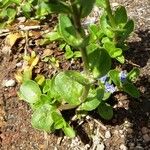
Veronica serpyllifolia
Thyme speedwell · Thyme-leaf speedwell · Thymeleaf speedwell · Thyme-leaved Speedwell · Bright-blue Speedwell
Description
Source: leafsnapVeronica serpyllifolia, commonly known as thyme-leaved speedwell, is a small herbaceous plant in the Plantaginaceae family. Native to Europe and Asia, it has also been introduced to other parts of the world. The plant can grow up to 30 cm tall and features thin stems with small, oval-shaped leaves arranged in opposite pairs. When crushed, the leaves emit a thyme-like aroma. The flowers of Veronica serpyllifolia are small and blue or purple in color, blooming from May to September. They grow on long stalks from the axils of the upper leaves. The plant prefers well-drained soils with full sun exposure but can also tolerate partial shade. Historically, Veronica serpyllifolia has been used for medicinal purposes due to its anti-inflammatory properties. It has also served as a natural remedy for respiratory ailments such as coughs and colds. Moreover, the plant is an important food source for bees, attracting pollinators such as bees and butterflies with its nectar-rich flowers. Overall, Veronica serpyllifolia is an attractive herbaceous plant that offers both medicinal benefits and ecological value by supporting pollinator populations.
🌳 Despite its unassuming appearance, thyme-leaved speedwell is a small but powerful force against soil erosion and pollution. Its dense, mat-like foliage stabilizes the soil, reducing runoff and preserving landscape integrity. Additionally, its presence has been proposed as a bioindicator for certain heavy metals, indicating a potential role in monitoring soil health.
🎭 Allegiance and faithfulness
Care Guide
💧 Water Every 7 days
Thyme-leaved speedwell flourishes in cool, temperate regions where moisture is consistent, and the soil is well-drained. It prefers moderate humidity and needs to be watered weekly to stay healthy. When grown outdoors, this plant benefits from natural rainfall, which often reduces the need for additional watering during the rainy season.
How should I water my Thyme-leaved speedwell plant?
To properly water the Thyme-leaved speedwell, it is recommended to use filtered water at room temperature. This is because tap water may contain harmful particles that can affect the plant's health. Additionally, the water should be at room temperature or slightly warmer since the plant is accustomed to a warm environment and cold water can be a shock to its system. It is advisable to avoid overhead watering as it can lead to foliage problems. Instead, water the plant by pouring filtered room temperature water onto the soil until it is completely soaked. This method is beneficial as it helps moisten the roots and enables them to spread through the soil and absorb the necessary nutrients.
What should I do if I give too much or too little water to my Thyme-leaved speedwell?
Overwatering is a common issue that can harm your Thyme-leaved speedwell. When this plant gets too much water, its stems and leaves may wilt and turn yellow. This can also lead to diseases like root rot, mold, and mildew, which can kill the plant. Underwatering is less common because the Thyme-leaved speedwell is drought-resistant, but it can still happen. In that case, the leaves will become brittle and brown. It's important to recognize the signs of overwatering early to prevent irreversible damage. Reduce watering if you see these signs and check if the soil drains well. Replace poor-draining soil with a loose and well-draining potting mix. If you notice signs of underwatering, simply water more frequently until the symptoms improve.
How often should I give water to my Thyme-leaved speedwell?
If your Thyme-leaved speedwell plant is in a pot, the most precise way to determine if it needs water is to check the soil moisture. Simply insert your finger into the soil and if the top two to three inches feel dry, it's time to water. If you have planted your Thyme-leaved speedwell outdoors in the ground, you can use a similar method to test the soil moisture. Again, if the first few inches of soil have dried out, it's a sign that it needs watering. During the spring and early fall, watering once a week is often sufficient. However, in extremely hot weather, you may need to water it two or more times a week. However, it's important to note that mature and well-established Thyme-leaved speedwell plants have a remarkable ability to tolerate drought conditions.
How much water does my Thyme-leaved speedwell plant need?
Here are some tips for watering your Thyme-leaved speedwell effectively: - Don't be afraid to give it a good amount of water when watering time comes. Make sure the first two to three inches of soil are dry before watering. - It's important to thoroughly water the plant, so supply enough water to completely soak the soil. - To ensure you've watered enough, make sure there is excess water flowing out from the drainage holes at the bottom of the pot. If not, you may have not given enough water. - However, be cautious not to let excessive water accumulate in the soil as it can be harmful to the plant. - On the other hand, if the water does not drain through the pot, it may be an indication of poorly draining soil. This should be avoided as it can negatively impact the plant's health. - If the plant is outdoors, 1 inch of rain per week should be sufficient.
How do I water my Thyme-leaved speedwell when it is growing at different stages?
The water needs of the Thyme-leaved speedwell can vary depending on its growth stages. In the first few years and when newly transplanted, it requires more water than usual. During these stages, the plant dedicates its energy to sprouting new roots that support future growth, and these roots need extra moisture. As the Thyme-leaved speedwell matures, it will require less water. However, during the bloom period, when the flowers are developing, it may need additional water due to the significant amount of moisture used by the plant.
☀️ Light Full sun
Thyme-leaved speedwell does best with abundant sunlight, though it can tolerate some shade. It is adapted to environments that are frequently sunny. Insufficient light can cause weak growth, while excessive exposure may scorch the leaves.
What are the sunlight requirements for Thyme-leaved speedwell?
Thyme-leaved speedwell requires a significant amount of sun exposure to thrive. Specifically, it benefits from full sun conditions, which involve more than 6 hours of sunlight daily, but it can also survive in partial sun, with about 3-6 hours of sunlight. It's vital to observe the movement of sunlight through your garden to choose locations providing the ideal mix of light and shade for this plant, ensuring it grows healthily and happily.
What essentials should be considered for the growth of Thyme-leaved speedwell?
Thyme-leaved speedwell thrives with plenty of sun exposure yet can also withstand some shade. It's crucial for its surroundings to usually be sunny, as inadequate light can cause weak growth, and excessive direct sunlight might scorch the leaves. For indoor plants or those in less sunny locations, utilizing artificial lighting, especially during winter or in darker spaces, is beneficial. LED lights, tailored to offer specific light wavelengths needed by plants, are recommendable. Full sun plants generally require 30-50W/sq ft of artificial light, partially sun plants 20-30W/sq ft, and full shade plants need 10-20W/sq ft. Position the light 12-36 inches from the plant to best mimic natural sunlight, ensuring 8-12 hours of light per day to promote optimal growth and health.
What are the common symptoms of inappropriate lighting conditions for Thyme-leaved speedwell?
When Thyme-leaved speedwell does not receive adequate light, several symptoms can manifest. These include smaller new leaves, leggy or sparse growth due to longer spaces between leaves or stems, faster leaf drop as plants conserve resources, slowed or halted growth as plants enter survival mode, paler new leaves indicating reduced chlorophyll, and chlorosis, where leaves lose their green color. Conversely, too much sunlight can cause sunscald, visible as damaged, pale, or necrotic areas on leaves or stems, leaf curling as a defense against water loss, wilting from excessive transpiration, and leaf scorching, evidenced by brown, dry edges on leaves. These symptoms highlight the plant's struggle with either excessive or insufficient light exposure.
How can I address lighting issues for Thyme-leaved speedwell to ensure its health?
To address insufficient sunlight, gradually move your Thyme-leaved speedwell to a sunnier spot, aiming for at least 6 hours of direct sunlight daily. Using south-facing windows and keeping curtains open during the day can maximize sunlight for indoor plants. If the plant is large or not easily movable, supplement with artificial light for at least 8 hours a day. For outdoor plants, avoid sudden changes in light intensity by gradually increasing sunlight exposure to prevent sunburn. If light is blocked, consider pruning obstructing trees or transplanting smaller plants to sunnier locations during their dormant period, ensuring ample sunlight and good drainage for optimal growth. It's important to note that parts of the plant damaged due to prior light conditions may not recover, but new growth should be healthy with improved light exposure.
🌡️ Temperature 0–32.2°C
Thyme-leaved speedwell does best in a temperature range of 32 to 90 °F (0 to 32 °C). It is native to temperate regions. During summer it benefits from cooler conditions to avoid heat damage, while in winter it can withstand frost. In spring and fall, change temperatures according to the plant’s active growth cycle.
What temperature conditions are ideal for Thyme-leaved speedwell?
Thyme-leaved speedwell, or Veronica serpyllifolia, thrives in a temperature range of 32 to 90°F (0 to 32°C). Native to temperate regions, it requires cooler temperatures during the summer to prevent heat damage, while in the winter, it can withstand frost. The plant has a high tolerance for cold and typically does not need special frost protection. However, if temperatures are expected to fall below -35°C, covering the plant with soil or straw can provide necessary cold protection. It's also advised to water the plant abundantly before the first freeze in autumn to keep the soil moist, aiding in drought prevention during winter and early spring.
How does Thyme-leaved speedwell react to low temperatures?
Thyme-leaved speedwell is notably cold-tolerant, with optimal growth above 0°C. Despite this, winter temperatures should ideally remain above -30°C. If exposed to conditions colder than -35°C, you might not observe immediate damage, but the plant's ability to sprout in spring could be diminished or even absent. To manage these effects in spring, it is recommended to remove any parts of the plant that have not sprouted.
How should I care for Thyme-leaved speedwell during high temperatures?
During the summer months, it is crucial to ensure that Thyme-leaved speedwell is not exposed to temperatures above 32°C. Exposure to temperatures exceeding 35°C can lead to symptoms such as lighter leaf coloration, leaf curling, susceptibility to sunburn, and in severe cases, wilting and drying of the entire plant. To mitigate these issues, removing sunburned and dried parts of the plant is advisable. Relocating the plant to a shaded area or employing shade cloth for protection against midday and afternoon sun will help. Additionally, watering the plant in the morning and evening will help maintain soil moisture, further contributing to the plant's well-being during hot conditions.
💨 Humidity
🪴 Soil 6-7
🌱 Fertilizer
One application of fertilizer in spring is generally enough for Thyme-leaved speedwell, though multiple feedings can maximize growth. Feed every month to a month and a half. Fertilization improves leaf appearance and function, helping maintain even color and a healthy texture. It also encourages root growth and nutrient uptake for long-term plant health.
🪴 Pot & Repot Every 12 months
✂️ Pruning
To improve the appearance and preserve nutrients, remove withered flowers from thyme-leaved speedwell. Prune the plants in the morning on dry days, trimming the flowering branches at their base. Regular pruning helps manage blooming, with a recovery period of around 20 days. In early spring, when ground temperatures rise above 0°C (32°F), prune any yellowed parts.
🌿 Propagating
🐛 Diseases & pets
☠️ Toxicity
Characteristics
- Plant Type
- Herb
- Life Cycle
- Perennial
- Genus
- Veronica
- Family
- Plantaginaceae
- Hardiness Zone
- 3-8
- Mature Height
- 20 cm
- Mature Spread
- 15 cm to 30 cm
- Leaf Color
- Green
- Leaf Type
- Semi-evergreen
- Flower Color
- White, Purple, Blue, Lavender
- Flower Size
- 5.08 cm to 10.16 cm
- Bloom Time
- Mid spring, Late spring, Early summer
- Planting Time
- Winter
- Harvest Time
- Early summer, Mid summer
- Native Area
- Sri Lanka, India, Austria, Turkey, Sweden, Mexico, Guatemala, Slovakia, Montenegro, Pakistan, Croatia, Slovenia, Belarus, Russia, Germany, Iceland, Estonia, Koppen, Romania, Latvia, Belgium, Portugal, Netherlands, France, Czech Republic, Bulgaria, Armenia, Poland, Greece, Ukraine, Serbia, China, Lithuania, Norway, Kyrgyzstan, Kazakhstan, Italy, Spain, Switzerland, Denmark, Japan, Finland, Bhutan, Iran, Albania, Ireland, United Kingdom, Hungary, Algeria, Azerbaijan