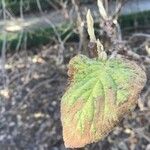
Viburnum lantanoides
Hobblebush · Moosewood · Witch-hobble · Alder-leaved Viburnum · American Wayfaring Tree
Description
Source: leafsnapViburnum lantanoides, commonly known as hobblebush or witch-hobble, is a deciduous shrub native to the eastern regions of North America. Typically, it grows to a height of 8-12 feet and spreads 10-15 feet wide. The plant features large, oval-shaped leaves that are dark green and turn reddish-purple in the fall. In the spring, hobblebush produces clusters of white flowers, which are followed by red berries in the summer. Although these berries are edible, they have a bitter taste and are not commonly consumed by humans. Hobblebush prefers moist, well-drained soil and partial shade but can also tolerate full sun if adequately watered. It is often used as an ornamental shrub for its attractive foliage and showy flowers. Beyond its aesthetic appeal, Viburnum lantanoides has medicinal properties. Native American tribes utilized various parts of the plant to treat colds, fevers, stomach ailments, and skin irritations. Overall, Viburnum lantanoides is an attractive shrub that offers both ornamental value and traditional medicinal uses, making it an interesting addition to any garden or landscape design project.
🌳 Hobble-Bush exhibits a notable feature: its branches grow toward sunlight, often forming horizontal "layers" that indigenous peoples used to navigate through dense forests. This growth habit also provides an important habitat for forest animals, helping to maintain biodiversity in the ecosystem where it occurs.
🎭 Strictness and harshness
Care Guide
💧 Water Every 7 days
Hobble Bush grows best in moist, well-draining soil and needs weekly watering to stay healthy. Once it's established, it can tolerate moderate drought conditions. Adding mulch is helpful for retaining moisture, particularly during the active growing season when the plant requires more water.
How should Hobble-Bush be watered effectively?
Soaker hoses are an effective way to prevent leaves and flowers from getting wet. They deliver water directly to the base of the plant, avoiding wetting the entire foliage. To use them, lay the hose around the plant and leave it on for 30 to 45 minutes. Check the soil afterwards to ensure it is moist but not overly wet. Another option is to use drip feeders to maintain moisture throughout the day. For potted plants like the Hobble-Bush, watering cans are recommended. Water the plant until you see the water dripping out of the bottom of the pots. Using portable watering cans enables you to reach the soil and ensure the water deeply penetrates the roots for better growth.
What should I do if I give Hobble-Bush too much or too little water?
If you have overwatered your Hobble-Bush plant, it is important to take steps to prevent any further damage. Although Hobble-Bush plants are hardy and have a better chance of surviving, they still require proper care. To help the plant recover, allow it to dry out by stopping the watering. These plants cannot tolerate being in water for extended periods of time, so it may be helpful to aerate the soil. Overwatering can cause symptoms such as premature yellow leaf-fall, reduced flower growth, and deformed buds. In more severe cases, the leaves may become wilted and turn brown, possibly leading to root rot. On the other hand, underwatering can show similar symptoms. If your Hobble-Bush plants are wilting, it may be a sign that they are not receiving enough water. To check for dehydration, feel the soil by sticking your finger into it. If the soil feels dry, this indicates that the plants are not getting enough water. In such cases, it is advisable to water the plants in the evening and regularly check the soil for dryness. It is important to follow a consistent watering schedule, typically in the morning.
How often should I give water to Hobble-Bush?
To ensure proper watering for the Hobble-Bush, it is recommended to water it deeply two to three times per week. If you live in a hot climate, you may need to water it more frequently. The plant has average water requirements and prefers moist but well-drained soil. An easy way to tell if it needs watering is to check the soil moisture level - if it is dry about 2-4 inches deep, it's probably time to water. When the Hobble-Bush is planted outdoors, watering it 1-2 times per week is sufficient, as it receives additional moisture from rainwater.
How much water does my Hobble-Bush plant need?
The amount of water needed can vary depending on several factors. These factors include the weather in the area, the amount of shade, and the specific species. In the case of the recently planted Hobble-Bush, it will require more water compared to the established ones. A weekly watering with a can of water should be sufficient for the Hobble-Bush, especially during its growing season or when it is in a pot. When the Hobble-Bush is outside, it is important to monitor the amount of rainfall it receives by using moisture meters. If the soil is dry, it is recommended to thoroughly water the Hobble-Bush using a sprinkler. To ensure the plants receive adequate moisture, it is best to water them less frequently but in larger amounts.
Why do I need to water my Hobble-Bush?
To ensure healthy growth, it's crucial to understand the watering requirements of any plant you're growing. Hobble-Bush, for instance, requires ample water to thrive and can wilt if not properly moistened. It's important to provide moist soil that is also well-drained for Hobble-Bush, as they are susceptible to root rot if their feet stay excessively wet. Both overwatering and underwatering can have negative effects, such as stunted growth and reduced flower production.
☀️ Light Partial sun
Hobble-Bush prefers spots with moderate sunlight but can also withstand intense light or complete shade. In its native growing environment it adjusts to different light levels. Too much or too little light can impact its health, yet hobble-bush generally remains resilient.
What are the sunlight requirements for plants?
Plants have varied sunlight requirements to thrive, ranging from partial sun, which entails about 3-6 hours of sunlight, to full sun or full shade, which requires above 6 hours of sunlight. It's essential to observe how sunlight moves through your garden throughout the day to find spots that offer an ideal balance of light and shade, tailored to each plant's needs. This careful selection ensures your plants grow healthy and happy.
How does Hobble-Bush adapt to light conditions?
Hobble-Bush, or Viburnum lantanoides, is reasonably adaptable to different lighting conditions, thriving in moderate to strong light or fully screened environments. While it can adjust well to varying levels of sunlight in its natural habitat and displays resilience against improper light exposure, both excessive and insufficient light can impact its health. To ensure optimal growth, especially indoors, providing adequate artificial lighting can be crucial during the less sunny months or in darker spaces. Artificial lights, particularly LED types that can be adjusted for specific wavelengths, support plant health by promoting growth. The intensity and duration of artificial lighting should mimic natural sunlight as closely as possible.
What are the symptoms of light deficiency in Hobble-Bush?
When a Hobble-Bush experiences insufficient light, it may show several symptoms indicating its struggle. These symptoms include smaller new leaves compared to older ones, leggy or sparse growth with longer spaces between leaves or stems, early leaf dropping to conserve resources, and a halt to new growth as the plant enters a survival mode. Additionally, new leaves might develop with lighter colors or irregular patterns, signifying a lack of chlorophyll. Excessive sunlight, conversely, can lead to chlorosis or the yellowing of leaves, sunscald, leaf curling, wilting due to significant water loss, and leaf scorching characterized by dry, crispy leaf edges.
What solutions can mitigate light deficiency or overexposure issues in plants?
To address light-related issues in plants like the Hobble-Bush, gradual adaptation to changing light conditions is key. For indoor plants, shifting them to sunnier spots progressively each week until they receive 3-6 hours of direct daily sunlight can help, as well as using artificial light sources like desk or ceiling lamps for at least 8 hours daily. Outdoor plants benefit from a similar gradual transition to sunnier locations to avoid sunburn. Reducing light obstructions by pruning trees or bush branches allows more sunlight to reach the plants. For smaller, easily movable plants, consider transplanting during their dormant period to a place with better sunlight and drainage. These steps encourage healthy new growth even if parts damaged by previous light conditions might not fully recover.
🌡️ Temperature 5–32.2°C
Hobble-Bush is a temperate woody plant that thrives within a temperature range of 41 to 90 ℉ (5 to 32 ℃). It naturally grows in cool, moist woods and along streams in eastern North America. In summer, Hobble-Bush can benefit from slight temperature adjustments and prefers cooler conditions of about 59 to 68 ℉ (15 to 20 ℃).
What is Hobble-Bush and where is it naturally found?
Hobble-Bush, known scientifically as Viburnum lantanoides, is a temperate woody plant native to cool, moist woods and along streams in eastern North America. It thrives in environments that prefer temperatures ranging from 41 to 90 °F (5 to 32 °C). Due to its robust nature, the Hobble-Bush is well-adapted to its native growth conditions, requiring little adaptation to thrive within its preferred temperature range.
How does Hobble-Bush handle seasonal temperature changes?
During the summer months, Hobble-Bush fares better in cooler temperatures, ranging between 59 to 68 °F (15 to 20 °C), enjoying slight adjustments to mimic its preferred cooler climate. Conversely, it possesses strong resistance to cold throughout the winter, typically not requiring special frost protection measures. However, in anticipation of temperatures dropping below its growth threshold (not specified in the provided data), it's advisable to implement cold protection by wrapping the trunk and branches with insulating materials. Additionally, ensuring the soil is amply watered before the first freeze of autumn can help the soil retain moisture, aiding the plant through winter and early spring by preventing drought and water scarcity.
What should be done if Hobble-Bush experiences extremely low temperatures?
Hobble-Bush is notably cold-tolerant, thriving best at temperatures above its minimum tolerance level (specific thresholds not provided in the provided data). If winter temperatures fall below this minimum threshold, there may not be noticeable damage during the winter itself, but the subsequent spring could reveal brittleness and dryness in branches, with no new shoots emerging. The recommended solution for this scenario is to prune any dead branches that have failed to produce new leaves come spring, which encourages new growth and helps maintain the health and aesthetics of the plant.
How does Hobble-Bush react to high temperatures and what are the solutions?
In the summer when temperatures climb above Hobble-Bush's comfortable range (specific thresholds not provided in the provided data), the plant may show signs of stress such as lighter leaf color, dry and withered leaf tips, and increased susceptibility to sunburn. To mitigate these effects, it's advisable to trim away the affected parts of the plant, relocate it to a shaded area away from the harsh midday and afternoon sun, or employ a shade cloth to artificially create more favorable light conditions. In addition, watering the plant during the cooler morning and evening hours can help maintain soil moisture, providing a more congenial environment for the Hobble-Bush during hotter periods.
💨 Humidity
🪴 Soil 5-6
🌱 Fertilizer
Fertilize your Hobble-Bush in early spring to encourage healthy growth. Regular feeding improves overall health, producing vigorous growth, greater tolerance of harsh conditions, and enhanced resistance to pests and diseases. Keep to a consistent fertilization routine for your Hobble-Bush to preserve vibrant, richly colored foliage and a lush look.
Why should I put fertilizer on my Hobble-Bush plant?
To ensure your Hobble-Bush thrives, regardless of the type you own, regular fertilization is key. By supplying the proper nutrients, you can promote robust growth and enhance its ability to withstand tough growing conditions, as well as fight diseases and pests. Preserving the beautiful foliage of your Hobble-Bush is important, so sticking to a specific fertilization schedule tailored to your plant is crucial. This will encourage the development of vibrant, lush leaves with a deep color.
When should I fertilize my Hobble-Bush?
To ensure healthy growth, it is recommended to fertilize your Hobble-Bush in late winter or early spring. This will provide the necessary nutrients for the upcoming warmer weather. If you live in a warm climate region, an additional fertilizer feeding in early fall can be beneficial. This not only adds nutrients for the following growing season but also helps the plant withstand winter and prevent foliage damage. Early fertilization promotes the growth of strong branches that can endure the cold winter.
When is it a bad idea to fertilize my Hobble-Bush?
There are certain times throughout the year when it's best to avoid fertilizing your Hobble-Bush plant. The first instance is during the winter months, specifically early to mid-winter, when the plant is dormant and doesn't require any nutrients. Additionally, it's not advisable to fertilize the plant in late spring or during the entire summer season. The weather during this period tends to be hotter and drier, which can have a negative impact on the plant if fertilized. To prevent any problems, it's recommended to stick to a fertilization schedule that only involves feeding the plant in early spring and early fall.
What kind of fertilizer should I use for my Hobble-Bush plant?
Hobble-Bush primarily needs nitrogen as the most important nutrient, but phosphorus and potassium are still vital. A balanced fertilizer like 10-10-10 can be effective because Hobble-Bush requires all three main nutrients. However, a more specific nutrient ratio can promote optimal growth, with slightly higher nitrogen ratios like 10-6-4 being preferable. Granular or liquid-based fertilizers can both be used for fertilizing.
How can I make my Hobble-Bush grow better?
To fertilize your Hobble-Bush using granular fertilizer, simply sprinkle it on the soil at the right time. The nutrients in granular fertilizer are released slowly over time. Before applying the fertilizer, it's a good idea to lightly water your Hobble-Bush. Alternatively, you can use liquid fertilizer, although this is less common. To use liquid fertilizer, mix it with water and pour it around the base of your Hobble-Bush. Sometimes, it's helpful to do a soil test before fertilizing to check if you need to adjust the pH.
🪴 Pot & Repot 2-3 years
When repotting Hobble-Bush, choose a pot 1–2 inches (2.5–5.1 cm) larger with ample drainage. Use a well-draining potting mix. Repot in spring or fall, ensuring the root ball sits slightly lower than the rim of the flower pot. Water thoroughly after repotting and place it in a warm spot with indirect sunlight.
✂️ Pruning
Hobble-Bush is a deciduous shrub known for its large white flowers and requires pruning in early spring to thrive. Use thinning cuts to improve air circulation and remove any dead wood. To encourage new growth and maintain the shape of the shrub, trim back any overgrown branches. Regular pruning not only promotes healthier blooms but also helps prevent disease, providing the best care for your Hobble-Bush.
🌿 Propagating
🐛 Diseases & pets
☠️ Toxicity
Characteristics
- Plant Type
- Shrub
- Life Cycle
- Perennial
- Genus
- Viburnum
- Family
- Viburnaceae
- Hardiness Zone
- 5-8
- Mature Height
- 2.13 m to 3.96 m
- Mature Spread
- 2.44 m to 3.05 m
- Leaf Color
- Green, Yellow, Red, Purple
- Leaf Type
- Deciduous
- Flower Color
- White
- Flower Size
- 3.05 cm to 5.08 cm
- Bloom Time
- Late spring, Early summer
- Planting Time
- Autumn, Winter
- Harvest Time
- Mid summer