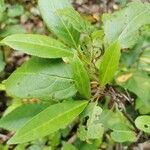
Viburnum nudum
Smooth witherod · Possum haw · Possumhaw Viburnum · Wild Raisin · Smooth white-rod
Description
Source: leafsnapViburnum nudum, commonly known as possumhaw viburnum, is a deciduous shrub native to the eastern United States. Typically, it reaches a height of 6-12 feet and exhibits an upright, spreading habit. The dark green, glossy leaves have slightly serrated edges and transform into vibrant shades of red and purple in the fall. In late spring or early summer, possumhaw viburnum produces clusters of small white flowers, which are then followed by bright red berries in late summer or early fall. These berries persist on the plant well into winter, providing a vital food source for birds during that time. This plant thrives in moist to wet soils but can tolerate some drought conditions once established. It grows best in full sun to partial shade, though it can also adapt to full shade conditions. Possumhaw viburnum is an excellent choice for naturalizing areas or incorporating into mixed border plantings due to its attractive foliage, flowers, and fruit that provide interest through multiple seasons. Additionally, it offers essential habitat for wildlife, particularly birds, who rely on its berries when food is scarce in winter. Overall, Viburnum nudum is a visually appealing shrub with year-round interest and ecological benefits, making it a valuable addition to any landscape design plan.
🌳 Smooth witherod serves as a notable host plant for the larvae of the spring azure butterfly (Celastrina ladon). This butterfly is commonly seen in woodlands where smooth witherod is present, highlighting the plant’s important role in supporting local biodiversity. The spring azure depends on smooth witherod as a primary food source during its larval stage, illustrating a complex ecological relationship often overlooked when assessing plant usefulness beyond human-centered purposes.
🎭 Gaelic monarch, the lord's lawful authority
Care Guide
💧 Water Every 7 days
Smooth witherod thrives in environments with seasonal rainfall and prefers consistently moist soil. Once established, it is moderately drought-tolerant but benefits from watering every 1-2 weeks. This adaptable shrub is ideal for outdoor settings, where it enhances the landscape with its lush foliage and attractive fruit displays.
How should I water Smooth witherod plants?
Soaker hoses are a great way to keep leaves and flowers moist without wetting the entire plant. To use them, lay the hose around the plant and leave it on for about 30 to 45 minutes until the soil is moist but not overly wet. You can connect your regular hose to the soaker hose and cover it with mulch. Alternatively, some people use drip feeders to keep the soil moist throughout the day. When watering Smooth witherod in pots, it's best to use a watering can. Pour water slowly until you see it dripping down from the bottom of the pots. Portable cans are helpful for reaching the soil and allowing the water to penetrate the roots deeply for better growth.
What should I do if I give Smooth witherod too much or too little water?
If you have overwatered Smooth witherod, it is important to take steps to prevent further damage. Smooth witherod plants are hardy, which means they have a better chance of surviving. To help the plant recover, allow it to dry out by stopping watering. It is crucial to avoid keeping the roots sitting in water for too long, so aerating the soil can be helpful. Some signs of overwatering include the premature yellowing and falling of leaves, a decrease in flowers, and misshapen buds. In more severe cases, the leaves may become wilted and brown, indicating potential root rot. Interestingly, the symptoms of underwatering can be similar. If the Smooth witherod plant is wilting, it may be a sign of not enough watering. Check the moisture of the soil by inserting your finger into it; if the soil is excessively dry, the plant may be dehydrated. To address this issue, consider adding water in the evening. Remember to regularly check the soil moisture and follow the recommended watering schedule, which typically involves watering in the morning.
How frequently do I need to water Smooth witherod?
For the Smooth witherod plant, it is recommended to water it deeply two to three times a week. However, if you live in a hot climate, you should water it more frequently. The plant has average water needs and requires moist but well-drained soil. A useful tip is to check the soil's moisture level by feeling it with your fingertips. If it is dry about 2-4 inches down, it might be the right time to water the plant. If the plant is outdoors, watering it 1-2 times a week is sufficient because it receives additional moisture from rainwater. This method is ideal for conserving water.
How much water does my Smooth witherod plant need?
The amount of water needed can vary depending on various factors like the weather, level of shade, and the species of plant. Specifically, if you have recently planted a Smooth witherod, it will require more water compared to established ones. In general, providing a can of water per week should suffice, especially during the growing season or if the Smooth witherod is grown in pots. Additionally, when these plants are outdoors, it is important to measure the amount of rainfall they receive using moisture meters. If the soil is dry, it is advisable to thoroughly water them with a sprinkler. To ensure the Smooth witherod receives enough moisture, it is best to water them less frequently but more thoroughly.
Why is it necessary to water my Smooth witherod plant?
It's crucial to understand the watering requirements of your plants, regardless of their type. Smooth witherod, for example, needs ample water to thrive and can easily wilt if not adequately hydrated. However, it's important to strike a balance - the soil should be moist, but well-drained to prevent root rot. Overwatering can cause issues like a decrease in flower production and stunted growth, similar to underwatering.
☀️ Light Full sun
Smooth witherod performs best in full sun but can tolerate some shade. Native to open forests, the plant stays healthiest with abundant sunlight. Insufficient light can impair flowering. Excessive sun exposure without enough moisture can cause scorching.
What are the sunlight requirements for Smooth witherod?
Smooth witherod requires full sun exposure to thrive, benefitting from more than 6 hours of sunlight daily. It can also grow in partial sun, with about 3-6 hours of sunlight. This plant originates from open forests and maintains optimal health when it receives plenty of sunlight, although it can endure some shade. Insufficient sunlight may affect its flowering, and overexposure to the sun without adequate moisture can lead to scorching. Observing how sunlight moves through your garden and choosing spots that provide a balance of light and shade will ensure the happiness of your plants.
How can I provide adequate lighting for Smooth witherod indoors?
For indoor Smooth witherod plants, artificial lighting can be a crucial solution when natural sunlight is insufficient, especially during winter or in less sunny spaces. LED lights are recommended because they can be customized to provide the wavelengths of light needed by plants. Full sun plants need 30-50W/sq ft, partial sun plants need 20-30W/sq ft, and full shade plants need 10-20W/sq ft of artificial light. The light source should be placed 12-36 inches above the plant to mimic natural sunlight, and most plants require 8-12 hours of light per day to mimic natural daylight hours effectively.
What are signs of insufficient light in Smooth witherod?
Signs of insufficient light in Smooth witherod include the growth of smaller leaves than usual once they have matured, leggy or sparse growth with longer spaces between leaves or stems, which can make the plant appear weak. The plant may also experience faster leaf drop as it conserves resources, or halt new growth entirely, entering a survival mode due to poor light conditions. New leaves may develop with paler colors, indicating a lack of chlorophyll and essential nutrients. Lastly, the plant may suffer from chlorosis, where leaves lose their green color and turn yellow due to a breakdown of chlorophyll.
How can I manage the symptoms of excessive sunlight exposure in Smooth witherod?
Excessive sunlight can cause symptoms such as sunscald, leaf curling, wilting, and leaf scorching in Smooth witherod. These issues arise from intense sunlight exposure damaging the plant's tissue or causing increased water loss. To manage these symptoms, ensure your plant is not exposed to more sunlight than it can handle. For indoor care, gradually move your plant to sunnier locations each week, allowing at least 6 hours of sunlight daily, and consider artificial lighting options to supplement light. For outdoor plants, relocate them gradually to prevent sunburn, and observational approaches such as pruning trees or transplanting to sunlight-rich locations can reduce sunlight obstructions. It's important to remember that while parts of the plant damaged by insufficient light may not recover, new growth should be healthy with improved light conditions.
🌡️ Temperature 5–35°C
The smooth witherod prefers an average temperature range of 41 to 95 ℉ (5 to 35 ℃). It is naturally found in temperate regions where average temperatures range from 41 to 68 ℉ (5 to 20 ℃). In winter it can tolerate colder conditions, but in summer it prefers shade from direct sunlight to prevent heat stress.
What is the preferred temperature range for Smooth Witherod?
Smooth Witherod prefers a temperature range of 41 to 95 °F (5 to 35 °C). Naturally, it grows in temperate regions where average temperatures vary from 41 to 68 °F (5 to 20 °C). While it can tolerate colder temperatures in winter without requiring special frost protection measures, during summer, it is best to provide shade to prevent heat stress.
How can I protect Smooth Witherod in winter?
To protect Smooth Witherod during winter, especially if temperatures are expected to drop below the plant's cold tolerance limit, you can wrap the trunk and branches with non-woven fabric or cloth. Additionally, watering the plant abundantly before the first freeze of autumn to ensure the soil remains moist and enters a frozen state can help prevent drought and water scarcity during winter and early spring.
What are the symptoms and solutions for Smooth Witherod exposed to low temperatures?
If Smooth Witherod is exposed to temperatures below its cold tolerance limit, there may not be noticeable immediate changes, but the branches can become brittle and dry by spring, failing to produce new shoots. The solution for this is to prune away any dead branches in the spring to promote new growth.
What are the symptoms and solutions for Smooth Witherod exposed to high temperatures?
Exposure of Smooth Witherod to temperatures above its heat tolerance limit can cause the leaves to lighten in color, the tips to become dry and withered, and make the plant more susceptible to sunburn. To mitigate these issues, trim away the sunburned and dried-up parts of the plant. Moving the plant to a shaded location or using a shade cloth can protect it from the midday and afternoon sun. Also, watering the plant in the morning and evening keeps the soil moist and helps the plant to cope with heat.
What is the botanical name of Smooth Witherod?
The botanical name of Smooth Witherod is Viburnum nudum.
💨 Humidity
🪴 Soil 5-6
🌱 Fertilizer
Encourage healthy growth by fertilizing your Smooth witherod in early spring. Regular feeding boosts overall vigor, producing strong growth, improved tolerance of harsh conditions, and increased resistance to pests and diseases. Stick to a consistent fertilization schedule for your Smooth witherod to preserve bright, deeply colored foliage and a lush appearance.
Why should I put fertilizer on my Smooth witherod?
To ensure the best overall health for your Smooth witherod, give it regular fertilization regardless of the type you have. Proper nutrients will boost its growth and make it more resilient to harsh conditions, as well as help it fight diseases and pests. Keeping your Smooth witherod's foliage intact is important because it adds to its attractiveness. Maintain a specific fertilization schedule for your Smooth witherod to encourage vibrant, lush leaves with a deep color.
When should I fertilize my Smooth witherod?
To ensure healthy growth of your Smooth witherod, the first fertilization should take place in late winter or early spring. This provides the necessary nutrients for the plant to thrive once the weather warms up. If you live in a warm climate region, it is beneficial to give your Smooth witherod an additional fertilizer feeding in early fall. This not only adds nutrients to the soil for the following growing season but also helps the plant withstand the winter cold without foliage damage. Fertilizing earlier in fall ensures that the new branches have enough time to grow and be resilient during the cold winter.
When is it better not to add fertilizer to my Smooth witherod?
There are specific times when you should avoid fertilizing your Smooth witherod. One is during early and mid-winter when the plant is dormant and doesn't require feeding. Another is during late spring and summer, when the weather is hotter and drier, which can have a detrimental effect on the plant if fertilized. To prevent any problems, it is best to stick to a fertilization schedule that involves feeding only in early spring and early fall.
What kind of fertilizer does my Smooth witherod plant need?
Nitrogen is typically the most important nutrient for a Smooth witherod, but this doesn't mean that phosphorus and potassium should be disregarded. In fact, a decent amount of all three nutrients is typically needed for your Smooth witherod's health. This is why a balanced fertilizer, like a 10-10-10 ratio, can be effective. However, it's worth noting that a more refined nutrient ratio often leads to optimal growth. In many cases, fertilizers with a slightly higher nitrogen content, such as a 10-6-4 ratio, tend to work best. When it comes to fertilizing, you have the option of using either granular or liquid-based fertilizer.
How should I fertilize my Smooth witherod?
To fertilize your Smooth witherod, you have two options: using a granular fertilizer or a liquid fertilizer. Let's start with the granular fertilizer. Simply sprinkle it on the soil at the appropriate time. The slow-release nature of the granules will gradually release nutrients into the soil. It's important to lightly water your Smooth witherod before applying the fertilizer. If you prefer a liquid fertilizer, you can mix it with water and then pour the mixture onto the soil around the base of your plant. This method is less common than using granular fertilizers. Before fertilizing, it's a good idea to perform a soil test to determine if any pH adjustments are necessary.
🪴 Pot & Repot
✂️ Pruning
Smooth witherod features glossy leaves and white flowers and benefits from pruning in early spring. To maintain its shape and encourage blooming, remove any dead or crossing branches to improve air circulation, and thin the canopy to allow sunlight to reach all parts of the plant. Be sure to use clean, sharp tools to avoid causing damage.
🌿 Propagating
🐛 Diseases & pets
☠️ Toxicity
Characteristics
- Plant Type
- Shrub
- Life Cycle
- Perennial
- Genus
- Viburnum
- Family
- Viburnaceae
- Hardiness Zone
- 5-9
- Mature Height
- 1.52 m to 1.83 m
- Mature Spread
- 1.52 m to 1.83 m
- Leaf Color
- Green, Red, Purple
- Leaf Type
- Deciduous
- Flower Color
- White, Cream
- Flower Size
- 2.54 cm
- Bloom Time
- Late spring, Early summer
- Planting Time
- Spring, Autumn
- Harvest Time
- Mid summer
- Native Area
- Canada