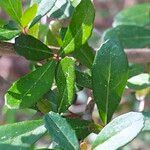
Viburnum obovatum
Walter's viburnum · Small-leaf viburnum · Small-Leaf Arrow-Wood · Small-leaf arrowwood · Walter viburnum
Description
Source: leafsnapViburnum obovatum, commonly known as Walter's Viburnum, is a species of flowering plant in the Adoxaceae family. Native to the southeastern United States, it thrives in wetlands, swamps, and along stream banks. This evergreen shrub can grow up to 20 feet tall and 15 feet wide, featuring a dense growth habit. Its glossy green leaves are oval-shaped and taper toward the base. In spring, Viburnum obovatum produces clusters of small white flowers, which are followed by blue-black berries in late summer. Walter's Viburnum is an excellent landscaping choice due to its attractive foliage and showy flowers. Additionally, it provides habitat for wildlife, such as birds that feed on its berries. The plant prefers moist soil conditions but can tolerate some drought once established. It grows best in full sun or partial shade, though it can also adapt to full shade conditions. Overall, Viburnum obovatum is a versatile shrub that enhances the beauty of any landscape while providing important ecological benefits for local wildlife populations.
Care Guide
💧 Water Every 7 days
Walter's viburnum thrives in areas with moderate rainfall and needs watering every one to two weeks. As an evergreen plant, it keeps its foliage throughout the year and requires consistent moisture for optimal growth and appearance.
☀️ Light Full sun
Walter's viburnum is native to open habitats like sunny meadows and forest edges where light is abundant. It does best in full sun but will also tolerate partial sun, adapting well to different light levels.
🌡️ Temperature 15–35°C
Walter's viburnum is fairly adaptable to temperature, able to endure higher heat and wider temperature fluctuations. In hot conditions, you should pay attention to irrigation and provide suitable shade to prevent sunburn. Conversely, Walter's viburnum tolerates low temperatures poorly. It can handle some cold, but very low temperatures can cause frost damage.
What is the botanical name of Walter's Viburnum?
The botanical name of Walter's Viburnum is Viburnum obovatum.
💨 Humidity
🪴 Soil 5-6
🌱 Fertilizer
Timing is essential for fertilizing Walter's viburnum. Apply fertilizer in early spring and continue monthly until early summer. The fertilizer promotes attractive blooms and supplies energy during both dormant and active growth phases.
🪴 Pot & Repot
✂️ Pruning
Walter's viburnum is known for its dense foliage and fragrant white flowers. To shape the plant and promote healthy growth, prune it from early to late winter, paying special attention to removing any dead or crossing branches. After the flowering period, perform additional pruning to maintain its appearance and encourage future blooms. Regular care helps maintain a compact form, making Walter's viburnum an excellent choice for hedges. Always use clean tools when pruning to prevent the spread of disease.
🌿 Propagating
🐛 Diseases & pets
☠️ Toxicity
Characteristics
- Plant Type
- Shrub
- Life Cycle
- Perennial
- Genus
- Viburnum
- Family
- Viburnaceae
- Hardiness Zone
- 7-9
- Mature Height
- 1.83 m to 8.23 m
- Mature Spread
- 1.83 m to 3.05 m
- Leaf Color
- Dark Green, Forest Green
- Leaf Type
- Evergreen
- Flower Size
- 0.51 cm to 1.02 cm
- Bloom Time
- Early spring, Mid spring
- Planting Time
- Spring, Summer, Autumn
- Harvest Time
- Late summer, Early fall, Mid fall