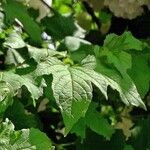
Viburnum opulus
Highbush-Cranberry · Guelder Rose · Snowball · Crampbark · Cranberrybush
Description
Source: leafsnapViburnum opulus, commonly known as the European cranberry bush or guelder rose, is a deciduous shrub that belongs to the Adoxaceae family. Native to Europe and Asia, it has been widely cultivated as an ornamental plant in North America. Typically, the plant grows up to 4 meters in height and features a spreading habit with arching branches. The leaves of Viburnum opulus are opposite, lobed, and toothed, displaying a dark green color that turns reddish-purple in autumn. Its flowers, which bloom from May to June, are arranged in white or pinkish-white clusters. These blossoms give way to bright red berries that persist into winter. Viburnum opulus prefers moist soils but can tolerate dry conditions once established. It thrives best in full sun or partial shade but can also endure full shade. The plant serves several purposes. Ornamental usage is common due to its attractive foliage and showy flowers. Additionally, it has medicinal applications because of its anti-inflammatory properties. The berries, while sour, are edible and often used in making jams, jellies, and other culinary products. Overall, Viburnum opulus is an attractive shrub with multiple benefits, making it an excellent addition to gardens and landscapes alike!
🌳 The European cranberry bush is more than an ornamental shrub; its uses reach into a variety of clever practical applications. Its sturdy branches are sometimes used to form garden structures, and its bark has long been brewed into a soothing tea. The wood of the European cranberry bush is prized for its fine grain and is occasionally used in cabinetmaking. Additionally, the plant's tannin-rich leaves are employed to soften leather, and its berries can be made into dyes for textiles, though that application is less common.
🎭 Affection, Psychic abilities, Restoration, Sanctity, Cultural origins, The loveliness of a young woman
Care Guide
💧 Water Every 7 days
The American Cranberry Bush thrives in moisture-rich environments, striking a balance between staying hydrated and being resilient to drought. It prefers consistent moisture and should ideally be watered every 1-2 weeks. When grown outdoors, it benefits from rainwater. Providing adequate water during the growing season is essential for healthy leaf development and overall plant health.
When Should I Water My American Cranberry Bush?
Proper and timely watering plays a crucial role in maintaining the overall health and development of the American Cranberry Bush. Check the soil moisture around the base of the plant; if the top 1 to 2 inches feels dry, it's time to water. Wilted or droopy leaves are another indicator, as is a change in leaf color to yellow or brown. For container plants, a lighter pot indicates the need for water. Be mindful of seasonal variations and increased water requirements during hot, dry weather, and the pre-flowering stage. Watering too early can risk root diseases, while too late can cause wilting or even plant death.
How Should I Water My American Cranberry Bush?
Watering your American Cranberry Bush properly involves watering deeply and infrequently to encourage deep root growth. Aim to moisten the entire root zone, located in the top 12-18 inches of soil. Use a watering can with a rose attachment or a sprinkler head to distribute water evenly without causing soil erosion. This method helps the plant develop tolerance to dry periods.
How Much Water Does American Cranberry Bush Really Need?
The American Cranberry Bush requires approximately 1 to 2 inches of water per week, depending on factors like temperature, humidity, and sun exposure. It's important to keep the soil evenly moist, especially since its roots are relatively shallow, reaching a depth of 12 to 18 inches. Monitor soil moisture closely and adjust watering accordingly. Mulching can help retain soil moisture, and regular adjustment of watering frequency during heavy rainfall or drought is crucial.
What Kind of Water is Best for American Cranberry Bush?
American Cranberry Bush thrives on rainwater or filtered tap water, which are less likely to contain harmful additives. If using tap water, it's advisable to let it sit for 24 hours to allow chlorine to evaporate or to filter it to remove contaminants. Avoid using softened water due to its high sodium content. Lukewarm water is recommended to prevent shocking the plant.
How Do American Cranberry Bush's Watering Needs Change with the Seasons?
Seasonally adjusting your watering schedule is key. In spring, water thoroughly when the top soil layer appears dry. Increase watering in summer to ensure consistent soil moisture, watering in early morning or late evening to reduce evaporation. As temperatures drop in autumn, reduce watering frequency. During winter's dormancy phase, water sparingly, only when the soil becomes almost dry, to prevent root waterlogging and freezing.
☀️ Light Partial sun
The european cranberry bush grows best with moderate sunlight but can tolerate very high or very low light levels. Having evolved in areas with a range of light conditions, it will develop well in sheltered, darker spots or in fully exposed sites. However, too much light can lower leaf moisture and cause dryness, while too little light slows growth and results in a stunted shrub.
What are the sunlight requirements for plants in general?
Plants require varying amounts of sunlight depending on their type. Partial sun plants need about 3-6 hours of sunlight, whereas full sun or full shade plants require more than 6 hours of sunlight. It's important to observe the movement of sunlight through your garden to ensure you place your plants in locations that provide the ideal balance of light and shade, ensuring their growth and health.
How does the American Cranberry Bush adapt to different light conditions?
The American Cranberry Bush is versatile in its sunlight needs, thriving in both moderate and extreme light conditions. Originating from areas with a wide range of sunlight exposure, it can grow well in both dark, sheltered areas and fully exposed locations. However, too much sunlight can cause leaf dryness due to moisture loss, while too little sunlight can slow down growth, resulting in a dwarfed shrub. Artificial lighting can serve as a vital solution for indoor plants when natural sunlight is insufficient, with LED lights being a popular choice due to customization for specific wavelengths needed by plants.
What are the symptoms of improper light conditions in an American Cranberry Bush?
Improper light conditions can lead to several symptoms in an American Cranberry Bush including small or paler new leaves, leggy or sparse growth, faster leaf drop, slower or halted growth, chlorosis, sunscald, leaf curling, wilting, and leaf scorching. These symptoms indicate either too much or too little light exposure, affecting the plant's ability to photosynthesize, maintain moisture, and overall health.
What solutions are recommended for addressing light-related issues in an American Cranberry Bush?
To address light-related issues in an American Cranberry Bush, gradually acclimatize the plant to its ideal sunlight conditions. For indoor plants, move them to sunnier spots weekly until they receive 3-6 hours of daily sunlight or use artificial lighting for at least 8 hours each day. Outdoor or ground-planted bushes should be moved to optimal sunlight locations gradually to prevent sunburn, and obstructions like trees may need to be pruned to improve light exposure. For smaller plants, consider transplanting during the dormant period to a better-lit location.
🌡️ Temperature 5–32.2°C
The European cranberry bush does best in a temperate climate and prefers temperatures between 41 and 89°F (5 and 32°C). It naturally occurs in cool, wet habitats like bogs and swamps. In hot summer periods, the plant should be kept watered to prevent drought stress. During colder months, it may need mulching or other protective measures to withstand freezing temperatures.
What climate is best for an American Cranberry Bush?
The American Cranberry Bush thrives in a temperate climate with a preferred temperature range of 41 to 89°F (5 to 32°C). It originates from cool, moist environments like bogs and swamps. During the hot summer months, it's crucial to ensure the plant remains well-watered to prevent drought stress. Conversely, during colder months, it may need mulching or additional protection to survive freezing temperatures. While the bush has strong cold resistance and doesn't usually require special frost protection measures, wrapping the trunk and branches with non-woven fabric or cloth can provide necessary cold protection if winter temperatures are expected to drop severely.
How should I care for my American Cranberry Bush in winter?
To care for an American Cranberry Bush in winter, it's advised to water the plant abundantly before the first freeze in autumn, ensuring the soil is moist when it enters a frozen state. This helps prevent drought and water scarcity during winter and early spring. Although the bush has significant cold resistance, if temperatures are expected to drop below the growth limit, you should consider providing additional cold protection by wrapping the plant parts.
What are the signs and solutions for an American Cranberry Bush exposed to low temperatures?
When exposed to low temperatures, an American Cranberry Bush is quite resilient, flourishing best above its suitable growth minimum temperature. If kept above the tolerable growing minimum during winter, it generally does well. However, if temperatures fall below the growth limit temperature, there might not be noticeable changes during winter, but come spring, the branches may turn brittle and dry, with no new shoots emerging. The solution for this is to prune away any dead branches in spring to encourage new growth.
How does high temperature affect the American Cranberry Bush, and what are the corrective actions?
During the summer, it's vital to keep the American Cranberry Bush below its suitable maximum growth temperature. Exceeding the tolerable growing maximum temperature can cause the leaves to lighten in color and the tips to become dry and withered, increasing susceptibility to sunburn. To mitigate high temperature stress, trim away any sunburned or dried parts of the plant. Move the bush to a shaded location or use a shade cloth to protect it during the midday and afternoon sun. Additionally, water the bush in the morning and evening to keep the soil moist and reduce stress.
💨 Humidity normal (40-60%)
This plant will thrive in moderate humidity, which is probably the level in your home. However, misting it a few times a week can be very beneficial. Make sure the room has good ventilation.
🪴 Soil 5-6
🌱 Fertilizer
Timing is essential for feeding the European cranberry bush. Begin fertilizing in early spring and repeat monthly up to early summer. Fertilizer encourages attractive blooms and supplies energy during both dormant and active growth periods.
Why should I put fertilizer on my American Cranberry Bush?
To maximize the beauty of your American Cranberry Bush, it is crucial to fertilize it. By providing fertilizer, you can ensure that your bush produces vibrant blooms. The ideal time for fertilization is early spring, which will result in outstanding flowers during that season. Additionally, fertilizer supplies ample energy to the bush, allowing it to store nutrients in the soil during dormant growth phases. By giving your American Cranberry Bush extra nutrients in the fall or late spring, you can enhance its energy reserves for when it enters an active growth phase again.
🪴 Pot & Repot 2-3 years
When repotting European cranberry bush, choose a pot 1–2 inches (2.5–5.1 cm) larger with ample drainage. Use a well-draining potting mix. Repot in spring or fall, ensuring the root ball sits slightly below the rim of the flower pot. Water thoroughly after repotting and place it in a warm spot with indirect sunlight.
✂️ Pruning
The American Cranberry Bush showcases beautiful white flowers and vibrant red berries. To maintain its health and appearance, it's essential to prune it in early spring. This allows you to remove any damaged branches, improve air circulation, and shape the plant effectively. Pruning before new growth begins reduces stress on the plant, encourages blooming, and helps manage its size. Be sure to use clean, sharp tools during this process to prevent the spread of disease.
🌿 Propagating
🐛 Diseases & pets
☠️ Toxicity
Characteristics
- Plant Type
- Shrub
- Life Cycle
- Perennial
- Genus
- Viburnum
- Family
- Viburnaceae
- Hardiness Zone
- 4-8
- Mature Height
- 1.52 m to 3.96 m
- Mature Spread
- 2.44 m to 4.57 m
- Leaf Color
- Green, Red, Yellow
- Leaf Type
- Deciduous
- Flower Color
- White
- Flower Size
- 1.27 cm to 2.54 cm
- Bloom Time
- Late spring, Early summer
- Planting Time
- Spring, Autumn
- Harvest Time
- Mid summer
- Native Area
- Turkey, Sweden, Austria, Slovakia, Montenegro, Slovenia, Croatia, Belarus, Russia, Germany, Estonia, Romania, Latvia, Belgium, Netherlands, France, Tajikistan, Czech Republic, Bulgaria, Armenia, Poland, Greece, Ukraine, Serbia, Lithuania, Norway, Italy, Kazakhstan, Spain, Switzerland, Denmark, Finland, Albania, Ireland, United Kingdom, Hungary, Azerbaijan