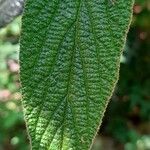
Viburnum rhytidophyllum
Leatherleaf viburnum · Wrinkled viburnum · Wayfaring-bush · Leatherleaf arrowwood
Description
Source: leafsnapViburnum rhytidophyllum, commonly known as Leatherleaf Viburnum, is a large evergreen shrub that belongs to the Adoxaceae family. Native to China, it was introduced to the United States in the 1800s. The plant can grow up to 10-15 feet tall and wide, featuring a dense, rounded shape. The leaves of Leatherleaf Viburnum are large, leathery, and dark green with a wrinkled texture on the upper surface. The undersides of the leaves are covered with tiny hairs that give them a fuzzy appearance. In late spring or early summer, clusters of small white flowers bloom at the ends of branches, followed by red berries in the fall. Leatherleaf Viburnum thrives in well-drained soil and partial shade but can tolerate full sun if it receives adequate moisture. It is an excellent choice for hedges or as an accent plant due to its attractive foliage and year-round interest. The plant has no major pest or disease problems but may be susceptible to leaf spot if grown in wet conditions for extended periods. Pruning should be done after flowering, as the plant blooms on old wood. Overall, Viburnum rhytidophyllum is an appealing evergreen shrub that provides year-round interest with its leathery foliage, showy flowers, and subsequent berries, making it an excellent addition to any landscape design or garden setting.
🌳 Leatherleaf viburnum is chiefly valued for its ornamental role in landscaping. Its sturdy nature and evergreen foliage make it well-suited for use as hedges and privacy screens. Notably, its leathery leaves can remain through severe winters, underscoring its ability to provide year-round visual interest. In certain areas, leatherleaf viburnum serves as a habitat plant for wildlife, supplying shelter and food for birds and insects and thereby supporting local biodiversity. A less widely known application is its potential for phytoextraction, where plants are employed to extract contaminants from soil. The plant’s hardiness indicates it may be useful in remediation projects on polluted sites.
🎭 Thoughts about Heaven
Care Guide
💧 Water Every 7 days
The leatherleaf viburnum thrives in moderately moist soil and requires watering every 1-2 weeks, allowing the soil to dry slightly between waterings. While it has moderate drought tolerance, mulching is beneficial to help retain moisture, particularly during its active growing season. This plant is typically cultivated outdoors for its ornamental value.
What is the best way to give water to Leatherleaf viburnum?
Soaker hoses are a great way to keep leaves and flowers moist without getting the whole plant wet. To use them, place the hose near the base of the plant, turn it on for 30-45 minutes, and wait for the soil to become moist but not too wet. You can connect a regular hose to the soaker hose and cover it with mulch for even better results. Some people use drip feeders to keep moisture consistent throughout the day. When watering Leatherleaf viburnum in pots, use a watering can and wait for the water to drip out of the bottom of the pot. Using a portable can allows you to reach the soil and ensure the roots are deeply hydrated for optimal growth.
What do I do if I give Leatherleaf viburnum too much or too little water?
If you have overwatered your Leatherleaf viburnum, take a step back and prevent further damage. These plants are hardy and have a good chance of surviving. Let the plant dry out completely and stop watering it, as its roots do not tolerate sitting in water for long periods. Aeration can help with this issue. Some symptoms of overwatering include yellow leaves falling prematurely, fewer flowers, and misshapen buds. In more severe cases, the leaves may wilt and turn brown. Long-term overwatering can lead to root rot. Symptoms of underwatering can be similar. If your Leatherleaf viburnum is wilting, it may be a sign of not enough water. Check the soil by sticking your finger into it. If it feels dry, this is a sign of dehydration. It is also possible to underwater, so consider adding some water in the evening. Always check the soil for dryness and adhere to a regular watering schedule in the morning.
How frequently should I water Leatherleaf viburnum plants?
To properly care for the Leatherleaf viburnum, it is recommended to water it deeply two to three times a week. However, if you live in a hot climate, you may need to water it more frequently. This plant requires average water needs and prefers moist but well-drained soil. One way to determine if it needs watering is to check the soil moisture by feeling it. If it is about 2-4 inches dry, it is likely time to water. If the plant is planted outdoors, watering it 1-2 times a week is sufficient, especially considering it receives additional moisture from rainwater.
How much water does my Leatherleaf viburnum plant require?
The amount of water needed can vary depending on factors like weather, shade, and plant species. If you've recently planted a Leatherleaf viburnum, it will require more water compared to established ones. In general, a weekly can of water should be sufficient for Leatherleaf viburnum, especially during the growing season or if they are in pots. When your plants are outdoors, it's helpful to measure the amount of rain they receive using moisture meters. If the soil is dry, give them a thorough watering with a sprinkler. It's recommended to water the Leatherleaf viburnum less often but thoroughly to ensure they have enough moisture.
Why do I need to water my Leatherleaf viburnum?
It is crucial to understand the watering requirements of your plants in order for them to thrive, regardless of the plant type. Leatherleaf viburnum, for instance, requires abundant water to prevent wilting. It is important to keep the soil moist but well-drained, as excessive water can lead to root rot. Overwatering can also result in slowed flower production and stunted growth, much like underwatering does.
☀️ Light Partial sun
Leatherleaf viburnum prefers a middle ground between fully sunny spots and shaded areas, so moderately lit locations are best. It can tolerate places with strong sun as well as sites that receive only limited light. Its native exposure to consistently varied light conditions explains this adaptability. Too much or too little sunlight can negatively affect its health.
What are the sunlight requirements for leatherleaf viburnum?
Leatherleaf viburnum thrives best in conditions that balance exposure to sunlight and shade, with an ideal setting being moderately sunlit spots. It has the ability to adapt to both full sun and shaded areas, thanks to its origins in environments with varied light exposure. The plant requires about 3-6 hours of sunlight for partial sun exposure and more than 6 hours for full sun. It's important to observe the movement of sunlight through your garden to find the optimal location that ensures the plant's well-being. Inadequate or excessive exposure to sunlight could adversely affect the plant's health.
How does artificial lighting support indoor leatherleaf viburnum plants?
Indoor leatherleaf viburnum plants benefit significantly from artificial lighting, especially when natural sunlight is insufficient, such as during winter or in less sunny locations. Artificial lights, notably LED lights, can be tailored to provide the specific wavelengths needed by the plants, and are essential for promoting faster, healthier growth. Full sun plants require 30-50W/sq ft, partial sun plants need 20-30W/sq ft, and full shade plants should have 10-20W/sq ft of artificial light. The light source should be placed 12-36 inches above the plant to imitate natural sunlight, and the duration should mimic natural daylight hours, with most plants needing 8-12 hours of light per day.
What are the signs of inadequate light exposure in leatherleaf viburnum?
When leatherleaf viburnum is grown indoors under insufficient light, it might display certain symptoms indicating light deficiency. These can include smaller new leaves compared to older ones, leggy or sparse growth with longer spaces between leaves or stems, premature leaf drop, halted or no new growth, and the appearance of pale or lighter-colored new leaves. Additional symptoms of extreme light conditions include chlorosis (leaves turning yellow), sunscald (damaged leaves or stems from intense sunlight), leaf curling, wilting from excessive water loss, and leaf scorching characterized by brown, dry edges on leaves.
What are effective solutions for managing light exposure in leatherleaf viburnum plants?
To optimize light exposure for leatherleaf viburnum, gradual adaptation is key. Indoors, plants can be shifted to sunnier locations weekly until reaching the desired 3-6 hours of direct sunlight. For plants that are large or difficult to move, consider using artificial light sources, such as desk lamps or professional plant grow lights, for at least 8 hours a day. Outdoors, plants should also be moved gradually to sunnier spots to prevent sunburn. Minimizing obstructions, through actions such as pruning nearby trees, can improve sunlight access. If necessary, smaller plants can be transplanted to sunnier locations during their dormant period to ensure better light exposure and health.
🌡️ Temperature 10–35°C
Leatherleaf viburnum is native to temperate zones and thrives in temperatures between 50 and 95 °F (10 to 35 °C). In winter it can endure lows down to 5 °F (-15 °C) so long as the soil drains well and temperature changes are introduced gradually.
What are the essential care instructions for Leatherleaf Viburnum?
Leatherleaf Viburnum thrives in temperate climates, preferring temperatures between 50 to 95°F (10 to 35°C). It exhibits strong cold resistance, tolerating winter lows down to 5°F (-15°C), especially if the soil is well-drained and temperature changes are gradual. While special frost protection is not generally necessary, in extreme cold below the plant's growth limit temperature, measures should be taken such as wrapping the trunk and branches with non-woven fabric or cloth. Additionally, watering the plant abundantly before the first freeze in autumn, to ensure the soil remains moist, can help prevent drought and water scarcity during the colder seasons.
How does low temperature affect Leatherleaf Viburnum, and what are the solutions?
Leatherleaf Viburnum is cold-tolerant, prospering best above a certain minimum suitable growth temperature and should be kept above a specific tolerable minimum growing temperature in winter. When temperatures drop below its growth limit, the plant may not show immediate changes, but its branches can become brittle and dry by spring, and new shoots might not emerge. The solution to revitalize affected plants is to prune away any dead branches that failed to produce new leaves in the spring.
How does high temperature affect Leatherleaf Viburnum, and what are the solutions?
During summer, it's important to keep Leatherleaf Viburnum below a maximum suitable growth temperature. Exceeding a tolerable maximum growing temperature can cause the leaves to lighten in color, tips to dry up and wither, and increase susceptibility to sunburn. To mitigate these issues, trim away sunburned and dried parts, move the plant to a shaded location or use a shade cloth to protect it from the midday and afternoon sun. Watering in the morning and evening to maintain soil moisture is also beneficial.
💨 Humidity normal (40-60%)
This plant will thrive in moderate humidity, which is probably the level in your home. However, misting it a few times a week can be very beneficial. Make sure the room has good ventilation.
🪴 Soil 5-7
🌱 Fertilizer
To encourage healthy growth, fertilize your Leatherleaf viburnum in early spring. Regular feeding improves overall health, producing vigorous growth, greater tolerance of challenging conditions, and enhanced resistance to pests and diseases. Follow a consistent fertilization schedule for your Leatherleaf viburnum to maintain vibrant, richly colored foliage and a lush appearance.
Why is it necessary to add fertilizer to my Leatherleaf viburnum?
If you own a Leatherleaf viburnum, it's important to regularly fertilize it for optimal health. Providing the right nutrients will promote strong growth and boost its ability to withstand harsh conditions and pests. To maintain the attractive foliage, stick to a consistent fertilization schedule that is suited to your specific Leatherleaf viburnum. This will result in deep-colored leaves and an overall vibrant appearance.
When should I put fertilizer on my Leatherleaf viburnum?
To ensure healthy growth, it is recommended to fertilize your Leatherleaf viburnum for the first time in late winter or early spring. This provides the necessary nutrients for the plant to thrive once the weather warms up. If you live in a warm climate region, it is also beneficial to give your Leatherleaf viburnum an additional fertilizer feeding in early fall. This not only adds nutrients to the soil for the following growing season, but also helps the plant withstand the winter cold without foliage damage. Fertilizing earlier in fall ensures that new branches have enough time to grow and become hardy enough for winter.
When is the best time to not fertilize my Leatherleaf viburnum plant?
There are specific periods throughout the year when you should avoid fertilizing your Leatherleaf viburnum. One of these times is during the early and mid-winter months when the plant is dormant and does not require any feeding. It is also not recommended to fertilize the plant during late spring and summer when the weather is usually hotter and drier. These conditions can have a negative impact on the plant's response to fertilization. To prevent any issues, it is best to stick to a fertilization schedule that involves feeding only in early spring and early fall.
What kind of fertilizer does my Leatherleaf viburnum require?
For a Leatherleaf viburnum, nitrogen is typically the most crucial nutrient, but that doesn't diminish the importance of phosphorus and potassium. It is actually ideal to provide a balanced fertilizer, like a 10-10-10, as this plant typically requires a decent amount of all three nutrients. However, a more discerning ratio of nutrients tends to result in the best growth for a Leatherleaf viburnum. In many cases, fertilizers with a slightly higher nitrogen content tend to be more effective. For instance, a ratio of 10-6-4 often yields good results. When fertilizing, you have the option of using either granular or liquid-based fertilizers.
How can I make my Leatherleaf viburnum grow better by adding nutrients to the soil?
To fertilize your Leatherleaf viburnum, you have two options: granular fertilizer or liquid fertilizer. If you choose granular fertilizer, simply sprinkle it on the soil at the correct time. The nutrients will be released slowly over time. It's a good idea to lightly water your viburnum before applying the fertilizer. Liquid fertilizer is less common, but if you prefer to use it, mix it with water and pour it around the base of the plant. Before fertilizing, it might be helpful to perform a soil test to determine if any pH adjustments are necessary.
🪴 Pot & Repot 2-3 years
When repotting Leatherleaf viburnum, select a pot 1–2 inches (2.5–5 cm) larger with good drainage. Use a well-draining potting mix. Repot in spring or fall, making sure the root ball sits slightly lower than the rim of the flower pot. Water thoroughly after repotting and place in a warm spot with indirect sunlight.
✂️ Pruning
You can lightly prune leatherleaf viburnum throughout the year to remove any dead or damaged parts. For shaping, it's best to prune in late winter or early spring. If you need to manage overgrown borders, cut back only one-third of the intermingled branches. Be sure to avoid pruning during frost, as this can cause damage to the plant.
🌿 Propagating
🐛 Diseases & pets
☠️ Toxicity
Characteristics
- Plant Type
- Shrub
- Life Cycle
- Perennial
- Genus
- Viburnum
- Family
- Viburnaceae
- Hardiness Zone
- 6-9
- Mature Height
- 3.96 m
- Mature Spread
- 3.05 m to 4.57 m
- Leaf Color
- Green
- Leaf Type
- Evergreen
- Flower Color
- White, Cream
- Flower Size
- 2.54 cm
- Bloom Time
- Mid spring, Late spring, Early summer
- Planting Time
- Spring, Autumn
- Harvest Time
- Mid summer
- Native Area
- China