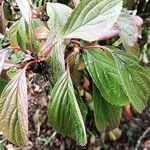
Viburnum sieboldii
Siebold's arrowwood · Siebold's arrow-wood · Siebold's viburnum
Description
Source: leafsnapViburnum sieboldii, commonly known as Siebold's viburnum, is a deciduous shrub native to Japan and Korea. It typically reaches a height of 6-10 feet and has a spread of 8-12 feet. The plant exhibits an upright growth habit with arching branches adorned with dark green, serrated leaves. In the fall, these leaves turn stunning shades of yellow, orange, and red. In late spring or early summer, Viburnum sieboldii produces clusters of white flowers. These are followed by red berries that mature to black in the fall, attracting birds and other wildlife. The shrub prefers moist, well-drained soil but can tolerate some drought once established. It thrives in full sun or partial shade, although it can also grow in full shade. Viburnum sieboldii is popular as an ornamental plant due to its attractive foliage and flowers. It is ideal as a specimen plant or for mass planting in borders or hedges. Additionally, it is known for its medicinal properties and has been traditionally used by herbalists to treat various ailments like fever, coughs, and colds, thanks to its anti-inflammatory properties. Overall, Viburnum sieboldii is an excellent choice if you're looking for an attractive, easy-to-grow shrub with year-round interest!
Care Guide
💧 Water Every 7 days
Siebold's viburnum, native to regions with varying moisture levels, thrives on moderate watering. It typically requires irrigation every 1 to 2 weeks. Primarily an outdoor plant, it benefits from natural rainfall and requires less water during dormancy in colder climates as it adapts to seasonal changes.
How should you water Siebold's viburnum?
Using soaker hoses is a great way to ensure that leaves and flowers receive the right amount of moisture. This method allows for efficient water delivery at the base of the plant without wetting the entire foliage. To use a soaker hose, simply lay it around the plant and let it run for 30 to 45 minutes until the soil is moist but not overly saturated. Another option is to use drip feeders to keep the soil consistently moist throughout the day. For Siebold's viburnum plants in pots, watering with a watering can is recommended. Wait until you see water dripping out of the bottom of the pots to ensure thorough watering. Using a portable watering can allows you to reach the soil and ensure deep penetration of water into the roots, promoting healthy growth.
What happens if I give Siebold's viburnum too much or too little water?
If you've overwatered Siebold's viburnum, here are some steps you can take to prevent further damage. Siebold's viburnum is hardy, so they have a good chance of surviving. To dry out the plant, stop watering it and allow it to aerate. When a plant's roots sit in water for too long, they don't tolerate it well. Look for symptoms such as yellow leaves falling prematurely, fewer flowers, and misshapen buds. In more severe cases, the leaves may become wilted and brown, and long-term overwatering can lead to root rot. Underwatering can have similar symptoms, such as wilting. Feel the soil to determine if it's too dry, which indicates dehydration. If the soil is dry, consider watering the plant in the evening. Always check the soil for dryness and maintain a regular watering schedule in the morning.
How frequently should I water Siebold's viburnum plant?
To properly care for Siebold's viburnum, it is recommended to water it deeply 2-3 times per week. If you live in a hot climate, you may need to water it more frequently. The plant's water needs are considered average, and it prefers moist but well-drained soil. An easy way to determine if it needs watering is to check the soil - if it is dry to a depth of about 2-4 inches, it is likely time to water. If the viburnum is planted outdoors, watering it 1-2 times per week should be sufficient, as it will receive additional moisture from rainwater.
How much water does my Siebold's viburnum plant require?
The amount of water needed can vary depending on several factors. These factors include the weather, the amount of shade, and the specific species of plant. In the case of the recently planted Siebold's viburnum, they will require more water compared to the established ones. In general, a can of water per week should be sufficient for Siebold's viburnum, especially during the growing season or if they are potted plants. When the plants are outdoors, it is important to monitor the amount of rain they receive using moisture meters. If the soil is dry, it is recommended to thoroughly water the plants with a sprinkler. It is better to water less frequently but with enough quantity to ensure the Siebold's viburnum plants receive adequate moisture.
Why do I need to water my Siebold's viburnum?
It is crucial to understand the watering requirements of the plant you are growing, regardless of its type, to ensure healthy growth. For example, Siebold's viburnum requires plenty of water to prevent wilting, but it is important to balance this with well-drained soil to avoid root rot. Overwatering can result in reduced flower production and stunted growth, similar to the issues caused by underwatering.
☀️ Light Full sun
Siebold's viburnum prefers sites that get abundant sunlight throughout the day, though it tolerates locations with moderate light. Its native habitat points to a liking for ample sun. However, both excessive and insufficient sunlight can harm the plant's health, potentially causing stunted growth or greater susceptibility to disease.
What are the sunlight requirements for Siebold's viburnum?
Siebold's viburnum thrives in locations with full sun exposure, requiring above 6 hours of sunlight a day, but it can also withstand partial sun conditions of about 3-6 hours of sunlight. It's important to observe the movement of sunlight through your garden to find spots that offer the right balance of light and shade, ensuring the plant's well-being. The natural habitat of Siebold's viburnum suggests a preference for generous sunlight, which is crucial for its health and growth. However, both excessive and insufficient sunlight can lead to adverse effects, such as stunted growth or increased susceptibility to disease.
Can artificial lighting be used for Siebold's viburnum, and if so, how?
Yes, artificial lighting can be utilized for Siebold's viburnum, especially when natural sunlight is insufficient, like in winter or less sunny spaces. Indoor plants benefit from artificial lights, which promote faster and healthier growth. LED lights are recommended due to their ability to provide specific wavelengths needed by plants. For plants requiring full sun, 30-50W per square foot is suggested; partial sun plants need 20-30W per square foot, and full shade plants require 10-20W per square foot. The light source should be placed 12-36 inches above the plant to mimic natural sunlight and should be kept on for 8-12 hours per day, depending on the plant species' natural daylight hours.
What are the symptoms of insufficient or excessive light exposure in Siebold's viburnum?
Siebold's viburnum shows various symptoms under suboptimal lighting conditions, including smaller new leaves, leggy or sparse growth, faster leaf drop, slower or halted growth, and lighter-colored or chlorotic leaves. Excessive sunlight can cause chlorosis, sunscald, leaf curling, wilting, and leaf scorching. These symptoms indicate either a deficiency or excess of sunlight, affecting the plant's ability to photosynthesize and maintain health. Observing these signs can help in adjusting the plant's exposure to light for better growth.
How can I improve light conditions for indoor and outdoor Siebold's viburnum plants?
To optimize light conditions for Siebold's viburnum, gradually increase sunlight exposure by moving the plant to sunnier locations each week until it receives at least 6 hours of direct sunlight daily. For indoor plants, use south-facing windows and consider artificial lighting for large plants or those in less sunny spaces, keeping lights on for at least 8 hours a day. For outdoor plants, adapt them to brighter spots incrementally to prevent sunburn. Removing obstructions and, for smaller plants, transplanting during their dormant period can also enhance sunlight access. Though parts of the plant that have been deprived might not recover, new growth should flourish with improved light exposure.
🌡️ Temperature 5–32.2°C
Siebold's viburnum is very adaptable to different climate conditions, from hot summers to cold winters. It still has a preferred temperature range for growth. When temperatures become too high, the plant can suffer from heat and humidity stress, which may lead to its death. In areas where temperatures near the lower limit of its cold tolerance, insulating measures should be taken to protect the plant.
💨 Humidity
🪴 Soil 5-7
🌱 Fertilizer
The timing of fertilizing Siebold's viburnum is important. Apply fertilizer in early spring and continue monthly through early summer. Fertilizer encourages attractive blooms and supplies energy during both dormant and active growth periods.
🪴 Pot & Repot
✂️ Pruning
Siebold's viburnum flourishes when it is properly pruned, ideally in early spring before new growth begins. Key techniques include removing dead branches, thinning to improve air circulation, and light shaping. Regular pruning not only enhances flowering but also prevents overcrowding. To reduce the risk of disease, always use clean, sharp tools.
🌿 Propagating
🐛 Diseases & pets
☠️ Toxicity
Characteristics
- Plant Type
- Tree, Shrub
- Life Cycle
- Perennial
- Genus
- Viburnum
- Family
- Viburnaceae
- Hardiness Zone
- 4-8
- Mature Height
- 4.57 m to 6.1 m
- Mature Spread
- 3.05 m to 4.57 m
- Leaf Color
- Dark Green, Olive Drab
- Leaf Type
- Deciduous
- Flower Color
- White
- Flower Size
- 2.54 cm
- Bloom Time
- Mid spring, Late spring
- Planting Time
- Spring, Summer
- Harvest Time
- Late summer, Early fall, Mid fall
- Native Area
- Japan