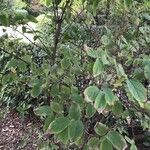
Viburnum trilobum
Snowball · American cranberrybush · Guelder-Rose · Highbush Cranberry · American Guelder-rose
Description
Source: leafsnapViburnum trilobum, commonly known as the American cranberrybush or highbush cranberry, is a deciduous shrub native to North America. Typically growing to a height of 8-12 feet, it has an upright, spreading habit. The dark green leaves are three-lobed with serrated edges and turn shades of red and purple in the fall. In the spring, the plant produces clusters of small white flowers, which are followed by bright red berries in the fall. These berries persist into winter and are edible, though tart, often used to make jams or sauces. Viburnum trilobum is popular as an ornamental plant due to its attractive foliage, showy flowers, and colorful fruit. It also provides ecological benefits by offering food for birds, such as cedar waxwings. The plant prefers moist soils but can tolerate some drought once established. It thrives best in full sun to partial shade and can be pruned after flowering if desired. Overall, Viburnum trilobum is an attractive shrub that offers both aesthetic value in landscaping settings and ecological benefits for wildlife habitats.
Care Guide
💧 Water Every 7 days
Moist soil makes Viburnum trilobum more vigorous. Insufficient water decreases the ornamental value of the whole plant and leads to abnormal flowering. Water management is the key to survival during transplanting. The newly transplanted plants must be irrigated continuously for 3-4 weeks to ensure that the soil is fully absorbent and closely connected with the root system. During severe hot and dry conditions, 7 to 8 mm (0,28" - 0,31") of water weekly is sufficient. In daily maintenance, just keep the soil moist. Too much soil moisture affects air permeability, inhibits root respiration, causes rotten roots, and even causes the plant to die in severe cases.
☀️ Light Full sun
The American cranberry bush favors plentiful sunlight for optimal growth, yet it also has a notable ability to thrive with reduced sun exposure. Although ample sun encourages more vigorous growth, inadequate sunlight can impair its healthy development, resulting in sparse foliage and poor fruit production.
🌡️ Temperature 5–32.2°C
The American cranberry bush is highly adaptable to a variety of climate conditions, from scorching summers to chilly winters. Still, it has an optimal temperature range for growth. If temperatures rise too high, the plant is vulnerable to heat and humidity stress, which can lead to its death. In areas where temperatures approach the lower limit of its cold tolerance, it is important to apply insulation to protect the plant.
💨 Humidity normal (40-60%)
This plant will thrive in moderate humidity, which is probably the level in your home. However, misting it a few times a week can be very beneficial. Make sure the room has good ventilation.
🪴 Soil 5-7
🌱 Fertilizer
Timing is essential for fertilizing the American cranberry bush. Start fertilizing in early spring and continue once a month until early summer. Fertilizer promotes lovely blooms and supplies energy both during dormancy and active growth.
🪴 Pot & Repot
✂️ Pruning
🌿 Propagating
🐛 Diseases & pets
☠️ Toxicity
Viburnum trilobum only causes mild upsets when eaten unripe or in large quantities.
Characteristics
- Plant Type
- Tree, Shrub
- Life Cycle
- Perennial
- Genus
- Viburnum
- Family
- Viburnaceae
- Hardiness Zone
- 4-8
- Mature Height
- 1.83 m to 3.66 m
- Mature Spread
- 2.13 m
- Leaf Color
- Green, Red, Purple
- Leaf Type
- Deciduous
- Flower Color
- White
- Flower Size
- 7.62 cm to 10.16 cm
- Bloom Time
- Mid spring, Late spring
- Planting Time
- Spring, Autumn
- Harvest Time
- Late summer, Early fall, Mid fall