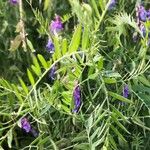
Vicia cracca
Tufted Vetch · Cow vetch · Purple tufted vetch · Bird vetch · Blue vetch
Description
Source: leafsnapVicia cracca, commonly known as bird vetch or tufted vetch, is a perennial herbaceous plant in the Fabaceae family. Native to Europe and Asia, it has also become naturalized in many parts of North America. The plant can grow up to 1 meter tall and has a climbing habit, using tendrils to ascend other plants or structures. The leaves of Vicia cracca are pinnate, featuring 8 to 12 pairs of oblong leaflets. The small, purple-blue flowers are arranged in dense clusters on long stalks and bloom from June to August. Bird vetch is a valuable forage crop for livestock due to its high nutritional content and palatability. It also plays a crucial role in soil conservation, with its deep roots helping to prevent soil erosion by binding the soil together. In traditional medicine, Vicia cracca has been used for its diuretic properties and as a remedy for respiratory ailments such as coughs and bronchitis. Overall, Vicia cracca is a versatile plant with numerous ecological and medicinal uses.
🌳 Bird vetch has an unexpected ability: it produces its own nutrients by teaming up with soil bacteria that convert nitrogen from the air into usable nitrates. This natural process, called nitrogen fixation, lets bird vetch essentially self-fertilize, reducing the need for synthetic fertilizers and thus lowering its environmental impact. Besides sustaining itself, bird vetch also provides nectar for bees and was historically used to make a blue dye, adding ecological and cultural value.
🎭 I cling to you, Shyness.
Care Guide
💧 Water Every 7 days
Bird vetch, a plant native to temperate regions, thrives best in conditions of moderate moisture but can tolerate short periods of dryness. To keep it healthy, water it weekly, letting the soil dry out slightly between waterings. It grows well in well-draining soils and adapts to the natural variations in rainfall typically found in outdoor meadows and fields.
How should I water my Bird vetch plant?
To ensure the health of the Bird vetch, it is recommended to water it with filtered water at room temperature or slightly warmer. Tap water may contain harmful particles, so using filtered water is preferred. Since the Bird vetch originates from a warm environment, cold water should be avoided as it can be a shock to the plant. It is also best to avoid overhead watering, which can cause problems with the foliage. Instead, apply the filtered room temperature water directly to the soil until it is completely soaked. This helps the roots to stay hydrated and spread through the soil to gather necessary nutrients.
What do I do if I give my Bird vetch plant too much or too little water?
Overwatering is a common issue that can harm your Bird vetch plant. It causes wilting, yellowing of the stems and leaves, and can lead to diseases like root rot, mold, and mildew. Underwatering is less common for the Bird vetch due to its drought tolerance, but it can still occur, resulting in brittle and brown leaves. It's important to notice signs of overwatering early to prevent irreversible damage. Reduce watering immediately if you see these signs and consider improving the soil's drainage. If your Bird vetch is not receiving enough water, simply increase your watering schedule until the signs of underwatering subside.
How often do I need to water my Bird vetch plant?
If your Bird vetch is in a pot, the most precise way to determine if it needs water is by sticking your finger into the soil. If the top two to three inches of soil feel dry, it's time to water it. For those who grow Bird vetch outdoors, you can use the same method to test the soil. When the top few inches of soil have dried out, it's time to water. Typically, watering once a week in the spring and early fall will suffice. However, during extremely hot weather, watering two or more times per week may be necessary. Despite this, mature and well-established Bird vetch plants have a remarkable ability to handle drought.
How much water does my Bird vetch plant need?
In order to effectively water your Bird vetch, it is important to be generous with the amount of water you give. When the top two to three inches of soil are dry, it is a good indication that the plant needs a thorough watering. Make sure to provide enough water to saturate the soil completely. To ensure proper drainage, the water should flow out of the bottom holes of the pot. If you don't see excess water draining, it means you have not given enough water to the plant. However, be cautious not to let the water accumulate inside the soil, as this can be harmful. On the other hand, if there is no water draining from the pot, it may indicate that the soil does not drain well, which is not ideal for this plant's health. If the plant is outdoors, receiving 1 inch of rainfall per week should be enough.
How do I water my Bird vetch as it grows?
The water needs of the Bird vetch can vary depending on its growth stages. In the first few years or after transplantation, it requires more water because it focuses on developing new roots. These roots need extra moisture to support future growth. As the plant matures, it will require less water. Additionally, during the bloom period, the Bird vetch may need more water due to the flower development process.
☀️ Light Full sun
Bird vetch grows best with abundant sunlight throughout the day. The plant can also cope with sunlight that is less intense or less frequent. However, either extreme can affect its health and development — too much or too little sun may result in reduced vigor or stunted growth, respectively. Its origin indicates it is adapted to those light conditions.
What are the sunlight requirements for Bird vetch?
Bird vetch requires full sun, defined as more than 6 hours of sunlight daily, but it can also thrive in partial sun, which is about 3-6 hours of sunlight. The plant's health and growth are optimum when exposed to an adequate amount of sunlight throughout the day. Although Bird vetch can manage with less intense or frequent sunlight, insufficient or excessive sunlight may impact its vigor, leading to reduced growth or other health issues. It's essential to watch how sunlight moves through your garden to choose spots that provide a balance of light and shade, ensuring the plant's happiness.
How can artificial lighting supplement natural sunlight for Bird vetch?
Indoor Bird vetch plants require adequate lighting for optimal growth, especially when natural sunlight is insufficient, like during winter or in less sunny spaces. Artificial lighting becomes a vital solution, offering the ability to provide the specific wavelengths of light needed by the plants. LED lights are popular for plant lighting as they can be customized to suit the plant's needs. The general guidelines include choosing the right type of artificial light with the appropriate wattage, determining the suitable distance of the light source from the plant (12-36 inches), and ensuring the light is on for 8-12 hours per day to mimic natural daylight hours.
What are the symptoms of inadequate lighting for Bird vetch?
Bird vetch shows several symptoms when it does not receive adequate sunlight, including smaller new leaves, leggy or sparse growth, faster leaf drop, slower or halted new growth, and irregular or paler coloration of new leaves. In extreme sunlight conditions, symptoms can include chlorosis, sunscald, leaf curling, wilting, and leaf scorching. These symptoms indicate either a lack of or excessive exposure to sunlight, impacting the plant's ability to photosynthesize and maintain overall health.
What are the solutions for Bird vetch experiencing inadequate sunlight?
For Bird vetch experiencing inadequate sunlight, gradually moving the plant to a sunnier location can improve its condition. Indoors, this can involve using a south-facing window or artificial lighting, such as desk or ceiling lamps for at least 8 hours a day or professional grow lights. Outdoors, it involves gradually exposing plants to more sunlight and avoiding sudden changes in light intensity. If your plants are in the ground and blocked from sunlight, reducing obstructions or transplanting during the plant's dormant period to an area with more sunlight and good drainage can be beneficial. It's important to note that parts of the plant affected by previous poor light conditions may not recover, but new growth should be healthy after adjustment.
🌡️ Temperature 5–32.2°C
Bird vetch, an herb native to temperate regions, grows well in temperatures from 41 to 89 ℉ (5 to 32 ℃). Across seasons, the plant adapts to temperature changes without any specific suggestions.
What is bird vetch and where does it grow?
Bird vetch, botanically known as Vicia cracca, is a herb native to temperate regions. It thrives in a wide range of temperatures, from 41 to 89 ℉ (5 to 32 ℃), adjusting well to temperature fluctuations across different seasons. Given its strong cold resistance, bird vetch doesn't usually require special frost protection measures during winter, although precautions should be considered if temperatures are expected to fall below the growth limit.
How do I protect bird vetch in winter?
To protect bird vetch during winter, especially if temperatures are anticipated to drop below its growth limit, it is advisable to wrap the trunk and branches with insulating materials like non-woven fabric or cloth. Additionally, watering the plant abundantly before the first freeze of autumn is recommended. This ensures that the soil remains moist and enters a frozen state, helping to prevent drought and water scarcity for the plant during the colder months and early spring.
What symptoms indicate that bird vetch is experiencing stress from low temperatures?
Bird vetch exhibits high cold tolerance and generally thrives when temperatures are above its minimum suitable growth temperature. However, if winter temperatures drop below the tolerable growing minimum, you may not notice immediate changes, but come spring, the branches might become brittle and dry, with no new shoots emerging. The recommended solution is to prune away any dead branches that have failed to produce new leaves in spring.
How does bird vetch react to high temperatures and how can I protect it?
During summer, bird vetch should be kept below its maximum suitable growth temperature. Exceeding the tolerable growing maximum can cause the leaves to lighten in color, tips to become dry and withered, and make the plant more susceptible to sunburn. To protect bird vetch in these conditions, trim away the sunburned and dried-up parts. Relocating the plant to a shaded area or using a shade cloth can protect it from the intense midday and afternoon sun. It's also important to water the plant in the morning and evening to keep the soil moist.
💨 Humidity
🪴 Soil 6-7
🌱 Fertilizer
Usually a single fertilizer application in spring is enough for Bird vetch, though repeated feedings can boost growth. Apply fertilizer every one to one and a half months. Fertilization improves leaf appearance and function, encouraging even color and a healthy texture. It also promotes root development and nutrient uptake for the plant's long-term health.
🪴 Pot & Repot Every 12 months
✂️ Pruning
Bird vetch is a vigorous climber that can overwhelm nearby plants if left unchecked. To control its spread and keep it compact, regular pruning is essential.
🌿 Propagating
🐛 Diseases & pets
☠️ Toxicity
Characteristics
- Plant Type
- Vine, Herb
- Life Cycle
- Perennial
- Genus
- Vicia
- Family
- Fabaceae
- Hardiness Zone
- 4-8
- Mature Height
- 0.4 m to 1.52 m
- Mature Spread
- 2.13 m
- Leaf Color
- Green
- Leaf Type
- Deciduous
- Flower Color
- Purple, Lavender
- Flower Size
- 2.54 cm
- Bloom Time
- Late spring, Early summer, Mid summer
- Planting Time
- Spring, Autumn
- Harvest Time
- Mid summer
- Native Area
- Turkey, Sweden, Austria, Slovakia, Montenegro, Slovenia, Croatia, Belarus, Russia, Germany, Iceland, Estonia, Koppen, Romania, Latvia, South Korea, Belgium, Moldova, Netherlands, France, Czech Republic, Bulgaria, Armenia, Poland, Greece, Ukraine, Serbia, China, Lithuania, Norway, Afghanistan, Syria, Kyrgyzstan, Kazakhstan, Italy, Spain, Switzerland, Vietnam, Japan, Mongolia, Finland, Denmark, Iran, Albania, Ireland, United Kingdom, Hungary, Azerbaijan