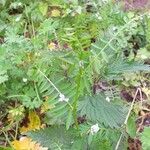
Vicia hirsuta
Hairy tare · Hairy vetch · Tiny vetch · Tare vetch
Description
Source: leafsnapVicia hirsuta, commonly known as hairy vetch or hairy tare, is a species of flowering plant in the pea family, Fabaceae. This annual or biennial herbaceous plant can grow up to 1 meter in height. Its leaves are pinnately compound, featuring 4-8 pairs of leaflets and a terminal tendril. The flowers range from pink to purple and are arranged in clusters on long stalks. The fruit is a pod containing several seeds. Native to Europe and Asia, hairy vetch has been introduced to other parts of the world for various agricultural purposes, such as a forage crop, cover crop, and green manure. Its nitrogen-fixing properties make it an excellent choice for enhancing soil fertility. Hairy vetch can be cultivated alone or in combination with other crops, such as cereal grains or legumes like clover. It is suitable for grazing by livestock and can also be harvested for hay production. Beyond its agricultural benefits, hairy vetch has been used in traditional Chinese medicine and is currently being studied for potential anti-inflammatory properties. In summary, Vicia hirsuta is a versatile plant species with significant contributions to both agriculture and medicine.
Care Guide
💧 Water Every 3 days
Tiny vetch adapts well to different moisture levels and requires moderate watering. While it can tolerate dry spells, it thrives best with consistent hydration. For optimal growth, water it weekly. As an herbaceous plant, tiny vetch also benefits from natural rainfall during the growing season when grown outdoors.
How should I water my Tiny vetch?
There are several options for watering Tiny vetch - you can use a garden hose with a spray nozzle, a watering can, or any other common watering tool. Tiny vetch is not too particular about the type of water it receives - it can thrive with rainwater, tap water, or filtered water. However, it's best to avoid watering this plant from overhead as it can harm the leaves and flowers and even lead to disease. A drip irrigation system often works well for watering Tiny vetch, as it provides even and direct watering to the soil. If you have a container-grown Tiny vetch, the same watering approach can be used, just with different tools such as a cup, watering can, or tap to water the soil directly.
What should I do if I give my Tiny vetch plant too much water or too little water?
To remedy underwatering Tiny vetch, simply water it more regularly when you notice it lacking moisture. Overwatering, on the other hand, can be more dire if not caught early. It can cause diseases and lead to the plant's decline and death. To prevent this, choose a growing location with plenty of sunlight to help dry the soil and proper drainage to avoid waterlogged soils. If you overwater your potted Tiny vetch, consider changing to a pot with better drainage and adding loose soils when repotting.
How many times should I give water to my Tiny vetch?
Tiny vetch needs regular water during the growing season. At the start of spring, water once a week. As it gets warmer, increase watering to two to three times a week. Be careful not to overwater, as it can harm the plant. Keep the soil moist but not wet. Watering potted Tiny vetch is slightly different. Pots can dry out faster, so water a few times a week instead of just once like in the ground.
How much water does my Tiny vetch plant need?
Determining the right amount of water for your Tiny vetch plant can be done in a few ways. Some gardeners choose to assess the moisture level of the soil by feeling it with their hands. They recommend watering until the top six inches of soil feel moist. Another approach is to use a specific measurement as a guideline. Generally, Tiny vetch plants should receive about two gallons of water per week, but this can vary based on factors like temperature and how quickly the soil dries out. However, it's important to avoid overwatering if your plant doesn't need that much water. When growing Tiny vetch in a container, a different method should be employed. Make sure to water enough to moisten all the layers of dry soil. To check if the soil is adequately moistened, you can simply stick your finger in it and feel for moisture. Another indicator is when you notice a slight trickle of excess water flowing out of the pot's drainage holes.
How do I know if I'm watering my Tiny vetch plant enough?
Avoiding overwatering your Tiny vetch can be a bit challenging. These plants have deep roots that need moist soil weekly, but they are also highly prone to root rot and browning when overwatered. Underwatering is less of a concern as Tiny vetch plants can survive for some time without additional watering. However, if you go too long without watering, the plant will likely start to wilt and develop dry leaves.
☀️ Light Full sun
The tiny vetch is a robust plant that does well in locations receiving sunlight for most of the day. It can also tolerate areas with less sun. Excessive sunlight can cause leaf bleaching, while shaded conditions will stunt its growth. These preferences reflect its native habitat.
What are the sunlight requirements for Tiny vetch?
Tiny vetch requires a significant amount of sunlight each day to thrive. It performs best in full sun conditions, which means it should receive above 6 hours of sunlight daily. However, it can also adapt to partial sun exposure, requiring about 3-6 hours of sunlight. It's crucial to monitor the way sunlight moves through your garden to ensure your Tiny vetch gets the right balance of light and shade, which will promote its health and growth.
How does the Tiny vetch plant adapt to different lighting conditions?
The Tiny vetch, a hearty plant, prefers to be in environments where it can receive the sun's rays for the majority of the day, reflecting its origin habitat. Despite its preference for substantial sunlight, it can adjust to less sunny conditions. Overexposure to sunlight may lead to leaf bleaching, while insufficient light can stunt the plant's growth. For indoor plants that don't get enough natural light, artificial lighting can be an excellent solution. LED lights are recommended as they can be adjusted to provide specific wavelengths needed for the plant's growth. Full sun plants should have 30-50W/sq ft of artificial light, partial sun plants require 20-30W/sq ft, and full shade plants need about 10-20W/sq ft. The artificial light source should be placed 12-36 inches above the plant, mimicking natural sunlight as closely as possible, with a duration of 8-12 hours of light per day to promote healthy growth.
What are the symptoms of inadequate light exposure in Tiny vetch?
When Tiny vetch is exposed to less than optimal light conditions indoors, several symptoms may manifest. These include smaller new leaves indicating insufficient light; leggy or sparse growth, where the distance between leaves or stems increases; early leaf drop as a survival strategy; slowed or halted growth due to the plant entering survival mode; lighter-colored new leaves and chlorosis, which is the yellowing of leaves due to a breakdown in chlorophyll; sunscald, which results from excessive light exposure causing pale, bleached areas on the plant; leaf curling as a defense against too much sunlight; wilting from excessive water loss; and leaf scorching, where leaf edges turn brown and crispy. These symptoms signal the plant's struggle with the lighting conditions and need for intervention.
What solutions can help Tiny vetch recover from inadequate or excessive sunlight exposure?
To address issues related to inadequate or excessive sunlight exposure for Tiny vetch, several strategies can be employed. Indoors, gradually positioning the plant to receive at least 6 hours of sunlight daily, using a south-facing window, or employing artificial light sources such as desk lamps or professional plant grow lights for at least 8 hours a day can improve conditions. For outdoor plants, moving them to sunny spots gradually, every week, helps them adapt without risk of sunburn. In scenarios where direct sunlight is blocked, identifying and minimizing obstructions or considering transplanting to better-lit areas during the plant's dormant period can prove beneficial. It's important to note that parts of the plant damaged by poor light may not recover, but proper exposure can ensure new growth is healthy.
🌡️ Temperature 5–35°C
Tiny vetch does best in its native habitat when temperatures range from 68 to 95 °F (20 to 35 °C). These plants favor warmer conditions and usually tolerate seasonal fluctuations well.
What is the ideal temperature range for Tiny vetch to flourish?
Tiny vetch flourishes best in environments with temperatures ranging from 68 to 95°F (20 to 35°C). It thrives in warmer climates and adjusts well to seasonal temperature variations. Despite its strong cold resistance, it's important to protect the plant from temperatures dropping below -30°C by using soil or straw coverings. Additionally, abundant watering before the first frost in autumn is recommended to keep the soil moist, helping to prevent drought and water scarcity during the winter and early spring.
How does Tiny vetch react to low and high temperatures?
Tiny vetch is notably cold-tolerant, ideally thriving when the temperature is above 20°C and requiring temperatures to stay above 0°C during winter. When temperatures fall below -30°C, there might not be noticeable changes during the winter, but there can be a decrease in sprouting or even no sprouting at all in spring. For high temperatures, it's crucial to keep Tiny vetch below 35°C during summer. Exceeding 38°C can lead to lighter leaf colors, leaf curling, susceptibility to sunburn, and, in severe cases, wilting and drying of the entire plant. The recommended solution for spring is to remove parts that have failed to sprout. For high temperature issues, trim away sunburned and dried parts, move the plant to a shaded area, or provide shade with a cloth. Additionally, watering in the morning and evening helps keep the soil moist.
💨 Humidity
🪴 Soil 6-7
🌱 Fertilizer
Tiny vetch does well with regular, light applications of fertilizer to encourage healthy leaf growth. Fertilize Tiny vetch about once a month during the summer. Nitrogen is vital for foliage, and supplying nitrogen-rich sources helps Tiny vetch thrive.
🪴 Pot & Repot
✂️ Pruning
Tiny vetch is a climbing plant that can overrun other plants if not properly managed. To keep it in check and prevent it from spreading undesirably, regular pruning is crucial.
🌿 Propagating
🐛 Diseases & pets
☠️ Toxicity
Characteristics
- Plant Type
- Herb, Vine
- Life Cycle
- Annual, Biennial
- Genus
- Vicia
- Family
- Fabaceae
- Hardiness Zone
- 4-9
- Mature Height
- 20 cm to 61 cm
- Mature Spread
- 20 cm to 49 cm
- Leaf Color
- Green, Blue
- Leaf Type
- Deciduous
- Flower Color
- White
- Flower Size
- 0.25 cm to 0.51 cm
- Bloom Time
- Late spring, Early summer, Mid summer
- Planting Time
- Spring, Summer
- Harvest Time
- Early summer, Mid summer