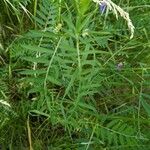
Vicia tenuifolia
Bramble vetch · Fine-leaf vetch · Cow vetch · Fine-leaved vetch · Slender-leaved Vetch
Description
Source: leafsnapVicia tenuifolia, commonly known as slender vetch or narrow-leaved vetch, is a species of flowering plant in the pea family, Fabaceae. Native to Europe and Western Asia, it has been introduced to other parts of the world as a forage crop and cover crop. Slender vetch can be an annual or biennial plant, reaching up to 60 cm in height. It features slender stems and narrow leaves divided into several pairs of leaflets. The small flowers come in shades of purple, pink, or white and are arranged in clusters on long stalks. This plant thrives in well-drained soils and can tolerate drought conditions, although it does not do well in waterlogged soils. It is often used as a cover crop because of its ability to fix nitrogen from the atmosphere into the soil. Slender vetch offers good forage for livestock due to its high protein content. However, it should be used with caution because it contains toxic compounds that can cause poisoning if consumed in large quantities. Overall, Vicia tenuifolia is a valuable agricultural plant. It improves soil quality through nitrogen fixation, provides feed for livestock, and boasts attractive flowers. This makes it an important species from both economic and ecological perspectives.
Care Guide
💧 Water Every 7 days
Fine-leaved vetch flourishes in moderate moisture conditions and benefits from consistent weekly watering. It adapts well to varying rainfall patterns, demonstrating resilience during both droughts and wet spells, typical of its native temperate meadows and fields.
How should I water my Fine-leaved vetch plant?
To properly care for the Fine-leaved vetch plant, it is important to use filtered water that is at room temperature. Tap water may contain harmful particles, so opting for filtered water is better. Since the Fine-leaved vetch originates from warm environments, using cold water can be a shock to its system. Therefore, it is recommended to use room temperature or slightly warm water. Additionally, it is advised to avoid overhead watering as it can lead to complications with the foliage. Instead, the filtered room temperature water should be applied directly to the soil until it is thoroughly soaked. This practice is beneficial as it not only moistens the roots but also aids in their spreading through the soil and nutrient collection.
What should I do if I give my Fine-leaved vetch too much or too little water?
Overwatering and underwatering can both harm the health of your Fine-leaved vetch, but overwatering is more common. Too much water can cause the stems and leaves to wilt and turn yellow. It can also lead to diseases like root rot, mold, and mildew, which can be fatal for your plant. Underwatering is less common as this plant can tolerate drought. However, if it does happen, the leaves may become brittle and brown. It's important to spot the signs of overwatering early. Some diseases, like root rot, may be irreversible if you wait too long. If you notice signs of overwatering, reduce your watering schedule and check the soil drainage. If the soil drains poorly, replace it with a well-draining potting mix. If you observe signs of underwatering, simply water more regularly until the signs improve.
How often do I need to water my Fine-leaved vetch?
If your Fine-leaved vetch is in a pot, the most precise way to determine if it needs water is by checking the soil. Stick your finger into the soil and if the top two to three inches are dry, it's time to water. For Fine-leaved vetch grown outdoors in the ground, use a similar method. When the top few inches of soil have dried out, it's time to water. Typically, during spring and early fall, watering once a week is sufficient. However, during extremely hot weather, you may need to water twice or more per week. Nevertheless, mature and well-established Fine-leaved vetch has a good ability to tolerate drought.
How much water does my Fine-leaved vetch require?
When watering your Fine-leaved vetch, make sure to give a generous amount of water. Wait until the top two to three inches of soil are dry, and then water the plant thoroughly. It should be enough water to soak the entire soil, causing excess water to drain from the bottom of the pot. If there is no excess water draining, you may have underwatered the plant, which is not good. However, be careful not to let water accumulate in the soil, as that is also harmful to the plant. If you notice that water is not draining well from the pot, it could mean that the soil doesn't drain properly and that's not good either. If the plant is outdoors, it should be enough to receive about 1 inch of rain per week.
How do I water my Fine-leaved vetch as it grows?
The water needs of the Fine-leaved vetch vary depending on its growth stages. In the first few years of its life or after transplanting, you will need to provide more water than usual. During these stages, the plant focuses on growing new roots, which require additional moisture for optimal performance. However, as the Fine-leaved vetch matures over a few seasons, its water requirements decrease. Another growth stage that demands more water is during the bloom period, as the development of flowers utilizes a substantial amount of moisture. Therefore, you may need to increase watering during this time.
☀️ Light Full sun
Fine-leaved vetch does best in locations that get plentiful sunlight all day. This light is essential for its proper growth and overall health. At every stage it needs these bright conditions, reflecting its native undisturbed habitat. Too little light can hinder its growth, while too much can lead to wilting.
What are the sunlight requirements for Fine-leaved vetch?
Fine-leaved vetch requires a significant amount of sunlight throughout the day for optimal growth and health. Specifically, it thrives in full sun conditions, which means it needs above 6 hours of direct sunlight daily. It can also grow in partial sun, which entails about 3-6 hours of sunlight. The plant's original habitat is in environments generously bathed in sunlight, and matching these conditions is crucial for its development. Insufficient light leads to growth impediments, while excessive sun can cause wilting. It's important to observe the movement of sunlight through your garden to find the perfect balance of light and shade, ensuring the happiness of your plants.
What kind of artificial lighting is needed for Fine-leaved vetch when natural light is insufficient?
When natural sunlight is insufficient, especially during winter or in less sunny spaces, artificial lighting becomes an essential solution for the growth of Fine-leaved vetch. Indoor plants require adequate artificial lighting to promote faster, healthier growth. LED lights are a popular choice because they can be customized to provide specific wavelengths needed by the plants. Full sun plants require 30-50W/sq ft of artificial light, partial sun plants 20-30W/sq ft, and full shade plants 10-20W/sq ft. The artificial light source should be placed 12-36 inches above the plant to mimic natural sunlight and turned on for 8-12 hours per day to emulate natural daylight hours.
What are the symptoms of insufficient or excessive sunlight in Fine-leaved vetch?
Symptoms of insufficient sunlight in Fine-leaved vetch include smaller new leaves, leggy or sparse growth, faster leaf drop, slower or no new growth, and lighter-colored or chlorotic new leaves. Excessive sunlight can cause chlorosis, sunscald, leaf curling, wilting, and leaf scorching. Chlorosis is the loss of green color in leaves due to chlorophyll breakdown, sunscald appears as pale or necrotic areas, leaf curling is a defense mechanism to minimize water loss, wilting signifies loss of turgor pressure, and leaf scorching is characterized by brown, dry edges on leaves.
What solutions can be applied for Fine-leaved vetch experiencing light-related issues?
For indoor Fine-leaved vetch experiencing light issues, gradually moving the plants to a sunnier location until they receive at least 6 hours of direct sunlight daily, complemented by artificial light where necessary, is advised. Use a south-facing window or professional grow lights for ample sunlight exposure. For outdoor plants, a gradual relocation to sunnier spots while avoiding sudden changes in light to prevent sunburn is effective. Reducing obstructions, such as pruning trees, or transplanting smaller plants during their dormant period to a sunny location with good drainage, can also help. It's important to note that parts of the plant already damaged by insufficient light might not recover, but new growth will be healthy with increased light exposure.
🌡️ Temperature 5–35°C
Fine-leaved vetch is naturally adapted to grow in environments with temperatures between 41 and 95 °F (5 and 35 °C). In hotter or colder periods, bringing the surrounding temperature closer to this range will support healthy development.
What temperature range is ideal for the growth of fine-leaved vetch?
Fine-leaved vetch thrives in environments where the temperature ranges between 41 to 95 °F (5 to 35 °C). Its natural habitat is suited to these temperatures, which facilitate its healthy development. It's crucial to adjust the surrounding temperature towards this comfortable range during hotter or colder seasons to promote the plant's well-being.
Does fine-leaved vetch need special protection during winter?
Despite its strong cold resistance, fine-leaved vetch may require cold protection if winter temperatures are expected to drop below -25°C. This can be achieved by covering the plant with soil or straw. Additionally, before the first freeze in autumn, it is beneficial to water the plant abundantly, ensuring the soil remains moist and enters a frozen state. This helps prevent drought and water scarcity for the plant during winter and early spring, although in normal conditions, special frost protection measures are usually not necessary.
How does low temperature affect fine-leaved vetch, and what are the solutions?
Fine-leaved vetch is cold-tolerant, ideally kept above 5°C during winter and should remain above -20°C. If temperatures fall below -25°C, the plant may not show immediate changes, but there could be a decrease in sprouting or lack of sprouting during spring. The solution for affected plants is to remove any parts that have failed to sprout in spring.
What symptoms indicate fine-leaved vetch is suffering from high temperature, and how can it be addressed?
Symptoms of high temperature stress on fine-leaved vetch include leaves becoming lighter in color, prone to curling, susceptibility to sunburn, and in severe cases, wilting and drying of the entire plant. This typically occurs when temperatures exceed 38°C. To mitigate these issues, trim away sunburned and dried-up parts. Move the plant to a shady location or use a shade cloth to protect it from midday and afternoon sun. Keep the soil moist by watering the plant in the morning and evening.
💨 Humidity
🪴 Soil 6-7
🌱 Fertilizer
One fertilizer application in spring is generally enough for Fine-leaved vetch, though repeated feedings can boost growth. Apply fertilizer every month to month and a half. Fertilization improves the leaves' appearance and function, maintaining even color and a healthy texture. It also promotes root growth and nutrient uptake for the plant's long-term health.
🪴 Pot & Repot
✂️ Pruning
Fine-leaved vetch is a vining perennial known for its delicate leaves and purple flowers. To keep it healthy and attractive, use the following key pruning techniques: In early spring, trim any damaged stems, and in late spring, cut back excessive growth. This approach promotes healthy growth, improves air circulation, enhances flowering, and maintains its aesthetic appeal, while also preventing the plant from becoming invasive.
🌿 Propagating
🐛 Diseases & pets
☠️ Toxicity
Characteristics
- Plant Type
- Herb, Vine
- Life Cycle
- Perennial
- Genus
- Vicia
- Family
- Fabaceae
- Hardiness Zone
- 5-9
- Mature Height
- 91 cm
- Mature Spread
- 30 cm to 61 cm
- Leaf Color
- Green, Light Green
- Leaf Type
- Semi-evergreen
- Flower Color
- Purple, Lavender
- Flower Size
- 15.24 cm to 30.48 cm
- Bloom Time
- Late spring, Early summer, Mid summer
- Planting Time
- Spring, Summer, Autumn
- Harvest Time
- Mid summer, Late summer, Early fall