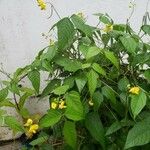
Vigna angularis
Adzuki bean
Description
Source: leafsnapVigna angularis, also known as the adzuki bean (Japanese: 小豆 (アズキ), azuki, Uncommon アヅキ, adzuki), azuki bean, aduki bean, red bean, or red mung bean, is an annual vine widely cultivated throughout East Asia for its small (approximately 5 mm or 1⁄4 in long) bean. The cultivars most familiar in East Asia have a uniform red color, but there are also white, black, gray, and variously mottled varieties. Scientists presume Vigna angularis var. nipponensis is the progenitor.
Care Guide
💧 Water
Native to East Asia, the adzuki bean thrives in environments with moderate moisture and can tolerate short periods of dryness. It benefits from regular watering, ideally on a weekly basis. When grown outdoors, the adzuki bean's growth cycle coincides with seasonal rainfall, making proper irrigation essential for its health.
☀️ Light Full sun
Adzuki bean thrives in conditions of intense light exposure, which greatly encourages vigorous growth and good health. Although it can tolerate light shade, this may result in suboptimal growth. The plant comes from environments with abundant light. Both insufficient and excessive light often prevent the plant from attaining its optimal condition.
What are the sunlight requirements for Adzuki beans?
Adzuki beans require full sun, meaning they thrive in areas that receive above 6 hours of sunlight a day, but they can also manage with partial sun, about 3-6 hours of sunlight daily. It's essential to observe your garden's sunlight patterns to ensure spots chosen provide the right balance of light and shade, promoting the plant's health and growth.
What are the essentials for growing Adzuki beans effectively?
To grow Adzuki beans effectively, they must be exposed to intense light settings, favoring their vigorous growth. While they can tolerate light shade, it may lead to suboptimal growth. Originating from bright, sun-rich environments, maintaining adequate light exposure is crucial. Inadequate or excessive light negatively impacts the plant’s health. For indoor cultivation, when natural sunlight is scarce, especially during winter, artificial lighting is beneficial. LED lights are recommended due to their ability to provide specific light wavelengths needed by plants. Full sun plants require 30-50W/sq ft, partial sun plants 20-30W/sq ft, and full shade plants 10-20W/sq ft of artificial light. The light source should be placed 12-36 inches above the plant, mimicking natural sunlight, and maintained for 8-12 hours daily.
What symptoms indicate Adzuki beans are receiving insufficient light?
Indoor-grown Adzuki beans with insufficient light may show several symptoms, including small new leaves, leggy or sparse growth, faster than normal leaf drop, and halted or no new growth, indicating the plant is in survival mode. New leaves may appear lighter in color due to insufficient chlorophyll and essential nutrients. Additionally, conditions like chlorosis, sunscald, leaf curling, wilting, and leaf scorching can manifest due to inappropriate light levels.
What solutions are available for Adzuki beans experiencing insufficient sunlight?
To address insufficient sunlight for Adzuki beans, indoor plants can benefit from gradually moving to sunnier locations, ensuring at least 6 hours of direct sunlight daily, and considering artificial lights for ample exposure. Outdoor plants also need gradual relocation to sunnier spots to prevent sunburn. Reducing obstructions such as pruning trees can help improve sunlight accessibility. For smaller plants, transplanting during their dormant period to a location with more sunlight and good drainage is advisable. Note that parts of the plant that have suffered from low light may not recover, but new growth should be healthy with improved light exposure.
🌡️ Temperature 20–37.8°C
Adzuki bean comes from areas with temperatures between 68 and 100.4°F (20 to 38℃). It does well under those conditions, making it a warm-season crop. If local conditions vary significantly, seasonal temperature adjustments may be needed.
What is the ideal temperature range for growing Adzuki bean?
Adzuki bean, or Vigna angularis, thrives in warm environments with temperatures ranging from 20°C to 38°C (68 to 100.4°F). It is considered a warm-season crop and performs best under these conditions. To ensure optimal growth, it is beneficial to maintain temperatures above 20°C, especially during winter cultivation. Keeping the plant from freezing is crucial, as temperatures below the freezing point can cause damage. In regions where winter temperatures approach -5°C (25°F), it is advisable to bring the Adzuki bean indoors or use protective measures such as a temporary greenhouse or wrapping materials like plastic film or fabric.
How does Adzuki bean react to low temperatures, and what are the solutions?
Adzuki bean has a moderate tolerance to low temperatures but thrives best within a range of 20°C to 38°C. During winter, temperatures should be kept above 5°C. Exposure to temperatures below 1°C can lead to darken leaves, and in severe cases, cause water-soaked necrosis, wilting, drooping, and gradually browning of the leaves. To mitigate frost damage, trim away affected parts and move the plant to a warmer indoor location or set up a makeshift greenhouse for protection. If indoor lighting is insufficient, supplement with artificial light, preferably near a south-facing window for ample sunlight.
What should be done if Adzuki bean experiences high temperatures?
During summer, it's crucial to ensure the temperature around the Adzuki bean stays below 38°C. High temperatures exceeding 43°C impede growth, causing the leaves to lighten in color and become more susceptible to sunburn. To combat high temperature stress, remove sunburned or dried parts of the plant. It's beneficial to relocate the plant to a shaded area, particularly to avoid afternoon sun. Additionally, watering the plant in the morning and evening helps keep the soil moist, further protecting it from heat stress.
💨 Humidity
🪴 Soil 5-6
🌱 Fertilizer
For optimal growth, Adzuki bean needs three fertilizer applications: one before planting, a second about one month after seedling emergence, and a final application 1 to 1.5 months after the second. Some Adzuki bean types gain from additional fertilizer at planting to support rapid growth.
🪴 Pot & Repot
✂️ Pruning
🌿 Propagating
🐛 Diseases & pets
☠️ Toxicity
Characteristics
- Plant Type
- Herb, Vine
- Life Cycle
- Annual
- Genus
- Vigna
- Family
- Fabaceae
- Hardiness Zone
- 10-12
- Mature Height
- 61 cm to 91 cm
- Mature Spread
- 20 cm to 40 cm
- Leaf Color
- Green, Dark Green
- Leaf Type
- Deciduous
- Flower Color
- Yellow, White
- Flower Size
- 2.54 cm to 5.08 cm
- Bloom Time
- Early summer, Mid summer
- Planting Time
- Spring, Summer, Autumn
- Harvest Time
- Late summer, Early fall
- Native Area
- Russia, Japan, Koppen, Laos, South Korea, China