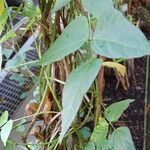
Vigna radiata
Mung bean · Celera-bean · Green-gram · Mungo-bean · Green Gam
Description
Source: leafsnapVigna radiata, commonly known as mung bean or green gram, is a fast-growing annual plant that belongs to the legume family. Native to India, it is widely cultivated across Asia, Africa, and South America. The plant can grow up to 60 cm tall and features trifoliate leaves. It produces small yellow flowers that develop into pods, containing small green seeds. Mung beans are a rich source of protein, fiber, vitamins, and minerals such as iron, potassium, and magnesium. They are frequently used in Asian cuisine to make soups, curries, and sprouts for salads. The plant thrives in warm climates with well-drained soil. It requires full sun exposure but can tolerate partial shade. While mung beans can be grown year-round, they prefer warm temperatures between 25-30°C. Beyond its culinary uses, mung bean has traditionally been used in Ayurvedic medicine for its anti-inflammatory properties, which may help reduce inflammation-related conditions such as arthritis and asthma. Overall, Vigna radiata is an important crop due to its nutritional value and versatility in both culinary and traditional medicinal practices around the world.
🎭 Safeguarding, spirit expulsion, wart-charming
Care Guide
💧 Water Every 3 days
Mung beans come from areas that experience wet and dry seasons, and they need moderate watering to grow well. It's best to let the soil dry out a bit between waterings. Watering them once a week is usually enough to keep them healthy. Mung beans are typically grown outdoors and benefit from natural rainfall during their growing season, which demonstrates efficient use of water resources.
☀️ Light Full sun
Mung bean does best beneath an open, unobstructed sky but can also thrive with reduced sunlight. The plant’s native habitat is closely connected to this light preference. Insufficient exposure can hinder growth, while excessive radiation may cause scorching.
What are the sunlight requirements for Mung bean?
The Mung bean plant requires a specific range of sunlight exposure to thrive. Full sun, defined as above 6 hours of sunlight per day, is optimal for its growth. However, it can also grow with partial sun, which is about 3-6 hours of sunlight per day. It's important to observe how sunlight moves through your garden to find spots that offer a balanced mix of light and shade, ensuring your plants grow happily and healthily.
What essentials should I consider for Mung bean's growth?
Mung bean thrives best under clear, unobstructed skies but can also do well with lesser solar exposure, which is linked to its original habitat preferences. Insufficient sunlight can hinder its growth, while too much can cause scorching. For indoor plants, artificial lighting is crucial when natural sunlight is not enough; LED lights are recommended. These should provide 30-50W/sq ft for full sun plants, 20-30W/sq ft for partial sun plants, and 10-20W/sq ft for full shade plants. Place the light source 12-36 inches above the plant and ensure it receives 8-12 hours of light per day.
What are the symptoms of insufficient or excessive sunlight on Mung bean?
Mung bean may show several symptoms due to improper light conditions. Insufficient light can cause small leaves, leggy or sparse growth, faster leaf drop, slower or no new growth, and lighter-colored new leaves. Excessive sunlight can lead to chlorosis, where leaves turn yellow, sunscald with damaged plant tissue, leaf curling, wilting from loss of water, and leaf scorching. Observing these symptoms can help in diagnosing and correcting your plant's light exposure.
What solutions can help Mung bean plants with insufficient or excessive sunlight?
For plants with light issues, gradually adjust them to receive the correct amount of sunlight. Indoor plants may be moved to a sunnier spot weekly or supplemented with artificial lighting for at least 8 hours daily. Outdoors, plants should be moved to optimal sunlight spots gradually to avoid sunburn. Reducing obstructions, like pruning branches, and transplanting smaller plants to more suitable locations can also help. While parts of the plant that already suffered might not recover, new growth will be healthy with adjusted light exposure.
🌡️ Temperature 20–37.8°C
Mung bean originates from regions where temperatures consistently range from 68 to 100.4 °F (20 to 38 °C). It thrives in that temperature range, and adjusting planting times can help in cooler seasons.
What is the native climate for Mung bean?
Mung bean thrives in climates that maintain temperatures between 68 to 100.4 °F (20 to 38 °C), where it can grow optimally. Adjusting planting timings can support its growth in cooler seasons, allowing it to flourish even when temperatures are not ideal. Mung bean is an extremely heat-loving plant, and exposure to cold can be detrimental to its health.
How should Mung beans be cared for in the autumn to avoid cold damage?
In the autumn, to protect Mung beans from the cold, it's recommended to bring outdoor-grown plants indoors. Positioning them near a bright window allows them to continue receiving ample sunlight while avoiding direct heat sources like heaters. Keeping the temperature above 20°C during the winter months is beneficial, as temperatures nearing 0°C can harm the plant.
What happens to Mung bean plants at low temperatures, and how can they be protected?
Mung beans prefer warm environments and do not tolerate low temperatures well, thriving best when the mercury stays above 20°C. Exposure to temperatures below -5°C may cause the leaves to lighten in color, eventually turning brown or black after frost damage, accompanied by wilting and drooping. To protect the plants, trim off frost-damaged parts and move them indoors to a warmer spot, preferably near a south-facing window for adequate sunlight, making sure to keep them away from heaters or air conditioning vents to avoid excessive dryness.
What should be done if a Mung bean plant experiences high temperatures?
During summer, it's crucial to keep the Mung bean plant below 38°C, as temperatures above 43°C can make the leaves turn lighter and increase the risk of sunburn. Solutions include trimming away sunburned and dried parts of the plant and relocating it to a shaded area during the intense midday and afternoon sun. Additionally, water the plant in the morning and evening to maintain soil moisture and help mitigate the effects of high temperatures.
💨 Humidity
🪴 Soil 6-7
🌱 Fertilizer
For optimal growth, mung bean needs three fertilizer applications: before planting, one month after seedlings emerge, and a final application 1 to 1.5 months after the second. Some mung bean varieties also benefit from extra fertilizer at planting to promote rapid growth.
🪴 Pot & Repot
When repotting a mung bean, choose a pot about 1-2 inches (2.5–5.1 cm) larger in diameter that has good drainage. Use a well-draining potting mix and consider adding perlite for extra drainage. Repot in spring or early summer, water thoroughly afterward, and keep the plant in a shaded spot at first.
✂️ Pruning
🌿 Propagating
🐛 Diseases & pets
☠️ Toxicity
Characteristics
- Plant Type
- Herb
- Life Cycle
- Annual
- Genus
- Vigna
- Family
- Fabaceae
- Hardiness Zone
- 9-12
- Mature Height
- 1.22 m
- Mature Spread
- 49 cm
- Leaf Color
- Green
- Leaf Type
- Deciduous
- Flower Color
- Yellow
- Flower Size
- 1.02 cm to 1.52 cm
- Bloom Time
- Summer, Early fall, Mid fall
- Planting Time
- Summer
- Harvest Time
- Late summer, Fall, Early winter
- Native Area
- Russia, Sri Lanka, Nepal, India, Indonesia, Cambodia, Vietnam, Bhutan, Pakistan, Laos, Thailand, China