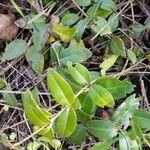
Vinca minor
Common periwinkle · Myrtle · Lesser Periwinkle [plant] · Running-myrtle · Lesser periwinkle
Description
Source: leafsnapVinca minor, also known as common periwinkle or creeping myrtle, is a low-growing evergreen plant native to Europe and Asia. Belonging to the Apocynaceae family, it typically grows up to 6 inches tall and can spread up to 18 inches wide. The plant features glossy, dark green leaves that are oval-shaped with pointed tips, and it produces small blue or purple flowers in the spring. Vinca minor is commonly used as a ground cover due to its ability to spread rapidly through underground stems called stolons. While it can tolerate shade, it prefers partial shade or full sun in cooler climates. The plant thrives best in well-draining soil with moderate moisture levels. In addition to its ornamental appeal, Vinca minor has been used for medicinal purposes for centuries. Its alkaloid content has been found effective in treating various ailments, such as high blood pressure, diabetes, and cancerous tumors. However, it is important to note that Vinca minor contains toxic compounds that can be harmful if ingested by humans or animals. Therefore, caution should be exercised when planting this species, particularly around children's play areas or pets' living spaces.
💡 The well-known pastel purple color, periwinkle, is named after the common periwinkle plant. The first recorded use of "common periwinkle" to describe this color, rather than just the plant, occurred in England in 1922.
🌳 Common periwinkle is widely used as a groundcover plant; its dense foliage can suppress weed growth. It is chosen for memory gardens because it symbolizes constancy and remembrance and provides greenery year‑round.
🎭 Affection, Mental abilities, Fidelity, Confidence
Care Guide
💧 Water Every 7 days
The common periwinkle flourishes in moist, well-drained soil and needs weekly watering to stay properly hydrated. As an evergreen plant, it keeps its leaves throughout the year, which requires a consistent watering schedule to support steady growth. This is especially important when it grows outdoors, where it forms dense ground covers that help suppress weeds.
When Should I Water My Common Periwinkle?
Watering your common periwinkle appropriately is vital for its growth, health, and flowering. The primary indicators for when it needs water include the dryness of the soil, which can be checked by feeling the top 1 to 2 inches of soil around the plant, and observing the plant's leaves for signs of wilting or color loss. Factors such as the plant's growth speed, pre-flowering stage, temperature, and sunlight exposure also influence its watering needs. It's crucial to avoid over-watering to prevent risks like root rot and under-watering to avoid stunting the plant's growth or even causing its death.
How Should I Water My Common Periwinkle?
Common periwinkle thrives in moist but well-draining soil. It's important to avoid overwatering and water logging. When watering, focus on watering the base of the plant directly to avoid wetting the foliage, which could lead to diseases. Using a watering can with a long, narrow spout is helpful for this. Additionally, employing a moisture meter could assist in accurately determining when your plant requires water, ensuring you neither over nor under water it. Make sure to water deeply at the root level while avoiding moisture on the leaves.
How Much Water Does Common Periwinkle Really Need?
The common periwinkle requires about 1 to 2 inches of water per week, but this can vary based on environmental conditions like pot size, root depth, and overall plant size. For optimal health, the soil should be moist but not waterlogged. Overwatering can lead to yellowing leaves, root rot, or fungal infections, while underwatering may result in wilting or reduced flowering. To maintain the right moisture balance, consider the type of soil, use of mulch, and regularly check the soil's moisture level.
What Kind of Water is Best for Common Periwinkle?
Common periwinkle prefers rainwater or distilled water over tap water, which may contain chemicals like chlorine or fluoride that can harm the plant. If you must use tap water, let it stand for 24 hours to allow chlorine to evaporate. This plant is sensitive to fluoride and heavy metals, so using filtered or distilled water is advisable to avoid leaf tip burn and other mineral-induced issues. Room temperature water is preferred as cold water can shock the plant's roots.
How Do Common Periwinkle's Watering Needs Change with the Seasons?
Common periwinkle's watering needs vary throughout the year. In spring, increase moisture as the plant's growth accelerates. During summer, ensure the soil remains moist due to higher temperatures causing quicker soil drying. In autumn, reduce watering as cooler temperatures slow evaporation. Winter calls for minimal watering, only when the top layer of soil dries out, as the plant's growth slows and it can tolerate lower moisture levels without the risk of root rot or fungal diseases.
☀️ Light Partial sun
Common periwinkle prefers moderate light but copes with a variety of lighting, tolerating both strong sun and lower light levels. Excessive sun can reduce the plant’s overall vigor, while insufficient light can restrict growth. Its native habitat occurs under varying light conditions.
What are the sunlight requirements for Common Periwinkle?
Common Periwinkle requires partial sun, about 3-6 hours of sunlight, to thrive. It can also adapt to both full sun and full shade conditions, with full sun being defined as receiving over 6 hours of sunlight. The plant's original habitat allows it to manage well across various light conditions. However, excessive sun exposure could diminish its performance, and too little sunlight may stunt its growth. Artificial lighting can serve as an effective alternative for indoor plants, ensuring they receive adequate light, especially in scenarios where natural sunlight is insufficient. LED lights are recommended for their customizable wavelengths, tailored to the specific needs of plants. For optimal growth, full sun plants should have 30-50W/sq ft of artificial light, partial sun plants require 20-30W/sq ft, and full shade plants need 10-20W/sq ft. This lighting should mimic natural daylight hours, generally 8-12 hours per day, placed 12-36 inches above the plants.
What symptoms indicate light deficiency in Common Periwinkle?
When Common Periwinkle is grown under insufficient light conditions, it may exhibit several symptoms indicating light deficiency. These include smaller new leaves compared to mature ones, leggy or sparse growth where the spaces between leaves or stems become longer, faster leaf drop as the plant sheds older leaves early to conserve resources, slower or no new growth, and new leaves developing pale colors or irregular patterns due to a lack of chlorophyll. Other symptoms of inappropriate light conditions include chlorosis or yellowing leaves, a sign of excessive light, sunscald with pale or necrotic areas on plant tissue, leaf curling as a defense against excessive sunlight, wilting from loss of water through transpiration in intense sunlight, and leaf scorching where edges or patches on leaves turn brown and crispy due to overexposure.
How can I address light-related issues in Common Periwinkle?
To address light-related issues in Common Periwinkle, gradual adaptation to changing light conditions is key. For indoor plants not receiving sufficient sunlight, gradually shifting them to sunnier spots each week until they receive the necessary 3-6 hours of direct sunlight daily can be beneficial. If moving the plant is not feasible, consider using artificial light, keeping a desk or ceiling lamp on for at least 8 hours daily or investing in professional plant grow lights. For outdoor plants, gradually moving them to optimal sunlight locations each week can help prevent sunburn. It's essential to minimize obstructions to sunlight, such as by pruning trees or branches, and for smaller plants, transplanting during their dormant period to a location with ample sunlight and good drainage may be necessary. It's important to note that while parts of the plant affected by insufficient sunlight may not recover, new growth following improved light exposure will be healthy.
🌡️ Temperature 15–37.8°C
The common periwinkle's native growth environment, in terms of temperature, falls between 40 to 60 ℉ (4 to 16 ℃). It prefers temperatures of 59 to 100 ℉ (15 to 38 ℃), tolerates both hot and cold conditions, but is sensitive to rapid temperature shifts. Seasonal adjustments are necessary, for example protecting it from frost in winter and providing shade in summer.
What are the ideal temperature conditions for growing Common Periwinkle?
The Common Periwinkle plant thrives in a range of temperature conditions. It prefers temperatures between 59 to 100 °F (15 to 38 °C) for optimal growth. Though it displays tolerance to both higher and lower temperatures, it is sensitive to rapid changes in temperature. To ensure the plant's health, it is important to adjust care seasonally, which might include protecting it from frost in the winter and providing shade during the summer. When the climate is within the periwinkle's preferred temperature range, it usually does not require additional measures. However, when temperatures are expected to fall below the plant's cold tolerance threshold, temporary protection measures, such as wrapping the plant with insulating materials, are necessary.
How does low temperature affect Common Periwinkle, and what are the solutions?
Common Periwinkle has a moderate tolerance to low temperatures and thrives best when kept within its suitable growth temperature range. During winter, it's crucial to maintain the temperature above its minimum tolerable limit. Falling below this threshold may cause the leaves to droop, and in severe cases, can lead to leaf wilt and drop. To protect the plant from damage due to low temperatures, remove frost-damaged parts and take proactive measures. These measures include wrapping the plant with protective materials like non-woven fabric or cloth, and building a wind barrier to shield it from cold winds.
What should be done if Common Periwinkle experiences high temperatures?
During the summer months, it's important to ensure that the temperature surrounding Common Periwinkle does not exceed its maximum tolerable limit. Exceeding this threshold may cause the leaves to lighten in color, dry out at the tips, curl, and make the plant prone to sunburn. To mitigate these effects, sunburned and dried portions of the plant should be trimmed off. The plant should be moved to a shaded location away from the intense midday and afternoon sun, or a shade cloth can be used to reduce exposure. Additionally, watering the plant in the morning and evening helps keep the soil adequately moist, further protecting the plant from heat stress.
💨 Humidity normal (40-60%)
This plant will thrive in moderate humidity, which is probably the level in your home. However, misting it a few times a week can be very beneficial. Make sure the room has good ventilation.
🪴 Soil 6-7
🌱 Fertilizer
Generally, a single fertilizer application in spring is enough for Common periwinkle, though multiple feedings can maximize growth. Feed every month to six weeks. Fertilization improves the leaves’ appearance and function, encouraging uniform color and a healthy texture. It also promotes root growth and nutrient uptake for long-term plant health.
Why should I add fertilizer to my Common periwinkle plant?
Common periwinkle relies heavily on its leaves for structure, so it's important to fertilize them to keep them both healthy and aesthetically pleasing. Proper fertilization will enhance the leaves' color and texture, ensuring a consistent appearance. Additionally, fertilization benefits the plant by promoting root growth below the soil. This helps the plant develop new roots and maintain its existing root system, enabling it to absorb nutrients more effectively in the long run. So, fertilization not only maintains the health of the plant in the present, but also improves its ability to absorb soil nutrients in the future.
When should I fertilize my Common periwinkle plant?
If you grow your Common periwinkle outdoors each year, it will start growing new leaves in early spring. This is a cue to start fertilizing the plant for the year. Usually, one application of fertilizer in the spring is enough for the Common periwinkle to thrive. However, if you want to promote maximum growth, you can fertilize it multiple times during the spring and early summer. If you choose this option, you can feed the Common periwinkle every month to a month and a half.
When is it not a good idea to add fertilizer to my Common periwinkle plant?
During late fall and winter, your Common periwinkle will become dormant and stop producing new growth. Therefore, it is best to avoid fertilizing it during this period. In the spring and summer, if you choose to fertilize multiple times, gradually decrease the amount of fertilizer as summer approaches and the growth rate slows. In general, it is not recommended to fertilize your Common periwinkle during extremely hot weather or when the soil is excessively dry. Doing so can stress the plant and lead to premature death.
What kind of fertilizer does my Common periwinkle plant need?
Choosing the right fertilizer for a Common periwinkle is actually quite simple. These plants do well with a general-purpose garden fertilizer that contains equal amounts of nitrogen, phosphorus, and potassium. Look for a fertilizer with a ratio of 10-10-10 or something similar for best results. Avoid fertilizers with high nitrogen levels if you're not sure. The ideal fertilizer for Common periwinkle is typically in granular form, and should be slow-release for easy application to the soil. Additionally, using organic soil amendments like compost can be beneficial for feeding your Common periwinkle.
How should I add fertilizer to my Common periwinkle plant?
To properly fertilize your Common periwinkle, start by waiting until its first leaves emerge in early spring. Once you see this happening, apply a granular slow-release fertilizer with a balanced formula to the soil around the base of the plant. You can repeat this process later in the season if desired. Remember to focus on the soil and not the plant itself when applying the fertilizer. This may mean gently moving leaves aside to access the soil near the roots. It is also beneficial to water the Common periwinkle before and after fertilizing.
🪴 Pot & Repot 2-3 years
Repot Common periwinkle in early spring, choosing a pot only slightly larger than the current one and with adequate drainage. Use a well-draining potting mix, making sure the root ball remains at the same level as before. Gently loosen any root-bound roots. After repotting, water generously and place the plant in a warm, shady spot. Regular pruning helps control size and encourages new growth.
✂️ Pruning
The common periwinkle thrives with regular pruning, ideally performed from early to late spring. This encourages denser growth and helps control its invasiveness. Key practices include trimming back overgrown stems and removing any damaged parts with clean tools. To protect the plant's health, avoid pruning during extreme heat.
🌿 Propagating
🐛 Diseases & pets
☠️ Toxicity
Characteristics
- Plant Type
- Vine, Herb
- Life Cycle
- Perennial
- Genus
- Vinca
- Family
- Apocynaceae
- Hardiness Zone
- 8-11
- Mature Height
- 10 cm to 40 cm
- Mature Spread
- 15 cm to 46 cm
- Leaf Color
- Green, Blue, Yellow, White
- Leaf Type
- Evergreen
- Flower Color
- Lavender, Purple
- Flower Size
- 1.52 cm to 3.05 cm
- Bloom Time
- Mid spring, Late spring, Early summer
- Planting Time
- Spring
- Harvest Time
- Early summer, Mid summer
- Native Area
- Austria, Czech Republic, Slovakia, Montenegro, Poland, Croatia, Slovenia, Ukraine, Serbia, Russia, Hungary, Germany, Italy, Kazakhstan, Spain, Switzerland, Netherlands, France, Romania, Belgium, Portugal