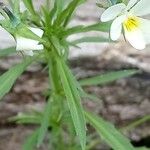
Viola arvensis
Field Pansy · European field pansy · European wild pansy · Wild pansy · Field Violet
Description
Source: leafsnapViola arvensis, commonly known as field pansy or wild pansy, is a small flowering plant belonging to the Violaceae family. Native to Europe and Asia, it has been introduced and naturalized in many parts of the world. The plant typically reaches a height of up to 20 cm and features small, oval-shaped leaves arranged alternately along the stem. The flowers of Viola arvensis are usually purple or blue with a yellow center, though they can also be white or pink. Each flower has five slightly asymmetrical petals with a spur at the base. These flowers bloom from April to September. Viola arvensis thrives in well-drained soils located in sunny or partially shaded areas such as meadows, fields, hedgerows, and woodland edges. It often grows alongside other wildflowers like daisies and buttercups. Traditionally, this plant has been used for medicinal purposes due to its anti-inflammatory properties, which can help alleviate symptoms of respiratory infections such as coughs and colds. Additionally, it contains antioxidants that may help protect against certain diseases. Overall, Viola arvensis is an attractive wildflower that provides essential ecological benefits by supporting pollinators such as bees and butterflies. It also has potential medicinal properties that may offer health benefits to humans.
🌳 Beyond its ornamental appeal, the field pansy has an interesting function as a bioindicator of specific soil metal levels. Although this trait is not widely exploited, it suggests possible applications in environmental monitoring and phytoremediation research, revealing its role in assessing ecosystem health.
🎭 Affection, Rain, Enchantment, Affection
Care Guide
💧 Water Every 7 days
The field pansy, which originates from temperate regions, adapts well to moderate moisture levels. It thrives when watered weekly to maintain consistent soil moisture. During dry spells, it requires more frequent watering to mimic its natural habitat conditions. This adaptability demonstrates its resilience to varying water availability.
How should I water my Field pansy?
To water Field pansy, you have several options. You can use a garden hose with a spray nozzle, a watering can, or any other common watering tool. Field pansy is not very particular about the type of water it receives. It can survive on rainwater, tap water, or filtered water. However, it's best to avoid watering this plant from above because it can harm the leaves and flowers and even cause disease. Instead, a drip irrigation system is often the most effective way to water Field pansy. These systems distribute water evenly and directly to the soil. If you have a container-grown Field pansy, you can apply water to the soil using a cup, a watering can, or simply your tap.
What do I do if I give my Field pansy too much or too little water?
If you notice that your Field pansy is lacking moisture, the remedy is simple - start watering it more regularly. However, overwatering is a more serious issue. When your Field pansy is overwatered, it can become susceptible to diseases that may cause it to decline and die. To prevent this, make sure to choose a suitable location for it to grow. This location should receive plenty of sunlight to help dry the soil and have adequate drainage to avoid waterlogged soil. If you overwater a potted Field pansy, consider transferring it to a new pot with better soil drainage and more drainage holes. When repotting, use loose soil and ensure the pot drains efficiently.
How frequently should I water my Field pansy?
To properly care for your Field pansy, it is important to water it regularly. In the spring, aim to water the plant once a week. As the season progresses and it gets hotter, you may need to increase watering to two or three times a week. However, be careful not to overwater as it can harm the plant. Regardless of how often you water, ensure that the soil remains moist but not overly wet. If you have a potted Field pansy, you will need to water it more frequently compared to plants in the ground. Due to the heating and faster drying in pots, watering a container-grown Field pansy a few times a week is usually necessary.
How much water does my Field pansy require?
There are a few ways to determine how much water to give to your Field pansy. Some gardeners gauge the water volume by feeling the soil for moisture. This method suggests watering until the first six inches of soil feel moist. Alternatively, you can use a set measurement. Generally, Field pansies require about two gallons of water per week, depending on the heat and soil dryness. However, strictly following this guideline can result in overwatering if your plant needs less water. When growing Field pansy in a container, a different method is needed. It's best to water enough to moisten all layers of dry soil. To test for moisture, stick your finger in the soil or water until excess water trickles from the drainage holes.
How do I know if I'm giving enough water to my Field pansy?
Avoiding overwatering your Field pansy can be somewhat difficult. These plants have deep roots that need weekly soil moisture. However, Field pansy are highly susceptible to root rot and browning from overwatering. Underwatering is less likely because these plants can survive without supplemental watering for a while. But if you wait too long to water them, they will likely wilt and develop dry leaves.
☀️ Light Full sun
Field pansy does best in places with plentiful sunlight throughout the day, although it can tolerate areas with only moderate sun. A setting similar to its native open fields that gets plenty of sunshine promotes vigorous growth. Too much or too little sun can hinder healthy plant development.
What are the sunlight requirements for Field Pansy?
Field Pansy (Viola arvensis) thrives best in areas exposed to full sun, which is defined as more than 6 hours of sunlight daily. However, it can also grow well in partial sun, receiving about 3-6 hours of sunlight. The essential aspect is to monitor how sunlight moves through your garden, ensuring you place your plants in spots that provide a healthy balance of light and shade, thus guaranteeing their well-being.
Can Field Pansy grow with artificial lighting?
Yes, Field Pansy can grow with artificial lighting, especially when natural sunlight is inadequate, such as during winter or in less sunny locations. Artificial light sources, like LED lights, can be tailored to emit specific wavelengths needed for optimal plant growth. Full sun plants require 30-50W per square foot of artificial light, partial sun plants need 20-30W per square foot, and full shade plants need 10-20W per square foot. It is important to place the light source 12-36 inches above the plant and ensure it receives 8-12 hours of light per day to mimic natural daylight hours effectively.
What are the common symptoms of inadequate light for Field Pansy?
Field Pansy shows several signs when suffering from light deficiency. These include smaller new leaves compared to older ones, leggy or sparse growth due to elongated spaces between leaves or stems, faster leaf drop as an energy conservation measure, slower or halted growth indicating the plant is in survival mode, lighter-colored new leaves signifying a lack of chlorophyll, and symptoms of too much sunlight such as chlorosis (leaf yellowing), sunscald, leaf curling, wilting, and leaf scorching.
How can I address inadequate sunlight issues for Field Pansy?
To address inadequate sunlight for Field Pansy, consider gradually moving your plants to a sunnier location, aiming for at least 6 hours of direct sunlight daily for optimal growth. For indoors, ensure plants are near a south-facing window or use artificial lighting, like grow lights or lamps, for a minimum of 8 hours a day. Outdoors, acclimate your plants to increased light gradually to prevent sunburn. Also, consider pruning nearby trees to reduce shade or transplanting smaller plants to sunnier spots, especially during their dormant periods in late winter or early spring.
🌡️ Temperature 10–35°C
Field pansy is commonly found in its native habitat where temperatures range from 68 to 95 °F (20 to 35 ℃). This temperature preference makes it well adapted to temperate climates. Seasonal temperature adjustments may be required to replicate these conditions.
What are the ideal temperature conditions for growing Field Pansy?
Field Pansy, or Viola arvensis, thrives in temperatures ranging from 68 to 95°F (20 to 35°C), making it suitable for temperate climates. These conditions typically align with its native environment, where seasonal temperature adjustments may help emulate its ideal growing conditions. Field Pansy has a strong resistance to cold; however, special frost protection measures are usually not necessary. Yet, in winters where temperatures are expected to drop significantly, it's important to provide cold protection by covering the plant with soil or straw and ensuring the soil is moist prior to the first freeze.
How does Field Pansy react to low temperatures?
Field Pansy has a natural tolerance for cold, optimally growing above certain minimum temperatures. During the winter months, it's crucial to keep it above these minimum temperatures to prevent damage. If temperatures fall below a critical limit, while the plant might not exhibit noticeable changes in the winter, there could be a decrease in sprouting or an absence of sprouting come spring. As a solution, in spring, any parts of the plant that have failed to sprout should be removed to encourage healthy growth.
What should I do if my Field Pansy experiences high temperatures?
In the summer, it's essential to ensure that Field Pansy remains below a certain maximum temperature for optimal health. Exceeding this temperature can cause the leaves to lighten in color, become prone to curling, susceptible to sunburn, and in severe cases, lead to the wilting and drying out of the entire plant. To protect the plant from high temperatures, you can trim away sunburned and dried parts, relocate it to a shaded area during the hottest parts of the day, or use a shade cloth. Additionally, watering the plant in the morning and evening will help keep the soil moist and reduce heat stress.
💨 Humidity
🪴 Soil 6-7
🌱 Fertilizer
Once Field pansy has opened most of its blooms to full size, resume fertilizing. When blooms are at peak output, apply fertilizer every three to four weeks, as weather permits. After Field pansy begins producing fewer new blooms, stop fertilizing; there's no need to feed the plant when it can no longer produce more blooms.
🪴 Pot & Repot
✂️ Pruning
🌿 Propagating
🐛 Diseases & pets
☠️ Toxicity
Characteristics
- Plant Type
- Herb
- Life Cycle
- Annual, Perennial
- Genus
- Viola
- Family
- Violaceae
- Hardiness Zone
- 6-9
- Mature Height
- 30 cm
- Mature Spread
- 30 cm
- Leaf Color
- Green
- Leaf Type
- Semi-evergreen
- Flower Color
- Yellow, White, Violet
- Flower Size
- 2.54 cm
- Bloom Time
- Mid spring, Late spring, Early summer
- Planting Time
- Spring, Autumn, Winter
- Harvest Time
- Late spring, Early summer, Mid summer