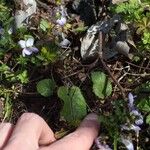
Viola bicolor
Johnny-jump-up · Cupid's-delight · Field pansy · Heart's-ease · Wild pansy
Description
Source: leafsnapViola rafinesquei (syn. Viola bicolor), commonly known as the American field pansy or wild pansy, is an annual plant in the violet family found throughout much of North America. There has been some debate as to whether the plant is native there or if it was introduced from the Old World as a variety of Viola kitaibeliana, but it is now generally thought to be native to the North America. It is common in disturbed habitats but is also found in fields and open woods on substrates ranging from sandy soil to clay to limestone.
🎭 Affection, Rain, Enchantment, Affection
Care Guide
💧 Water
Wild pansy, which originates from moist meadows, thrives in consistently damp soil and high humidity. While it can tolerate moderate drought, it still requires watering twice a week. Adequate soil moisture is essential for supporting its flowering and growth throughout its active seasons.
How should I water my Wild pansy?
To water Wild pansy, you have several options: a garden hose with a spray nozzle, a watering can, or any other common watering tool. This plant isn't too particular about its water source - it can thrive with rainwater, tap water, or filtered water. However, it's best not to water this plant from above as it can harm the leaves and flowers, and even lead to disease. For optimal watering, consider using a drip irrigation system, which evenly and directly applies water to the soil. For a Wild pansy in a container, the same concept applies but you can use tools like a cup, watering can, or tap to water the soil directly.
What should I do if I give my Wild pansy too much water or not enough water?
If you notice that your Wild pansy is lacking moisture, the remedy is simple: water it more regularly. Overwatering, on the other hand, can be much more serious if not caught early. This can lead to diseases that can harm and ultimately kill the plant. To prevent this, choose a location for your Wild pansy that gets plenty of sun to help dry out the soil and has good drainage to avoid water pooling. If your potted Wild pansy is overwatered, consider changing it to a new pot with better drainage. When repotting, use loose soil and a pot that drains efficiently.
How often should I give water to my Wild pansy?
Wild pansy requires regular watering throughout the growing season. In spring, water once a week, increasing to two to three times per week as the season progresses and temperatures rise. However, exceeding this watering rate can harm the plant. It's important to keep the soil moist but not saturated for Wild pansy. When growing in a pot, the watering frequency should be higher compared to planting in the ground. Generally, container-grown Wild pansy should be watered a few times per week, while in-ground plants can be watered once a week.
How much water does my Wild pansy plant need?
To determine how much water to give your Wild pansy, you have different options. One method is to check the soil moisture by feeling it and watering until the top six inches are moist. Alternatively, you can use a set measurement and give your Wild pansy around two gallons of water per week, depending on the temperature and how quickly the soil dries. However, following strict guidelines like this can lead to overwatering if your plant needs less water. When growing Wild pansy in a container, you need to use a different approach. You should water enough to moisten all the dry layers of soil, which you can test by sticking your finger into the soil or letting excess water drain from the pot's drainage holes.
How do I know if I'm giving enough water to my Wild pansy plants?
Avoiding overwatering your Wild pansy can be somewhat difficult. These plants have deep roots that need to be moistened weekly. However, Wild pansies are highly susceptible to root rot and may also experience browning from overwatering. Underwatering is less likely as these plants can survive without supplemental watering for a while. If you wait too long to water your Wild pansy, it may wilt and develop dry leaves.
☀️ Light Full sun
The wild pansy prospers beneath an open sky, enjoying the presence of the daylight star, which encourages vigorous growth. This species tolerates partial sunlight, showing a degree of flexibility. In the wild it occupies places where the sun's path is not blocked. Excessive exposure can cause dehydration, while insufficient light would impede its development.
What are the sunlight requirements for Wild Pansy?
Wild Pansy requires full sun exposure, which means it needs above 6 hours of sunlight daily to thrive. It can also tolerate partial sun, roughly about 3-6 hours of sunlight each day. It's recommended to observe the movement of sunlight in your garden to find the ideal spot that provides a mix of light and shade to ensure the plant's growth and happiness.
How does sunlight affect the growth of Wild Pansy?
Sunlight plays a crucial role in the growth of Wild Pansy, enabling it to thrive and maintain robust growth. Although this plant can tolerate partial sunlight, its natural habitat is in open areas where sunlight is abundant. Too much exposure can lead to dehydration, whereas insufficient sunlight can hinder its development. In environments where natural light is sparse, particularly during winter or in less sunny areas, artificial lighting can be a beneficial alternative to support its growth.
How can artificial lighting supplement sunlight for indoor Wild Pansy plants?
For indoor Wild Pansy plants, artificial lighting can compensate for the lack of natural sunlight. It's advisable to use LED lights as they can mimic the specific wavelengths of light needed by plants. The amount of artificial light required varies depending on the type of plant: full sun plants need 30-50W/sq ft, partial sun plants need 20-30W/sq ft, and full shade plants require 10-20W/sq ft. The light source should be placed 12-36 inches above the plant and kept on for 8-12 hours per day to mimic natural daylight conditions.
What are the symptoms of insufficient light in Wild Pansy?
When Wild Pansy receives inadequate light, it may display several symptoms indicating light deficiency. These include smaller new leaves, leggy or sparse growth, faster leaf drop, slower or halted new growth, and paler new leaves. Chlorosis, or the yellowing of leaves due to chlorophyll breakdown, along with sunscald, leaf curling, wilting, and leaf scorching are also common symptoms that occur either from insufficient light or overexposure to sunlight.
What solutions can address light deficiency in Wild Pansy?
To address light deficiency in Wild Pansy, gradually relocate your plant to a sunnier spot, allowing it at least 6 hours of direct sunlight a day. If indoor, use a south-facing window or consider artificial grow lights for ample light exposure. For outdoor plants, ensure they are moved to optimal sunlight gradually to prevent sunburn. Removing obstructions like branches can also improve light availability. For smaller plants, consider transplanting to a sunnier location during their dormant period. While parts of the plant damaged by poor light may not recover, new growth should be healthy with these adjustments.
🌡️ Temperature 5–35°C
Wild pansy originates from temperate regions and prefers temperatures between 68 and 95°F (20 to 35℃). If temperatures rise above this preferred range in certain seasons, it may need shading or other preventive cooling measures.
What are the temperature requirements for growing Wild Pansy?
Wild Pansy (Viola bicolor) thrives in temperate environments, favoring temperatures between 68 to 95°F (20 to 35°C). If temperatures rise above this preferred range, shading or cooling measures may be needed. The plant has strong cold resistance, so special frost protection is usually not required. However, in regions where winter temperatures may drop below -30°C, cold protection should be provided, such as covering the plant with soil or straw. It is also recommended to water the plant abundantly before the first freeze of autumn to ensure the soil remains moist and enters a frozen state, which helps prevent drought and water scarcity during winter and early spring.
How does Wild Pansy react to low temperatures?
Wild Pansy is cold-tolerant and performs best when temperatures are above 20°C. During winter, it should ideally be kept above 0°C. However, temperatures below -30°C may not visibly affect the plant during winter, but there can be a decrease in sprouting or even a lack of sprouting during spring. To combat this, it is recommended to remove any parts of the plant that have failed to sprout in spring.
How should Wild Pansy be cared for in high temperatures?
During summer, it is crucial to ensure that the temperature around the Wild Pansy does not exceed 35°C. Exposure to temperatures above 41°C may lead to the leaves becoming lighter in color, curling, being prone to sunburn, and in severe cases, causing the entire plant to wilt and dry out. To mitigate these issues, trim away the sunburned and dried parts. Move the plant to a shadier location or use a shade cloth to protect it from the midday and afternoon sun. Additionally, watering the plant in the morning and evening can help keep the soil moist and further protect the plant from heat stress.
💨 Humidity
🪴 Soil 6-7
🌱 Fertilizer
When Wild pansy has opened most of its blooms to full size, it's time to resume fertilizing. Around the period when blooms are at their peak, begin fertilizing again every three to four weeks, as the weather allows. Then, once Wild pansy starts producing fewer new blooms, cease fertilizing; there's no need to feed the plant when it can no longer form additional blooms.
🪴 Pot & Repot
✂️ Pruning
Wild pansy is a small, charming flowering plant that can benefit greatly from specific pruning techniques such as deadheading and removing damaged stems. The best time to prune is from early to late spring, as this helps to improve air circulation, reduce pests, and encourage vibrant blooms, leading to a healthier and more thriving plant.
🌿 Propagating
🐛 Diseases & pets
☠️ Toxicity
Characteristics
- Plant Type
- Herb
- Life Cycle
- Annual, Perennial
- Genus
- Viola
- Family
- Violaceae
- Hardiness Zone
- 4-10
- Mature Height
- 15 cm
- Mature Spread
- 20 cm
- Leaf Color
- Green
- Leaf Type
- Semi-evergreen
- Flower Color
- Purple, Violet
- Flower Size
- 1.27 cm
- Bloom Time
- Mid spring, Late spring, Early summer
- Planting Time
- Autumn
- Harvest Time
- Early summer, Mid summer
- Native Area
- Canada