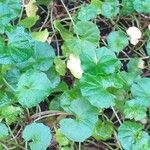
Viola hederacea
Australian violet · Creeping violet · Trailing violet · Ivy-leaf violet · Ivy-leaved Violet
Description
Source: leafsnapViola hederacea, commonly known as the Ivy-leaved Violet, is a low-growing perennial plant that belongs to the Violaceae family. Native to Australia and New Zealand, it thrives in a variety of habitats, including forests, woodlands, and grasslands. The plant features heart-shaped leaves that are dark green with scalloped edges. These leaves are glossy and have a slightly waxy texture. The flowers of Viola hederacea are small and consist of five petals, with colors ranging from white to pale blue or purple. Viola hederacea plays a significant role in supporting wildlife, providing food for various insects such as bees and butterflies. Moreover, it serves as a host plant for certain butterfly species. In traditional medicine, Viola hederacea has been used to treat various ailments, including coughs, colds, sore throats, headaches, and skin conditions, owing to its anti-inflammatory properties. Overall, Viola hederacea is an attractive ground cover option due to its low-growing habit, making it ideal for rock gardens or for underplanting larger shrubs or trees. It not only enhances the aesthetic appeal of a garden but also offers important ecological benefits.
Care Guide
💧 Water Every 7 days
The Australian violet is native to the forest understories of Australia, where it thrives in consistently moist soil. While it prefers balanced moisture, it can tolerate short periods of dryness. Watering it weekly encourages lush growth. Although it is typically grown outdoors, using mulch can help retain soil moisture and replicate the plant’s natural environment.
How should I water my Australian violet?
To properly water the Australian violet, use filtered water at room temperature. Tap water may contain harmful particles, so filtered water is preferred. The plant benefits from warm water as it comes from a warm environment and cold water can be a shock to its system. Avoid overhead watering to prevent foliage complications. Instead, apply the filtered room temperature water directly to the soil until it is fully soaked. This helps to moisten the roots and allows them to continue spreading and absorbing nutrients from the soil.
What should I do if I give my Australian violet too much water or too little water?
Overwatering is a common issue that can harm your Australian violet. If this plant receives too much water, its stems and leaves may wilt and turn yellow. Overwatering over a long period can also lead to diseases like root rot, mold, and mildew, which can be fatal for your plant. On the other hand, underwatering is less common for Australian violets due to their drought tolerance. However, it is still possible, and when it happens, the leaves may become brittle and brown. It is important to be aware of the signs of overwatering and take action promptly. Some diseases caused by overwatering, such as root rot, may be irreversible if not addressed in time. If you notice early signs of overwatering, reduce your watering schedule and assess the soil drainage. If the soil drains poorly, replace it with a loose, well-draining potting mix. For underwatering, simply increase your watering frequency until the signs improve.
How frequently should I water my Australian violet?
If your Australian violet is in a pot, you can test if it needs water by sticking your finger into the soil. If the top two to three inches of soil feel dry, then it's time to water it. If you have your Australian violet planted outdoors, you can use the same method to check if it needs water. When the top few inches of soil are dry, it's time to give it some water. Typically, during spring and early fall, you'll need to water this plant about once a week using this method. However, in very hot weather, you may need to increase the frequency to twice or more per week. While the Australian violet is generally able to endure drought, mature and well-established plants are especially resilient.
How much water does my Australian violet require?
When watering your Australian violet, don't hold back on the amount of water you give. Wait until the top two to three inches of soil are dry, then give the plant a good, thorough watering. Make sure to water enough for the soil to be completely soaked, and watch for excess water flowing out of the drainage holes at the bottom of the pot. If you don't see excess water draining, it means you haven't watered enough. However, be careful not to let the water accumulate in the soil, as this can harm the plant. On the other hand, if water isn't draining properly from the pot, it could indicate poor soil drainage, which is not good for the plant's health and should be avoided. If the plant is outside, it will need about 1 inch of rain per week.
How do I water my Australian violet as it grows?
The water needs of the Australian violet can vary depending on its growth stages. When the plant is young or has just been transplanted, it requires more water than usual. During these stages, the plant focuses on developing new roots to support future growth, and therefore needs more moisture for optimal performance. As the plant matures over a few seasons, it will require less water. Additionally, during the bloom period, the Australian violet may need increased watering due to the significant moisture requirements for flower development.
☀️ Light Full sun
Australian violet grows best with plenty of sunlight, which encourages healthy development. Its native habitat is bright, so it tolerates strong light. Still, too much radiation can cause the plant to become stressed, while insufficient light can impede vigorous growth. Different stages of growth may have different sunlight requirements.
What are the sunlight requirements for Australian violet?
Australian violets thrive best in full sun conditions, requiring more than 6 hours of sunlight daily. They can also grow in partial sun, with about 3-6 hours of sunlight. It's essential to monitor the sunlight through your garden to find the perfect balance of light and shade for optimal plant growth, as the native habitat of Australian violet includes well-lit environments. Excessive sunlight can stress the plant, while too little can impede its development. Pay attention to the changing needs of the plant at different growth stages.
How does artificial lighting support indoor growth of Australian violets?
When natural sunlight is insufficient, especially during winter or in less sunny areas, artificial lighting is crucial for the growth of indoor plants like the Australian violet. Using the right type of artificial light, such as LED lights that can provide specific light wavelengths, helps in promoting faster and healthier plant growth. For full sun plants, 30-50W/sq ft of light is suggested, 20-30W/sq ft for partial sun plants, and 10-20W/sq ft for full shade plants. The artificial light source should be placed 12-36 inches above the plant, mimicking natural sunlight as much as possible, and kept on for 8-12 hours per day to align with the natural daylight hours needed by the plant species.
What are the common symptoms of inappropriate lighting conditions for Australian violets?
Australian violets show various symptoms when they experience inadequate lighting conditions, including smaller new leaves, leggy or sparse growth, faster leaf drop, slower or halted new growth, lighter-colored new leaves indicating a lack of chlorophyll, chlorosis resulting in yellowing leaves, sunscald that damages the leaves or stems, leaf curling as a defense mechanism against excessive sunlight, wilting due to increased water loss, and leaf scorching characterized by brown, dry edges on leaves.
What solutions can be employed to address lighting issues for Australian violets?
To solve lighting issues for Australian violets, gradually move the plants to a location with at least 6 hours of direct sunlight daily for outdoors, and use a south-facing window for indoors, keeping curtains open during the day. If natural sunlight is insufficient, consider using artificial light for at least 8 hours daily. For outdoor plants, avoid sudden changes in light intensity to prevent sunburn. Removing obstructions like trees by pruning can help increase sunlight exposure. If necessary, transplant smaller plants during their dormant period to a location with adequate sunlight and good drainage. Note that parts of the plant affected by insufficient sunlight may not recover, but new growth will be healthy after improving light exposure.
🌡️ Temperature 15–35°C
The Australian violet is native to areas with mild temperatures and typically prefers a range of 59 to 95°F (15 to 35℃). In winter, it benefits from being kept in a temperature-controlled space that mimics its preferred conditions. Keep it away from drafts and cold windows for best growth.
What is the optimal temperature range for Australian violet?
The Australian violet, also known by its botanical name Viola hederacea, thrives in moderate temperatures and is indigenous to such environments. Its comfort zone spans from 59 to 95°F (15 to 35°C), making it suitable for areas that maintain these temperature ranges. During the colder months, it's advantageous to keep the plant in a temperature-controlled environment to mimic its natural habitat. This includes positioning it away from drafts and cold windows to encourage optimal growth. The Australian violet exhibits strong resistance to cold, meaning elaborate frost protection measures are typically unnecessary. However, in conditions where winter temperatures are anticipated to plummet below -15°C, it's crucial to implement cold protection strategies. This can involve covering the plant with insulating materials like soil or straw and watering it thoroughly before the first freeze of autumn. This practice ensures the soil remains moist and enters a frozen state, effectively preventing drought and water scarcity for the plant during the winter and early in the spring season.
How does Australian violet react to low temperatures, and what are the solutions?
Australian violet is noted for its cold tolerance, ideally thriving when the temperature remains above 15°C. In winter, maintaining temperatures above -10°C is recommended to avoid potential damage. Should temperatures dip below -15°C, while immediate changes might not be visible during winter, the plant could exhibit reduced or entirely absent sprouting come spring. To mitigate such effects, it's advised to remove any parts of the plant that have failed to sprout in spring as part of the care routine, thus helping in the plant's recovery and ensuring its health for the upcoming seasons.
How does Australian violet respond to high temperatures, and what solutions can be applied?
In the warmer months, it's crucial for the Australian violet's well-being that it remains within a temperature range below 35°C. Exposing the plant to temperatures above 38°C can induce several stress symptoms, including leaves becoming lighter, prone to curling, the development of sunburn, and in severe cases, causing the plant to wilt and dry out. To address these issues, affected areas should be trimmed away, and the plant should be relocated to an area shielded from the midday and afternoon sun. Utilizing a shade cloth can also provide necessary protection. Additionally, watering the plant during cooler times of the day, such as in the morning and evening, will help maintain appropriate soil moisture levels, further alleviating stress from high temperatures.
💨 Humidity high (>60%)
This plant needs special care because it loves high humidity levels of 60-80% or more. The best way to achieve this is by placing a humidifier near the plant. Daily misting is also essential! Make sure the room has good ventilation.
🪴 Soil 5-6
🌱 Fertilizer
For Australian violet, use a common slow-release fertilizer and apply a diluted liquid fertilizer every two weeks during the growth and blooming periods. Be sure to check the product instructions for specific application methods.
🪴 Pot & Repot Every 12 months
✂️ Pruning
The Australian violet is a plant with round, ivy-like leaves and delicate purple flowers. To keep it healthy and promote new growth, it's best to prune it in early spring or late winter. During pruning, remove any dead foliage and trim back overgrown areas. This helps improve airflow, which can reduce the likelihood of pests. Additionally, make sure to clean your tools before use to prevent the spread of disease, ensuring your garden remains vibrant and beautiful.
🌿 Propagating
🐛 Diseases & pets
☠️ Toxicity
Characteristics
- Plant Type
- Herb
- Life Cycle
- Perennial
- Genus
- Viola
- Family
- Violaceae
- Hardiness Zone
- 7-9
- Mature Height
- 20 cm
- Mature Spread
- 30 cm
- Leaf Color
- Green, Variegated, Purple
- Leaf Type
- Evergreen, Deciduous
- Flower Color
- White, Purple
- Flower Size
- 0.76 cm to 2.03 cm
- Bloom Time
- All year round
- Planting Time
- Spring, Summer
- Harvest Time
- All year round