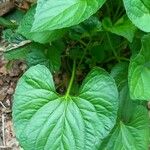
Viola mirabilis
Wonder violet
Description
Source: leafsnapViola mirabilis, commonly known as the "spectacular violet," is a perennial herbaceous plant belonging to the Violaceae family. Native to Europe and Asia, this plant thrives in meadows, woodlands, and along riverbanks. It typically grows up to 30 cm in height with a spread of about 20 cm. The leaves of Viola mirabilis are heart-shaped with serrated edges and grow in a basal rosette formation. The flowers can be solitary or grow in small clusters on long stalks that rise above the foliage. Each flower has five petals, which can range in color from deep purple to pink or white, often with dark purple veins. Viola mirabilis blooms from May through September, attracting pollinators such as bees, butterflies, and moths. It is also valued for its medicinal properties, particularly its anti-inflammatory effects. The plant prefers moist soil conditions but can tolerate some drought once established. While it thrives best in partial shade, it can also endure full sun exposure. Overall, Viola mirabilis is an attractive addition to any garden due to its beautiful flowers, which bloom throughout the summer months and attract pollinators. Moreover, its medicinal benefits make it an ideal choice for gardeners seeking both beauty and functionality from their plants.
Care Guide
💧 Water Every 7 days
Wonder violet flourishes in temperate areas and needs consistently moist soil that doesn't become waterlogged. It prefers well-drained soil and should be watered weekly, particularly during its active growing season, to promote lush foliage and vibrant blooms.
How should I water my Wonder violet plant?
When watering the Wonder violet, it is best to use filtered water at room temperature. Filtered water is preferable because tap water may contain harmful particles. The water should be at room temperature or slightly warmer to avoid shocking the plant, which is used to warm environments. It is important to avoid overhead watering, as it can cause problems with the foliage. Instead, simply apply filtered room temperature water to the soil until it is completely soaked. This helps the roots to spread and collect essential nutrients, benefiting the plant.
What should I do if I give too much or too little water to my Wonder violet?
When caring for your Wonder violet, both overwatering and underwatering are harmful, but overwatering is more often a problem. When given too much water, the stems and leaves may wilt and turn yellow. Overwatering over a long time can also cause root rot, mold, and mildew, which can be deadly to your plant. Underwatering is less common as the Wonder violet can tolerate drought to some extent. However, it's still possible, and when it happens, the leaves may become brittle and brown. It's important to notice signs of overwatering promptly. Certain diseases like root rot may become irreversible if you wait too long. If you see early signs of overwatering, reduce your watering schedule right away. Also, check the soil quality where your Wonder violet is planted. If the soil doesn't drain well, replace it with a loose, well-draining potting mix. On the other hand, if your Wonder violet shows signs of not getting enough water, simply water it more regularly until the signs disappear.
How often do I need to water my Wonder violet?
If your Wonder violet is in a pot, the best way to check if it needs water is by sticking your finger into the soil. If the top two to three inches of soil feel dry, it's time to water it. If you have your Wonder violet growing outdoors, you can use the same method. When the top few inches of soil are dry, it's time to water. Typically, during the spring and early fall, watering once a week is sufficient. However, during extremely hot weather, you may need to water twice a week or more. It's important to note that mature and well-established Wonder violets can handle drought conditions quite well.
How much water should I give my Wonder violet plant?
To properly water your Wonder violet, don't hold back on the amount of water you give. Wait until the first two to three inches of soil are dry, and then water the plant thoroughly. Make sure to soak the soil completely, allowing excess water to drain out of the pot through the drainage holes. If you don't see any excess water draining, it means you haven't watered enough. However, be careful not to let water accumulate in the soil, as this can harm the plant. On the other hand, if water doesn't drain well from the pot, it could mean the soil is not draining properly, which is not good for the plant's health. If you're watering the plant outside, 1 inch of rain per week should be enough.
How should I water my Wonder violet as it grows?
The water requirements of the Wonder violet can vary depending on its growth stages. When the plant is in its early years or has just been transplanted, it will need more water than usual. During these stages, the Wonder violet focuses on growing new roots to support future growth. To ensure optimal root performance, these roots require more moisture. As the plant matures, it will require less water. Additionally, during the bloom period, the Wonder violet may need extra water due to the flower development process.
☀️ Light Full sun
In its native environment, the wonder violet prefers ample sunlight for healthy growth, though it can tolerate moderate light. Both excessive and limited sunlight affect different stages of development. Too much light can be harmful, and too little can also cause problems, indicating the plant needs a balanced light regime.
What are the sun requirements for Wonder Violet?
Wonder Violet thrives under specific sunlight conditions to maintain its health and growth. It requires full sun, which means it should be exposed to more than 6 hours of direct sunlight daily. However, it can also tolerate partial sun, receiving about 3-6 hours of sunlight. It's important to observe how sunlight moves through your garden to ensure that you choose locations that offer a good balance of light and shade, providing conducive environments for your plants.
What are the essentials for growing Wonder Violet successfully?
Growing Wonder Violet successfully requires understanding its preference for generous exposure to sunlight as observed in its native habitat. Healthy growth is achieved with adequate solar rays, yet the plant is adaptable to moderate light conditions as well. The balance is crucial since both overexposure and underexposure to sunlight can negatively impact various growth stages. For indoor plants, when natural light is insufficient, especially during winter or in less sunny areas, artificial lighting becomes essential. LED lights are a popular choice because they can be tailored to provide necessary wavelengths. For optimal growth, full sun plants need 30-50W/sq ft of artificial light, partial sun, 20-30W/sq ft, and full shade, 10-20W/sq ft. The light source should be placed 12-36 inches above the plant, mimicking the natural daylight hours necessary for the species, which is generally 8-12 hours per day.
What symptoms indicate light deficiency in Wonder Violet?
Wonder Violet shows several symptoms when subjected to inadequate lighting, which may not be immediately apparent. Symptoms include the growth of smaller leaves compared to previously matured ones, leggy or sparse growth, characterized by longer spaces between leaves or stems, leading to a weak appearance. There might be a faster drop of older leaves to conserve resources for new growth, resulting in delayed or completely halted growth. Leaves developing under poor light can appear lighter or even pale, indicating a scarcity of chlorophyll and essential nutrients. In extreme cases of light exposure, conditions such as chlorosis, sunscald, leaf curling, wilting, and leaf scorching can manifest, all of which deteriorate the plant's health.
How can you address light-related issues in Wonder Violet?
To address light-related issues in Wonder Violet, gradual adaptation to the optimal light conditions is key. For indoor plants, gradually move them to sunnier spots until they receive at least 6 hours of direct sunlight daily, utilizing south-facing windows for max sunlight exposure. Artificial lighting, like desk or ceiling lamps, should be used for at least 8 hours daily if the plant is large or not easily movable. For outdoor plants, moving them to sunny spots gradually helps prevent sunburn. Note that parts of the plant affected by insufficient light might not recover, but new growth will be healthy once light exposure is increased. If sunlight is obstructed, consider pruning obstructive branches or transplanting smaller plants to sunnier locations during their dormant period for better sunlight access.
🌡️ Temperature 5–32.2°C
Wonder violet can tolerate a wide range of temperatures, but its occurrence may still be restricted by different mixes of moisture and heat. It does best in warm summer climates with sufficient rainfall or watering. Extended periods of cloudy, rainy weather or prolonged high heat can raise the chance that Wonder violet will die. In winter, guarding it against cold improves its survival odds.
What is Wonder Violet?
Wonder Violet, scientifically known as Viola mirabilis, is a plant species. Although no specific details regarding its essentials or symptoms are provided, it is recognized by its unique botanical name and presumably exhibits the charming characteristics typical of the Viola genus.
💨 Humidity
🪴 Soil 6-7
🌱 Fertilizer
The best time to feed a Wonder violet is in early spring, as it comes out of dormancy and begins active growth. Fertilizing supplies essential nutrients needed for healthy development. Although Wonder violet requires relatively little fertilizer, applying it once a year can improve its survival and encourage better, longer-lasting blooms.
🪴 Pot & Repot
✂️ Pruning
The Wonder Violet features heart-shaped leaves and vibrant violet flowers. To encourage growth and blooming, it's best to prune it from early to late spring. Remove any dead stems and thin out crowded areas to improve air circulation. Light, regular pruning helps maintain the plant’s health and appearance. Be careful not to over-prune, as excessive cuts can stress the plant.
🌿 Propagating
🐛 Diseases & pets
☠️ Toxicity
Characteristics
- Plant Type
- Herb
- Life Cycle
- Perennial
- Genus
- Viola
- Family
- Violaceae
- Hardiness Zone
- 4-8
- Mature Height
- 15 cm to 30 cm
- Mature Spread
- 15 cm to 30 cm
- Leaf Color
- Green, Dark Green
- Leaf Type
- Semi-evergreen
- Flower Color
- Violet, Lavender
- Flower Size
- 1.52 cm to 2.54 cm
- Bloom Time
- Early spring, Mid spring
- Planting Time
- Spring
- Harvest Time
- Late spring, Early summer
- Native Area
- Sweden, Austria, Slovakia, Montenegro, Croatia, Slovenia, Belarus, Russia, Germany, Estonia, Koppen, Romania, Latvia, Belgium, France, Czech Republic, Bulgaria, Poland, Ukraine, Serbia, China, Lithuania, Norway, Italy, Kazakhstan, Spain, Switzerland, Denmark, Japan, Mongolia, Finland, Albania, Hungary