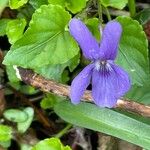
Viola Reichenbachiana
Early dog violet · Wood dog violet · Pale Wood-violet · Violeta de câine
Description
Source: leafsnapViola reichenbachiana, commonly known as the early dog-violet, is a perennial herbaceous plant belonging to the Violaceae family. Native to Europe, it thrives in meadows, woodlands, and along hedgerows. The plant reaches up to 15 cm in height and features heart-shaped, dark green leaves. Its flowers are typically blue-violet with yellow centers and bloom from March to May. This plant serves as an important food source for various insects, including bees, butterflies, and moths. Additionally, Viola reichenbachiana has been used medicinally to treat respiratory ailments such as coughs and bronchitis, owing to its expectorant properties. Overall, Viola reichenbachiana is a beautiful wildflower that enhances natural landscapes with its vibrant colors while providing ecological benefits to local wildlife populations.
Care Guide
💧 Water Every 7 days
The early dog violet flourishes in moist, shaded woodland areas, where it prefers consistently damp conditions. To keep the plant well-hydrated, it's important to water it weekly. This allows for adjustments with natural rainfall during its growth cycles. However, care must be taken to prevent waterlogging, as the plant's natural habitat has moderate humidity levels.
How should I water my Early dog violet plant?
To properly water the Early dog violet, use filtered water at room temperature or slightly warmer. Tap water may have harmful particles, so filtered water is preferred. Since the Early dog violet originates from a warm environment, avoid using cold water as it can be a shock to the plant. Furthermore, overhead watering should be avoided to prevent foliage complications. Instead, apply filtered room temperature water directly to the soil until it is thoroughly soaked. This allows the roots to absorb moisture and spread through the soil to collect necessary nutrients.
What happens if I give my Early dog violet too much or too little water?
Overwatering and underwatering can both harm your Early dog violet, but overwatering is a more common problem. When the plant gets too much water, its stems and leaves may wilt and turn yellow. Overwatering for a long time can also cause diseases like root rot, mold, and mildew, which can kill the plant. Underwatering is less common for the Early dog violet because it can tolerate drought reasonably well. However, it's still possible, and if it happens, the leaves may become brittle and brown. To take care of your Early dog violet, it's important to recognize the signs of overwatering as soon as possible. Some diseases caused by overwatering, like root rot, may not be fixable if you wait too long. If you see early signs of overwatering, reduce your watering right away. Also, check the quality of the soil where your Early dog violet is growing. If it drains poorly, replace it with a loose, well-draining potting mix. If you notice signs of underwatering, simply water more regularly until the signs disappear.
How often should I give water to my Early dog violet?
To determine if your Early dog violet needs water, there are specific guidelines depending on how it is planted. If the plant is in a pot, you can check the moisture level by inserting your finger into the soil. If the top two to three inches of soil are dry, it is time to water it. For outdoor plants, you can use the same method. When the first few inches of soil have dried out, it is time to water. Typically, watering this plant about once a week is sufficient during spring and early fall. However, during extremely hot weather, you may need to water it twice or more per week. It's worth noting that mature and well-established Early dog violets have a good ability to tolerate drought.
How much water does my Early dog violet plant need?
To water your Early dog violet effectively, don't hesitate to give it a good amount of water. Make sure the top layer of soil is dry, and then water the plant thoroughly by soaking the soil entirely. You should add enough water so that it flows out of the drainage holes at the bottom of the pot. If you don't see excess water coming out, it means you haven't watered enough. However, avoid letting water accumulate in the soil, as it can harm the plant. Also, if the water doesn't drain properly from the pot, it might indicate that the soil doesn't drain well, which is not good for the plant's health. If the plant is outside, it should receive about 1 inch of rain per week, which is enough.
How do I water my Early dog violet as it grows?
The water needs of the Early dog violet can vary depending on its growth stages. When it is in the first few years of life or has been recently transplanted, it will require more water than usual. During this time, the plant will focus on developing new roots to support future growth, and those roots need extra moisture. As the Early dog violet matures, it will require less water. Additionally, during the bloom period, the plant may need more water due to the significant amount of moisture used in flower development.
☀️ Light Partial sun
Early dog violet prefers locations where sunlight does not fully reach throughout the day. Originating from habitats with filtered light, it grows best by using morning or late-afternoon sun while also tolerating shadier spots. Both too much and too little sunlight can impede the plant's healthy growth.
What are the sunlight requirements for Early Dog Violet?
Early Dog Violet thrives in conditions where it receives partial sun, approximately 3-6 hours of sunlight daily. This plant prefers locations where the sunlight is not too intense throughout the day, benefiting from filtered sunlight rather than direct, harsh rays. Watching the movement of sunlight through your garden is crucial in choosing spots that offer a mix of light and shade, which ensures the plants' well-being.
What essentials should be taken into account for optimal growth of Early Dog Violet?
Early Dog Violet shows a preference for environments with filtered sunlight, doing well in spots that catch the morning or late afternoon sun while also tolerating shaded areas. Over or underexposure to sunlight can adversely affect its growth. When natural light is insufficient, especially during winter or in less sunny locations, artificial lighting becomes essential. LED lights, with their ability to be customized to provide specific wavelengths, are advisable. For full sun plants, 30-50W/sq ft of artificial light is needed; partial sun plants require 20-30W/sq ft, and full shade plants 10-20W/sq ft. Position the light source 12-36 inches above the plant, ensuring it mimics natural sunlight as closely as possible and keep it on for 8-12 hours daily depending on the plant's needs.
What are the significant symptoms of light deficiency in Early Dog Violet?
When Early Dog Violet is grown under insufficient light, it may exhibit several symptoms indicating distress. These can include smaller new leaves, leggy or sparsely grown plants, a quicker drop of older leaves to conserve resources, delayed or halted growth, and lighter-colored or irregularly patterned new leaves due to reduced chlorophyll and nutrients absorption. Exposure to too much sunlight can lead to chlorosis, sunscald, leaf curling, wilting, and leaf scorching, adversely impacting the plant's health and ability to photosynthesize efficiently.
How can I address light-related issues in Early Dog Violet?
Optimizing light exposure for Early Dog Violet involves several strategies depending on its location. Indoors, gradually shifting the plant to sunnier spots each week until it receives the ideal 3-6 hours of direct sunlight, or using artificial lights like desk, ceiling lamps, or professional grow lights for at least 8 hours daily can help. Outdoors, plants should be gradually moved to sunnier locations to adapt without suffering sunburn. Reducing obstructions, such as pruning branches that block sunlight or transferring the plant to a brighter location, can enhance light availability. It's important to note that while affected parts of the plant may not recover, new growth, post increased light exposure, will be healthy.
🌡️ Temperature 10–35°C
The early dog violet is native to temperate habitats and does best at temperatures between 50 and 95°F (10 to 35°C). Seasonal care may involve keeping it in warmer conditions during winter.
What is the native climate for Early dog violet?
Early dog violet, botanically known as Viola reichenbachiana, is native to temperate climate environments. It thrives in temperatures ranging from 50 to 95°F (10 to 35°C). The plant has a strong resistance to cold temperatures, which means special frost protection measures are often unnecessary. However, in the face of winter temperatures expected to fall below -25°C, providing cold protection through the use of covering materials such as soil or straw is advisable. To further aid in cold weather resilience, it's recommended to water the plant abundantly before the first freeze of autumn to ensure the soil remains moist and enters a frozen state, preventing drought and water scarcity during winter and early spring.
How does Early dog violet respond to low and high temperatures?
Early dog violet is notably cold-tolerant, performing best when temperatures are maintained above 10°C. In winter, it's crucial to keep temperatures above -15°C to prevent damage. At temperatures falling below -25°C, while the plant may not show noticeable changes during winter, a reduction in sprouting or absence of sprouting in spring can occur. The solution for such a scenario involves removing any parts of the plant that fail to sprout. For high temperatures, specifically during summer, it's important to ensure that temperatures stay below 35°C. Exceeding 38°C can cause the leaves to lighten in color, become prone to curling, and become susceptible to sunburn. In severe cases, the entire plant may wilt and dry. Managing this includes trimming away sunburned and dried parts, relocating the plant to a shaded area or using a shade cloth, and watering the plant in the morning and evening to maintain soil moisture.
💨 Humidity high (>60%)
This plant needs special care because it loves high humidity levels of 60-80% or more. The best way to achieve this is by placing a humidifier near the plant. Daily misting is also essential! Make sure the room has good ventilation.
🪴 Soil 6-7
🌱 Fertilizer
The best time to fertilize an Early dog violet is in early spring, when it is coming out of dormancy and beginning active growth. Fertilizing supplies essential nutrients for healthy development. Although the Early dog violet has relatively low fertilizer requirements, applying fertilizer once a year can improve its survival and encourage better, longer-lasting flowers.
Why should I put fertilizer on my Early dog violet?
Fertilization is important for the Early dog violet for various reasons. It provides essential nutrients for the plant's growth above and below the ground. However, the fertilization needs for the Early dog violet are generally low. Although it can survive without fertilization, annual fertilization can greatly benefit the plant, helping it stay healthy and produce better, longer-lasting flowers. Therefore, those wishing to enhance the appearance of their Early dog violet should ensure regular fertilization.
When should I fertilize my Early dog violet?
The best time to fertilize an Early dog violet is in late winter or early spring when it is transitioning from dormancy to active growth. This will promote healthy growth and give the plant a strong start for the season. While early spring is generally the most beneficial time for fertilization, fall is also acceptable. However, it is not advisable to fertilize the Early dog violet during summer or winter.
When should I not put fertilizer on my Early dog violet?
To properly care for your Early dog violet, remember to only fertilize it during the late winter and early spring. This plant does not require frequent fertilization, so a single annual feeding is sufficient. Avoid fertilizing it during the rest of the year, as it can easily lead to overfertilization and complications. The only exception is if you missed fertilizing it in the spring, in which case you can feed it during the fall. Furthermore, there is no need to fertilize the plant during the winter, as it is in a dormant growth phase and does not produce new growth during this time.
What kind of fertilizer does my Early dog violet plant need?
For Early dog violet, any general-purpose fertilizer with balanced amounts of the three main plant nutrients will work well. However, there are specific nutrient blends that may be even more beneficial. Many gardeners believe that higher levels of phosphorus promote stronger roots and better flowers. Since Early dog violet is a flowering plant, using a phosphorus-rich fertilizer may be the best choice. You can use either granular or liquid fertilizers as long as they contain enough nutrients. In addition to manufactured fertilizers, organic methods such as compost and manure can greatly improve the soil for your Early dog violet. These materials help create a healthy growing medium.
How can I make my Early dog violet grow better?
To fertilize an Early dog violet, the most common method is to use a granular or pellet fertilizer. It is important to remember that the best time to apply fertilizer is when the plant is transitioning from its dormant phase to a phase of active growth. In early spring, wait until the plant starts to push shoots through the soil and then apply the fertilizer. Alternatively, some people prefer using a liquid fertilizer, which needs to be diluted with water before application. Regardless of the type of fertilizer used, it is always a good idea to moisten the soil before, during, and after fertilizing.
🪴 Pot & Repot
✂️ Pruning
The early dog violet is characterized by its heart-shaped leaves and violet flowers. To maintain a healthy and attractive plant, prune it from early to late spring. This involves deadheading the blooms and removing any unhealthy foliage. These actions will improve air circulation, reduce the risk of disease, and encourage growth.
🌿 Propagating
🐛 Diseases & pets
☠️ Toxicity
Viola reichenbachiana has no toxic effects reported.
Characteristics
- Plant Type
- Herb
- Life Cycle
- Perennial
- Hardiness Zone
- 6-9
- Mature Height
- 10 cm to 15 cm
- Mature Spread
- 10 cm to 15 cm
- Leaf Color
- Dark Green
- Leaf Type
- Deciduous
- Flower Color
- Violet
- Flower Size
- 1.27 cm to 1.78 cm
- Bloom Time
- Spring
- Planting Time
- Autumn, Spring, Summer
- Harvest Time
- Late spring, Early summer, Mid summer
- Native Area
- Turkey, Sweden, India, Austria, Slovakia, Montenegro, Pakistan, Slovenia, Morocco, Croatia, Belarus, Russia, Germany, Estonia, Romania, Latvia, Belgium, Netherlands, France, Czech Republic, Bulgaria, Poland, Greece, Ukraine, Serbia, Lithuania, Italy, Spain, Switzerland, Denmark, Albania, Ireland, United Kingdom, Hungary, Algeria, Azerbaijan