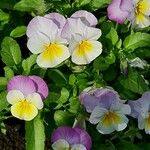
Viola tricolor
بنفشه · گل بنفشه · Pansy · Johnny jumpup · Viola
Description
Source: leafsnapViola tricolor is a common European wild flower, growing as an annual or short-lived perennial. The species is also known as wild pansy, Johnny Jump up (though this name is also applied to similar species such as the yellow pansy), heartsease, heart's ease, heart's delight, tickle-my-fancy, Jack-jump-up-and-kiss-me, come-and-cuddle-me, three faces in a hood, love-in-idleness, and pink of my john. It has been introduced into North America, where it has spread. It is the progenitor of the cultivated pansy, and is therefore sometimes called wild pansy; before the cultivated pansies were developed, "pansy" was an alternative name for the wild form. It can produce up to 50 seeds at a time. The flowers can be purple, blue, yellow or white.
💡 The Johnny Jump Up, also known as Viola tricolor, is the original wild pansy. It was used in the hybridization process to create the garden pansies (Viola tricolor var. hortensis) that we are familiar with today. Viola tricolor is sometimes mistaken for Viola arvensis, the field pansy, which is less appealing and rarely cultivated.
🌳 Aside from its aesthetic beauty, johnny Jump-up acts as an environmental indicator. Its presence can indicate that the soil is rich in certain minerals. Researchers have investigated johnny Jump-up's hyperaccumulative abilities to signal the presence of metals like Zinc and Copper, using it in bio-monitoring of polluted lands.
🎭 Meditative practice, joy, please long for me, remembrance, spiritual life
Care Guide
💧 Water Twice per week
Johnny jump up flourishes in temperate regions, where it prefers well-drained soil and consistent moisture. Although it can tolerate moderate drought, it thrives best with regular watering, ideally twice a week. While natural rainfall is beneficial for outdoor growth, supplemental irrigation is needed during dry periods, particularly for plants grown in containers.
When Should I Water My Johnny Jump Up?
Watering your Johnny Jump Up (Viola tricolor) at the right time is vital for its health and flowering. Observe the pot's weight, which decreases as the soil dries, and check the soil's surface; if the top inch is dry, it's time to water. Look out for leaves losing their firmness or appearing dull, and note any early morning wilting as signs of needing water. Ignoring these indicators or watering improperly can lead to issues like root rot or dry, wilting plants.
How Should I Water My Johnny Jump Up?
Johnny Jump Up benefits from specific watering techniques to meet its hydration needs. Bottom-watering, which involves placing the pot in a tray of water to let the soil absorb moisture upwards, is effective in preventing root problems and fungal diseases. When using a watering can, choose one with a narrow spout to direct water at the base of the plant, avoiding excess moisture on the foliage.
How Much Water Does Johnny Jump Up Really Need?
The amount of water needed by Johnny Jump Up depends on factors like pot size, root depth, and the plant's overall size. With its shallow root system, it requires regular, moderate watering. For small pots, 4-6 fluid ounces (120-180 mL) of water when the top inch of soil feels dry is sufficient. Adjust the volume for larger pots. Proper hydration leads to vibrant leaves, upright stems, and abundant flowering. Avoid both overwatering and underwatering to prevent health issues.
What Kind of Water is Best for Johnny Jump Up?
Johnny Jump Up prefers rainwater, which is natural and free of chemicals, making it ideal. Distilled water is also suitable due to its purity. Tap water can be used but may need treatment to remove chlorine or fluoride, to which the plant is moderately sensitive. Letting tap water sit for 24 hours before use can evaporate chlorine, and water filters can remove unwanted chemicals. Use water at room temperature to avoid shocking the plant.
How Do Johnny Jump Up's Watering Needs Change with the Seasons?
Johnny Jump Up's watering needs fluctuate with the seasons. In spring, increase watering as the plant exits dormancy and growth resumes. Summer demands more frequent watering due to higher temperatures and active blooming. In autumn, gradually reduce watering as the plant prepares for dormancy, but ensure the soil stays moist. During winter, water sparingly, ensuring the soil doesn't completely dry out, and consider mulching to retain soil moisture.
☀️ Light Full sun
Johnny Jump-up thrives with plenty of light, though it can adapt to locations with moderate illumination. Originating from regions with long photoperiods, it therefore requires adequate light for healthy growth. An imbalance in light can impede its growth and flowering.
What are the sunlight requirements for Johnny jump up?
Johnny jump up requires full sun, which means it needs above 6 hours of sunlight daily, but it can also thrive in partial sun, receiving about 3-6 hours of sunlight. It's essential to observe how sunlight moves through your garden to find spots that offer the right balance of light and shade, ensuring your plants grow healthily.
What are the essentials for growing Johnny jump up?
For optimal growth, Johnny jump up blossoms best with an abundance of light, being adaptable to moderate light exposure as well. Originating from regions with long photoperiods, it needs sufficient light for healthy growth. Inadequate light can affect its growth and flowering. When natural sunlight is insufficient, especially in less sunny spaces or during winter, artificial lighting can be a vital solution. Optimal growth under artificial light involves choosing the right type of light (such as LED), adjusting the light's distance (12-36 inches above the plant), and mimicking natural daylight hours (8-12 hours of light per day).
What symptoms indicate Johnny jump up is not getting enough light?
When Johnny jump up does not receive enough light, it may show several symptoms including leggy or sparse growth, lighter-colored new leaves, slower or no new growth, and conditions such as chlorosis where leaves lose their green color and turn yellow. Excessive sunlight can cause symptoms like sunscald, leaf curling, wilting, and leaf scorching, which are indicators of too much light exposure.
What can be done to address light-related issues for Johnny jump up?
To ensure optimal growth for Johnny jump up, you can gradually move the plants to a sunnier location, ensuring they receive at least 6 hours of direct sunlight daily. Utilize a south-facing window and keep curtains open during the daytime. If natural sunlight is inadequate, especially for large or non-movable plants, consider using artificial light for at least 8 hours daily or invest in professional plant grow lights. For outdoor plants, avoid sudden changes in light intensity to prevent sunburn. Pruning obstructive trees and transplanting smaller plants during their dormant period can also help improve light exposure. Affected parts of the plant may not recover, but ensuring adequate light will promote healthy new growth.
🌡️ Temperature 0–35°C
Johnny Jump-up comes from temperate environments where temperatures fluctuate between 68 to 95 °F (20 to 35 ℃). It favors this range and may require extra care in extreme temperatures. Seasonal adjustments to the plant's surroundings can promote healthy growth.
What is the preferred temperature range for Johnny jump up?
Johnny jump up thrives in temperate environments, preferring temperatures between 68 to 95 °F (20 to 35 °C). This range facilitates healthy growth, and the plant may require extra care outside of these temperatures. Although Johnny jump up has strong cold resistance and usually doesn't need special frost protection, in extreme cold below -40°C, protective measures should be taken by covering the plant with soil or straw and watering it abundantly before the first freeze to prevent drought and water scarcity during winter.
How does Johnny jump up react to low and high temperatures?
At low temperatures, Johnny jump up is cold-tolerant and performs best when the temperature is above 20°C, requiring protection only if temperatures drop below -40°C. Without noticeable changes during winter, a decrease in sprouting or absence thereof might occur come spring. The solution is to remove any parts that fail to sprout in spring. In high temperatures, specifically above 35°C and especially when it exceeds 41°C, the plant may exhibit lighter-colored leaves, curling, susceptibility to sunburn, and in severe cases, wilting and drying. To manage this, trim away sunburned and dried parts, relocate the plant to a shaded area or use a shade cloth for protection, and ensure the soil is kept moist by watering in the morning and evening.
What are the scientific and common names of Johnny jump up?
The plant commonly known as Johnny jump up is scientifically named Viola tricolor.
💨 Humidity normal (40-60%)
This plant will thrive in moderate humidity, which is probably the level in your home. However, misting it a few times a week can be very beneficial. Make sure the room has good ventilation.
🪴 Soil 6-7
🌱 Fertilizer
When most of Johnny Jump-up's flowers are fully open, resume fertilizing. At the peak of bloom production, apply fertilizer every three to four weeks, weather permitting. Once the plant begins to produce fewer new flowers, stop fertilizing; there's no reason to feed it when it can no longer set additional blooms.
Why do I have to add fertilizer to my Johnny jump up plant?
Plants, like Johnny jump up, require nutrients to survive. This is common knowledge among gardeners, regardless of their experience. If Johnny jump up doesn't receive enough food, it will die shortly after its first pollination. Therefore, it is crucial to provide the right nutrients in proper amounts to ensure Johnny jump up thrives throughout the blooming season and produces large, beautiful flowers. Fertilizer also plays a significant role in helping Johnny jump up develop a robust and healthy root system. Since this plant has a thin and fragile root system, it requires all the support it can get. By fertilizing at the time of planting, Johnny jump up can establish a strong root structure that not only offers stability but also sets the stage for an impressive flowering display. Properly timing the fertilization can also greatly extend the period in which Johnny jump up blooms.
When should I fertilize my Johnny jump up?
Johnny jump up experiences rapid growth early in the growing season, after the last frost danger is gone. This is the time to fertilize Johnny jump up, specifically during planting, regardless of whether it is planted in the ground or in planters. This initial fertilization is the only one needed until later in the year when the blooms are fully developed. Once the season is in full swing and most of the blooms are open, it is time to resume fertilizing. This should be done every three to four weeks, depending on the weather, when the blooms are at their maximum. When Johnny jump up starts producing fewer new blooms, it is no longer necessary to fertilize since it cannot produce any more blooms.
When shouldn't I add fertilizer to my Johnny jump up?
Fertilizing Johnny jump up is crucial, but it is important to apply it at the right time. There are several situations where holding back on fertilizing is necessary, such as climate-related issues or controllable factors. When there are problems with the plant, soil, or climate, it is best to wait until things improve and the plant has recovered. For instance, if there are sudden severe weather changes like a cold snap in the middle of summer, it's better to wait until it warms up before fertilizing. Similarly, if the soil is too dry or compacted, fertilizing would be ineffective as the roots won't be able to absorb the nutrients properly. When temperatures are extremely high, it's advisable not to apply fertilizer as the heat can break it down too quickly. It is also important to address any pest or disease issues before re-fertilizing.
What kind of fertilizer does my Johnny jump up plant need?
Most types of Johnny jump up require the same balanced nutrients from fertilizer. To achieve this, it is recommended to use a fertilizer specifically formulated for high-yield blooming plants. The best option is a fertilizer with a higher level of phosphorus, indicated by a higher P number in its NPK number (e.g., 10-30-10). There are several fertilizer brands that sell products perfect for blooming plants like Johnny jump up, making it easy to provide the right nutrients without any hassle. If you decide to use a pre-mixed fertilizer, be sure to follow the package instructions to avoid over or under-fertilizing the plant, as both can lead to poor growth or even wilting.
How can I help you fertilize your Johnny jump up plant?
When it comes to fertilizing Johnny jump up, the specific instructions may vary depending on the type of fertilizer you have. However, there are some general tips that apply to most types. The first application of fertilizer should be done when you initially plant Johnny jump up. This involves mixing the recommended amount of fertilizer into the soil before planting and watering it in. For subsequent fertilizing, the process may be slightly different. Pellet fertilizers, for example, should be mixed into the top inch of soil around the outer edge of the plant, where the roots are. Make sure to water them in well at first, and then continue to water regularly. Other fertilizers can be mixed into a watering can and applied like a regular watering. It's important to follow any instructions on the fertilizer packaging for consistency, but if you prefer a schedule, aim for fertilizing every three to four weeks.
🪴 Pot & Repot
When repotting Johnny Jump-up, choose a pot that’s 1-2 inches (2.5–5.1 cm) larger in diameter and ensure it has good drainage. Use a well-draining potting mix, and consider adding perlite for extra drainage. Repot in spring or early summer, then water thoroughly, and place it in a shady location for the very beginning.
✂️ Pruning
Johnny Jump-Up displays vibrant tri-colored flowers. To encourage growth and prolong blooming, prune from early to late spring. Deadheading and removing damaged parts improve air circulation and help maintain the plant's shape. Ensure you use clean tools to minimize stress on the plant. Maintaining a regular pruning schedule is crucial for achieving the best results.
🌿 Propagating
🐛 Diseases & pets
☠️ Toxicity
Viola plants are non-toxic for people and pets. In fact, these flowers are edible in small amounts and may be harvested for medicinal use.
Characteristics
- Plant Type
- Herb
- Life Cycle
- Annual, Perennial, Biennial
- Genus
- Viola
- Family
- Violaceae
- Hardiness Zone
- 2-10
- Mature Height
- 10 cm to 40 cm
- Mature Spread
- 10 cm to 30 cm
- Leaf Color
- Green
- Leaf Type
- Evergreen, Semi-evergreen
- Flower Color
- Purple, Yellow, White
- Flower Size
- 1.52 cm to 6.35 cm
- Bloom Time
- Spring, Early summer
- Planting Time
- Spring
- Harvest Time
- Early summer, Mid summer
- Native Area
- North America