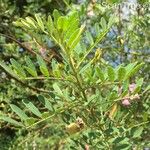
Virgilia oroboides
Keurboom
Description
Source: wikipedia (CC BY-SA)Virgilia is a genus of Southern African trees in the family Fabaceae that is known for its very fast growth and a tendency to fall over as it matures. The common name in South Africa is keurboom, meaning 'choice tree'. Valued as useful ornamental trees by gardeners, the genus's two species are also known as tree-in-a-hurry, Cape lilac, blossom tree and pink blossom tree.
Care Guide
💧 Water Every 2 weeks
The Tree-in-a-hurry thrives in areas with consistent moisture levels, making it well-suited for regions with regular rainfall. While it has some tolerance for drought, it requires stable soil moisture to truly flourish. Water the tree every two weeks and provide extra irrigation during dry spells to encourage lush foliage and vigorous growth.
☀️ Light Full sun
Because of its native habitat, the tree-in-a-hurry grows best when it receives a large amount of sun each day. While the plant can adjust to lower levels of radiation, consistent sunlight supports healthy growth. Too little light can impede its progress, whereas too much sunlight does not harm it.
How much sunlight does a Tree-in-a-hurry require?
The Tree-in-a-hurry, or Virgilia oroboides, thrives best when it receives a substantial amount of daily sunlight. It is recommended that the plant is exposed to more than 6 hours of sunlight per day to promote healthy growth. Even though the plant can adapt to lower levels of sunlight, ensuring it receives continuous sunlight exposure is crucial for its development. Insufficient light can hinder its growth, but notably, exposure to too much sunlight doesn't detrimentally affect it. It's important to observe the movement of sunlight through your garden to find spots that offer an ideal balance of light and shade, ensuring the plant's wellbeing.
What are the symptoms of insufficient or excessive light in Tree-in-a-hurry?
Tree-in-a-hurry shows several symptoms when exposed to insufficient or excessive light. Insufficient light can lead to smaller new leaves, leggy or sparse growth, faster leaf drop, slower or no new growth, lighter-colored new leaves, and conditions like chlorosis, where leaves turn yellow due to a lack of chlorophyll. On the other hand, excessive sunlight exposure can cause symptoms such as sunscald, leaf curling, wilting, leaf scorching, indicating damage to the plant's leaves or stems, reduced health, and loss of water through transpiration. Recognizing these symptoms early can help in taking appropriate measures to ensure the plant thrives.
How can artificial lighting be used for Tree-in-a-hurry indoors?
Indoor Tree-in-a-hurry plants, particularly in less sunny spaces or during winter, can benefit significantly from artificial lighting. It's vital to choose the right type of artificial light, such as LED lights, which can be customized to provide specific wavelengths needed by the plants. For full sun plants like the Tree-in-a-hurry, 30-50W/sq ft of artificial light is optimal. The light source should be placed 12-36 inches above the plant to mimic natural sunlight and turned on for 8-12 hours per day to mimic natural daylight hours, promoting faster and healthier growth.
What are the solutions for managing light exposure for Tree-in-a-hurry?
To manage light exposure for Tree-in-a-hurry, gradually move plants to sunnier locations each week until they receive at least 6 hours of direct sunlight daily. For indoor plants, using a south-facing window with curtains open during the day maximizes sunlight exposure. If the plant is large or not easily movable, consider artificial lighting options like keeping a desk or ceiling lamp on for at least 8 hours daily or using professional grow lights. For outdoor plants, it's crucial to avoid sudden changes in light intensity to prevent sunburn. Incremental adjustment to sunnier spots is key. When minimizing obstructions, such as trees blocking sunlight, pruning can help allow sunlight through. For smaller plants, consider transplanting during the dormant period to a location with ample sunlight and good drainage. Although parts of the plant affected by insufficient sunlight may not recover, new growth will be healthy with increased light exposure.
🌡️ Temperature 20–37.8°C
Tree-in-a-hurry does best in a temperature range of 68 to 100.4 °F (20 to 38 °C), consistent with its native, temperature-controlled habitat. Seasonal temperature changes may be necessary to reproduce its ideal conditions.
What are the ideal growing conditions for Tree-in-a-hurry?
Tree-in-a-hurry (Virgilia oroboides) thrives best within a temperature range of 68 to 100.4 °F (20 to 38 °C), which replicates its native, temperature-controlled environment. To ensure the plant's health, seasonal temperature adjustments may be necessary to maintain this ideal range. The plant is extremely heat-loving, and exposure to cold temperatures can be harmful. It is recommended that Tree-in-a-hurry plants grown outdoors be brought indoors during the autumn and placed near a bright window, but not too close to heaters, to avoid damage. Maintaining indoor temperatures above 20°C throughout winter supports the plant's growth. Exposing the Tree-in-a-hurry to temperatures near 5°C or lower can detrimentally affect the plant.
How does low temperature affect Tree-in-a-hurry and how can it be managed?
Tree-in-a-hurry is not tolerant of low temperatures and shows clear preferences for warmth, thriving best at temperatures above 20°C. During colder winter months, keeping the plant above 5°C is crucial to avoid damage. Exposure to temperatures below 1°C may cause the leaves to lighten in color. After frost damage, leaves may turn brown or black, with wilting and drooping being common symptoms. To manage frost damage, it's recommended to trim off affected parts and immediately move the plant to a warmer indoor environment. Choosing a spot near a south-facing window for ample sunlight, while avoiding placement near heaters or air conditioning vents, helps prevent air dryness and supports recovery.
What should be done if Tree-in-a-hurry is affected by high temperature?
During summer, it is important to ensure that the temperature around the Tree-in-a-hurry remains below 38°C to prevent heat stress. Exposure to temperatures above 43°C can cause the leaves to lighten and increase susceptibility to sunburn. Managing high temperature issues involves trimming away sunburned and dried parts of the plant and relocating it to a spot that offers shade from the intense midday and afternoon sun. Ensuring the plant is watered in the morning and evening helps keep the soil adequately moist, offering some protection from the effects of high temperatures.
💨 Humidity
🪴 Soil 6-7
🌱 Fertilizer
The best time to fertilize a Tree-in-a-hurry is in early spring, as it breaks dormancy. This supports overall growth and the development of flowers. Fertilization improves foliage, stems, and branches, and encourages flowers that are large, vibrant, and long-lasting. It helps transport nutrients from the roots to the blooms and enhances the plant’s health and resistance to disease.
🪴 Pot & Repot
✂️ Pruning
Tree-in-a-Hurry is a fast-growing, evergreen tree known for its lush foliage and cascading flowers. For best results, prune the tree in winter to manage its shape and size. Be sure to remove any dead branches and thin out crowded areas to improve air circulation. Always use clean, sharp tools during pruning to prevent disease and promote better blooming.
🌿 Propagating
🐛 Diseases & pets
☠️ Toxicity
Characteristics
- Plant Type
- Tree
- Life Cycle
- Perennial
- Genus
- Virgilia
- Family
- Fabaceae
- Hardiness Zone
- 10-11
- Mature Height
- 4.88 m to 20.12 m
- Mature Spread
- 4.88 m
- Leaf Color
- Green, Dark Green
- Leaf Type
- Evergreen
- Flower Color
- Pink
- Flower Size
- 1.52 cm to 2.03 cm
- Bloom Time
- Mid spring, Late spring, Early summer
- Planting Time
- Spring
- Harvest Time
- Mid summer, Late summer, Early fall