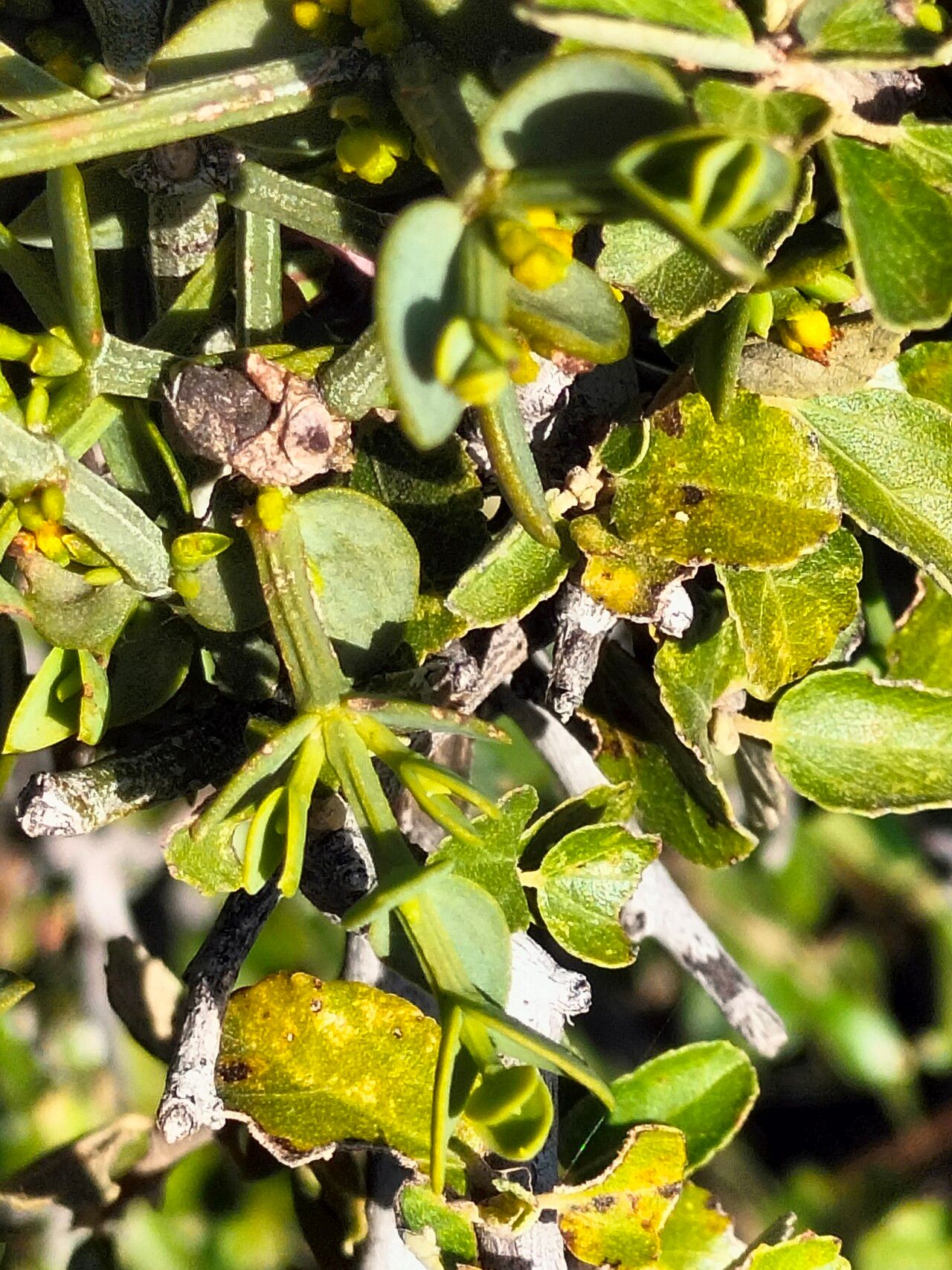
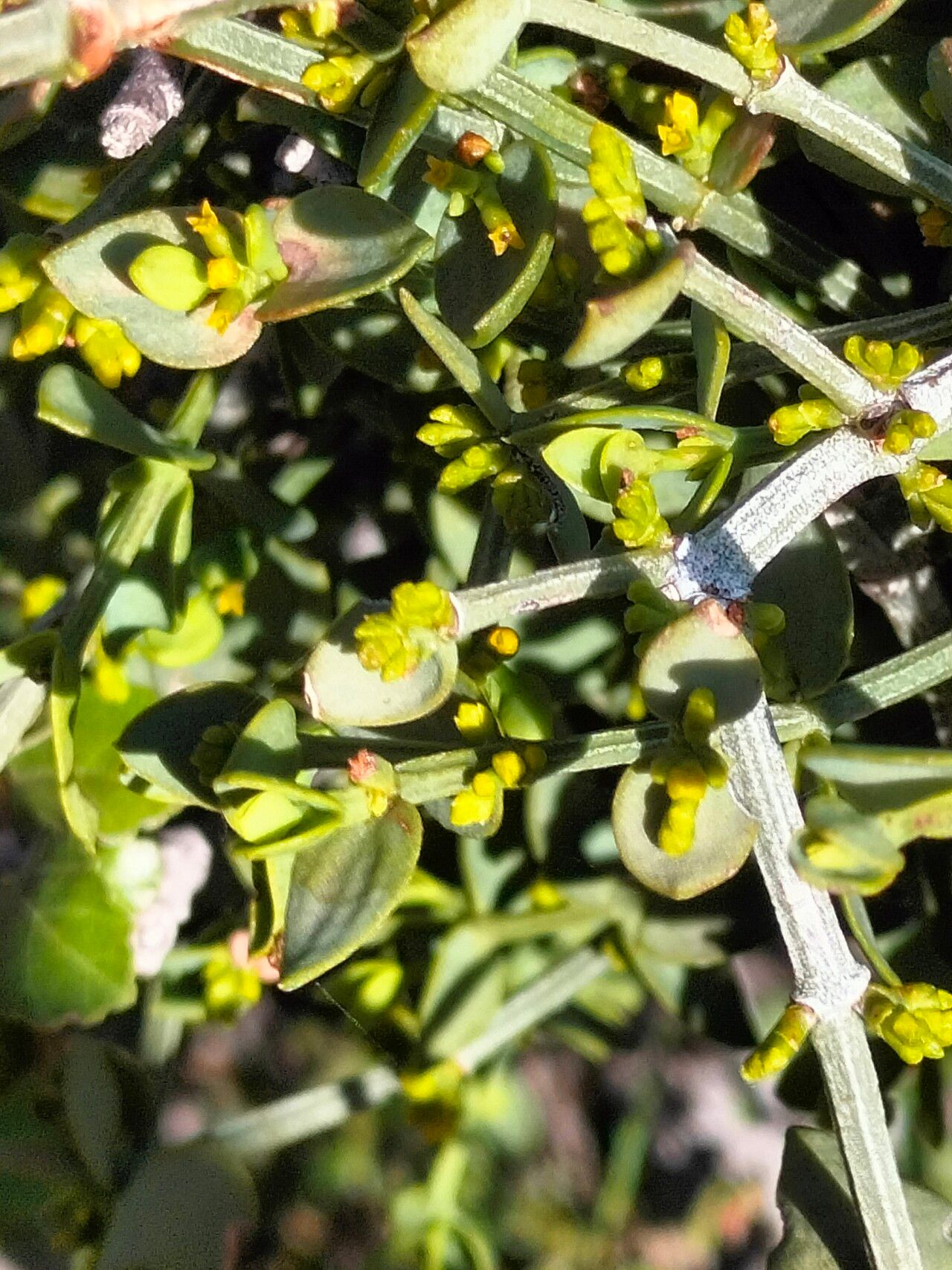
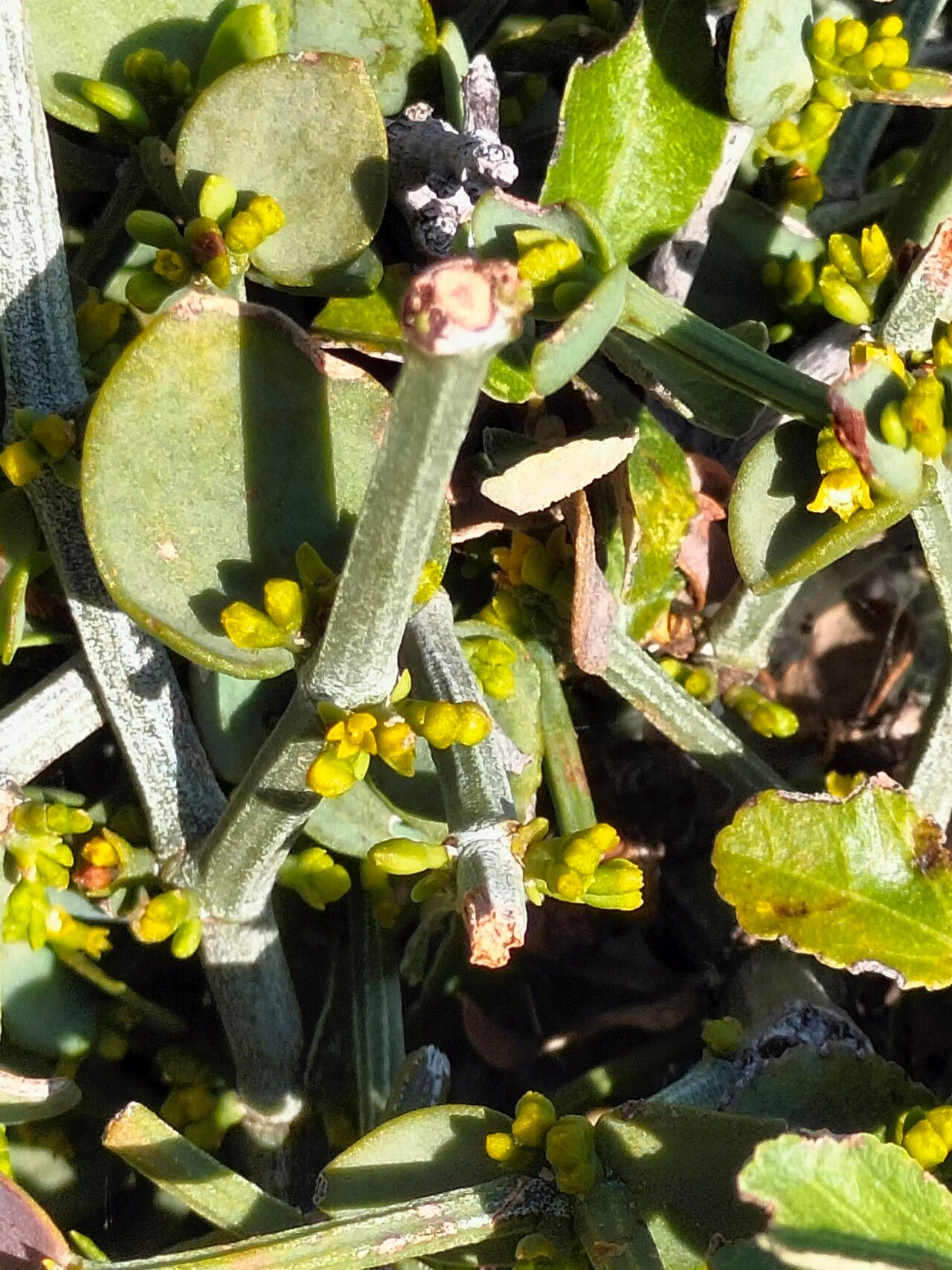
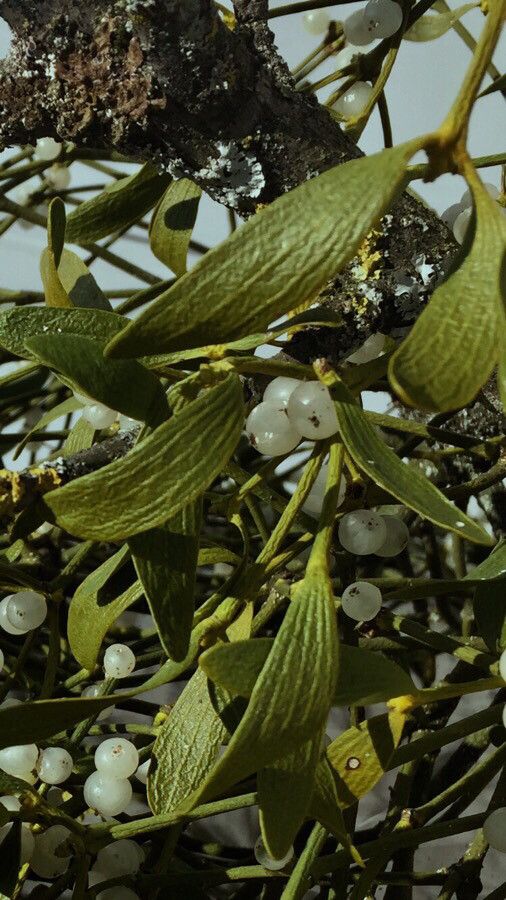
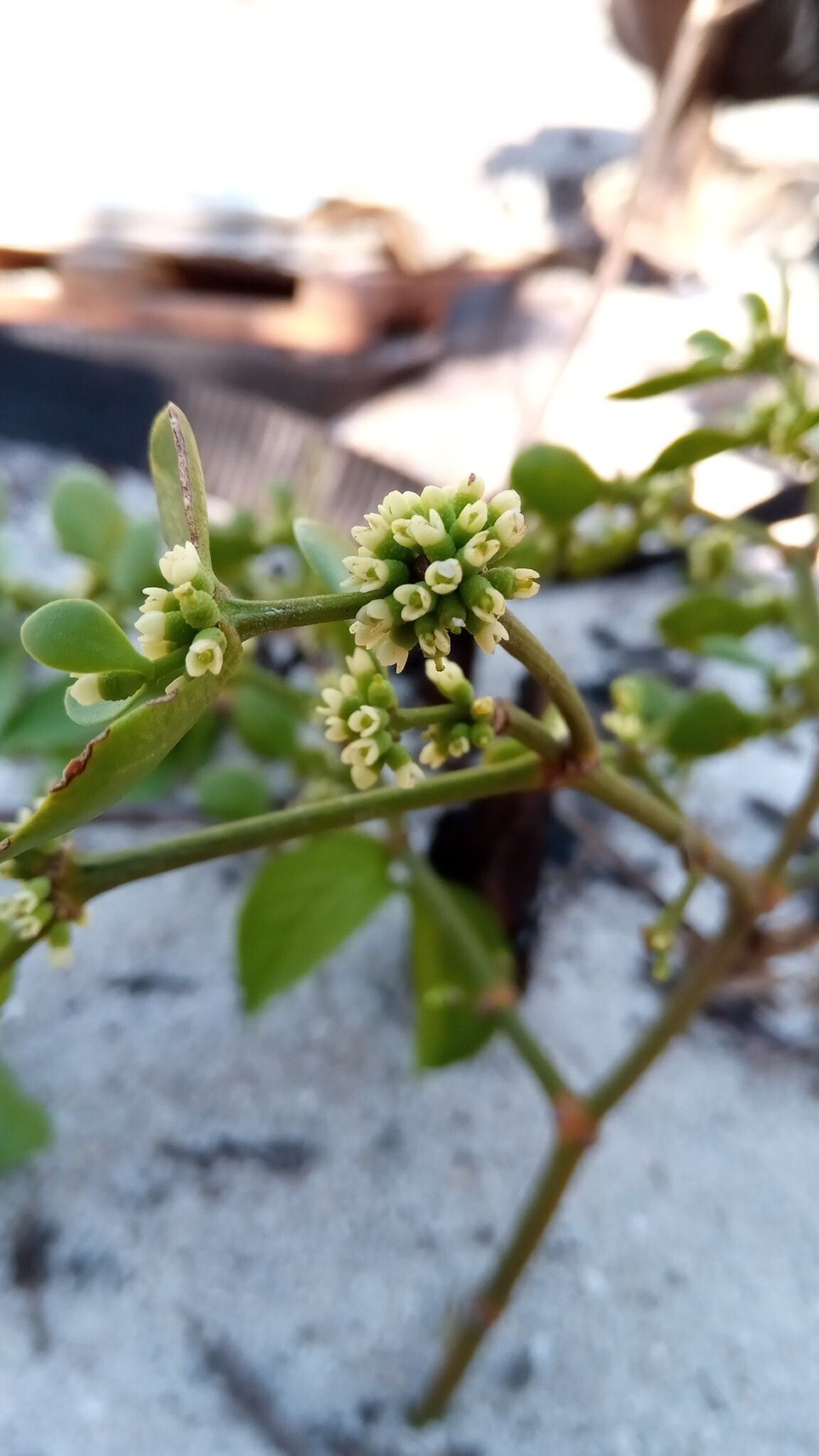
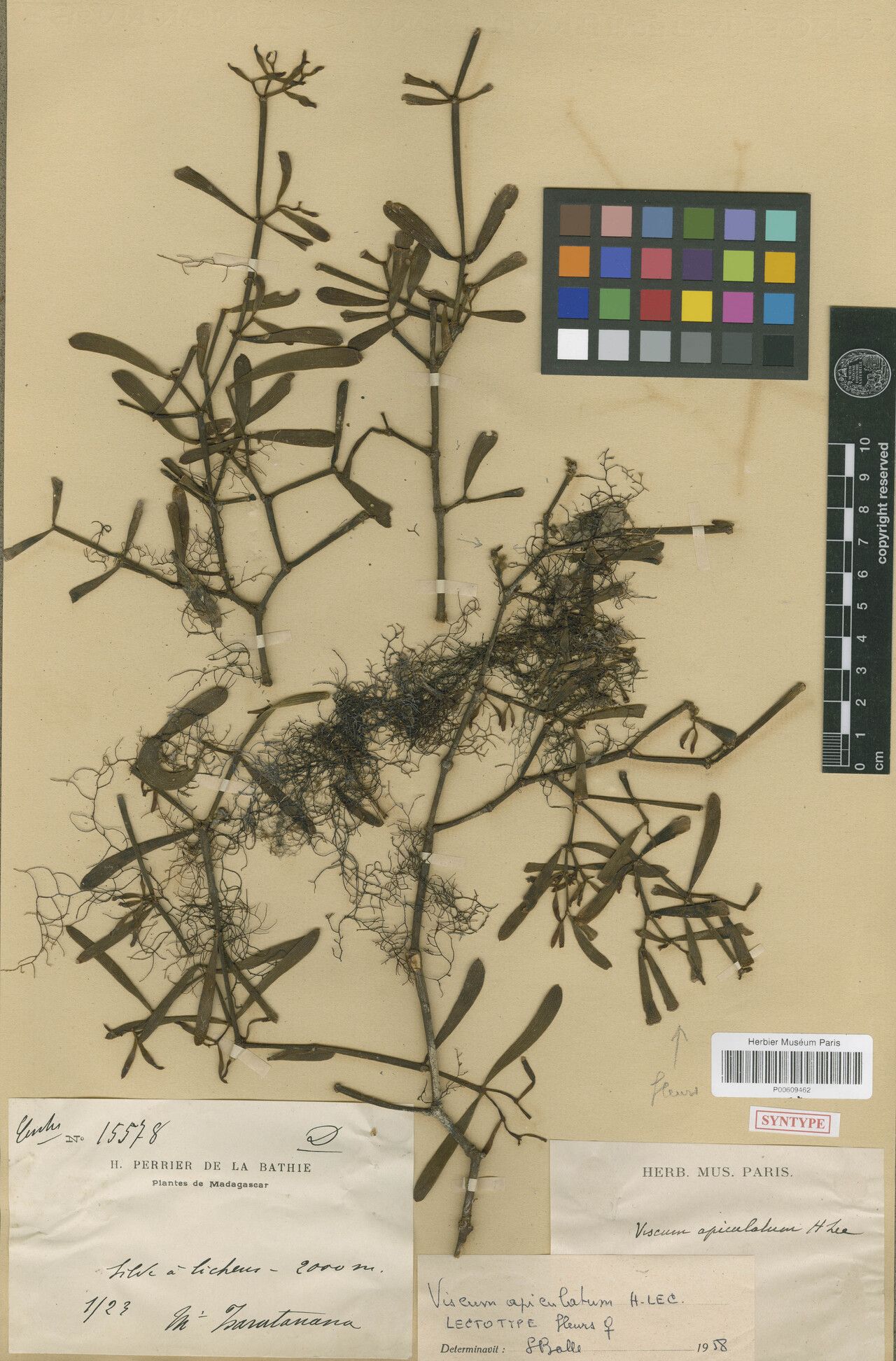
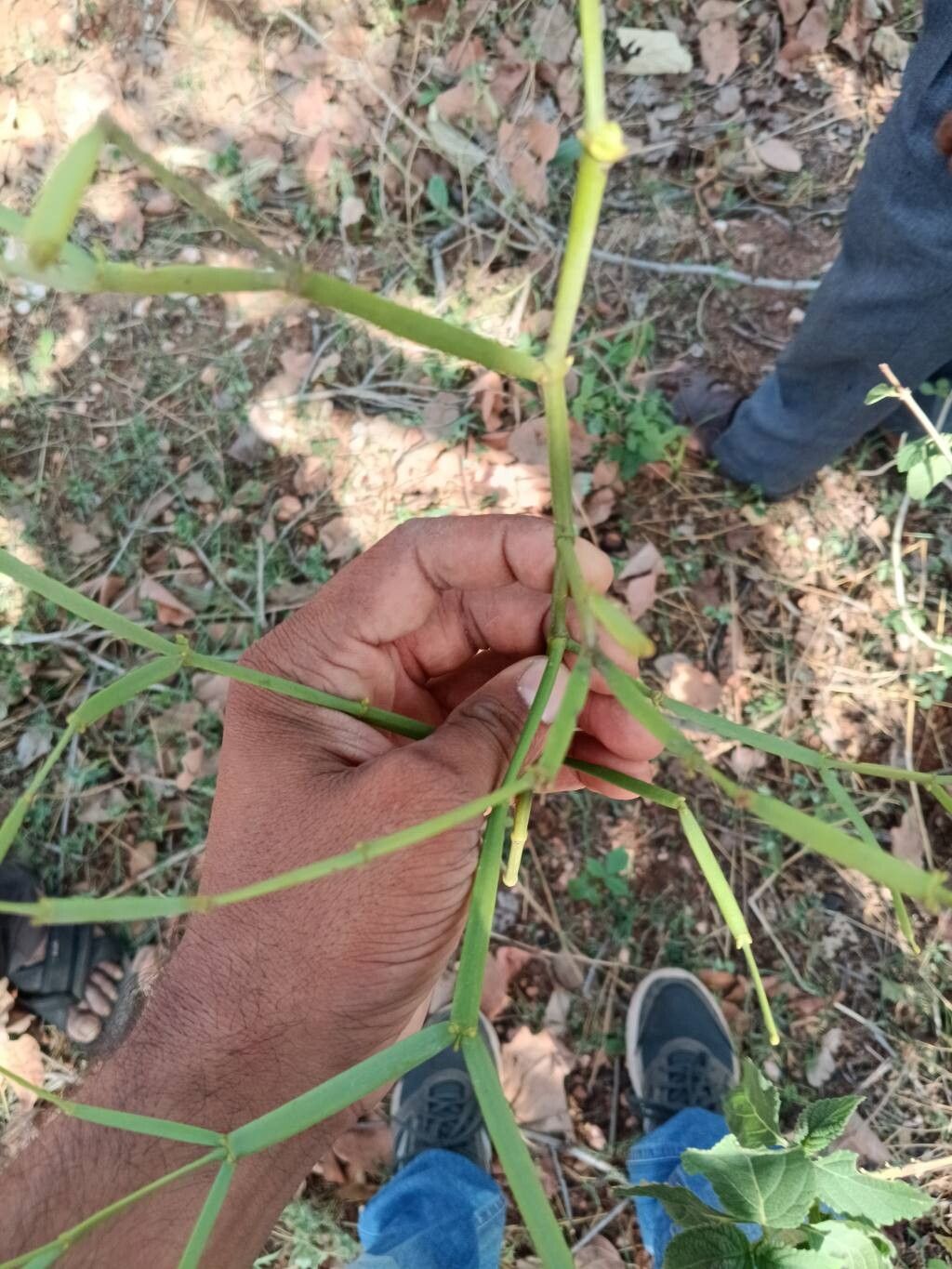
Viscum rotundifolium, the red-berry mistletoe, is a variable, wide-ranging and monoecious mistletoe of southern Africa. It is a hardy, evergreen hemiparasite with a catholic variety of host plants, including other mistletoes. It may be found from near sea level to 1,950 m. Its fleshy, leathery leaves are dark or pale green and variable in shape, though usually broadly ovate to elliptic. While its creamy-green flowers are small and inconspicuous, the fruit are a brilliant, shiny orange-red colour when ripe. It is similar to V. schaeferi Engl. & K.Krause and V. pauciflorum L.f. with which it may be confused.
Viscum rotundifolium is resistant to disease and is generally not prone to illnesses. In terms of care, this plant is relatively low-maintenance. Planted outdoors, it needs only minimal watering, and larger specimens usually do not require pruning. Smaller plants, however, should be pruned after they finish blooming. Viscum rotundifolium is appropriate for anyone with an outdoor area, such as a garden or deck, and does not demand a great deal of care experience.
How to keep Viscum Rotundifolium.
Fertilizer
To encourage healthy growth, apply fertilizer to your Viscum rotundifolium in early spring. Regular feeding boosts overall health, leading to vigorous growth, increased resilience to harsh conditions, and enhanced resistance to diseases and pests. Follow a specific fertilization schedule for your Viscum rotundifolium to keep its foliage vibrant, deep in color, and lush in appearance.
Pruning
Pruning Viscum rotundifolium in early spring is beneficial as it removes dead or diseased branches, improving the plant's health and air circulation. It's important not to over-prune, as this can cause stress. Regular shaping not only encourages a fuller, more visually appealing plant but also supports vigorous growth and overall vitality throughout the season.
Botanical profile.
- Plant Type
- Shrub
- Life Cycle
- Perennial
- Genus
- Viscum
- Family
- Santalaceae
- Native Area
- Lesotho, Angola, South Africa, Namibia, Eswatini, Congo (DRC), Botswana, Zimbabwe