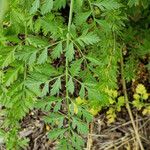
Visnaga daucoides
Toothpickweed · Bishop's Flower · Toothpick-plant
Description
Source: leafsnapVisnaga daucoides is a species of flowering plant in the carrot family known by many common names, including toothpick-plant, toothpickweed, bisnaga, khella, or sometimes bishop's weed. It is native to Europe, Asia, and North Africa, but it can be found throughout the world as an introduced species. This is an erect annual plant growing from a taproot to a maximum height near 80 centimeters. The leaves are up to 20 centimeters long and generally oval to triangular in shape but dissected into many small linear to lance-shaped segments. The inflorescence is a compound umbel of white flowers similar to those of other Apiaceae species. The fruit is a compressed oval-shaped body less than 3 millimeters long. This species is a source of khellin, a diuretic extract. Like its close relative Ammi majus, Visnaga daucoides is commonly seen in gardens where it is grown from seed annually.Some authorities regard Visnaga daucoides as a synonym of Ammi visnaga; and it is still widely referenced under that name.
Care Guide
💧 Water Every week
Native to arid regions, toothpickweed is drought-tolerant and requires weekly watering to prevent soil saturation. It thrives in dry climates outdoors and prefers well-draining soil that mimics its natural habitat for optimal health.
What should I do if I give my Toothpickweed too much or too little water?
To prevent underwatering of your Toothpickweed, simply water it more regularly when you notice it lacks moisture. Overwatering, on the other hand, can be more serious if not detected early. Overwatered Toothpickweed may develop diseases that can cause its decline and death. To prevent this, ensure you choose a growing location with ample sunlight to dry the soil and good drainage to avoid water accumulation. If you have overwatered a potted Toothpickweed, consider transferring it to a new pot with well-draining soil and sufficient drainage holes.
How frequently do I need to water my Toothpickweed plant?
To ensure the health and growth of Toothpickweed, it is important to provide regular water throughout the growing season. In the spring, watering once per week should be sufficient. However, as the season progresses and temperatures rise, you may need to increase watering to two or three times per week. It is crucial not to exceed this rate, as it can harm the plant. Additionally, the soil should be kept relatively moist but not wet. If you are growing Toothpickweed in a pot, the watering requirements may be slightly different. Due to faster drying in pot soil, you may need to water container-grown Toothpickweed a few times per week, compared to just once per week for plants in the ground.
How much water does my Toothpickweed plant need?
There are a few different ways to determine the amount of water your Toothpickweed needs. Some gardeners choose to feel the soil for moisture, and water until the top six inches feel moist. Another option is to use a set measurement, like two gallons per week, taking into consideration the temperature and soil dryness. However, following strict guidelines can result in overwatering if the plant requires less water. When growing Toothpickweed in a container, you should water enough to moisten all layers of dry soil. You can test this by sticking your finger in the soil or observing excess water coming out of the drainage holes.
How do I know if I'm giving enough water to my Toothpickweed?
Avoiding overwatering for Toothpickweed can be a bit challenging. These plants have deep roots that need weekly soil moisture, but they are also highly vulnerable to root rot. Overwatering can cause browning and wilting, while underwatering is less of a concern as Toothpickweed can survive without frequent watering. However, extended periods without water can lead to wilting and dry leaves.
How do I water my Toothpickweed throughout the year?
As the seasons change, the water needs of your Toothpickweed will also change. In spring, watering once per week should be sufficient. However, as summer arrives and the heat intensifies, you may need to increase watering to about three times per week, especially if your Toothpickweed is in a container. Containers tend to dry out faster than ground soil in warm weather. In autumn, when the temperature cools down and the sun is not as intense as in the summer, your Toothpickweed may require less water, even though it is still in bloom.
☀️ Light Full sun
Toothpickweed grows best when exposed to plentiful daytime light. However, it can tolerate light shade, reflecting its resilience and adaptability. Adequate sunlight is essential for its health and development. Insufficient light can stunt growth, while excessive exposure may cause wilting or burning.
What are the sunlight requirements for Toothpickweed (Visnaga daucoides)?
Toothpickweed requires full sun, which means it needs more than 6 hours of sunlight daily to thrive optimally. However, it can also adapt and grow in partial sun conditions, receiving about 3-6 hours of sunlight. It's vital to observe how sunlight moves through your garden to choose spots that offer the right balance of light and shade, ensuring the plant's health and happiness.
How important is sunlight for Toothpickweed's growth?
Sunlight is crucial for Toothpickweed's growth, as it thrives in abundant light throughout the day. The plant can adapt to light shade, showcasing its resilience. Adequate sunlight is essential for its health and development; too little sunlight might stunt its growth, while too much sunlight could lead to wilting or burning. Artificial lighting can be a valuable solution for indoor Toothpickweed plants when natural sunlight is insufficient, helping promote healthier and faster growth.
What are the indications of insufficient light for Toothpickweed?
When Toothpickweed is grown indoors or in conditions with inadequate light, it may show symptoms such as smaller new leaves, leggy or sparse growth, quicker leaf drop, slower or no new growth, paler new leaves, or even chlorosis (yellowing of leaves). These symptoms hint at a light deficiency, which needs to be corrected for healthier plant growth.
What are the effects of too much sunlight on Toothpickweed?
Excessive sunlight exposure can lead to symptoms such as sunscald, which is damage to leaves or stems; leaf curling, as a defense mechanism to reduce exposed surface area; wilting, due to increased water loss; and leaf scorching, characterized by brown, dry, and crispy patches on leaves. These conditions negatively impact Toothpickweed's health and its ability to photosynthesize efficiently.
What solutions can address light-related issues in Toothpickweed?
To address light-related issues, gradually moving Toothpickweed to sunnier locations is beneficial, ensuring it receives at least 6 hours of direct sunlight daily. For indoor plants, using artificial light sources like desk or ceiling lamps for at least 8 hours daily can provide additional light. For outdoor plants, it's crucial to avoid sudden changes in light intensity to prevent sunburn. Pruning obstructions or transplanting to areas with better sunlight and drainage can also help improve light exposure.
🌡️ Temperature 0–37.8°C
Toothpickweed originates in temperate environments where temperatures are typically between 68 to 100 °F (20 to 38 °C). It generally prefers that temperature range, though it may need seasonal adjustments for proper growth.
What is the native climate of Toothpickweed?
Toothpickweed, botanically known as Visnaga daucoides, is native to temperate environments where the temperatures typically range from 68 to 100 °F (20 to 38 °C). This plant thrives in these temperatures but may require seasonal adjustments to ensure proper growth. Despite its preference for milder conditions, Toothpickweed possesses a strong resistance to cold and does not generally need special frost protection. However, in extremely cold winters where temperatures are expected to drop below -40°C, it's crucial to protect the plant by covering it with soil or straw and ensuring the soil is moist before the first freeze to prevent drought and water scarcity during the colder months.
How does Toothpickweed respond to low and high temperatures?
Toothpickweed is notably cold-tolerant, performing best in temperatures above 20°C and maintaining its health above 0°C during winter. However, exposure to temperatures below -40°C can affect its sprouting pattern, leading to decreased sprouting or none at all come springtime. The suggested solution for this is to remove any parts of the plant that fail to sprout in the spring. On the other end of the spectrum, Toothpickweed should ideally be kept below 38°C during the summer. If temperatures exceed 43°C, the plant may show signs of stress such as lighter-colored leaves, curling, susceptibility to sunburn, and in severe cases, drying and wilting of the entire plant. To combat these issues, it's advised to trim away any sunburned or dried parts, relocate the plant to a shaded area or use a shade cloth to protect it from midday and afternoon sun, and water it in the morning and evening to maintain soil moisture.
💨 Humidity
🪴 Soil 6-7
🌱 Fertilizer
When the majority of Toothpickweed's blooms have fully opened, resume fertilizing. Around the peak bloom period, apply fertilizer every three to four weeks, weather permitting. Then, once Toothpickweed begins producing fewer new blooms, stop fertilizing; there is no need to feed the plant when it can no longer produce additional flowers.
Why is it necessary to put fertilizer on my Toothpickweed?
Plants, including Toothpickweed, require nutrients to survive. It is widely known among gardeners, regardless of experience. Without food, Toothpickweed will die after the first pollination. To keep Toothpickweed thriving and producing beautiful flowers throughout its blooming season, it is crucial to provide the proper nutrients in the right quantities. Fertilizer plays a key role in helping Toothpickweed develop a robust and healthy root system. Since this plant has a delicate, thin root system that is prone to damage, it greatly benefits from fertilizing at the time of planting. This encourages the growth of a strong root structure that not only provides stability to the plant but also enhances its flowering performance. Additionally, when timed correctly, fertilization can significantly prolong the flowering period of Toothpickweed.
When should I put fertilizer on my Toothpickweed plant?
Toothpickweed undergoes significant growth early in the growing season, after the last frost threat has passed. This is the ideal time to fertilize Toothpickweed, specifically during planting. Whether it is planted in the ground or in planters, apply fertilizer at this stage. This will be the only fertilization until later in the year when the blooms are at their peak. Once the season is fully underway and Toothpickweed has opened most of its blooms, begin fertilizing again. This should be done once every three to four weeks, depending on the weather, while the blooms are at their maximum output. Once Toothpickweed starts producing fewer new blooms, stop fertilizing as there is no need to fertilize when the plant cannot generate more blooms.
When is the best time to not use fertilizer on my Toothpickweed?
Regular fertilizing is important for Toothpickweed, but it's crucial to apply it at the right time. In certain situations, it may be necessary to hold back on fertilizing. These situations are often related to climate, but other factors can also play a role. When there are issues with the plant, soil, or climate, it's best to wait until things have improved and the plant has recovered. For example, if there are severe or unexpected weather changes, like a sudden cold snap in the middle of summer, it's better to wait until the temperature warms up before applying fertilizer. Similarly, if the soil is too dry or compacted, fertilizing would only direct the nutrients straight to the roots instead of allowing them to be properly absorbed by the soil. This is not favorable for the roots of Toothpickweed. Additionally, during the hottest parts of the day when temperatures reach the 90-degree Fahrenheit range, it's advisable to avoid fertilizing. Since fertilizer can break down at different rates depending on temperature, it's important to prevent it from breaking down too quickly in the heat. Furthermore, it's necessary to address any pests or diseases and resolve them before reapplying fertilizer.
What kind of fertilizer does my Toothpickweed plant need?
To ensure optimal growth for Toothpickweed, it is important to provide the right balance of nutrients through fertilizer. Specifically, a fertilizer designed for high-yield blooming plants is recommended. Such fertilizers typically have a higher phosphorus content, indicated by a higher P number in the NPK ratio (e.g., 10-30-10). Many fertilizer brands offer options suitable for blooming plants like Toothpickweed, making it easy to provide the necessary nutrients. If using a pre-mixed fertilizer, carefully follow the instructions on the package to avoid overfeeding or underfeeding the plant, as either can hinder its growth or even cause wilting.
How should I add nutrients to my Toothpickweed plant?
Specific fertilizing instructions for Toothpickweed may vary depending on the type of fertilizer you have. However, there are a few general tips that can be applied to most types of fertilizer. The first fertilizer application should be done when you first plant Toothpickweed. This involves mixing the recommended amount of fertilizer into the soil and watering it in. Subsequent fertilizing may differ depending on the type of fertilizer you have. For pellet fertilizers, simply mix the pellets into the top inch of soil around the outer edge of the plant where the roots are. Initially, water the pellets in well and then continue to water regularly. For other fertilizers, they can be mixed into a watering can and applied like regular watering. It is important to follow any instructions on the fertilizer packaging for consistency. However, if you prefer a regular schedule, aim for fertilizing every three to four weeks.
🪴 Pot & Repot
✂️ Pruning
Toothpickweed is characterized by its delicate, feathery foliage and clusters of umbrella-shaped white flowers. To promote healthy growth, it's important to regularly prune the plant from early to late spring. Remove any weak stems and trim back crowded branches to improve air circulation, which helps reduce the risk of disease and encourages bushier, more vibrant flowering. For detailed pruning techniques, refer to horticultural guides.
🌿 Propagating
🐛 Diseases & pets
☠️ Toxicity
Characteristics
- Plant Type
- Herb
- Life Cycle
- Annual, Biennial, Perennial
- Genus
- Visnaga
- Family
- Apiaceae
- Hardiness Zone
- 2-11
- Mature Height
- 76 cm
- Mature Spread
- 61 cm
- Leaf Color
- Green
- Leaf Type
- Evergreen
- Flower Color
- White
- Flower Size
- 0.25 cm to 0.51 cm
- Bloom Time
- Early summer, Mid summer
- Planting Time
- Spring, Summer, Autumn
- Harvest Time
- Late summer, Early fall
- Native Area
- Saudi Arabia, Libya, Egypt, Turkey, Tunisia, Cyprus, Armenia, Greece, Croatia, Morocco, Yemen, Lebanon, Iraq, Portugal, Syria, Italy, Spain, Iran, Albania, Azerbaijan, Algeria, France