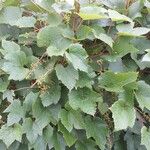
Vitis amurensis
Amur grape · Domestic Grape · Grape Vine · Wine Grape
Description
Source: leafsnapVitis amurensis, the Amur grape, is a species of grape native to the Asian continent. Its name comes from the Amur Valley in Russia and China. It is very resistant to frost, but is not tolerant to drought. Selections vary, but as a species it has strong resistance to anthracnose and ripe rot, and moderately strong resistance to downy mildew and powdery mildew.
Care Guide
💧 Water
The Amur grape thrives with consistent moisture and shows moderate tolerance to drought. It's best to water it every three weeks, letting the soil dry out slightly between waterings. During its dormancy period, reduce the amount of water to prevent root rot and to mimic its natural precipitation cycle.
☀️ Light Full sun
Amur grape grows best in places that get sunlight for most of the day, though it can tolerate sites with slightly less sun. In its native habitat it developed under an open sky. Too little light can limit its growth and fruiting, while too much exposure can lead to leaf burn.
What are the sunlight requirements for Amur grape?
Amur grape requires full sun, meaning it thrives with above 6 hours of sunlight daily, but it can also manage with partial sun, about 3-6 hours of sunlight. Observing how sunlight moves through your garden is crucial in choosing spots that offer the right balance of light and shade, ensuring your plants remain happy.
What are the essentials for growing Amur grape successfully?
For successful growth, the Amur grape needs plenty of sun exposure, preferably most of the day, though it can survive in slightly less sunny spots. Originally growing under open skies, it requires adequate sunlight to prevent stunted growth and poor fruit production. Too little sun can hinder its growth and fruiting capabilities, while too much sun can cause leaf burn. When natural sunlight is insufficient, especially during winter or in dimly lit areas, artificial lighting can be a great alternative. LEDs are recommended for their ability to provide necessary light wavelengths, with full sun plants needing 30-50W/sq ft., partial sun plants requiring 20-30W/sq ft., and full shade plants needing 10-20W/sq ft. of artificial light. Position the light source 12-36 inches above the plant and ensure it receives 8-12 hours of light per day to mimic natural sunlight conditions.
What are the important symptoms of light deficiency or excess in Amur grape?
When Amur grape experiences light deficiency, it may show symptoms such as smaller new leaves, leggy or sparse growth, faster leaf drop, halted growth, paler new leaves, and overall weaker structure. Excessive sunlight can cause chlorosis (yellowing of leaves due to chlorophyll breakdown), sunscald (damage from intense sunlight exposure), leaf curling (to minimize water loss), wilting (loss of turgor pressure causing droopiness), and leaf scorching (brown, dry edges on leaves due to too much sun), which negatively affect the plant’s health and growth.
What solutions can help Amur grape thrive in terms of sunlight exposure?
To ensure Amur grape's optimal growth, gradually increasing sunlight exposure to at least 6 hours daily is crucial. Indoor plants benefit from a south-facing window or artificial light for a minimum of 8 hours per day if moving them is not feasible. Outdoors, it's important to adjust plants gradually to sunnier spots to prevent sunburn. Reducing obstacles to sunlight, such as pruning trees or relocating plants to brighter locations, can significantly improve light accessibility. Remember, while parts of the plant damaged by insufficient light might not recover, new growth will be healthier with improved light conditions.
🌡️ Temperature 5–32.2°C
Amur grape is native to climates with temperatures ranging from 41 to 90 °F (5 to 32 °C). It does best in mild, temperate surroundings. Adjusting temperate conditions to match seasonal changes can help improve its growth.
💨 Humidity
🪴 Soil 5-7
🌱 Fertilizer
The Amur grape needs adequate nutrients to achieve optimal fruit production. Apply fertilizer in early spring to promote new growth and flower development. Regular feeding keeps the plant healthy, produces tastier fruit, and prevents nutrient-deficiency problems such as yellowing leaves and poor fruit yield.
🪴 Pot & Repot
✂️ Pruning
Pruning amur grape is essential for promoting growth and preventing diseases. Important techniques include removing buds, thinning flowers before they bloom, and pruning during the winter. To maintain strong branches, cut back the axillary shoots. After two years, selectively prune some fruiting branches, making sure to retain the right number of buds. Apply protective agents to larger wounds to promote healing.
🌿 Propagating
🐛 Diseases & pets
☠️ Toxicity
Characteristics
- Plant Type
- Vine, Shrub
- Life Cycle
- Perennial
- Genus
- Vitis
- Family
- Vitaceae
- Hardiness Zone
- 4-8
- Mature Height
- 6.1 m to 9.14 m
- Mature Spread
- 61 cm
- Leaf Color
- Green, Blue
- Leaf Type
- Deciduous
- Flower Color
- Yellow, Green
- Flower Size
- 5.08 cm to 12.70 cm
- Bloom Time
- Early summer, Mid summer
- Planting Time
- Spring, Autumn
- Harvest Time
- Early fall, Mid fall
- Native Area
- Russia, Japan, Koppen, South Korea, China