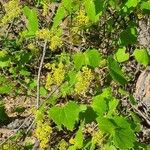
Vitis arizonica
Canyon grape
Description
Source: leafsnapVitis arizonica, commonly known as the Arizona grape, is a species of grapevine native to the southwestern United States and northern Mexico. This deciduous vine can grow up to 30 feet long and has woody stems that can reach up to 4 inches in diameter. The leaves are large and lobed, featuring a glossy green surface that turns yellow or red in the fall. The plant produces small clusters of dark purple grapes that are edible but not commonly consumed due to their tart taste. Vitis arizonica is well adapted to hot and dry climates, making it suitable for growth in desert regions. It prefers well-drained soils with low fertility but can tolerate some moisture if drainage is adequate. For centuries, Native American tribes have used the plant for food, medicine, and basket weaving. Besides its cultural significance, Vitis arizonica also plays an important ecological role by providing habitat for wildlife such as birds and small mammals. Its deep roots help stabilize soil on steep slopes, while its dense foliage offers shade during hot summer months. In summary, Vitis arizonica is a significant plant species with both cultural importance and ecological value in its native range of the southwestern United States and northern Mexico.
🎭 Reproductive Ability, Garden Area, Sorcery, Psychic Powers
Care Guide
💧 Water Every 7 days
Canyon grape, a plant native to arid regions, is drought-tolerant and thrives with just weekly watering. Its strong root system efficiently absorbs the scarce rainfall, making it ideal for xeriscaping and low-water gardens. This characteristic reflects its natural adaptation to dry climates.
☀️ Light Full sun
Canyon grape is a plant that thrives with considerable sun exposure, though it can also adjust to environments with moderate light. Too little or too much sunlight can hinder its growth, and both extremes affect the plant's overall health. Its native habitat corresponds with its need for abundant sunlight.
What are the sunlight requirements for Canyon Grape plants?
Canyon Grape plants thrive in conditions where they have substantial exposure to sunlight, aligning with their origin habitat that demands abundant sunlight for optimal growth. They require full sun, which is above 6 hours of sunlight daily, but they can also adapt to partial sun, about 3-6 hours of sunlight each day. It's important to observe how sunlight moves through your garden to ensure you choose spots that provide the right balance of light and shade, which is essential for the plants' health and happiness.
What are some essential growth conditions for Canyon Grape apart from sunlight?
Apart from needing substantial sun exposure, Canyon Grape's growth can be negatively impacted by both inadequate sunlight and excessive exposure. In situations where natural sunlight is limited, such as indoors or during winter, artificial lighting can be a vital solution. Using the right type of artificial light, like LED lights that offer customizable wavelengths, is crucial. The required wattage varies with the type of plant: full sun plants need 30-50W/sq ft, partial sun plants need 20-30W/sq ft, and full shade plants require 10-20W/sq ft. The artificial light source should be placed 12-36 inches above the plant and provided for 8-12 hours per day to mimic natural daylight hours.
What symptoms indicate Canyon Grape is receiving inadequate sunlight?
Symptoms of inadequate sunlight exposure in Canyon Grape include smaller new leaves, leggy or sparse growth, faster leaf drop, slower or no new growth, and lighter-colored or pale new leaves. In contrast, excessive sunlight exposure can lead to chlorosis (leaves turning yellow), sunscald (pale or necrotic areas on the plant tissue), leaf curling, wilting from increased water loss, and leaf scorching characterized by brown, dry edges or patches on leaves. These symptoms highlight the plant's struggle to adapt to unsuitable light conditions.
How can I address light-related issues for my Canyon Grape, whether indoor or outdoor?
To tackle light-related issues in Canyon Grape plants, for indoor solutions, it's recommended to gradually move plants to a sunnier location each week until they get at least 6 hours of direct sunlight daily or to use artificial lights for added illumination. Outdoor plants should also be gradually moved to sunnier spots to prevent sunburn. Eliminating obstructions like overhanging branches can increase sunlight exposure. If necessary, especially for smaller plants, consider transplanting during the plant's dormant period to a location with better sunlight and drainage. It's crucial to remember that parts of the plant already affected by sunlight issues may not recover, but adjusting the light exposure will promote healthy new growth.
🌡️ Temperature 5–35°C
Canyon grape is native to climates with temperatures between 41 and 95 °F (5 to 35 °C). The plant prefers moderate temperatures and may require temperature adjustment during extreme seasons to thrive optimally.
What climates are suitable for Canyon Grape?
Canyon grape, or Vitis arizonica, thrives in climates where temperatures range between 41 to 95 °F (5 to 35 °C). It is indigenous to regions with moderate temperatures and exhibits strong cold resistance. Despite its resilience against cold, during extremely cold winters with temperatures dropping below -25°C, it requires protection. Preparing the plant for winter involves covering it with soil or straw and watering it abundantly before the first freeze, ensuring the soil remains moist, which helps prevent drought and water scarcity during the colder months.
How does Canyon Grape react to low temperature conditions?
Canyon grape is cold-tolerant and ideally should be kept in temperatures above 5°C. It can generally withstand winter temperatures above -20°C without special frost protection measures. However, when temperatures fall below -25°C, it may not show immediate damage but can experience reduced sprouting or fail to sprout in the spring. In such cases, it's advisable to remove parts of the plant that have failed to sprout in spring.
What should I do if Canyon Grape is exposed to high temperatures?
During summer, it's crucial to ensure that the Canyon grape's environment does not exceed 35°C. Exposure to temperatures above 38°C can lead to the leaves becoming lighter in color, curling, and becoming prone to sunburn. Severe heat can also cause the entire plant to wilt and dry up. To mitigate these effects, trim away sunburned and dried parts of the plant, relocate it to a shaded area or use a shade cloth to protect it from the intense midday and afternoon sun. Additionally, watering the plant in the morning and evening helps keep the soil moist and supports the plant's health during hot weather.
💨 Humidity
🪴 Soil 6-7
🌱 Fertilizer
The Canyon grape plant needs adequate nutrients to achieve optimal fruit production. Fertilize in early spring to encourage new growth and bloom development. Regular feeding keeps the plant healthy, produces more delicious fruit, and prevents nutrient-deficiency problems like yellowing leaves and poor fruit yields.
🪴 Pot & Repot
✂️ Pruning
Canyon grape flourishes when properly pruned from early to late spring. Essential techniques involve removing dead wood, thinning branches, and shaping the longer shoots. These practices enhance air circulation and sunlight exposure, promoting healthy growth and improving fruit quality. Additionally, proper pruning helps reduce the risk of disease.
🌿 Propagating
🐛 Diseases & pets
☠️ Toxicity
Characteristics
- Plant Type
- Herb
- Life Cycle
- Perennial
- Genus
- Vitis
- Family
- Vitaceae
- Hardiness Zone
- 5-9
- Mature Height
- 2.13 m to 6.1 m
- Mature Spread
- 1.83 m to 6.1 m
- Leaf Color
- Green, Dark Green
- Leaf Type
- Deciduous
- Flower Color
- Yellow, Green
- Flower Size
- 2.03 cm to 10.16 cm
- Bloom Time
- Mid spring, Late spring
- Planting Time
- Spring, Summer
- Harvest Time
- Late summer, Early fall, Mid fall
- Native Area
- Mexico