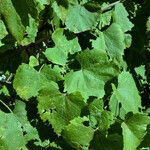
Vitis vinifera
انگور · European grape · Grape · Common grapevine · Grapevine
Description
Source: leafsnapVitis, commonly known as grapevine, is a genus of flowering plants belonging to the family Vitaceae. This genus encompasses around 60 species of deciduous vines native to temperate regions of the Northern Hemisphere. These plants are renowned for their edible fruit, which is used to produce wine and various other products. The leaves of Vitis plants are generally large and lobed, featuring a distinctive shape that makes them easily identifiable. The vines can grow up to 35 meters in length, using tendrils to climb trees or other structures. For optimal growth, Vitis plants require well-drained soil and abundant sunlight. They are typically propagated through cuttings or by grafting onto rootstock. Beyond their value as a food source for humans, Vitis plants also provide habitat for numerous species of birds and insects. Historically, they have been used medicinally to treat various ailments such as digestive issues and inflammation. Overall, Vitis is an important plant genus with significant cultural importance due to its role in wine production and its ecological importance as a habitat provider.
💡 Crafting an oak barrel requires three hours of work, while wine grapes take four to five months to ripen. It takes decades to produce a fine bottle of wine, yet it only takes a second for that wine to travel from your lips and tongue to your esophagus. In that moment, you are experiencing the culmination of years of history and tradition.
🌳 The common grape vine has uses beyond winemaking; in some cultures its leaves are used in cooking as wrappers for food. Its vines and canes can be turned into decorative crafts and pieces of furniture. Grape seed extract, obtained from the seeds of the common grape vine, is valued for its antioxidant properties and is employed in the beauty industry. Tartaric acid produced during wine making is used to make natural dyes and mordants for fabrics and to help maintain the acidity in certain food products.
🎭 Forbearance, generosity, riches, plenty, the love for the divine
Care Guide
💧 Water Every 7 days
Originating from Mediterranean climates, wine grapes prefer moderate water conditions and require consistent soil moisture without becoming waterlogged. Ideally, they should be watered weekly. Vineyards often use drip irrigation systems to optimize both hydration and drainage during the growing season, which is beneficial for the grapes.
When Should I Water My Wine Grape?
Watering your wine grape, Vitis vinifera, appropriately is essential for its health and the production of quality fruit. To determine the right time to water, check for several indicators. The soil moisture at a depth of 5-10 cm should feel dry before watering. Observing the plant's leaves can also provide clues; if they appear limp or their color changes from deep green to lighter shades or yellow, it indicates the need for water. Additionally, wine grape shows quick signs of drought stress, such as wilting or curling leaves, which should not be ignored. Despite being a deep-rooting vine that can access water from deeper soil layers, careful attention to watering is necessary. Excessive watering can be detrimental, leading to conditions like root rot or fungal disease. It's also advised to water early in the morning to avoid shock or scorching and to understand that some stress due to water scarcity can actually enhance the fruit's flavor, critical for wine production.
How Should I Water My Wine Grape?
The best method for watering wine grape involves using a soaker hose or drip irrigation system, delivering water directly to the base of the plant, focusing on the root zone. This technique minimizes water wastage and prevents the leaves from getting wet, reducing the risk of fungal diseases. Utilizing a moisture meter or soil probe can help determine the soil's moisture level at the root zone, ensuring the plant is neither overwatered nor underwatered. Key areas to focus on are the root zone beneath the plant rather than the surface, ensuring a wet area of about 3 to 4 feet in the soil. It's also crucial to avoid watering the foliage directly to prevent diseases such as downy mildew and powdery mildew.
How Much Water Does Wine Grape Really Need?
Wine grape requires moderate watering, with the amount depending on factors like pot size, root depth, and plant size. Since it has a deep root system, deep watering to reach the roots is essential. Allow the soil to dry out partially between waterings, with an average mature plant in a 10-inch pot needing about 1 to 2 liters per watering session. Signs of proper hydration include vibrant and healthy leaves, while overwatering may lead to yellowing leaves, root rot, or fungal diseases. Underwatering may cause the plant to wilt or droop. It's vital to ensure good drainage and use mulch to conserve soil moisture and reduce water needs.
What Kind of Water is Best for Wine Grape?
Wine grape shows moderate sensitivity to water quality, thriving best on rainwater due to its natural, chemical-free composition. Filtered water is a suitable alternative if it removes harmful contaminants. Tap water is an option if other sources aren't available, though it may contain chlorine and other chemicals potentially harmful to the plant. Wine grape is particularly sensitive to chlorine, which can cause leaf burn and stress. Letting tap water sit out for 24 hours before use allows chlorine to evaporate, making it safer. Ideally, use water at room temperature to avoid shocking the plant.
How Do Wine Grape's Watering Needs Change with the Seasons?
Wine grape's watering needs vary with the seasons. In spring, as the plant enters a growth phase, watering should ensure the soil remains moist to support development. The demand for water peaks in summer, crucial for fruit ripening; the soil should be assuredly moist, complemented by mulching to reduce evaporation. In autumn, as the plant prepares for dormancy, water needs decline; maintain slightly damp soil without promoting new growth. Winter sees the wine grape in dormancy, requiring minimal watering just to prevent the roots from drying out. Adjust watering gradually as temperatures change to accommodate the plant's seasonal needs.
☀️ Light Full sun
The common grape vine does best with a plentiful amount of sunlight every day, though it can also do well with moderate light exposure. Sunlight is essential for its development and benefits the plant's health and productivity. Its natural habitat is a sunny one, but not one with extreme light conditions. Too much or too little sunlight can impede growth and the plant's overall health.
What are the sunlight requirements for wine grapes (Vitis vinifera)?
Wine grapes require a generous amount of sunlight each day to thrive, ideally thriving under conditions of full sun, which is above 6 hours of sunlight per day, but they can also manage with partial sun, about 3-6 hours of sunlight. The right amount of sunlight is crucial for the plant's development, health, and productivity. Sunlight influences these aspects positively, without burdening the plant with light extremes as they naturally inhabit sunny environments. However, both too much and too little sunlight can impede growth and affect overall plant health. It's important to watch how sunlight moves through your garden and choose spots that offer a balance of light and shade to ensure the happiness and health of your plants.
How important is artificial lighting for indoor wine grapes?
Artificial lighting becomes vital for the growth of indoor wine grapes when natural sunlight is insufficient, especially in winter or in less sunny spaces. It promotes faster, healthier growth. Utilizing LED lights, which can provide specific wavelengths needed for plant growth, is advisable. For optimal growth under artificial light, full-sun plants require 30-50 watts per square foot, partial-sun plants require 20-30 watts per square foot, and full-shade plants need 10-20 watts per square foot of artificial light. Light sources should be placed 12-36 inches above the plant, mimicking natural sunlight as closely as possible. Most plants, including wine grapes, will benefit from 8-12 hours of artificial light per day to simulate the length of natural daylight hours.
What are some common symptoms of improper sunlight exposure in wine grapes?
Wine grapes can exhibit several symptoms when they do not receive adequate sunlight. These include smaller new leaves, leggy or sparse growth, faster leaf drop, slower or halted new growth, lighter-colored new leaves, chlorosis, sunscald, leaf curling, wilting, and leaf scorching. Insufficient sunlight leads to a range of issues from reduced chlorophyll and essential nutrients, affecting the plant's ability to photosynthesize and grow healthily. Conversely, too much sunlight can result in damaged plant tissues and increased water loss through transpiration, causing plants to wilt or show signs of scorching on the leaves.
How can you manage and mitigate sunlight-related issues for wine grapes?
Managing and mitigating sunlight issues involve a strategic approach to plant placement and care, whether indoors or outdoors. For indoor plants, gradually moving them to sunnier locations each week until they receive at least 6 hours of sunlight daily is key. Using a south-facing window and keeping curtains open can maximize sunlight exposure. If the plant is large or not easily movable, consider supplemental artificial lighting for at least 8 hours daily. Outdoors, gradually acclimate your plants to sunnier spots to avoid sunburn. Pruning obstructions and transplanting smaller plants during their dormant period to sunnier locations with good drainage can also help. It's important to note that while parts of the plant affected by insufficient sunlight may not recover, new growth should be healthy after adjusting light exposure.
🌡️ Temperature 5–35°C
Common grape vine is a temperate woody plant native to areas with average temperatures between 41 and 95 ℉ (5 to 35 ℃). It favors temperatures of 60 to 68 ℉ (16 to 20 ℃) during flowering and fruit set, and a bit cooler conditions in autumn to encourage sugar accumulation. In winter, the plant needs a dormant period with temperatures below 45 ℉ (7 ℃) to ensure proper bud break and healthy growth in the next season.
What is the ideal temperature range for the growth and fruit set of wine grapes?
Wine grapes thrive in temperate regions and prefer a temperature range of 41 to 95°F (5 to 35°C) for optimal growth. During the critical periods of flowering and fruit set, the ideal temperature range narrows to 60 to 68°F (16 to 20°C). These conditions support healthy development and sugar accumulation in the grapes. As autumn approaches, slightly cooler temperatures are beneficial for enhancing sugar development, while a dormant period with temperatures below 45°F (7°C) during winter is essential for proper bud break and vigorous growth in the subsequent season.
Do wine grapes require special frost protection measures in winter?
Wine grapes possess strong cold resistance, usually negating the need for special frost protection measures during the winter months. However, if temperatures are anticipated to drop below -25°C, it is crucial to provide cold protection. This can be accomplished by wrapping the plant's trunk and branches with insulating materials like non-woven fabric or cloth. Additionally, to prevent drought and water scarcity for the plant during winter and early spring, it's recommended to water the plant abundantly before the first freeze of autumn, ensuring the soil remains moist as it enters a frozen state.
How should wine grapes be cared for in low winter temperatures?
Wine grapes are cold-tolerant and manage well above 5°C. However, during winter, it's important to keep them above -20°C to avoid damage. If temperatures fall below -25°C, no visible damage may appear during winter, but come spring, the branches could become brittle and dry, and fail to produce new shoots. The best care practice in spring for vines damaged by extreme cold is to prune any dead branches to promote healthy growth and the emergence of new shoots.
What measures should be taken if wine grapes are exposed to high temperatures?
During the summer, it's important to ensure that wine grapes are kept below 35°C. Exposure to temperatures above 41°C can cause the leaves to lighten in color, tips to dry and wither, and increase the plant's susceptibility to sunburn. To mitigate damage from high temperatures, trim away the sunburned and dried parts of the plant. Additionally, relocating the plant to a shaded area or using a shade cloth to protect it from intense midday and afternoon sun can greatly help. Keeping the soil moist by watering in the morning and evening is also crucial during hot periods.
💨 Humidity
🪴 Soil 5-6
🌱 Fertilizer
The Common grape vine plant needs adequate nutrients to achieve the best fruit production. Apply fertilizer in early spring to promote new growth and flower development. Regular feeding keeps the plant healthy, encourages more flavorful fruit, and prevents nutrient deficiency problems like yellowing leaves and poor fruit yield.
🪴 Pot & Repot 2-3 years
Repot the common grape vine in early spring, choosing a container only slightly larger than the current one and with proper drainage. Use a well-draining potting mix and position the root ball at the same depth as before. Gently loosen any roots that are root-bound. After repotting, water thoroughly and place the pot in a warm, shady spot. Regular pruning will help keep the plant’s size down and encourage new growth.
✂️ Pruning
Pruning wine grapes is crucial for promoting healthy growth and preventing disease. Important techniques include picking buds to improve ventilation, thinning flower spikes before they bloom, and performing winter pruning to develop strong trunks. It is recommended to keep 2-3 buds on fruiting branches and apply protective agents to larger cuts to minimize the risk of infection.
🌿 Propagating
🐛 Diseases & pets
☠️ Toxicity
Though it is considered edible, grapes are toxic to pets. Grape toxicity includes vomiting, lethargy, loss of appetite, and diarrhea. These symptoms usually appear within 24 hours of ingesting a harmful dose.
Characteristics
- Plant Type
- Vine
- Life Cycle
- Perennial
- Genus
- Vitis
- Family
- Vitaceae
- Hardiness Zone
- 5-10
- Mature Height
- 32 m
- Mature Spread
- 3.96 m
- Leaf Color
- Green
- Leaf Type
- Deciduous
- Flower Color
- Green, Yellow
- Flower Size
- 2.54 cm
- Bloom Time
- Late spring, Early summer
- Planting Time
- Spring, Autumn
- Harvest Time
- Mid summer
- Native Area
- Austria, Czech Republic, Slovakia, Romania, Montenegro, Bulgaria, Croatia, Slovenia, Ukraine, Serbia, Russia, Germany, Italy, Switzerland, Hungary, France