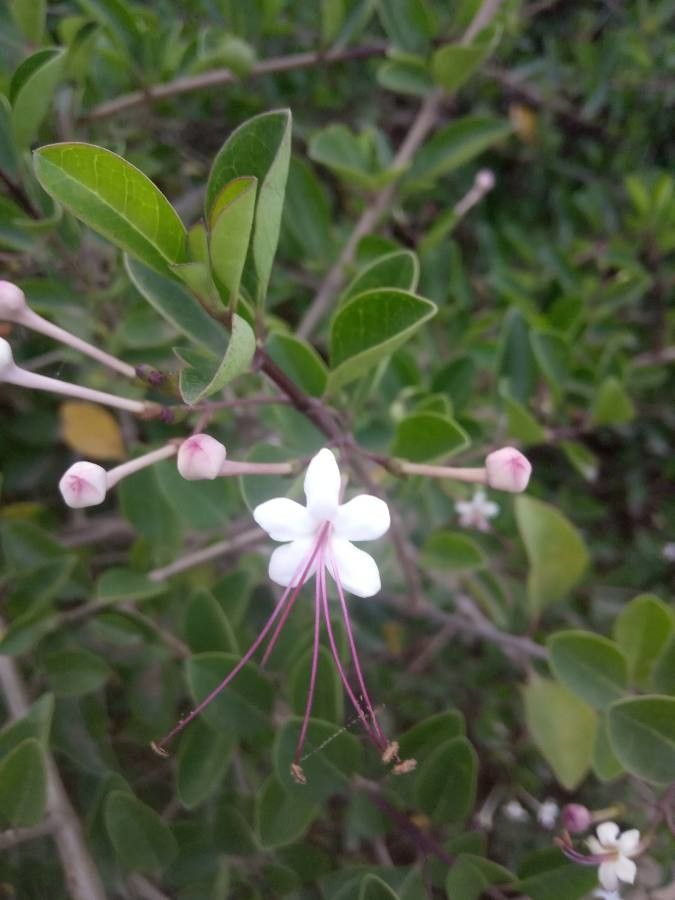
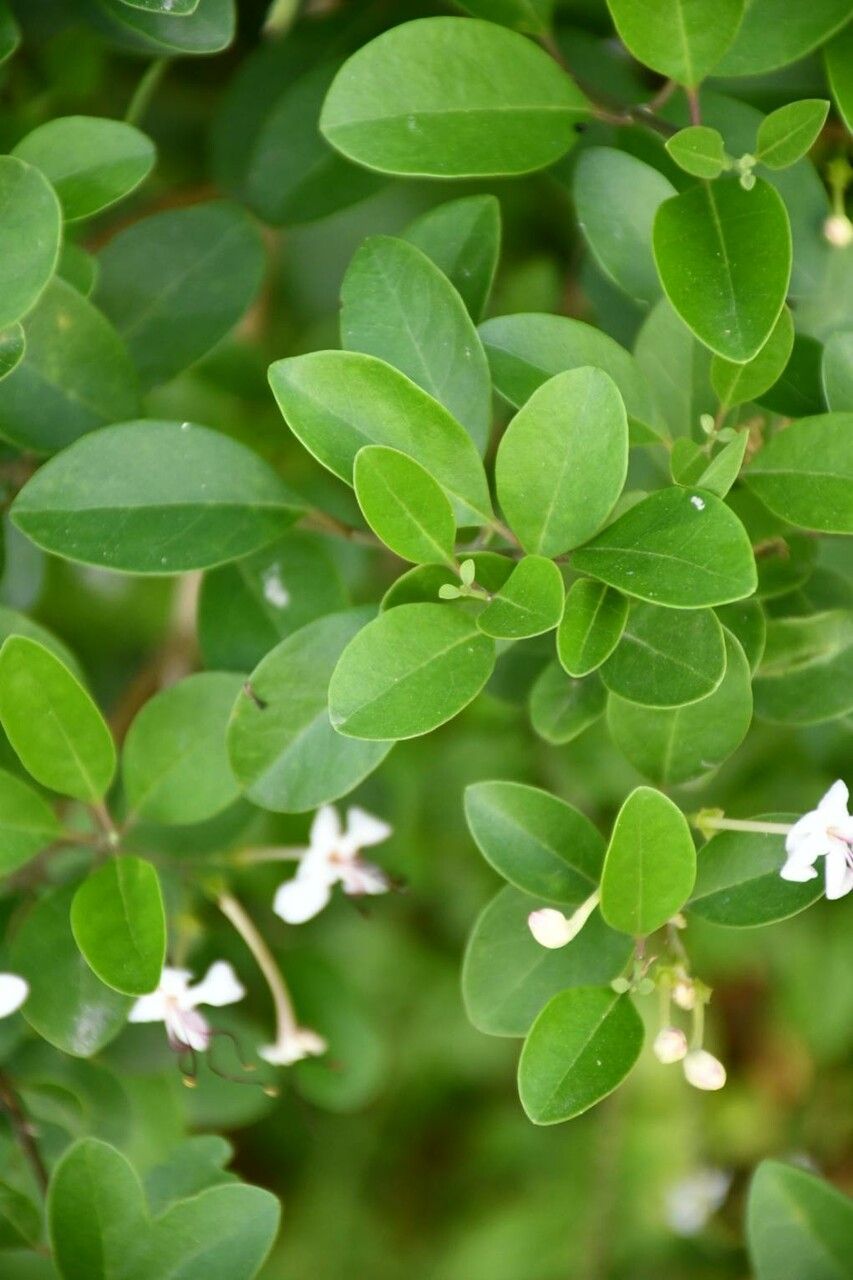
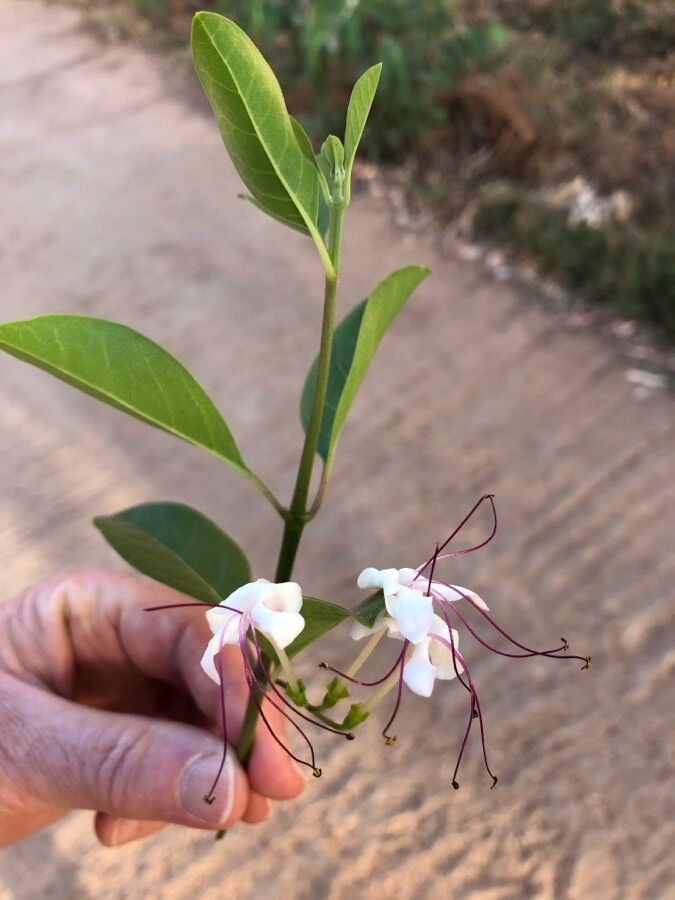
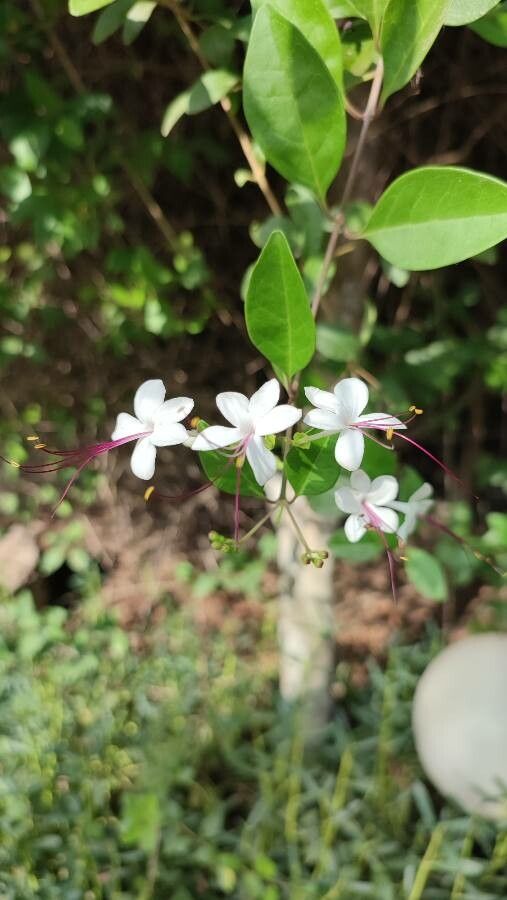
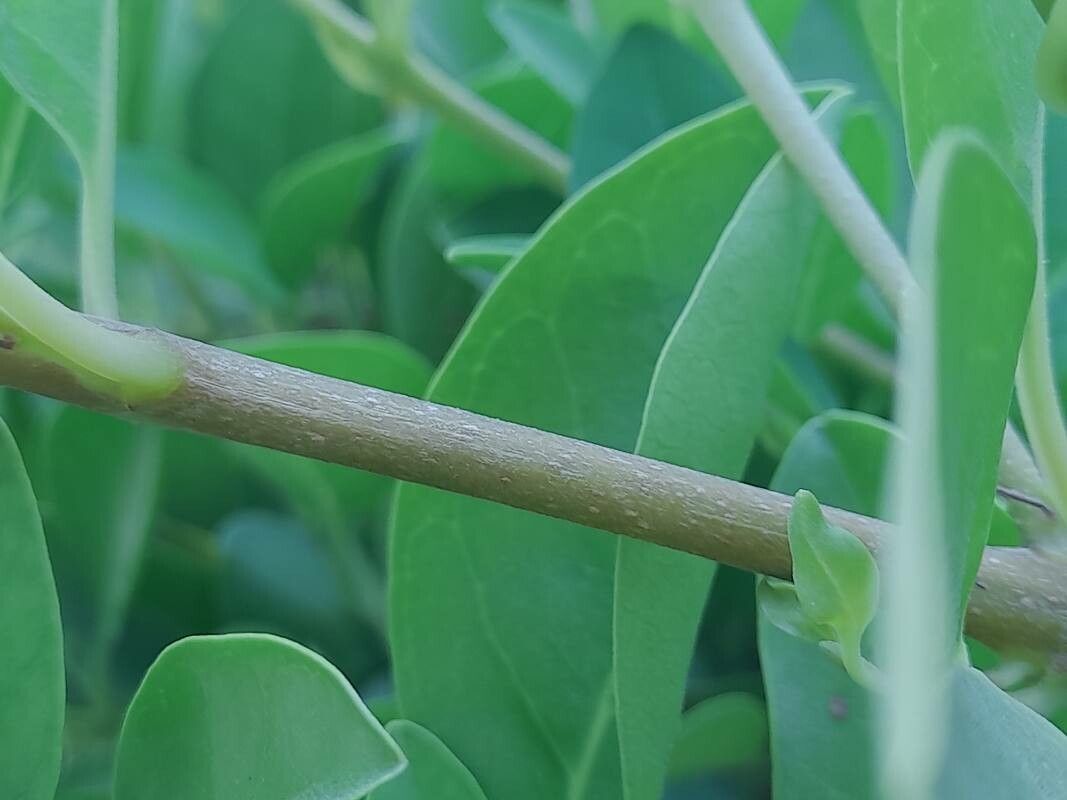
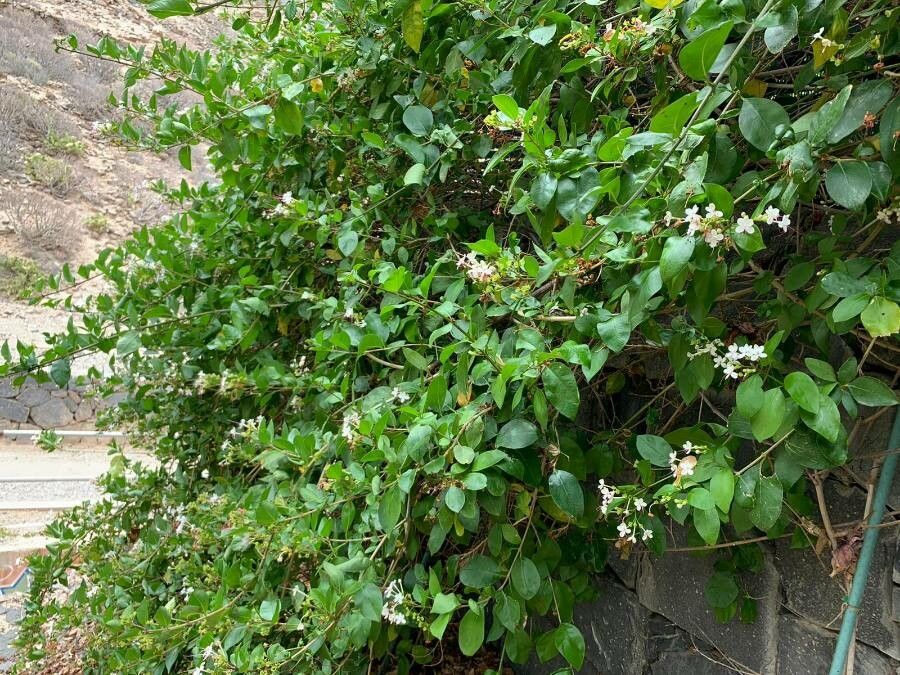
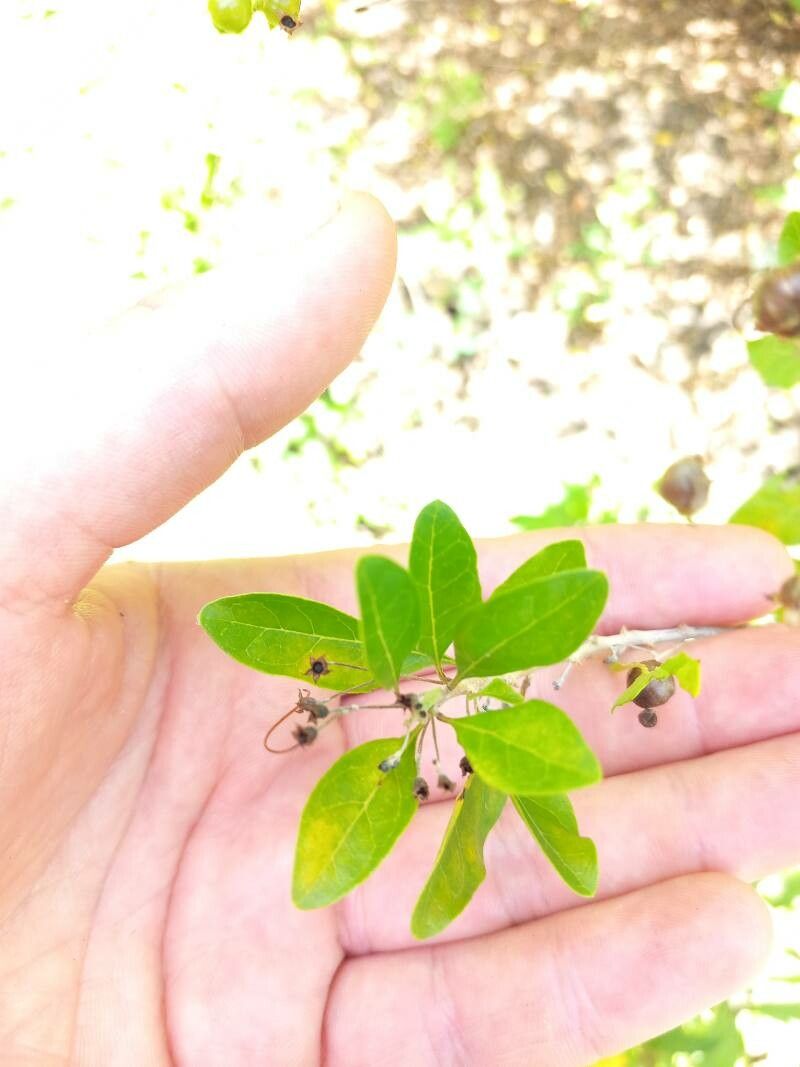
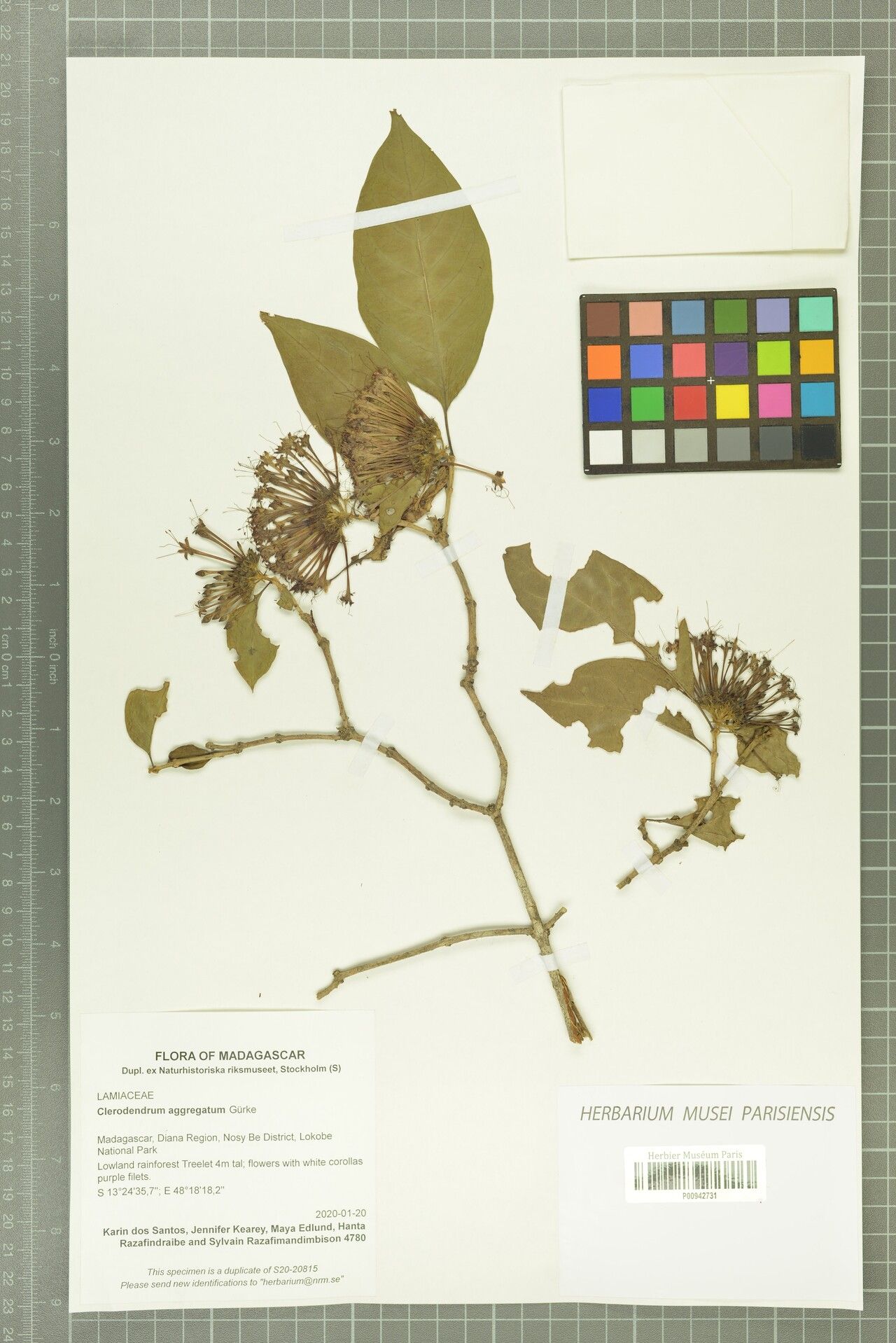
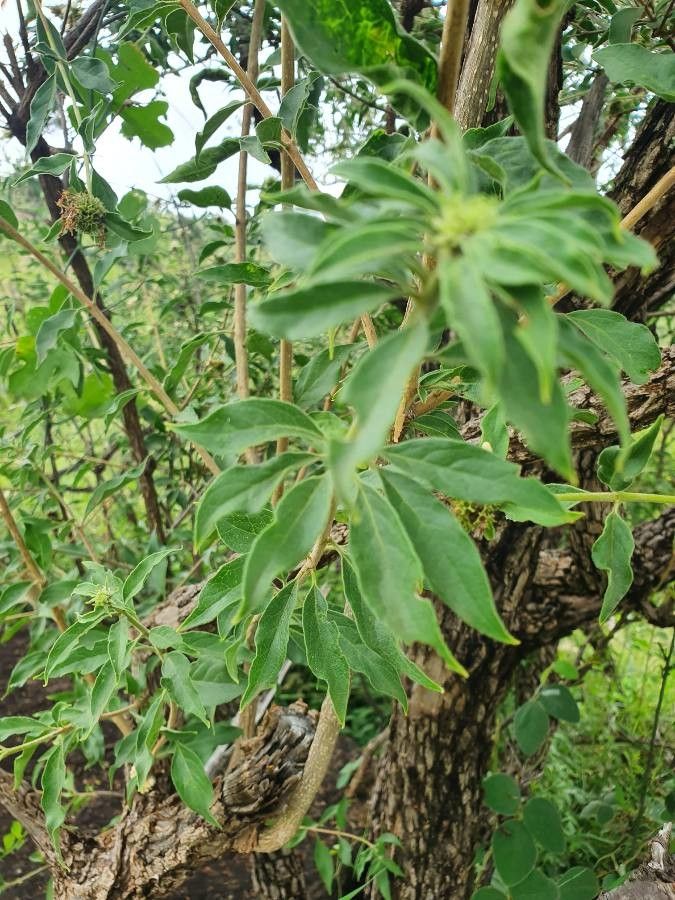
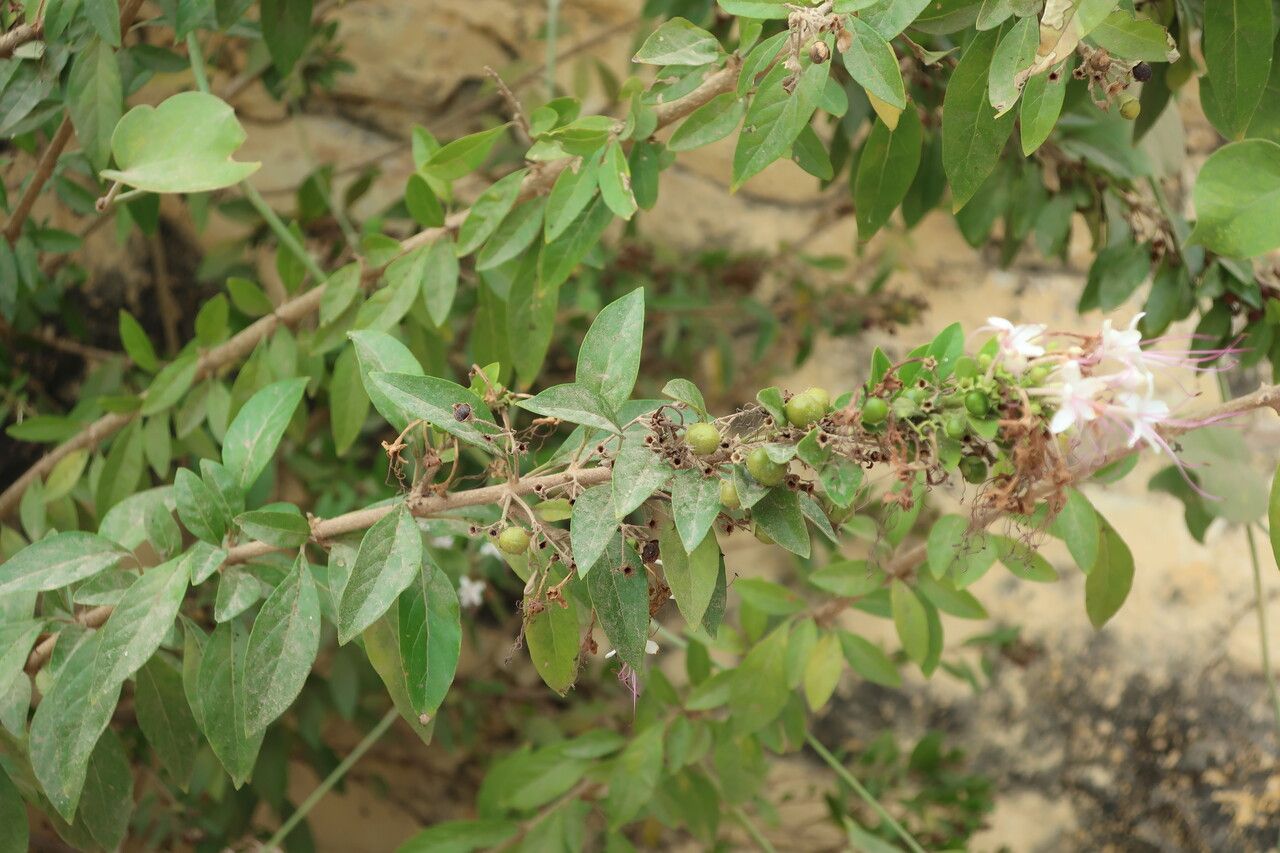
Volkameria inermis, commonly known as the Chinese crown flower or sweet-scented oleander, is a flowering plant in the family Apocynaceae. Native to Southeast Asia, it is found in countries such as Thailand, Malaysia, and Indonesia. This plant can grow up to 3 meters tall and features glossy green leaves arranged opposite each other on its stem. The flowers are small and tubular, with five petals that vary in color from white to pink or purple. While the flowers bloom throughout the year, they are most abundant during the summer. Volkameria inermis is popular as an ornamental plant due to its attractive appearance and sweet fragrance. It is often used as a hedge or border plant but can also be grown indoors in pots. For centuries, traditional healers in Southeast Asia have used the Chinese crown flower for medicinal purposes. The leaves are known to have anti-inflammatory properties, while the roots have been used to treat fever. However, it is important to note that all parts of this plant contain toxic compounds called cardiac glycosides, which can cause serious health problems if ingested by humans or animals. In summary, Volkameria inermis is an attractive ornamental shrub with medicinal properties, but it should be handled with caution due to its toxic nature.
Glory bower has strong resistance to disease and is generally not susceptible to illnesses. Regarding care, this plant is fairly low-maintenance. When grown outdoors it needs only minimal watering, and larger specimens usually do not require pruning. Smaller plants, however, should be trimmed after they have finished blooming. Glory bower is appropriate for anyone with outdoor space, such as a garden or deck, and does not demand extensive care experience.
How to keep Volkameria Inermis.
Light
Glory bower thrives best when constantly under sunlight, though it is capable of withstanding periods of shade. Its typical environment demonstrates this, as it often thrives in highly illuminated conditions. Nonetheless, both too little and too much light could impede its growth, resulting in altered color and stunted growth.
Water
Glory bower flourishes in subtropical climates. It demonstrates moderate drought tolerance and prefers moderate humidity. It's best to water the plant every two weeks and maintain consistent moisture during the growing season to encourage lush foliage and vibrant flowers.
Temperature
The glory bower thrives best in a moderately warm climate, ideally with temperatures between 68 and 100 °F (20 to 38 ℃). Therefore, it's recommended to adjust indoor temperatures to resemble its natural habitat, particularly during shifts in the season.
Fertilizer
The most suitable period to apply fertilizer to a Glory bower is during the early spring, when it awakens from its dormancy phase. This action encourages tremendous growth and assists in the progression of blossom production. Fertilizing aids not only in the enrichment of leaves, stems, and branches, but also fosters the growth of large, radiant, and enduring flowers. It facilitates the transportation of nutrients from the roots to the flowers and heightens the plant's overall well-being and resilience to diseases.
Pruning
The Glory Bower is cherished for its beautiful and fragrant blooms. To maintain its health and appearance, prune it during early to late winter. Remove any dead or crowded branches to improve air circulation and encourage healthy growth. Regular pruning also enhances its shape and vigor, ensuring your garden looks its best.
Botanical profile.
- Plant Type
- Tree, Vine, Shrub
- Life Cycle
- Perennial
- Genus
- Volkameria
- Family
- Lamiaceae
- Hardiness Zone
- 10-11
- Mature Height
- 1.83 m to 2.44 m
- Mature Spread
- 2.13 m to 3.05 m
- Leaf Color
- Green
- Leaf Type
- Evergreen
- Flower Color
- White
- Flower Size
- 3.56 cm to 5.08 cm
- Bloom Time
- All year round
- Planting Time
- Spring, Summer, Autumn, Winter
- Harvest Time
- All year round
- Native Area
- Sri Lanka, India, Malaysia, Vanuatu, Philippines, Bangladesh, Fiji, China, Indonesia, Vietnam, Myanmar, Japan, Singapore, Congo (DRC), Thailand
Other names.
Reader questions.
How should I water my Glory bower plant?
When it comes to watering your Glory bower, you have plenty of options. You can use a watering can, hose, or even a cup. Just make sure that whatever tool you choose, you apply the water directly to the soil. It's important to evenly moisten all areas of the soil to ensure that every part of the root system gets enough water. Using filtered water is a good idea, as tap water may have harmful particles. Additionally, it's best to use water that is at or slightly above room temperature, as very hot or cold water can be a bit shocking for the Glory bower. However, this plant is generally not too fussy and will typically respond well to any type of water you give it.
Why should I put fertilizer on my Glory bower?
Proper fertilization is crucial for the overall health and well-being of a Glory bower. When supplied with the right amount of energy and nutrients, the plant will develop a healthy foliage and sturdy stems and branches. Gardeners, however, value the flowers of a Glory bower the most. Luckily, fertilization also helps in producing large, vibrant, and long-lasting flowers. This is because the right fertilizer facilitates the transfer of fuel from the roots to the stems and flowers. Additionally, proper fertilization ensures the plant's general health, enabling it to effectively fight off diseases.
What are the sunlight requirements for Glory bower?
Glory bower requires full sun, defined as above 6 hours of sunlight daily, but it can also thrive in partial sun, which is about 3-6 hours of sunlight. When planning your garden, it's important to observe how sunlight moves through the area to ensure your plants get the right balance of light and shade, contributing to their growth and health.
What temperature conditions are best for growing Glory Bower?
Glory bower thrives in a warm climate, flourishing best in temperatures ranging between 68 to 100 °F (20 to 38 °C). To ensure optimal growth, it's advised to adjust indoor temperatures to closely mimic its native environment, especially during seasonal changes. The plant is extremely heat-loving, and exposure to cold temperatures can be harmful. During autumn, it's recommended to bring outdoor-grown Glory bower indoors, placing it near a bright window but at a distance from heaters to avoid damage. Keeping it in temperatures above 20°C during winter is crucial for its health, as any exposure to temperatures nearing 5°C can lead to detrimental effects.
What should I do if I give too much or too little water to my Glory bower?
When caring for outdoor plants, especially newly planted ones or seedlings, it's important to be mindful of watering. In the beginning, make sure to water regularly for a few months while the plant is still small or recently planted. Once the roots are established, the plant can rely on rain for most of its water needs. If you have a Glory bower planted in a pot, be careful not to overwater it. In case you accidentally overwater the plant, take immediate action to address the situation. First, stop watering the plant to minimize the effects of overwatering. Then, consider removing the Glory bower from the pot to inspect its roots. If none of the roots show signs of root rot, you can return the plant to its pot. However, if you do find signs of root rot, trim away the affected roots and consider applying a fungicide to prevent further damage. Finally, repot the Glory bower in well-draining soil. On the other hand, if your Glory bower is underwatered, it's a relatively simple issue to fix. When the plant lacks water, its leaves may droop, dry out, and even fall off. However, these symptoms can be reversed by watering the plant sufficiently. So, adjust your watering frequency as soon as you notice signs of underwatering.
What time should I fertilize my Glory bower?
To properly fertilize a Glory bower, the best time to do so is during early spring when the plant is coming out of dormancy. This will provide the plant with energy for growth and flower development. However, there is another opportunity to fertilize in the fall, although a smaller amount is needed. Some gardeners also choose to fertilize during planting, but it's not always necessary.
Can Glory bower grow under artificial lighting?
Yes, Glory bower can grow under artificial lighting, which is especially useful when natural sunlight is insufficient, such as during winter or in less sunny indoor spaces. Indoor plants benefit from adequate artificial lighting, promoting faster and healthier growth. LED lights are recommended as they can be customized to provide specific wavelengths needed by the plant. For full sun plants, 30-50W/sq ft is needed; partial sun plants require 20-30W/sq ft, while full shade plants need 10-20W/sq ft. The artificial light source should be placed 12-36 inches above the plant, and it should be on for 8-12 hours per day to mimic natural sunlight.
How do you care for Glory Bower in low temperatures?
Glory bower prefers warm temperatures and is sensitive to cold. It thrives best when the temperature remains above 20°C, and during winter months, it's essential to ensure temperatures stay above 5°C to avoid frost damage. Exposure to temperatures below 1°C may result in leaf discoloration, which can transition from light to brown or black. This can be accompanied by wilting and drooping. To mitigate frost damage, trim off the frost-damaged sections and immediately move the plant to a warmer indoor setting. Position it near a south-facing window for sufficient sunlight while being cautious to avoid placing it near heaters or air conditioning vents, which can lead to excessive dryness.
How often do I need to water my Glory bower plant?
If your area receives enough rainfall, most outdoor plants can grow normally without additional watering. However, if your area lacks rainfall, you should water your plants adequately every 2 weeks in the spring and fall. During the summer, you need to water more often. In the winter, when plants need less water due to slower growth, you should water sparingly or not at all. Young or newly planted Glory bower plants require more frequent watering to help them establish and grow into drought-tolerant plants. For potted plants, there are two main methods to determine watering frequency for your Glory bower. The first method is to follow a set watering schedule, such as once a week or once every other week. However, this approach may not always be suitable as it doesn't consider the specific growing conditions of your Glory bower. Watering frequency can also vary depending on the season. During the summer, when the plant's water needs are highest, a predetermined schedule may not be enough. An alternative approach is to water based on soil moisture. It's generally best to wait until the top two to four inches of soil, about one-third to half the depth of the pots, have completely dried out before watering again.
When is the best time to not put fertilizer on my Glory bower plant?
During the winter, Glory bower plants go into a dormant phase and do not require fertilization as they don't need much energy from the soil to grow. Fertilizing during this time increases the risk of overfertilization and its negative effects. The best times to feed a Glory bower are early spring and fall. This means that for most of spring and summer, fertilization is unnecessary. Additionally, if the plant is exposed to extremely hot or dry conditions, it is best to avoid feeding it.
What are the symptoms of light deficiency in Glory bower?
Symptoms of light deficiency in Glory bower include smaller new leaves, leggy or sparse growth, faster leaf drop, slower or stunted growth, and lighter-colored new leaves. These symptoms indicate that the plant is not receiving adequate sunlight, leading to a lack of chlorophyll and essential nutrients. Excessive sunlight can also lead to chlorosis, sunscald, leaf curling, wilting, and leaf scorching, showing the importance of providing the right amount of sunlight for healthy growth.
What should I do if my Glory Bower experiences high temperatures?
During the summer, it's crucial to protect Glory bower from temperatures exceeding 38°C, as exposure to temperatures above 43°C can lighten the color of the leaves and increase susceptibility to sunburn. To remedy this, trim away the sunburned or dried sections of the plant. Relocate the plant to a shaded area, especially away from the harsh midday and afternoon sun. Regular watering in the morning and evening helps keep the soil moist and the plant healthy under high temperature conditions.