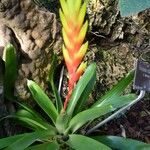
Vriesea carinata
Lobster-claws
Description
Source: leafsnapVriesea carinata is a plant species in the genus Vriesea. The bromeliad is endemic to the Atlantic Forest biome (Mata Atlantica Brasileira), located in southeastern Brazil.
Care Guide
💧 Water
The painted feather plant, native to humid tropical regions, thrives in high humidity and can tolerate moderate drought. It needs to be watered weekly and benefits from regular misting to mimic its natural environment. This care routine helps maintain its vibrant foliage and promotes optimal growth.
What should I do if I added too much or too little water when painting the feather?
Overwatering: - Excess water can cause rot and root damage to your Painted feather plant. - Keeping the potting mix too moist creates a favorable environment for bacteria and fungus, leading to root rot and decay. - Too much water also suffocates the roots, preventing nutrient absorption. - This type of bromeliad can rot from the stem if the rosette is kept too full. - Symptoms of overwatering include softening leaves, yellowing or browning, wilting, and an overall unwell appearance. - To resolve the issue, remove the plant from its pot and replace wet soil. Prune affected roots and rotting stem. Flush out the rosette cavity to remove bacteria. Underwatering: - Painted feather can tolerate dry soil, but extended dryness can cause problems. - Symptoms of underwatering include dried out leaves and curling, which can also be due to low humidity. - Before watering again, check the soil moisture. - If you forget to water, the plant can recover unless it becomes completely dehydrated. - To revive it, thoroughly water the plant, add humidity by misting the leaves, remove dried out leaves, and resume normal watering.
How much water does my Painted feather plant need?
During spring, water the Painted feather once a week as it is actively growing. Keep in mind that the frequency may change depending on temperature, humidity, and other conditions in your home. In summer, you may need to water more frequently. As autumn approaches and temperatures cool down, decrease the amount of watering. In winter, when the plant experiences the least growth, it will require the least amount of water. Before watering again, check the soil's dryness using your finger or a moisture meter. In winter, many people opt to water once every 2 weeks or longer. Some gardeners mistakenly believe that watering the center of the rosette is sufficient for the Painted feather. However, it still needs the roots to absorb the majority of the water. Therefore, ensure the soil is slightly moist but not soggy, and only water after confirming the top 2-3 inches of the soil are dry. This is the key factor in determining the necessary amount of watering.
How can I give my Painted feather enough water?
The Painted feather plant has two sources of water: the rosette and the roots. Unlike most houseplants, it needs some extra care. First, make sure the rosette has enough water and doesn't dry out for too long. It should be about ¼ full, not too much because too much water can cause the stem to rot. During the growing season, you may need to top up the water often, but less frequently in winter. Rainwater or distilled water is best to avoid mineral buildup. Always use room temperature water as hot or cold water can shock the plant. Every 1 to 2 weeks, change the water in the center of the plant and flush out the cavity with clean water to prevent bacteria. Try not to get water on the flower. Second, occasionally water the potting soil, but be careful not to overwater. Use a well-draining soil mix and let it dry out before watering again. The frequency will depend on factors like temperature and humidity. Checking the soil is the best way to know when to water again.
☀️ Light Partial sun
The painted feather prefers moderate sunlight but can tolerate full shade, indicating its resilience. Originating from an environment with variable light levels, the plant's growth and health are strongly affected by light. Both excessive and insufficient light can reduce the plant's vigor and visual appeal.
What are the sunlight requirements for Painted Feather?
Painted Feather requires about 3-6 hours of sunlight daily (partial sun) but can also thrive in conditions where it receives less than 3 hours of sunlight (full shade). Monitoring the movement of sunlight through your garden will help you find the ideal spots that offer a perfect balance for your plants, ensuring they remain healthy and happy. It's crucial to provide the right amount of light to prevent issues related to either excess or insufficient sunlight exposure.
How does sunlight affect Painted Feather's health and growth?
Moderate exposure to sunlight is essential for the health and growth of Painted Feather, indicating its ability to endure various light conditions due to its origin. Proper sunlight exposure affects the plant's vigor and aesthetic appeal significantly. Under artificial lighting, indoor plants need specific wattage based on their sunlight needs: 30-50W/sq ft for full sun plants, 20-30W/sq ft for partial sun plants, and 10-20W/sq ft for full shade plants. The right type of artificial light, appropriate distance, and duration of exposure are key factors in promoting healthy growth indoors.
What are the symptoms of light deficiency in Painted Feather?
Painted Feather displays various symptoms when experiencing light deficiency, including smaller new leaves, leggy or sparse growth, faster leaf drop, slower or halted growth, lighter-colored new leaves, chlorosis, sunscald, leaf curling, wilting, and leaf scorching. These symptoms range from physical deformities to changes in coloration, indicating the plant's struggle to adapt to poor light conditions. Adjusting the light exposure can help mitigate these issues and encourage healthier growth.
How can I address light-related issues in Painted Feather?
To address light-related issues in Painted Feather, gradual adaptation to sunlight is recommended. For indoor plants, shifting them to sunnier spots weekly or using artificial light for at least 8 hours daily can optimize growth. Outdoors, gradually moving plants to sunnier locations each week helps prevent sunburn. Reducing obstructions and, if necessary, transplanting the plant to a sunnier location can improve light exposure. It's important to note that parts of the plant affected by insufficient light may not recover, but new growth should be healthy after adjusting the light exposure.
🌡️ Temperature 20–37.8°C
Painted feather is native to regions with temperate climates and does best in temperatures of 68 to 100 °F (20 to 38 ℃). These preferred temperatures let it flourish in the warmer months. Adjustments may be necessary to ensure indoor temperatures do not fall in colder seasons.
What is the ideal temperature range for Painted feather to thrive?
Painted feather, also known by its botanical name Vriesea carinata, thrives in temperate climates and prefers temperatures ranging from 68 to 100°F (20 to 38°C). It flourishes in warmer months, benefiting from optimal temperature conditions. In order to maintain its health and growth, it is essential to ensure that indoor temperatures do not drop significantly in colder seasons, keeping the environment conducive for its tropical nature.
What should I do with my Painted feather during winter?
During the winter, if the temperature drops below 5°C, it is advisable to move Painted feather indoors to protect it from the cold. Position it near a south-facing window to ensure it receives enough sunlight. It's important to avoid placing your plant near heaters or air conditioners to prevent the air around it from becoming too dry. Keeping the indoor temperature above 20°C is beneficial for the plant's health. If indoor temperatures fall below 20°C, reduce watering and wait for the soil to dry before watering again, to avoid root rot. For plants wintering outdoors, ensure they are in a sheltered, sunny spot. Consider using a temporary greenhouse or wrapping them with plastic film or fabric to protect them from cold and reduce watering, keeping the soil slightly moist.
How does low temperature affect Painted feather and what are the solutions?
Painted feather prefers warm environments and does not tolerate low temperatures well. It thrives best when the environment is above 20°C. When temperatures fall below 5°C, the plant should be protected from the cold. If temperatures drop below 1°C, the leaves may initially show no obvious symptoms, but after three to five days, they begin to wither and droop, with the entire plant potentially drying up in severe cases. To counteract frost damage, trim the frostbitten areas and immediately move the plant to a warm indoor space, placing it near a south-facing window for ample sunlight, while avoiding close proximity to heaters or air conditioning vents to prevent air dryness.
How does high temperature affect Painted feather and what are the solutions?
During summer, it's crucial to keep Painted feather's environment below 38°C. Temperatures exceeding 43°C can lead to dry, withered leaf tips and a halt in growth, making the plant susceptible to root rot. Excessive sunlight may also cause sunburn. To mitigate these issues, remove any withered parts of the plant, relocate it to a shaded area away from intense midday and afternoon sun, and ensure it's watered in the morning and evening to maintain moisture for both the plant and its surrounding environment.
💨 Humidity
🪴 Soil 5-6
🌱 Fertilizer
Appropriate fertilization is essential for Painted feather's health and appearance. Apply fertilizer to Painted feather during the summer, repeating applications monthly throughout the season. Nutrients power growth and preserve the plant's parts. Fertilization improves Painted feather's flower display, guaranteeing the best blooms.
Why should I put fertilizer on my Painted Feather?
Fertilizer and soil nutrients are like fuel for your Painted feather. They help the plant grow and stay healthy by providing the necessary nutrients for new plant material and maintaining existing components. Specifically, fertilization is important for this plant to have beautiful flowers. Gardeners who want the flowers to look their best should consider using fertilizer to ensure optimal blooms.
When should I fertilize my Painted feather?
The Painted feather plant goes through two main phases each year. The first phase is the dormant phase, which occurs during winter and involves minimal new growth. The second phase is the active growth phase, which happens in spring and fall. During this phase, the Painted feather plant needs the most fertilization. It is recommended to start fertilizing in the spring and repeat the feeding once a month until late summer. As fall approaches, you can decrease the frequency of fertilization.
When is it best to not add fertilizer to my Painted feather plant?
If you're looking to promote Painted feather growth while avoiding root burn, it's important to know when to apply additional nutrients. During the spring and summer, when your plant is actively growing, providing extra nutrients is beneficial. However, in the fall and winter when your plant goes into dormancy, it's best to refrain from fertilizing.
What kind of plant food does my Painted feather plant require?
When choosing a fertilizer for a Painted feather, it is best to look for one that contains a balanced mix of the three main plant nutrients, with slightly higher levels of phosphorus. Another option is to enhance the soil for the Painted feather by incorporating organic materials like compost, worm castings, and manure. Fertilizers come in various forms, and most of them will work well for your Painted feather. However, the top fertilizers for this plant are typically available as either liquid or powdered. Regardless of the form you choose, it is important to dilute the fertilizer and apply it while watering your Painted feather.
How can I make my Painted feather plant grow better?
To apply your chosen fertilizer to your Painted feather, follow these steps for successful fertilization. First, find a suitable fertilizer and learn the ideal fertilization schedule. Then, mix your liquid fertilizer with water before applying it to the soil. Remember that each fertilizer may have different specific instructions, so it's best to follow the manufacturer's guidance. These instructions will likely include how to properly dilute the fertilizer to avoid overfertilization. Mixing the fertilizer with water is a simple process, after which you can pour the mixture into the soil where your Painted feather plant is located.
🪴 Pot & Repot 2-3 years
When repotting Painted feather, select a pot 1–2 inches (2.5–5.1 cm) larger that provides ample drainage. Use a well-draining potting mix. Repot in spring or fall, making sure the root ball sits slightly below the rim of the flower pot. Water thoroughly after repotting and place in a warm spot with indirect sunlight.
✂️ Pruning
Painted Feather thrives with its vibrant foliage and requires very little pruning. To encourage growth and preserve its appearance, focus on removing dead leaves and spent flower spikes from early spring to late winter. Be sure to sterilize your tools to prevent disease, which will enhance the plant's overall health and aesthetics after flowering.
🌿 Propagating
🐛 Diseases & pets
☠️ Toxicity
Characteristics
- Plant Type
- Herb
- Life Cycle
- Perennial
- Genus
- Vriesea
- Family
- Bromeliaceae
- Hardiness Zone
- 10-11
- Mature Height
- 30 cm to 46 cm
- Mature Spread
- 61 cm to 91 cm
- Leaf Color
- Green, Light Green
- Leaf Type
- Evergreen
- Flower Color
- Red, Yellow
- Flower Size
- 12.70 cm to 15.24 cm
- Bloom Time
- Summer, Early fall, Mid fall
- Planting Time
- Spring, Summer
- Harvest Time
- Fall
- Native Area
- Brazil