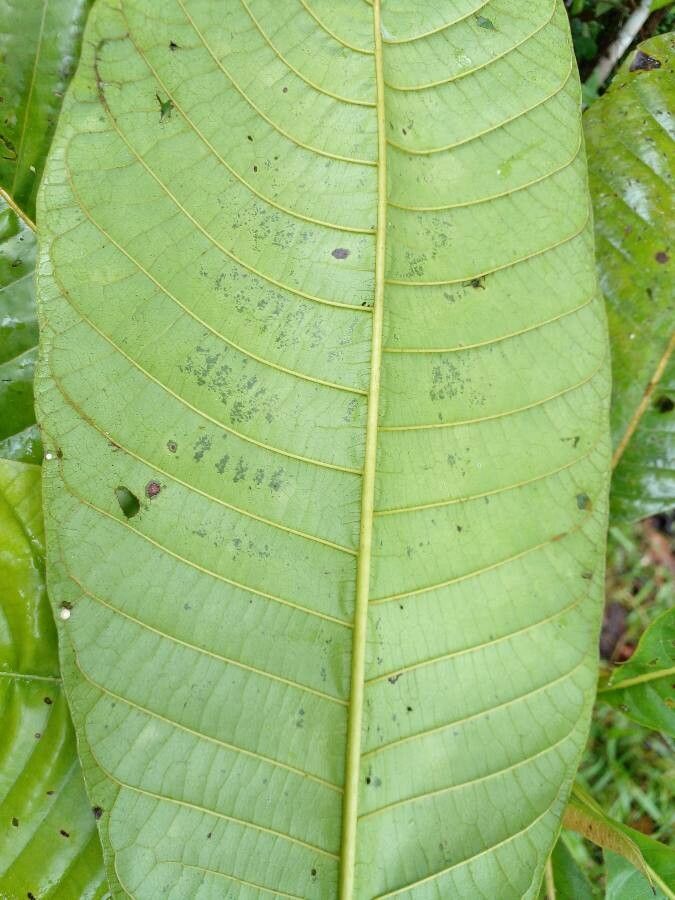
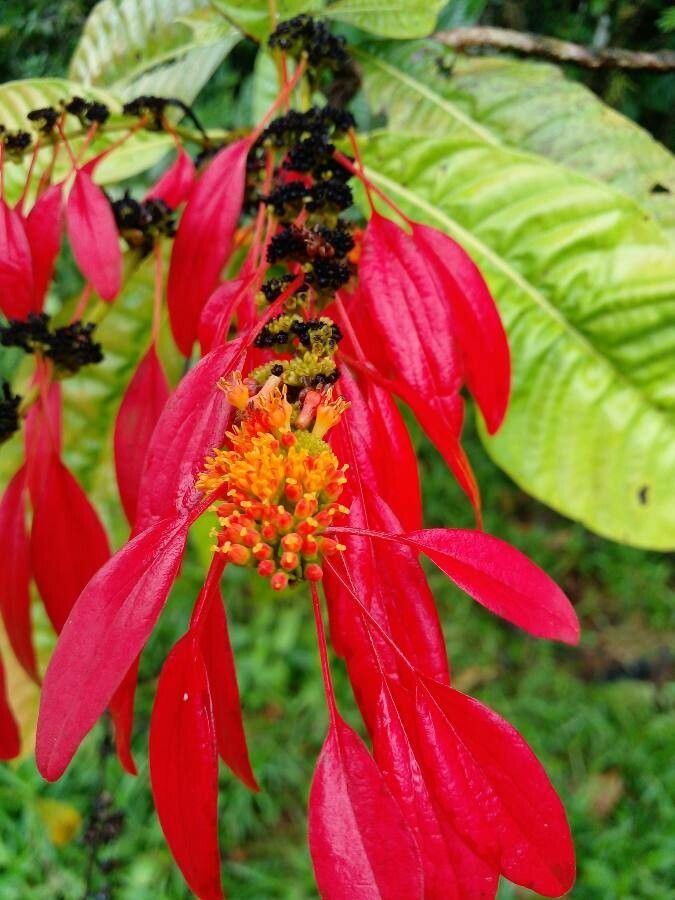
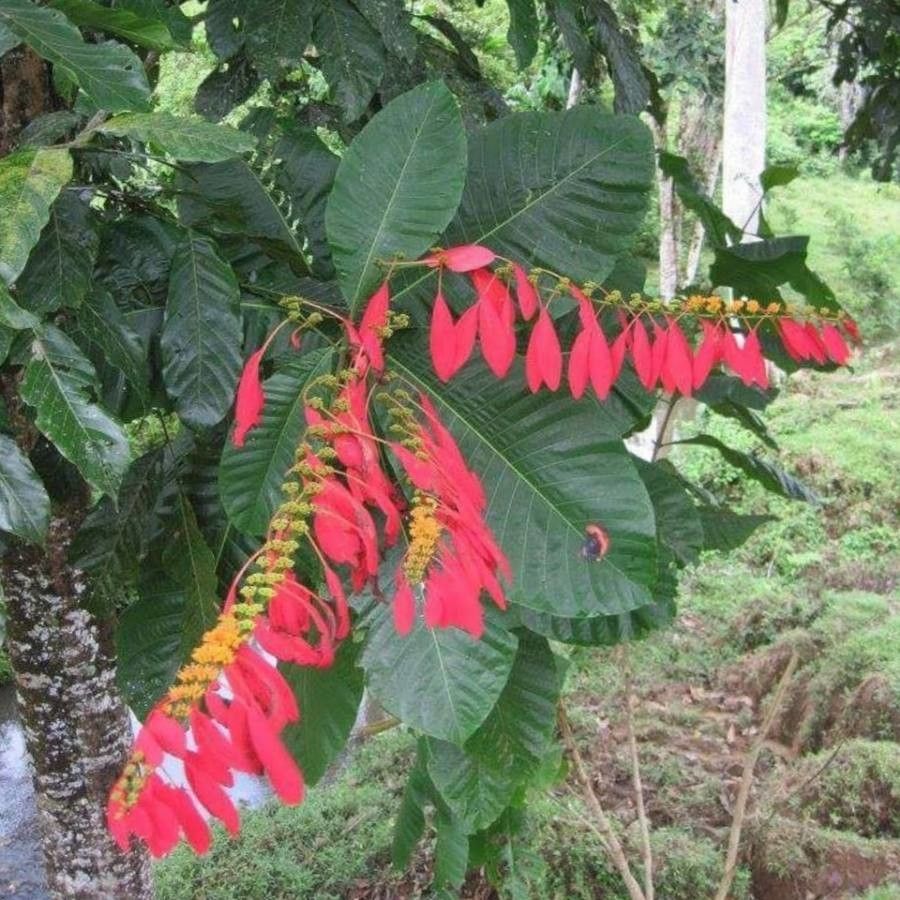
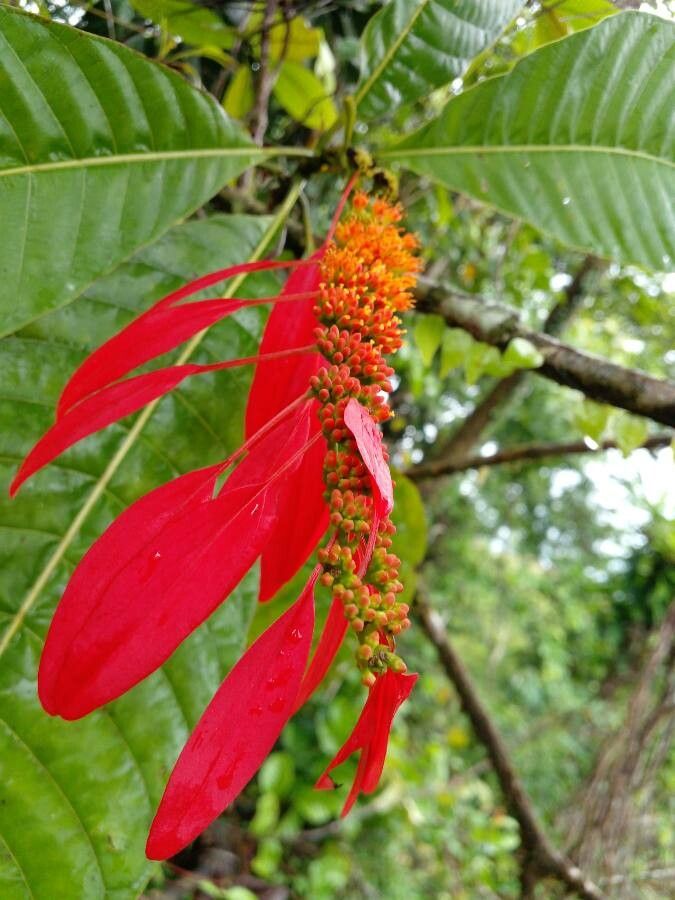
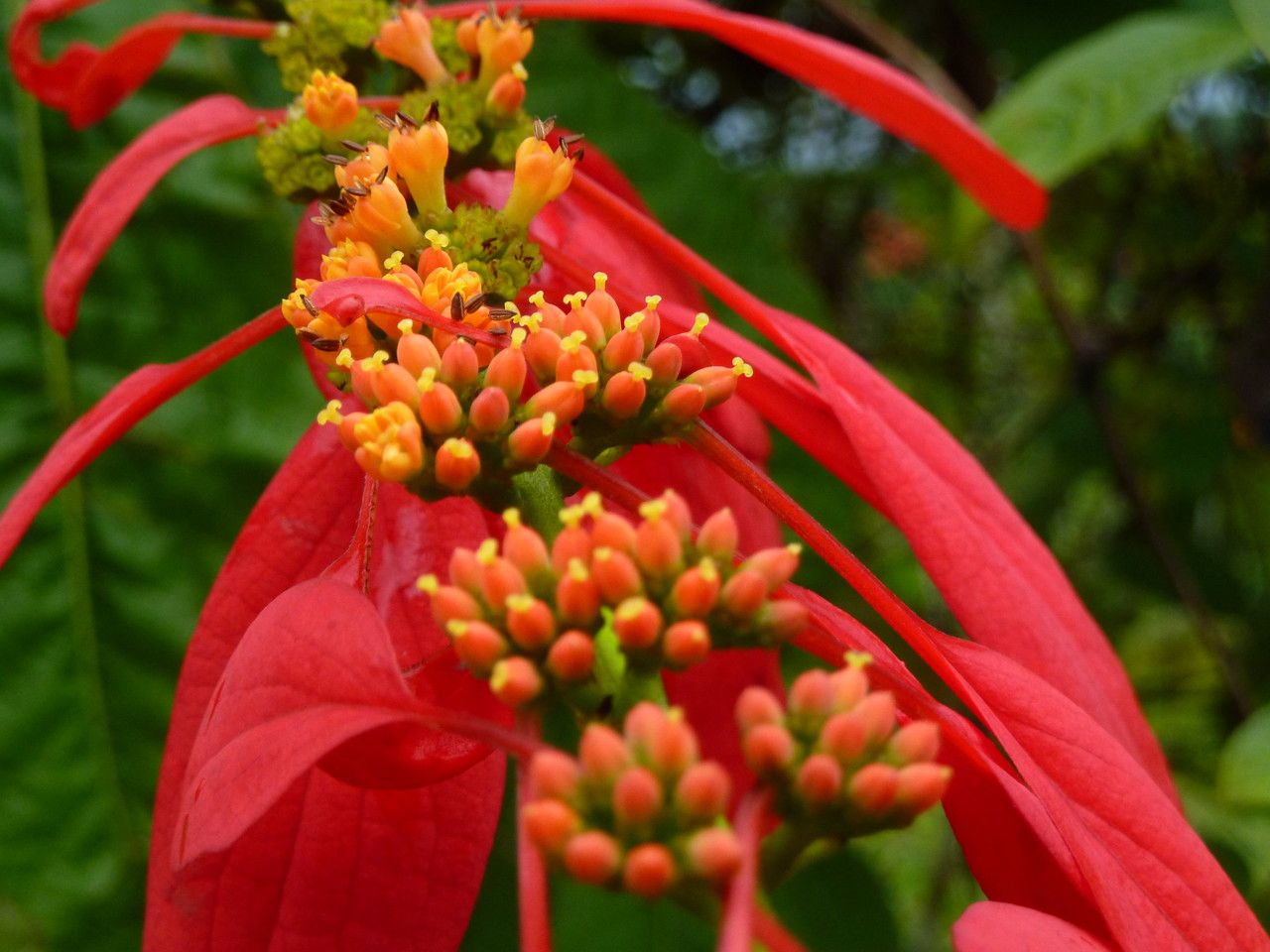
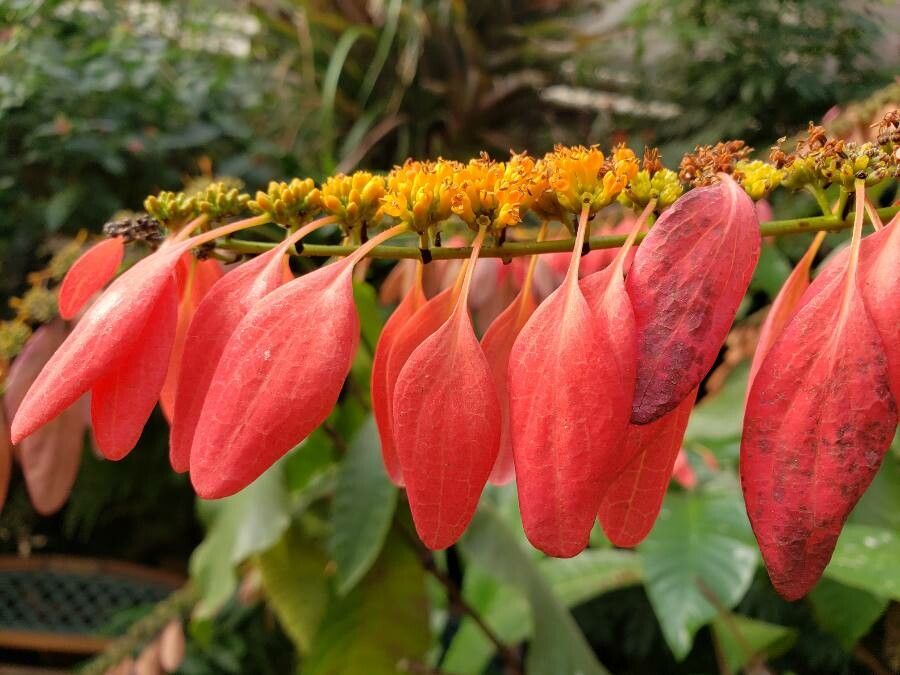
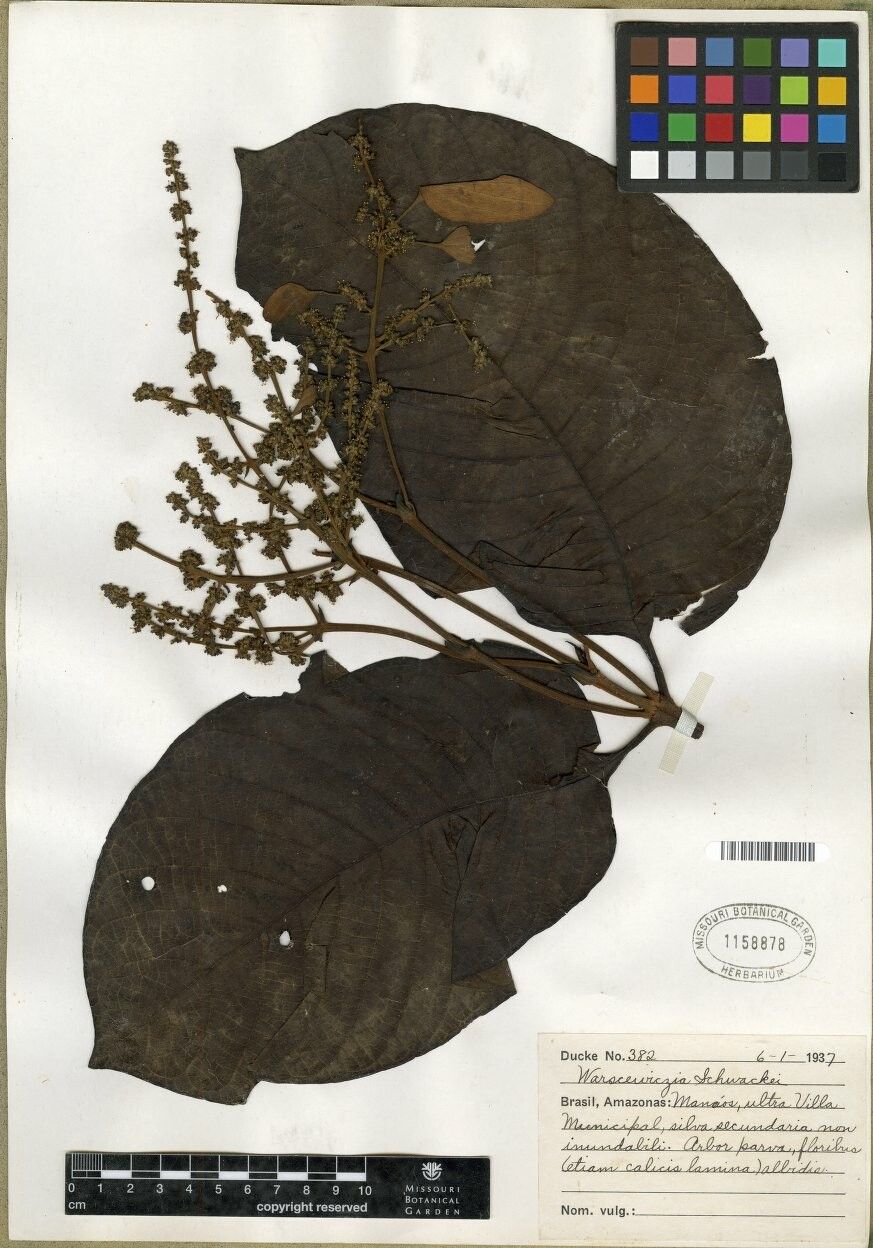
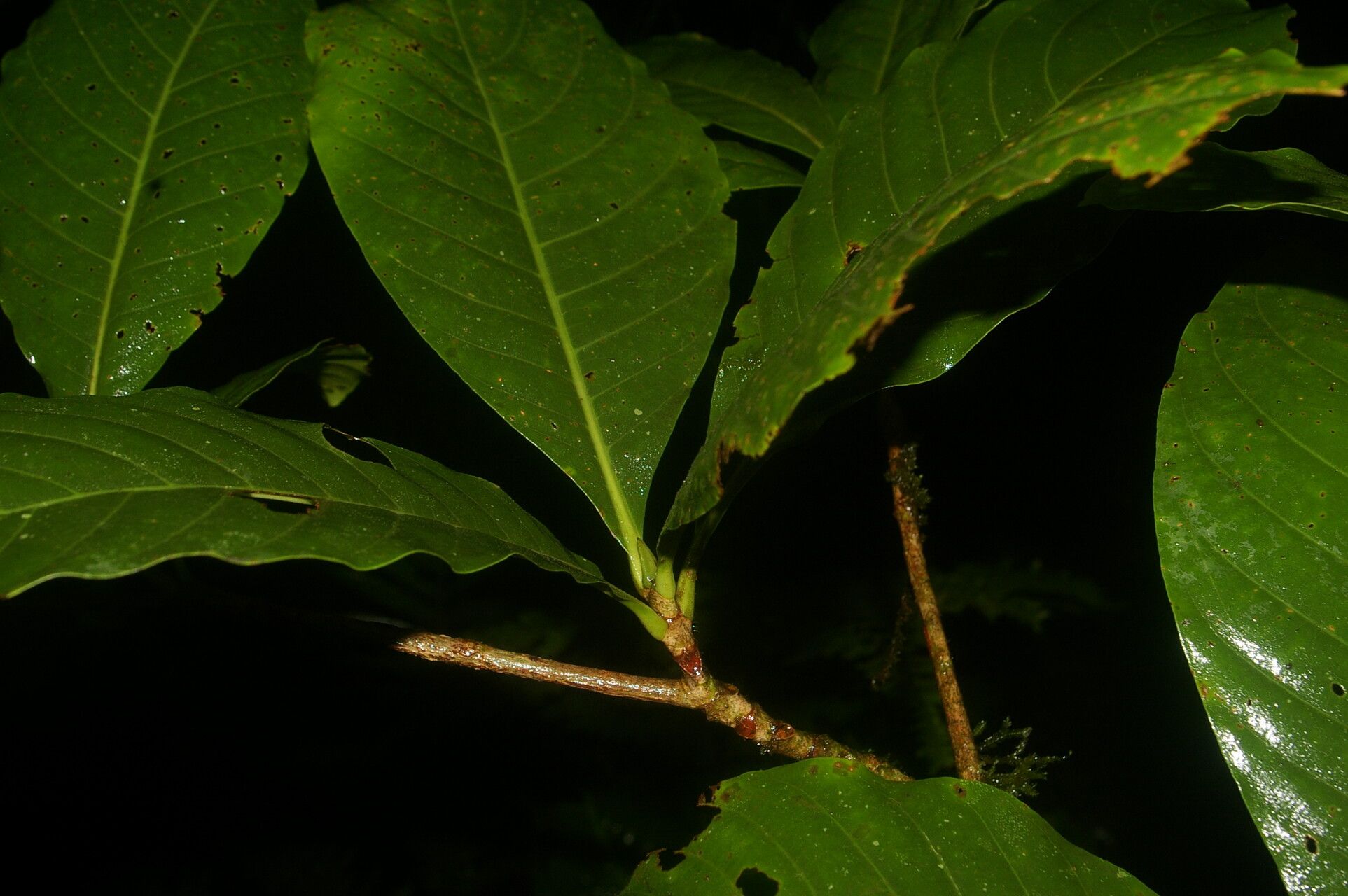
Warszewiczia coccinea (or chaconia, wild poinsettia and pride of Trinidad and Tobago) is a species of flowering plant in the family Rubiaceae. It is the national flower of Trinidad and Tobago because it blooms on 31 August, which coincides with the day that Trinidad and Tobago became independent from the United Kingdom. This small, evergreen ornamental tree is remarkable for its inflorescence with bright red bracts and inconspicuous yellow petals. The anise-odored roots are said to exhibit aphrodisiac properties. A cultivar, the double chaconia, which has a double row of bracts, is the more widely cultivated form. This plant originates from cuttings taken from a wild plant found growing along a roadside. Since propagation from seed has not yet been successful, all double chaconias have been propagated by cuttings from this individual.
Chaconia shows strong resistance to disease and typically does not suffer from illnesses. Regarding maintenance, this plant is fairly low-maintenance. Outdoors it needs only light watering, and mature specimens usually do not require pruning. Smaller specimens, however, should be trimmed after they finish flowering. Chaconiat is appropriate for anyone who has an outdoor area like a garden or a deck, and it does not demand extensive gardening experience.
How to keep Warszewiczia Coccinea.
Light
The chaconia thrives with moderate light levels, which greatly support its healthy growth. Its natural habitat is made up of places where light is common but not excessive. Infrequent light can lead to slow growth, while too much light can damage the plant.
Water
Chaconia, adapted to humid environments, is surprisingly drought-tolerant and only needs watering every 2-3 weeks. It prefers drier conditions between waterings. When grown outdoors, it thrives best in soil that remains moist—but not waterlogged—during its peak growing season, allowing it to display its vibrant flowers beautifully.
Temperature
Chaconia comes from tropical areas, where the climate is generally warm and humid. As a result, it is adapted to high temperatures and humidity. It does not tolerate sudden temperature shifts and prefers a steady temperature environment, so it is important to avoid indoor temperature fluctuations. It generally cannot withstand cold and needs warmer temperatures to grow. If the surrounding temperature falls too low, the plant may stop growing or even die.
Fertilizer
The best time to fertilize a Chaconia is in early spring, as it comes out of dormancy. This encourages overall growth and flower development. Fertilization improves foliage, stems, and branches, and promotes flowers that are large, vibrant, and long-lasting. It helps move nutrients from the roots to the flowers and enhances the plant’s health and resistance to disease.
Pruning
To maintain the shape of your chaconia plant and encourage blooming, it's best to prune it from early to late winter, during its dormant season. Start by removing any dead branches, and thin out crowded areas to improve air circulation. Regular pruning helps keep the plant healthy and boosts flower production. Remember to always use sanitized tools to prevent the spread of disease.
Botanical profile.
- Plant Type
- Tree, Shrub
- Life Cycle
- Perennial
- Genus
- Warszewiczia
- Family
- Rubiaceae
- Hardiness Zone
- 10-12
- Mature Height
- 1.83 m to 6.1 m
- Mature Spread
- 2.13 m to 3.96 m
- Leaf Color
- Green
- Leaf Type
- Evergreen
- Flower Color
- Red
- Flower Size
- 2.54 cm
- Bloom Time
- Summer, Early fall, Mid fall
- Planting Time
- Summer
- Harvest Time
- Late summer, Fall, Early winter
- Native Area
- Colombia, Bolivia, Venezuela, Peru, Guyana, Nicaragua, Ecuador, Costa Rica, Panama
Other names.
Reader questions.
How much sunlight do Chaconia plants require?
Chaconia plants thrive in environments with moderate amounts of light, needing about 3-6 hours of sunlight daily to maintain healthy growth. It's essential to watch how sunlight moves through your garden to find the perfect balance for these plants, as their natural habitat consists of well-lit but not overly bright environments. Infrequent sunlight can lead to slow growth, while excessive light may harm the plant.
What should I do if natural sunlight is insufficient for my Chaconia plant?
When natural sunlight is insufficient, particularly in winter or less sunny spaces, consider using artificial lighting to support your Chaconia plant's growth. LED lights are recommended because they can be customized to provide the specific wavelengths of light plants need. Full sun plants require 30-50W/sq ft, partial sun plants 20-30W/sq ft, and full shade plants 10-20W/sq ft of artificial light. Place the light source 12-36 inches above the plant, and mimic natural daylight hours, with most plants needing 8-12 hours of light per day.
What are the symptoms of light deficiency in Chaconia plants?
Chaconia plants show several symptoms when they don't receive enough light. These include smaller new leaves, leggy or sparse growth, faster leaf drop, slower or no new growth, and lighter-colored new leaves. Conditions such as chlorosis (leaves turning yellow due to chlorophyll breakdown), sunscald (damage from intense light exposure), leaf curling, wilting, and leaf scorching are also symptoms, but these latter indicate excessive sunlight exposure rather than deficiency.
What solutions are available for Chaconia plants suffering from light deficiency or excessive sunlight?
For Chaconia plants suffering from light deficiency, gradually moving them to sunnier spots each week until they receive sufficient sunlight or using artificial lights can help. For those with issues due to excessive sunlight, it's crucial to adjust their location gradually to prevent sunburn and allow them to adapt. In both scenarios, it's important to avoid sudden changes in light exposure. Additionally, removing obstructions or transplanting to ensure better light exposure can benefit plant health. Note that damage from insufficient sunlight might not be reversible, but new growth should be healthy with improved light conditions.