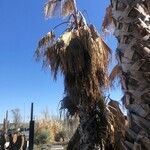
Washingtonia filifera
California Fan Palm · Desert Palm · Desert fan palm · Petticoat palm · Washington palm
Description
Source: leafsnapWashingtonia filifera, commonly known as the California fan palm or desert fan palm, is a species of palm tree native to the southwestern United States and northern Mexico. This tall and slender tree can grow up to 80 feet in height, with a trunk diameter reaching up to 3 feet. Its large, fan-shaped leaves feature long, thread-like fibers that hang from the edges. The flowers are small and either white or cream-colored, appearing in large clusters on long stalks. The California fan palm is well adapted to hot and dry climates, thriving in desert regions where temperatures can soar above 100°F during the day. While it prefers well-drained soils, it can also tolerate some degree of salinity. For centuries, indigenous people have used this plant for food, medicine, shelter material, and spiritual purposes. Today, it remains an important ornamental plant in landscaping due to its striking appearance. Overall, Washingtonia filifera is an iconic plant species that plays a significant ecological and cultural role across its native range.
🌳 The California palm has long been a vital resource for Indigenous Californian tribes, valued both as a source of food and as material for basketry. The fruit of the California palm, called 'California dates', is edible and has historically been a staple in their diet. They also made use of the fibrous leaves to fashion tools and weave materials, which represented an integral part of their culture and survival.
Care Guide
💧 Water Every 7 days
The California palm thrives in arid environments due to its outstanding drought resistance. It needs infrequent, deep watering only once every two weeks, which aligns with its natural climate. Being an evergreen, the California palm retains its leaves all year, requiring even less water during cooler months when evaporation rates are lower.
☀️ Light Full sun
California palm requires plenty of light to grow healthily. Native to areas with strong sun, this plant can cope without light but does best with ample daylight. Both too little and too much light can hinder growth, causing it to wilt or display poor development.
What are the sunlight requirements for a California palm?
California palms require abundant light exposure for healthy growth. They have adapted to environments with excessive sun exposure, thriving best with generous daylight. These plants need more than 6 hours of sunlight for full sun exposure, and about 3-6 hours for partial sun. However, both excessively low or high light levels can impede growth, causing the plant to either wither or show inadequate development. It's important to observe your garden's sunlight patterns to ensure plants get the right balance of light and shade.
How does artificial lighting support California palm growth indoors?
Indoor California palms require adequate lighting for optimal growth, especially when natural sunlight is insufficient, like during winter or in less sunny spaces. Artificial lights, such as LED lights which can be customized to specific wavelengths, provide a vital solution. The amount of artificial light needed varies: full sun plants need 30-50W/sq ft, partial sun plants need 20-30W/sq ft, and full shade plants need 10-20W/sq ft. The light source should be placed 12-36 inches above the plant to mimic natural sunlight, and the duration should mimic natural daylight hours, usually 8-12 hours per day.
What are the symptoms of light deficiency in California palms?
California palms may display several symptoms when exposed to suboptimal lighting, including smaller new leaves, leggy or sparse growth, faster leaf drop, slower or no new growth, lighter-colored new leaves, and conditions like chlorosis, sunscald, leaf curling, wilting, and leaf scorching. These symptoms indicate deficiencies in light exposure, which can lead to a lack of chlorophyll and essential nutrients or damage from excessive sunlight.
What solutions can help improve light conditions for California palms?
To optimize growth for California palms, gradually move plants to sunnier locations, ensuring at least 6 hours of direct sunlight daily. Use south-facing windows and keep curtains open during the day. For large indoor plants or those not easily movable, artificial lightings, such as desk lamps or professional grow lights, can be used for at least 8 hours daily. Outdoors, plants should be moved to sunlight gradually to avoid sunburn. If trees block sunlight, consider pruning to allow more light through. For smaller plants, transplanting during the dormant period, usually late winter or early spring, to a location with ample sunlight and good drainage can improve growth.
🌡️ Temperature 15–37.8°C
The california palm is native to the hot, dry climate of the North American deserts and endures wide temperature fluctuations. Its preferred temperature for healthy growth is 59 to 100 ℉ (15 to 38 ℃). In summer, it is advisable to provide some shade to protect the plant from scorching heat, and in winter the plant should be brought indoors when the temperature drops below 20 ℉ (-6.67 ℃).
What is the native climate of the California palm?
The California palm, or Washingtonia filifera, is native to the hot and dry climate of the North American deserts. It thrives in areas where the climate supports wide temperature fluctuations, making it well-suited to environments that mirror its native habitat.
What are the temperature preferences of the California palm?
The California palm prefers temperatures ranging from 59 to 100°F (15 to 38°C) for healthy growth. It has some tolerance for cold, but it's recommended to provide shade during the scorching summer heat and to bring the plant indoors or protect it when temperatures fall below 20°F (-6.67°C) during winter. The palm can generally withstand temperatures just below -5°C without additional measures, but protection is necessary if temperatures are expected to drop lower.
How does the California palm react to low temperatures?
The California palm has moderate tolerance to low temperatures, thriving best when the temperature stays above 15°C. It can handle winters where temperatures stay above -5°C, but exposure to temperatures below -10°C may cause leaf drooping. In mild cases, the palm can recover, but severe cold may lead to leaf wilt and loss. To protect the palm in cold weather, it's advisable to trim frost-damaged parts and wrap the plant with insulating materials, along with erecting a wind barrier for additional protection.
What should be done if the California palm experiences high temperatures?
During summer, it's important to ensure the California palm doesn't remain in temperatures above 38°C. Exposure to temperatures exceeding 43°C can cause lighter leaf color, dry and withered leaf tips, curling leaves, and increased susceptibility to sunburn. To mitigate these effects, trim away sunburned and dried parts of the plant, move it to a shaded location or use a shade cloth, and water the plant in the morning and evening to maintain soil moisture.
💨 Humidity normal (40-60%)
This plant will thrive in moderate humidity, which is probably the level in your home. However, misting it a few times a week can be very beneficial. Make sure the room has good ventilation.
🪴 Soil 6-7
🌱 Fertilizer
Fertilize your California palm in early spring to encourage healthy growth. Regular feeding boosts overall health, leading to vigorous growth, increased tolerance of harsh conditions, and improved resistance to pests and diseases. Keep to a consistent fertilization schedule for your California palm to maintain bright, deeply colored foliage and a lush appearance.
🪴 Pot & Repot 1-2 years
When repotting a California palm, choose a pot that’s only slightly larger and provides excellent drainage. Use a potting mix that drains well. Repot in spring, taking care not to damage the roots while handling the plant. Place the palm so it sits at the same level as it did in the previous pot. Water thoroughly after repotting, then put the palm in a warm spot with bright, indirect sunlight. Avoid overwatering to prevent root rot.
✂️ Pruning
The California palm features fan-like, evergreen fronds that can grow up to 15 feet (4.5 meters) in length. To maintain the health and appearance of the tree, prune it in early spring to remove any dead fronds. This helps promote growth, enhances aesthetics, and prevents pest infestations. Be sure to sterilize your tools and wear protective gear when pruning.
🌿 Propagating
🐛 Diseases & pets
☠️ Toxicity
Characteristics
- Plant Type
- Palm
- Life Cycle
- Perennial
- Genus
- Washingtonia
- Family
- Arecaceae
- Hardiness Zone
- 8-11
- Mature Height
- 10.97 m to 21.95 m
- Mature Spread
- 6.1 m
- Leaf Color
- Green, Gray, Silver
- Leaf Type
- Evergreen
- Flower Color
- White
- Flower Size
- 2.54 cm
- Bloom Time
- Mid summer
- Planting Time
- Spring, Autumn
- Harvest Time
- Mid summer, Late summer, Early fall
- Native Area
- Mexico