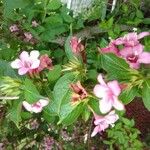
Weigela florida
Weigelia · Old-fashion weigela · Oldfashioned weigela · Weigela · Old-fashioned weigela
Description
Source: leafsnapWeigela florida is a deciduous shrub native to East Asia that typically grows to a height of 6-10 feet with a spread of 9-12 feet. The plant produces stunning trumpet-shaped flowers that bloom in late spring and early summer, varying in color from pink and red to white. Its leaves are oval-shaped with serrated edges and a dark green hue. Weigela florida thrives in full sun to partial shade and prefers well-drained soil with moderate moisture. While relatively low-maintenance, the shrub benefits from regular pruning after flowering to maintain its shape. Often used as an ornamental shrub in gardens, Weigela florida also serves as an attractive accent plant for borders and hedges, thanks to its beautiful flowers and foliage. Additionally, it attracts pollinators such as bees and butterflies, making it an excellent addition to wildlife gardens. Overall, Weigela florida is an outstanding choice for gardeners seeking low-maintenance yet beautiful flowering shrubs. It adds color and texture to landscape designs while also drawing pollinators to the garden.
💡 Weigela florida blooms from spring to summer, adorning itself with clusters of flowers that resemble rosy clouds woven into a tapestry. In literature, scholars and writers recognize its unique beauty and often weave it into their stories.
🌳 Weigela is well-known for its ornamental beauty, but the remarkable properties of its nectar are less widely recognized. Attracted by the nectar’s distinct flavor, certain bird and butterfly species visit weigela, making it a popular choice for attracting wildlife and promoting ecological diversity. The pigments in the flowers also hold untapped potential as a natural dye, which is useful in an age when synthetic colorants are met with health-related skepticism.
🎭 Promising future, radiance, loveliness
Care Guide
💧 Water Every 7 days
Originating from East Asia, the old-fashioned weigela thrives in moderately moist environments. It prefers consistent moisture but can tolerate short dry spells. Watering every 1-2 weeks promotes optimal growth. Commonly grown outdoors, the old-fashioned weigela benefits from mulching, which helps retain soil moisture and enhances its blooming cycle.
When should I water my old fashioned Weigela?
Watering your old fashioned Weigela is crucial for its health, focusing on timely watering to keep the soil moist, supporting nutrient absorption, and minimizing disease risk. Check the top inch of soil for dryness to determine the need for watering. Look for signs such as leaf drooping, which indicates dehydration, and be aware that stunted growth and color changes in the leaves, like pale or dull green turning to yellow or brown, are signs of insufficient watering. Remember, overwatering can lead to root rot and fungal diseases, while under-watering can cause leaf drop, stunted growth, or even plant death. It's all about finding the right balance to ensure your Weigela thrives.
How should I water my old fashioned Weigela?
Water your old fashioned Weigela using the 'soak and dry' method to ensure optimal hydration without overwatering. Use a watering can with a long, narrow spout to direct water to the plant's base, minimizing foliage wetness and preventing fungal diseases. Consider using a moisture meter to precisely determine when watering is needed. To raise humidity levels around the plant, especially during dry periods, occasionally misting the leaves can be beneficial. However, always check the soil's moisture level before watering to avoid overwatering, and use filtered or distilled water to prevent mineral buildup.
How much water does old fashioned Weigela really need?
The water needs of old fashioned Weigela vary based on factors like pot size, root depth, and plant size. It's important to provide regular but not excessive watering, ensuring that the soil is evenly moist but not waterlogged. Look for signs of proper hydration such as vibrant foliage and steady growth. Conversely, symptoms of underwatering include wilting and yellowing leaves, while overwatering may cause leaf dropping and root rot. To mitigate risks of improper watering, using well-draining soil and avoiding prolonged water standing can help maintain the plant's health.
What kind of water is best for old fashioned Weigela?
Old fashioned Weigela prefers rainwater or filtered tap water, avoiding distilled water due to its lack of essential minerals. Be mindful of the plant's sensitivity to chlorine and fluoride found in tap water. Letting water sit out before watering allows chlorine to evaporate, and while fluoride is tolerated in small quantities, supplementing with rainwater occasionally is advisable. Remember to dechlorinate tap water and avoid using water softeners. Room temperature water is optimal to prevent shock from cold temperatures.
How do old fashioned Weigela's watering needs change with the seasons?
The watering needs of old fashioned Weigela vary throughout the year. In spring, increase watering as new growth begins, ensuring the soil stays slightly moist. Summer requires consistent soil moisture to support the plant's peak growth phase. During autumn, reduce watering as the plant enters dormancy, letting the top soil dry out between watering sessions. In winter, water lightly, if necessary, to prevent the soil from completely drying out, but avoid waterlogging or frost damage.
☀️ Light Full sun
Weigela performs best in locations with long periods of daylight. Although it can tolerate somewhat reduced light, it grows and blooms most successfully when bathed in abundant sunlight. Strong exposure to sunlight ensures vigorous growth, while lesser light can impair its health and flower production.
What are the sunlight requirements for Old Fashioned Weigela?
Old Fashioned Weigela thrives best in full sun, requiring more than 6 hours of sunlight daily to flourish and bloom optimally. It can also grow in partial sun, with about 3-6 hours of sunlight. However, it's essential to watch how sunlight moves through your garden, choosing spots that offer a balance of light and shade to ensure the plant's happiness. Despite its preference for abundant sun, Old Fashioned Weigela can withstand somewhat lesser light but will show vigorous growth and more prolific blooming when exposed to strong, radiant sunlight.
How does artificial lighting support Old Fashioned Weigela's growth?
Indoor Old Fashioned Weigela plants require adequate lighting for optimal growth, especially when natural sunlight is insufficient, such as in winter or less sunny spaces. Artificial lights, particularly LED lights, provide a vital solution by offering the specific wavelengths of light the plants need. For full sun plants, 30-50W per square foot of artificial light is needed; partial sun plants require 20-30W per square foot, and full shade plants need 10-20W per square foot. The artificial light source should be placed 12-36 inches above the plant, mimicking natural sunlight as closely as possible, and most plants will need 8-12 hours of light per day.
What are the symptoms of light deficiency in Old Fashioned Weigela?
When Old Fashioned Weigela does not receive adequate sunlight, it may exhibit symptoms such as smaller new leaves, leggy or sparse growth, faster leaf drop, slower or no new growth, and lighter-colored or yellow (chlorotic) leaves. Excessive sunlight can also cause issues like sunscald, leaf curling, wilting, and leaf scorching, indicating the plant's struggle with its light environment.
What are the solutions for Old Fashioned Weigela facing light deficiency issues?
To address light deficiency in Old Fashioned Weigela, gradually move the plants to sunnier locations each week until they receive at least 6 hours of direct sunlight daily. For indoor plants, consider using artificial light if moving them is not feasible, keeping a lamp on for at least 8 hours daily or investing in professional plant grow lights. For outdoor and ground plants, reduce obstructions to sunlight by pruning trees and, if necessary, transplant smaller plants during their dormant period to a location with ample sunlight and good drainage. It's crucial to avoid sudden changes in light exposure to prevent sunburn, and remember that parts of the plant already affected may not recover, but new growth will be healthy after increasing light exposure.
🌡️ Temperature 5–35°C
Weigela thrives in temperate climates and does best at temperatures from 41 to 95 ℉ (5 to 35 ℃). To help the plant adjust to seasonal shifts, gradually change the temperature during transition periods.
What are the ideal growing temperatures for Old Fashioned Weigela?
Old Fashioned Weigela thrives in a temperate environment, preferring temperatures between 41 to 95°F (5 to 35°C). These plants are quite cold-resistant, so they usually don't need special frost protection measures during winter. However, it is still important to provide cold protection if winter temperatures are expected to drop below the plant's cold tolerance limit. This can include wrapping the trunk and branches with materials like non-woven fabric or cloth and making sure to water the plant abundantly before the first freeze in autumn, to ensure the soil remains moist and enters a frozen state. This helps in preventing drought and water scarcity during winter and early spring.
How should you care for Old Fashioned Weigela in low temperatures?
Old Fashioned Weigela is cold-tolerant and performs best when temperatures are above its minimum growth threshold. It's important to maintain temperatures above this minimum during winter. If temperatures fall below the plant's growth limit, the branches may become brittle and dry by spring, and new shoots might not emerge. To address this, it's recommended to prune away any dead branches that have failed to produce new leaves in the spring.
What should you do if your Old Fashioned Weigela experiences high temperatures?
In high temperatures, it's crucial to ensure that Old Fashioned Weigela remains below its maximum temperature tolerance. Exceeding this can cause the leaves to lighten in color, tips to become dry and withered, and increases susceptibility to sunburn. To mitigate these issues, trim away sunburned and dried-up parts of the plant. Additionally, moving the plant to a shaded area or using a shade cloth to protect it from the midday and afternoon sun can help. It's also beneficial to water the plant in the morning and evening to keep the soil consistently moist.
💨 Humidity normal (40-60%)
This plant will thrive in moderate humidity, which is probably the level in your home. However, misting it a few times a week can be very beneficial. Make sure the room has good ventilation.
🪴 Soil 5-7
🌱 Fertilizer
Timing matters when fertilizing Weigela. Apply fertilizer in early spring and continue once a month until early summer. Fertilizer encourages beautiful blooms and supplies energy during both dormant and active growth periods.
Why is it necessary to fertilize my Old fashioned weigela?
Fertilizing your Old fashioned weigela is important for several reasons. One of the main reasons is that it helps the plant produce beautiful blooms. To ensure your Old fashioned weigela has excellent flowers in the spring, it's best to fertilize it in early spring. Additionally, fertilizer provides the plant with energy that it can store in the ground during its dormant phases. By giving your Old fashioned weigela extra nutrients during fall planting or late spring, it will have more energy to use when it starts growing again.
When should I fertilize my Old fashioned weigela?
To maximize the effectiveness of fertilizer for Old fashioned weigela, timing is key. It's important to avoid applying fertilizer too early while the plant is still dormant, as it won't be able to utilize the nutrients efficiently and the fertilizer may get washed away by rainwater, resulting in waste and pollution. Instead, the first application of fertilizer should be done in early spring. For best results, continue fertilizing once a month until early summer.
When is the best time to not fertilize my Old fashioned weigela?
To ensure optimal bloom development for Old fashioned weigela, it is important to choose a fertilizer that has a lower level of nitrogen compared to other nutrients. Too much nitrogen can result in an abundance of leaves but a lack of blooms. It is also crucial to avoid fertilizing after early autumn, as this can lead to excessive growth right before winter. Additionally, refrain from fertilizing during hot and dry periods, as dry soil is not as effective at delivering fertilizer and can stimulate growth that requires more water than may be available. It is advisable to apply fertilizer earlier in the season when temperatures are cooler. Lastly, keep in mind that Old fashioned weigela can absorb fertilizer from nearby plants or lawns, so be cautious to avoid accidentally providing a double-dose of fertilizer to the tree or shrub.
What kind of plant food should I use for my Old fashioned weigela?
To help your Old fashioned weigela plant thrive, you'll want to find a fertilizer that has a balanced mix of the three main nutrients, with a little extra phosphorus. Alternatively, you can improve the plant's soil by adding organic materials like compost, worm castings, or manure. As the flowers start to appear, some experienced gardeners will supplement with water-soluble fertilizers that have phosphorus to make the flowers develop better, grow larger, and bloom for longer. There are different types of fertilizers available, but for Old fashioned weigela, liquid or powdered forms tend to work best. Regardless of the form you choose, make sure to dilute the fertilizer and apply it while watering your Old fashioned weigela.
How should I add fertilizer to my Old fashioned weigela plant?
To properly fertilize your Old fashioned weigela, it's important to follow the directions for the specific type of fertilizer and do some research on how to use it. Avoid over-fertilizing the plant by determining the correct amount to use. A general guideline is to use the age of the tree or the diameter of the trunk as a reference. For each year of tree age or each inch of trunk diameter, it's recommended to estimate one-tenth of a pound of fertilizer, not exceeding one pound in total. Apply granular fertilizers or organic options like blood meal by sprinkling them around the base of the tree, extending all the way to the drip line (the area underneath the outermost branches). Be careful not to let the fertilizer come into contact with the trunk. Over time, the granules will break down and filter into the soil, where the roots can absorb the nutrients. Once you've fertilized, spread a layer of compost about an inch deep around the base of the tree, and make sure to water thoroughly.
🪴 Pot & Repot 2-3 years
When repotting Weigela, select a pot 1–2 inches (2.5–5.1 cm) larger that provides ample drainage. Use a well-draining potting mix. Repot in spring or fall, making sure the root ball sits slightly below the rim of the flower pot. Water thoroughly after repotting and place the plant in a warm spot with indirect sunlight.
✂️ Pruning
Old-fashioned weigela is a deciduous shrub known for its vibrant, tubular flowers. To encourage healthy growth, prune it in late spring after it has finished blooming. Remove any dead wood and thin out dense areas to improve air circulation. Avoid heavy pruning, as it can lead to fewer blooms. Instead, perform regular light shaping to maintain the shrub's form and vitality.
🌿 Propagating
🐛 Diseases & pets
☠️ Toxicity
Characteristics
- Plant Type
- Shrub
- Life Cycle
- Perennial
- Genus
- Weigela
- Family
- Caprifoliaceae
- Hardiness Zone
- 4-9
- Mature Height
- 2.13 m to 3.96 m
- Mature Spread
- 0.91 m to 3.05 m
- Leaf Color
- Green, Yellow, White, Variegated
- Leaf Type
- Deciduous
- Flower Color
- Pink, Red, White
- Flower Size
- 2.03 cm
- Bloom Time
- Late spring, Early summer
- Planting Time
- Spring, Autumn
- Harvest Time
- Mid summer
- Native Area
- Koppen, Japan, South Korea, China