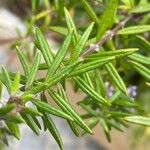
Westringia eremicola
Slender western-rosemary · Slender westringia
Description
Source: leafsnapWestringia eremicola, commonly known as Desert Rosemary, is a small shrub native to the arid regions of Western Australia. Belonging to the Lamiaceae family, this plant features a compact growth habit and can reach up to 1 meter in height. Its narrow, gray-green leaves have a woolly texture that helps retain moisture in hot and dry conditions. Desert Rosemary produces small white or pale blue flowers that bloom from late winter through spring, attracting bees, butterflies, and other pollinators. Westringia eremicola thrives in well-drained soils with low fertility levels but can also tolerate some clay soils. It requires full sun exposure for optimal growth but can tolerate partial shade. This plant is highly valued in landscaping for its drought tolerance, low maintenance requirements, and attractive foliage throughout the year. Its ability to attract pollinators makes it an excellent addition to gardens or landscapes. Overall, Westringia eremicola is an ideal choice for gardeners seeking an easy-to-grow shrub with year-round interest that thrives in hot, arid conditions, while providing a habitat for beneficial insects like bees.
Care Guide
💧 Water Every 7 days
☀️ Light Full sun
Slender westringia comes from open habitats, such as sunny meadows and the edges of forests, which supply plenty of light. It thrives in Full Sun but can also tolerate Partial Sun, adapting well to different sunlight conditions.
🌡️ Temperature 15–37.8°C
Slender westringia is highly adaptable to a variety of climates, from blazing summers to cold winters. Still, it has an optimal temperature range for healthy growth. If temperatures rise too high, the plant can experience heat and humidity stress that may kill it. In locations where temperatures approach the lower bound of its cold tolerance, providing insulation is important to protect the plant.
💨 Humidity
🪴 Soil 6-8
🌱 Fertilizer
Timing is essential for fertilizing Slender westringia. Apply fertilizer in early spring and continue monthly until early summer. Fertilizer promotes attractive blooms and supplies energy during both dormant periods and active growth.
🪴 Pot & Repot
✂️ Pruning
The slender westringia is a resilient shrub characterized by its thin leaves and delicate flowers. For best results, prune it in early spring using clean tools. Make cuts just above the nodes to promote growth and improve air circulation. Regular pruning will enhance the shrub's health and appearance, but be careful not to prune too heavily, as this can cause stress to the plant.
🌿 Propagating
🐛 Diseases & pets
☠️ Toxicity
Characteristics
- Plant Type
- Shrub
- Life Cycle
- Perennial
- Genus
- Westringia
- Family
- Lamiaceae
- Hardiness Zone
- 8-11
- Mature Height
- 0.91 m to 2.13 m
- Mature Spread
- 0.91 m to 1.52 m
- Leaf Color
- Gray, Dark Gray
- Leaf Type
- Evergreen
- Flower Color
- White, Lavender
- Flower Size
- 1.02 cm to 1.52 cm
- Bloom Time
- All year round
- Planting Time
- Spring, Summer, Autumn
- Harvest Time
- All year round