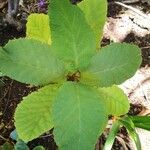
Wigandia urens
Caracus wigandia · Wigandia
Description
Source: wikipedia (CC BY-SA)Wigandia urens, synonyms including Wigandia caracasana, known as fiberglass plant and the Caracus wigandia, is a plant in the family Namaceae.
Care Guide
💧 Water
The Caracas big-leaf plant originates from arid regions and thrives with minimal moisture due to its drought tolerance. To prevent overwatering, maintain a watering schedule of once every 2 to 3 weeks. Its ability to store water in its tissues allows it to flourish during sporadic rainfall, which significantly influences its outdoor growth cycles.
How should I water my Caracas big-leaf plant?
Your Caracas big-leaf plant doesn't have specific preferences when it comes to watering methods. You can use common tools like watering cans, hoses, or even cups to water it. It's important to directly water the soil, making sure to evenly moisten all areas. It's recommended to use filtered water as tap water may contain harmful particles. Using water at room temperature or slightly warmer is best, as extremely cold or hot water can be a bit harsh for the plant. However, the Caracas big-leaf plant usually responds well to any type of water.
What do I do if I give too much or too little water to my Caracas big-leaf plant?
Watering is important for outdoor plants, especially new ones or seedlings. Keep in mind that you should water them regularly for a few months when they are small or newly planted. Once the roots are established, Caracas big-leaf plants can rely on rain most of the time. However, overwatering can be a problem when these plants are in pots. If you accidentally overwater your Caracas big-leaf plant, take immediate steps to fix the situation. Stop watering it right away to minimize the effect of overwatering. Then, remove the plant from its pot and check the roots for any signs of root rot. If there is no root rot, you can put the plant back in its pot. If there is root rot, trim away any affected roots and consider applying a fungicide. Finally, replant the Caracas big-leaf in well-draining soil. If you underwater the plant, simply water it more frequently. Underwatering is easily fixed as the leaves will droop, dry out, and fall off, but they will quickly recover with adequate watering. Correct the watering frequency as soon as you notice underwatering.
How frequently should I water my Caracas big-leaf plant?
If your area doesn't get enough rainfall, you'll need to water your outdoor plants every 2 weeks in the spring and fall, and more often in the summer. In the winter, when plants need less water, you can water them less frequently or not at all. Young or newly planted Caracas big-leaf plants should be watered more often to help them establish and grow. For potted plants, you can either set a schedule to water them once a week or every other week, but this may not always be accurate for your specific plant. Another option is to wait until the top few inches of soil have completely dried out before watering again.
How much water does my big-leaf plant from Caracas need?
To water your Caracas big-leaf effectively, you don't always need to use a lot of water. If only a few inches of soil have dried out since your last watering, give the plant around five to ten ounces of water. You can also judge how much water to give based on the moisture in the soil. Take note of how many inches of soil have dried out between waterings. To ensure your Caracas big-leaf gets enough moisture, water it enough to dampen all the dry soil layers since the last watering. If over half of the soil is dry, you may need to give more water than usual. Keep adding water until it starts to drain from the pot's holes. If your Caracas big-leaf is planted in a rainy outdoor area, it might not need extra watering. When the plant is young or just getting established, make sure it receives 1-2 inches of rain each week. Once it grows and establishes itself, it can rely solely on rainwater. However, if the weather is hot and there's no rainfall for 2-3 weeks, give your Caracas big-leaf a thorough watering to prevent stress.
How do I know if I'm giving enough water to my Caracas big-leaf plant?
Overwatering is a common issue for the Caracas big-leaf plant, and there are specific signs to watch out for. Typically, if you overwater this plant, its leaves will turn yellow and it may even shed some leaves. Additionally, overwatering can cause the overall plant structure to shrink and could lead to root rot. Conversely, if you underwater the Caracas big-leaf, it will also start to droop. The leaves may become brown and brittle when touched. Whether you notice signs of overwatering or underwatering, you should take action promptly to restore the plant's health.
☀️ Light Full sun
Caracas big-leaf thrives in strong sunlight but tolerates reduced light. Seasonal changes in light levels may require repositioning, especially for container-grown specimens. Inadequate sunlight can hinder growth and reduce flowering.
What are the sunlight requirements for Caracas big-leaf?
Caracas big-leaf flourishes in environments that offer ample light, similar to its native open habitats such as sunny meadows and forest edges. It requires full sun exposure, which is defined as more than 6 hours of direct sunlight daily, but it can also tolerate partial sun, receiving about 3 to 6 hours of sunlight. It's crucial to observe how sunlight moves through your garden to find spots that provide the right balance of light and shade, enhancing the plant's well-being and growth.
How can artificial lighting be used for indoor plants like Caracas big-leaf?
For indoor plants where natural sunlight may be insufficient, especially during winter or in less sunny locations, artificial lighting serves as an essential solution for promoting faster, healthier growth. LED lights are recommended because they can offer specific wavelengths needed by the plants. For full sun plants, 30-50 watts per square foot is advisable; partial sun plants require 20-30 watts per square foot, and full shade plants need 10-20 watts per square foot. The artificial light source should be placed 12-36 inches above the plant to emulate natural sunlight. Mimicking natural daylight hours, most plants will benefit from 8-12 hours of artificial light each day.
What are the symptoms of light deficiency in Caracas big-leaf?
Light deficiency in Caracas big-leaf may manifest as smaller new leaves, leggy or sparse growth, faster leaf drop, slower or no new growth, and lighter-colored new leaves, signaling insufficient chlorophyll and nutrient absorption. Excessive sunlight can lead to chlorosis (leaves turning yellow), sunscald (pale or necrotic areas on leaves), leaf curling, wilting due to increased water loss, and leaf scorching, marked by brown or crispy leaf edges. These symptoms highlight the plant's struggle in suboptimal lighting conditions, signifying the need for better light management.
What solutions are available for managing light conditions for Caracas big-leaf?
To optimize growth for Caracas big-leaf, indoor solutions include gradually moving the plant to a location with at least 6 hours of direct sunlight daily, ideally using a south-facing window and keeping curtains open. If moving the plant isn't feasible, consider using artificial light sources like desk or ceiling lamps for at least 8 hours daily or investing in professional grow lights. Outdoors, gradually acclimate plants to sunnier spots to prevent sunburn. Reducing obstructions is essential for ground-planted Caracas big-leaf; this could mean pruning trees to allow more sunlight or transplanting to a brighter location during the plant's dormant period. It's important to note that while parts of the plant affected by insufficient light may not recover, new growth should be healthy after improving light exposure.
🌡️ Temperature 15–35°C
The Caracas big-leaf originates from a climate with temperatures ranging from 59 to 95 °F (15 to 35 ℃). It prefers warmer conditions but can adapt to cooler environments. Adjust watering in colder seasons to prevent root chill.
What is the native climate of Caracas big-leaf?
Caracas big-leaf, botanically known as Wigandia urens, is native to climates where temperatures range between 59 to 95 °F (15 to 35 °C). It thrives in warmer conditions but has the ability to adapt to cooler environments. During colder seasons, it's important to adjust the watering schedule to prevent root chill. The plant exhibits some degree of cold tolerance, maintaining its health without any special care as long as temperatures remain above -5°C. However, when temperatures are anticipated to fall below -5°C, temporary cold protection measures, such as wrapping the plant with plastic film, fabric, or other suitable materials, are advisable. These protections should be removed once temperatures rise to ensure the plant's continued health.
How should you care for Caracas big-leaf in low temperatures?
Caracas big-leaf has a moderate tolerance to low temperatures, flourishing best in conditions above 15°C. It should be safeguarded against winter temperatures falling below -5°C. Exposure to temperatures below -10°C can cause the leaves to droop; while they may recover in mild cases, severe exposure can lead to permanent wilting and leaf drop. To prevent frost damage, it's advised to trim off the frost-damaged parts of the plant. Before facing low temperatures again, wrapping the plant with non-woven fabric or cloth and erecting a wind barrier can provide effective protection against the cold.
What is the response of Caracas big-leaf to high temperatures?
During the summer, it's essential to keep the Caracas big-leaf under 35°C to avoid stress from high temperatures. When the mercury climbs above 41°C, the plant can exhibit signs of distress such as discoloration to a lighter green, dried and withered leaf tips, curling of the leaves, and an increased risk of sunburn. To mitigate these issues, affected parts of the plant should be trimmed away. Relocating the plant to a shaded area during the late morning and afternoon or using shade cloth can protect it from excessive sun exposure. Additionally, watering the plant in the early morning and evening will help keep the soil moist and reduce temperature stress.
💨 Humidity
🪴 Soil 6-7
🌱 Fertilizer
Timing is essential when fertilizing the Caracas big-leaf. Start fertilizing in early spring and continue monthly until early summer. Fertilizer promotes attractive blooms and provides energy during both dormant and active growth periods.
🪴 Pot & Repot
✂️ Pruning
Caracas big-leaf plants thrive when pruned properly in early spring. This pruning stimulates growth and helps maintain their shape. Focus on removing dead branches and thinning out overcrowded areas to improve air circulation. Regular pruning also enhances flowering and reduces the risk of diseases and pests, which boosts the plant's overall vitality.
🌿 Propagating
🐛 Diseases & pets
☠️ Toxicity
Characteristics
- Plant Type
- Shrub
- Life Cycle
- Perennial
- Genus
- Wigandia
- Family
- Boraginaceae
- Hardiness Zone
- 8-10
- Mature Height
- 0.91 m to 7.92 m
- Mature Spread
- 3.66 m
- Leaf Color
- Forest Green
- Leaf Type
- Evergreen
- Flower Color
- Purple, Lavender
- Flower Size
- 2.03 cm to 3.05 cm
- Bloom Time
- Spring, Early summer, Mid summer
- Planting Time
- Spring, Autumn
- Harvest Time
- Summer, Early fall, Mid fall
- Native Area
- Colombia, Honduras, Mexico, Guatemala, Venezuela, Peru, El Salvador, Nicaragua, Ecuador, Costa Rica